


Iran’s Rekabi Latest Female Athlete at Risk in Home Country

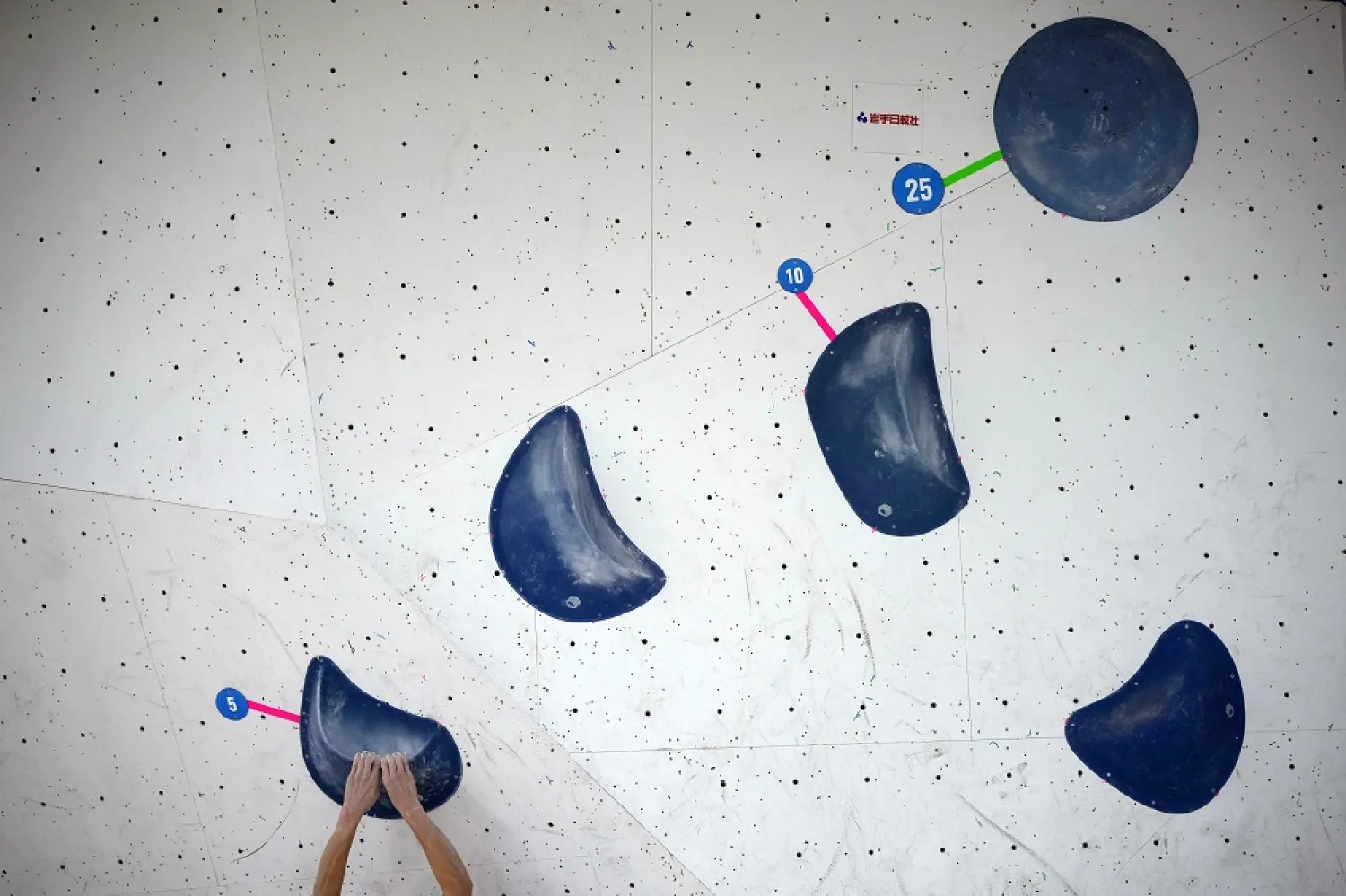
An athlete competes during the boulder semi-final of the IFSC Climbing World Cup Friday, Oct. 21, 2022, in Morioka, Iwate Prefecture, Japan. (AP)
TT

Iran’s Rekabi Latest Female Athlete at Risk in Home Country

An athlete competes during the boulder semi-final of the IFSC Climbing World Cup Friday, Oct. 21, 2022, in Morioka, Iwate Prefecture, Japan. (AP)

Days after Iranian climber Elnaz Rekabi caused an international incident by not wearing her country's mandatory headscarf while competing abroad, her fate is top of mind for the world's best climbers.

“It has made me ill — nauseous,” said American Brooke Raboutou, speaking to The Associated Press on Friday at a World Cup climbing event in northern Japan.

“I support her 100 percent and I’d like to think I can speak on behalf of most of the athletes,” she added. “I’ve reached out to her, just asking if there is anything we can do to help, to support. I know that she’s fighting a really hard battle and doing what she can to represent the women in her country.”

Raboutou said she had not received a reply.

Rekabi, 33, competed Sunday without her headscarf, or hijab, in Seoul during the finals of the International Federation of Sport Climbing’s Asia Championship. She was immediately embraced by those supporting the weekslong demonstrations in her country over the hijab that increasingly include calls for the overthrow of the country’s theocracy.

She returned home to a crowd of cheering protesters, including women not wearing the required head covering. In an emotionless interview before leaving the airport terminal, she told state television that competing without her hair covered was “unintentional.”

Sports in Iran, from football leagues to Rekabi’s competitive climbing, broadly operate under a series of semi-governmental organizations. Women athletes competing at home or abroad, whether playing volleyball or running track, are expected to keep their hair covered as a sign of piety. Iran makes such head coverings mandatory for women.

Rekabi's act of what seemed to be open defiance has been described as a lightning-rod event in Iran. Activists say it lends support to the antigovernment protests sparked by the death of 22-year-old Mahsa Amini, who had been detained by the country's morality police over what she was wearing.

In the tight-knit climbing community, she's become an inspiration for many athletes who barely know her — or only know of her.

“I feel I cannot understand how it feels,” French climber Oriane Bertone said. “Athletes from that country (Iran) are obligated to wear something. I feel like this is something she did knowing perfectly that she was risking something. And that must have been really hard.

“We’re trying to be her voice because it’s not only concerning her, it’s concerning everyone in the country,” Bertone added.

Bertone was asked if she believes Rekabi is safe.

“She’s definitely not. She’s not safe right now,” Bertone said. “When we watched the (television) interview she did, she was trembling.”

Rekabi's case has drawn comparisons to that of sprinter Krystsina Tsimanousksya. She criticized her Belarusian team officials, then was forced to flee to Poland during last year’s Tokyo Olympics. She feared returning home and now has Polish citizenship.

Iranian athletes did not compete at the climbing event in Japan. The field was made up of largely Europeans, Americans and Japanese.

The International Federation of Sport Climbing, the government body, has echoed similar statements made by the International Olympic Committee, saying it has assurances that Rekabi “will not suffer any consequences and will continue to train and compete.”

Neither the IOC nor the climbing federation has said how it will track how Rekabi is treated in Iran.

American Natalia Grossman said other climbers at the event in Japan were thinking of Rekabi, and trying to find ways to support her. She said she did not know Rekabi well and had “not talked to her too much. But everyone in the climbing community is close in one way or another.”

Grossman said she wasn't certain if Rekabi intentionally competed without the hijab. But she has her suspicions.

“I can’t know because I’m not her and I haven’t spoken to her,” Grossman said. “But every day you wear it, and you just don't forget one day.”

Like several other climbers, Grossman argued that sports and politics could not be separated — and shouldn't be.

“I don't really think you can keep them apart,” she said. “I don't think we should have to keep them apart. You should be able to make whatever statement.”

Japanese climber Miho Nonaka, who won an Olympic silver medal a year ago in Tokyo, said she was trying to understand Rekabi's plight.

“There is some physical distance, so in terms of actual support, I think the most immediate thing I can do is share it on (social media) as much as possible, or obtain the correct information and spread it to many people,” she said in Japanese.

Marco Vettoretti, a spokesman for the climbing federation, described the climbers as “a young, cohesive and a diverse group.”

Vettoretti said the climbing federation expected Rekabi to be back competing in the northern hemisphere this spring.

Japanese climber Ai Mori seemed to have the same expectation, addressing her best wishes to the Iranian.

“You are not wrong,” she said in Japanese. "So do your best to come back to climbing to compete again. We’ll be waiting for you.”



Nishikori Bows Out for Final Time in Tokyo as Crowd Salutes Japanese Trailblazer

Japan's Kei Nishikori waves to the spectators after his first round loss to Frances Tiafoe at the Japan Open tennis in Tokyo, Thursday, Oct. 1, 2026. (Daiki Katagiri/Kyodo News via AP)
TT

Nishikori Bows Out for Final Time in Tokyo as Crowd Salutes Japanese Trailblazer

Japan's Kei Nishikori waves to the spectators after his first round loss to Frances Tiafoe at the Japan Open tennis in Tokyo, Thursday, Oct. 1, 2026. (Daiki Katagiri/Kyodo News via AP)

Kei Nishikori's final match before retirement ended in a 6-4 6-4 loss to American Frances Tiafoe in the Japan Open first round on Thursday, as an adoring crowd in Tokyo rose to salute the former world number four and Japanese trailblazer.

The 36-year-old was the first Asian man to reach a Grand Slam singles final at the 2014 US Open and the second after Thailand's Paradorn Srichaphan to make it into the top 10.

After bowing out at the tournament he won in 2012 and 2014, Nishikori soaked up applause from fans at the Ariake Coliseum as organizers honored his two-decade career with a ⁠video tribute featuring ⁠messages from top players including Novak Djokovic.

"We had some great battles at the Grand Slams and other tournaments all over the world," 24-times Grand Slam champion Djokovic said, according to Reuters.

"Your resilience and your fighting spirit to always come back after all the adversity you had with your body, injuries and everything that you faced is really ⁠commendable and admirable.

"I'm really glad you're ending your career in your town, in your country, in front of your people. You're definitely going to get the farewell and applause that you absolutely deserve. All the very best in retirement, Kei."

Seven-times Grand Slam champion Carlos Alcaraz said he considered himself a fan, while others like Grigor Dimitrov, Alex de Minaur and Andy Murray heaped praise on his two-handed backhand.

The Shimane-born Nishikori reached his career-high ranking of four in 2015 and claimed 12 titles on the ATP Tour, ⁠but has ⁠been hampered by injuries for years and has slipped to 436 in the world.

Former world number three and twice Grand Slam runner-up Stefanos Tsitsipas of Greece led the tributes on social media, thanking Nishikori for his hard work and aggressive, counter-punching playing style in a memorable professional career.

"Beyond your remarkable achievements, you captivated audiences everywhere with your one-of-a-kind playing style, bringing immense pride and emotion to people across Japan," Tsitsipas wrote in Japanese on X.

"I've always loved watching your matches and it saddens me that I won't get to see you on tour anymore. I'll keep cheering you on in whatever you do next."


Colapinto Takes Full Blame for Baku Crash as he Faces Social Media Storm

Alpine driver Franco Colapinto of Argentina walks down pit lane following his crash during the Azerbaijan F1 Grand Prix auto race, in Baku, Azerbaijan, Saturday, Sept. 26, 2026. (AP Photo/Darko Bandic)
TT

Colapinto Takes Full Blame for Baku Crash as he Faces Social Media Storm

Alpine driver Franco Colapinto of Argentina walks down pit lane following his crash during the Azerbaijan F1 Grand Prix auto race, in Baku, Azerbaijan, Saturday, Sept. 26, 2026. (AP Photo/Darko Bandic)

Alpine's Franco Colapinto said that the days following his crash at the Azerbaijan Grand Prix had been among "the most difficult" of his career, as he faced questions and social media abuse following the collision that wiped out teammate Pierre Gasly and McLaren's Lando Norris.

The incident occurred after a safety car restart in Baku, with Colapinto locking up at turn one before ploughing into French teammate Gasly in a crash that also collected reigning Formula One champion Norris.

Norris initially called for Colapinto to be given a one-race ban for triggering the crash, but later apologized for the comments that he said he made in the heat of the moment.

"There are some moments that are trickier than others, the most important is to grow from those and to improve as a driver and as a ⁠person," Colapinto told ⁠reporters on Thursday ahead of the Bahrain Grand Prix in Malaysia.

"So I think it's been one of those that you have to move on and learn from it. It also makes you stronger."

The 23-year-old took full responsibility for the "silly mistake" which had "very big consequences," pointing out that both McLaren drivers Norris and Oscar Piastri also locked up at turn one during the race.

"As soon as we made contact, I came back to (the ⁠paddock and took) full responsibility for it," he added, according to Reuters.

Colapinto revealed he was "a bit surprised" by Norris' initial comments calling for a race ban, noting that the McLaren driver had previously spoken out against online backlash.

"I think he was in the heat at the moment," Colapinto said. "Of course, he knows what comments create, because he suffered from it or he was probably the driver that was speaking the most about hate just a few seasons ago."

The crash sparked a wave of social media abuse, with Colapinto addressing criticism of his passionate Argentine fanbase while pointing out that hate comes "from all the world and from many other fan bases.

"My message is ⁠sort of the ⁠same, that they sometimes don't realise what you can create by writing on your keyboard and that we are all humans," he said. "It's not easy for us when we get these kinds of things."

Colapinto said he and Norris have since resolved their differences, with the Argentine saying they had chatted and "it's all good."

He also praised Alpine team principal Flavio Briatore's handling of the situation, calling him "probably one of the best I've had in the sport," while dismissing speculation about his future with the team.

"Those things never changed and now we're praying for the future," he said when asked if he had been threatened with being dropped.

"I'm very grateful to be part of this team and with the support of everyone and Flavio from the start. Pierre, as my teammate, we have a very good relationship as well. Everything is good."


Michael Jordan's 'Last Dance' Jersey Sells for Record $12.26 Million

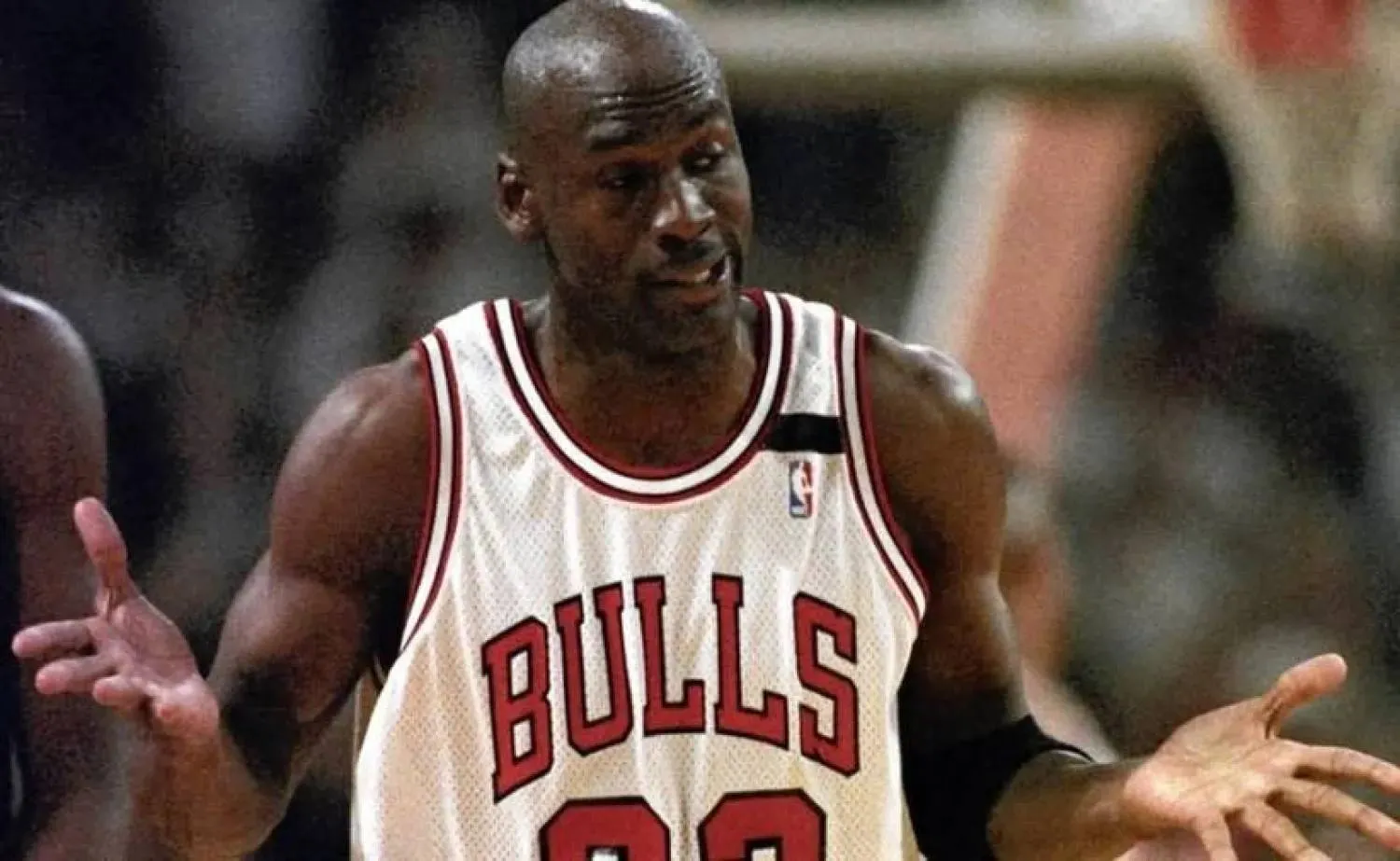
The No 23 jersey worn by Michael Jordan in his final regular-season game with the Chicago Bulls (Mike Blake/Reuters) 
TT

Michael Jordan's 'Last Dance' Jersey Sells for Record $12.26 Million

The No 23 jersey worn by Michael Jordan in his final regular-season game with the Chicago Bulls (Mike Blake/Reuters) 

A jersey worn by Michael Jordan during one of the most famous seasons of his career sold at auction for $12.26 million on Tuesday to become the most expensive basketball jersey to ever cross the block, according to CNN.

The white mesh top emblazoned with Jordan’s iconic number “23” was worn by the star during Game 3 of his legendary 1998 NBA Finals run. It was the end of his time with the Chicago Bulls, known as “The Last Dance,” which was chronicled in a 2020 ESPN and Netflix documentary series of the same name.

During the pivotal game against the Utah Jazz, Jordan delivered a crushing performance in front of a home-court crowd that helped shift the series in the Bulls’ favor, with Jordan ultimately leading the team to win its sixth championship in eight seasons.

The shirt is the only publicly known white game-winning jersey from the 1998 Finals ever put on sale, making it an extremely rare piece of memorabilia, according to Joopiter, the online auction house that hosted the sale.

“The significance of this jersey extends well beyond the box score,” Joopiter had written on its online auction listing.

“This is the type of object collectors wait a lifetime for — an irreplaceable artifact that transcends basketball to become a piece of global cultural history,” said Caitlin Donovan, the auction platform’s global head of sales, in a press release prior to the sale’s conclusion.

In becoming the most expensive basketball jersey ever sold at auction, the shirt surpassed the previous record set by another Jordan jersey from Game 1 of the same finals.

In 2022, a red jersey worn during that matchup where the Bulls lost, sold for $10.1 million, more than double initial estimates, CNN previously reported.

In 2021, a jersey also worn by the player during his sophomore season at the University of North Carolina set an auction record at the time when it sold for $1.38 million.

The current record for the most expensive sports collectible ever sold is held by Babe Ruth’s “Called Shot” jersey, which sold for $24.12 million in 2024. Ruth wore the jersey during Game 3 of the 1932 World Series, when he appeared to gesture toward something in center field just before hitting a fifth-inning home run into the bleachers, a story which is now part of baseball lore.