UAE, Egypt to Develop 10 GW Onshore Wind Energy Project

 The 10 GW wind farm will produce 47,790 GWh of clean energy annually. WAM
The 10 GW wind farm will produce 47,790 GWh of clean energy annually. WAM
TT

UAE, Egypt to Develop 10 GW Onshore Wind Energy Project

 The 10 GW wind farm will produce 47,790 GWh of clean energy annually. WAM
The 10 GW wind farm will produce 47,790 GWh of clean energy annually. WAM

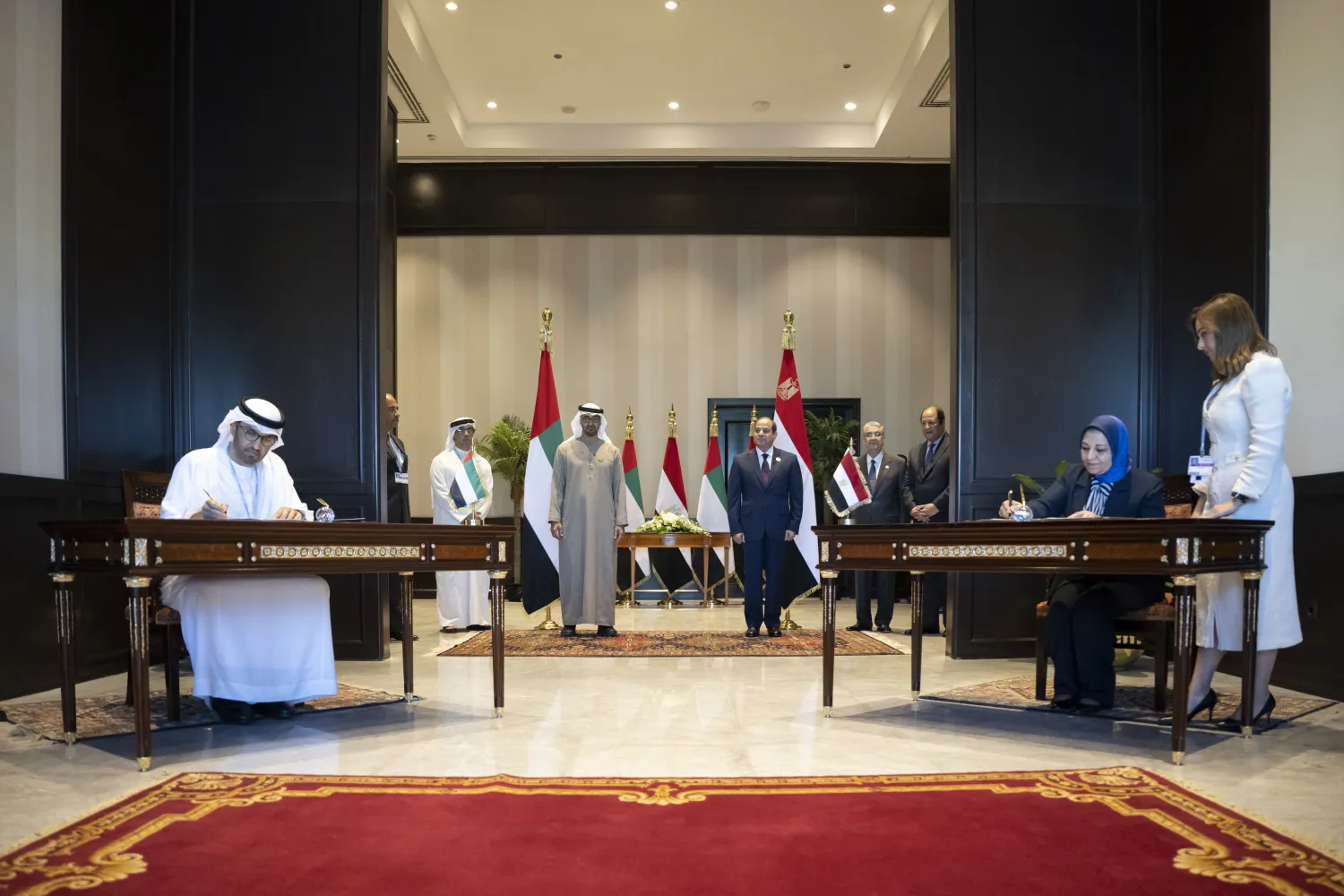
UAE President Sheikh Mohamed bin Zayed Al Nahyan and Egyptian President Abdel Fattah el-Sisi witnessed the signing of an agreement to develop a 10-gigawatt (GW) onshore wind project in Egypt, one of the largest wind farms in the world.

The agreement is between Masdar, one of the world’s fastest-growing renewable energy companies, along with its Infinity Power joint venture with Infinity, Egypt’s main renewable energy developer, and Hassan Allam Utilities.

The Memorandum of Understanding was signed Dr. Sultan Ahmed Al Jaber, UAE Minister of Industry and Advanced Technology, UAE Special Envoy for Climate, and Chairman of Masdar, and Dr. Mohamed Shaker El-Markabi, Egypt’s Minister of Electricity and Renewable Energy, on the sidelines of the 2022 United Nations Climate Change Conference (COP27) in Sharm El-Sheikh.

“The scale of this mega 10 GW onshore wind project – one of the largest winds farms in the world – is a testament to the renewable energy ambitions of the United Arab Emirates and the Republic of Egypt, and demonstrates Masdar’s status as a global leader in clean energy,” said Al Jaber said.

“The UAE and Masdar will continue to support Egypt’s net-zero goals, and we will endeavor to take forward the gains made here at COP27, as the UAE prepares to host COP28 next year.”

When completed, the 10 GW wind farm will produce 47,790 GWh of clean energy annually and offset 23.8 million tons of carbon dioxide emissions – equivalent to around 9 percent of Egypt’s current CO2 emissions.

The project will be part of Egypt’s Green Corridor initiative – a grid dedicated to renewable energy projects – and will contribute to Egypt’s goal of ensuring renewable energy makes up 42 percent of its energy mix by 2035.

The wind farm will also save Egypt an estimated $5 billion in annual natural gas costs, and help create as many as 100,000 jobs. Direct employment in the construction phase is estimated at around 30,000, with as many as 70,000 people being employed indirectly. After construction, around 3,200 jobs will be added for operation and maintenance.


Miras: Energy Security, Sustainability, or Affordability Cannot Be Sacrificed

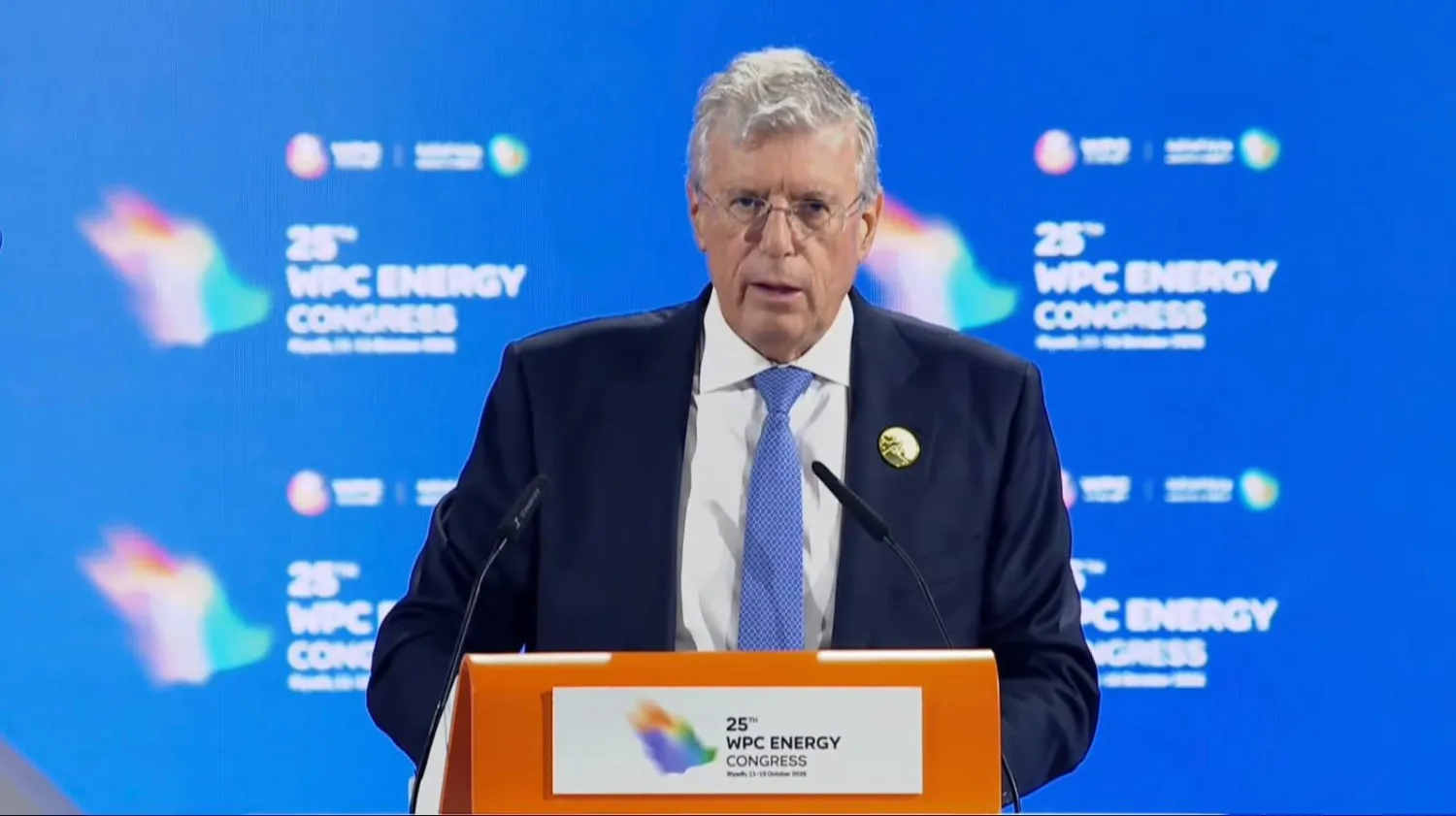
Pedro Miras addresses attendees as the 25th WPC kicks off in Riyadh (Asharq Al-Awsat)
TT

Miras: Energy Security, Sustainability, or Affordability Cannot Be Sacrificed

Pedro Miras addresses attendees as the 25th WPC kicks off in Riyadh (Asharq Al-Awsat)

Pedro Miras, President of WPC Energy, affirmed that the world needs more energy from multiple sources to keep pace with population and economic growth, emphasizing the necessity of balancing supply security, affordability, sustainability, and economic development, without sacrificing any of these priorities.

In his speech at the opening of the 25th WPC in Riyadh, Miras stated that Riyadh is the most suitable place to host the conference, noting the pivotal role Saudi Arabia plays in the global energy system, and its continued leadership in investments, innovation, and technological advancement in the sector.

He added that the conference, which gathers government and industry leaders, academics, technology experts, financiers, and international institutions over four days, serves as a platform to discuss ways to meet the world's increasing energy needs, while supporting prosperity, sustainability, and security for future generations.

He pointed out that the world is undergoing a period of profound transformations, significant challenges, and exceptional opportunities, with the global population expected to approach 10 billion by mid-century, accompanied by increased energy demand resulting from population growth, urbanization, and improved living standards.

He explained that energy consumption and human development have gone hand-in-hand throughout modern history, as the availability of energy has contributed to improving health, education, and living standards, emphasizing that continued human progress requires more energy.

He noted that oil and gas still provide a significant share of the world's energy needs, despite decades of innovation and growth in new technologies, considering this an affirmation of the scale of the upcoming challenge and the need to utilize multiple energy sources.

Four Pillars for the Future of Energy
Miras stressed that the challenge is no longer about choosing between energy security, affordability, and sustainability, but rather about achieving progress in these areas in parallel with economic development.

He stated that billions of people around the world aspire to improve their living conditions, access better health and education services, and broader economic opportunities, all of which require reliable energy availability and continued investment in its system.

He added that countries differ in their circumstances, resources, priorities, and developmental stages, which necessitates adopting diverse paths to achieve the future of energy and utilizing a wide range of technologies and solutions, noting that this diversity represents a source of strength.

He affirmed that technological neutrality remains one of the fundamental principles of the World Petroleum Council, allowing various energy sources and technologies to contribute to building a secure, affordable, and sustainable system.

Innovation Alone Is Not Enough Without Investment and Partnerships
Regarding technological developments, Miras said that artificial intelligence, digitalization, advanced materials, new fuels, hydrogen, and carbon capture, utilization, and storage technologies, along with other technologies, are reshaping the global energy landscape.

However, he stressed that technology alone is not enough to achieve the desired transformation, as it requires effective policies, stable and predictable regulatory frameworks, long-term investments, and enhanced international cooperation.

He explained that energy security remains essential for economic growth, social stability, and human well-being, and that a successful energy sector transformation cannot be achieved without ensuring supply security. Furthermore, the long-term sustainability of this security requires sufficient investments across various components of the energy system.

He added that no single country, company, or technology can address global energy challenges alone, emphasizing the importance of partnerships among governments, industry, academia, and international institutions.

Riyadh: A Platform for Global Dialogue
Miras expressed his appreciation to the Kingdom, the Minister of Energy, and the Saudi Minister of Industry and Mineral Resources, Prince Abdulaziz bin Salman, for their efforts in organizing and hosting the conference in Riyadh.

He stated that for over 90 years, the World Petroleum Council has provided a platform bringing together governments, industry, academia, and international institutions to exchange ideas, deepen understanding, and explore practical solutions for sector challenges.

He noted that the importance of dialogue and cooperation is increasing amid the uncertainty and fragmentation the world is experiencing, expressing his hope that the conference discussions will contribute to developing partnerships and exploring innovations that will shape the future of energy.

He concluded by affirming that the goal is to build an energy future that leaves no one behind, achieving progress in supply security, affordability, sustainability, and economic development, based on innovation, cooperation, and mutual respect.



Saudi Energy Minister: No Room for Fear in Our Vocabulary … No Wasted Opportunities to Realize Our Vision

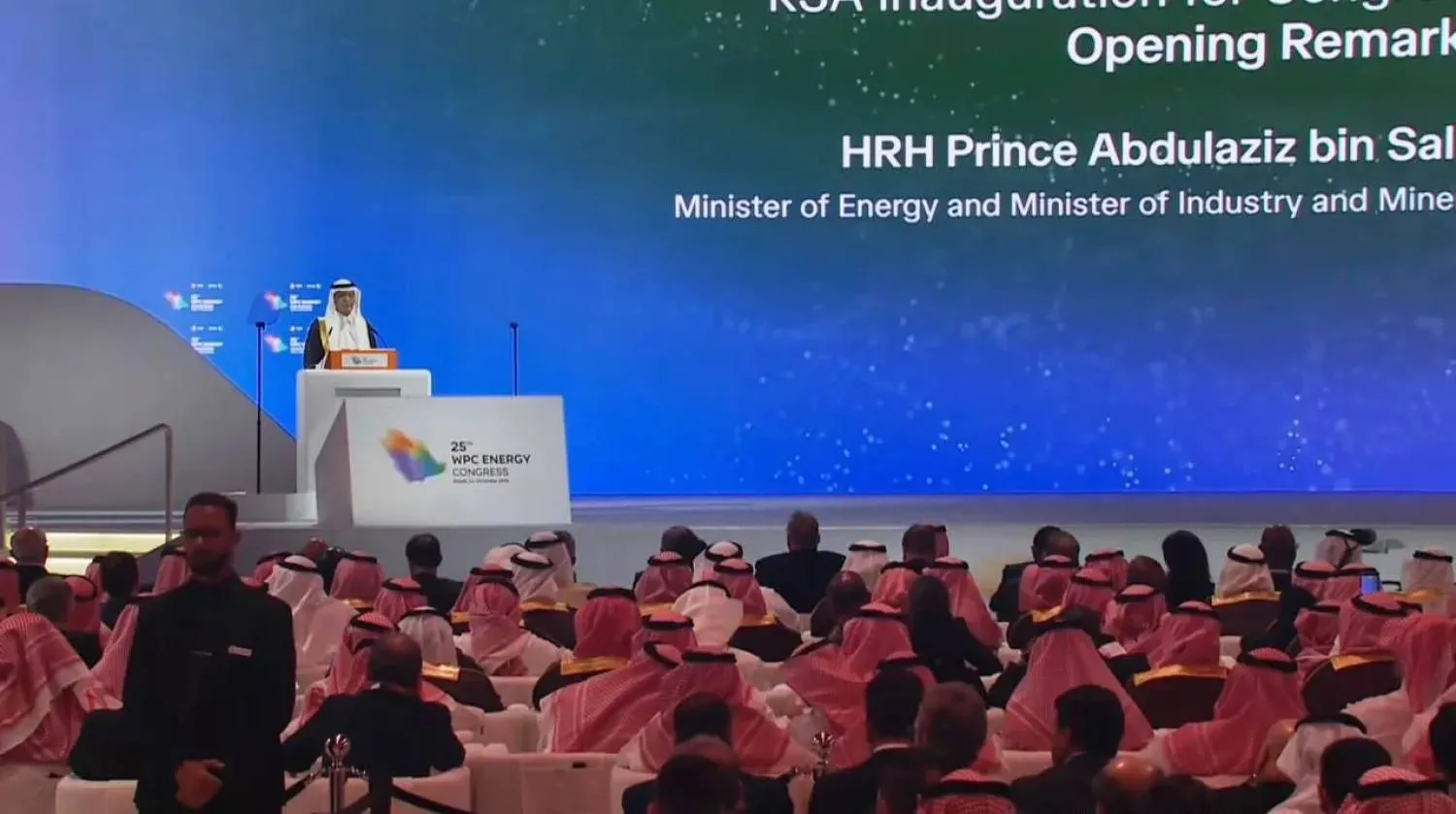
Saudi Energy Minister Prince Abdulaziz bin Salman speaks at the opening of the WPC Energy Congress (Asharq Al-Awsat)
TT

Saudi Energy Minister: No Room for Fear in Our Vocabulary … No Wasted Opportunities to Realize Our Vision

Saudi Energy Minister Prince Abdulaziz bin Salman speaks at the opening of the WPC Energy Congress (Asharq Al-Awsat)

Saudi Energy Minister Prince Abdulaziz bin Salman said there was “no room for fear in the vocabulary of Saudis,” stressing that the resilience of the kingdom’s energy system and the determination of its people strengthened its ability to weather crises, ensure uninterrupted supplies and continue its transformation drive toward the goals of Vision 2030.

He also highlighted the importance of long-term investment in infrastructure, developing supply chains and localizing industries to help Saudi Arabia navigate global challenges and changes while preserving opportunities for future generations in a more sustainable future.

Prince Abdulaziz made the remarks in his opening address at the 25th WPC Energy Congress, held as part of Riyadh Energy Week on Monday, in the presence of a large number of ministers, officials and industry leaders.

He said recent experiences had demonstrated the importance of advance preparedness and building an energy system capable of adapting to different circumstances. Resilience, he added, was measured not only by a system’s ability to withstand disruptions, but also by its capacity to repair damage, restore operations and continue meeting market needs.

Prince Abdulaziz stressed that energy system resilience and reliable supplies were fundamental to addressing global challenges and changing conditions. He said the kingdom would continue investing in energy infrastructure, developing supply chains and strengthening human capabilities and modern technologies to ensure uninterrupted supplies under all circumstances.

He said the conference was being held at a pivotal moment for the global energy sector, adding that Saudi Arabia’s hosting of participants in its capital reflected the kingdom’s commitment to providing a safe environment and that the safety of its guests was a top priority.

The meeting, he said, embodied a commitment to prudent decision-making, practical cooperation and a shared sense of responsibility within the energy community, as the sector faces mounting challenges related to energy security and supply stability that are testing the resilience and adaptability of countries and economic systems.

Prince Abdulaziz said Saudi Arabia had invested over the years in developing infrastructure, improving supply chain efficiency and building human capabilities to ensure the energy system was prepared to cope with exceptional circumstances.

He cited the East-West oil pipeline as a key example of infrastructure that provides alternative routes for transporting oil to markets, strengthening the kingdom’s ability to manage risks that could disrupt traditional supply routes.

These capabilities, he said, had not been developed overnight, but were the result of years of planning, development and operational experience, supported by Saudi Aramco’s technical and operational expertise, industrial capabilities and transportation and supply networks, which help ensure business continuity under varying conditions.

Localizing supply chains

Prince Abdulaziz bin Salman stressed the importance of localizing supply chains and increasing local content, describing them as strategic objectives for Saudi Arabia. He cited Saudi Aramco’s announcement that it had achieved a 70% local content rate, a milestone reflecting the growing capabilities of national industries and their role in strengthening the sector’s resilience.

The minister said the value of these investments becomes more apparent when global supply chains are disrupted, as advanced systems and domestic capabilities help address gaps and mitigate the impact of interruptions, supporting energy system stability and ensuring continued operations.

He said resilience depends on skilled personnel, technical expertise and rapid response, enabling critical facilities to recover from damage and maintain services.

The energy minister reaffirmed the kingdom’s commitment to continued investment across the energy sector, developing new technologies and reducing emissions, while also investing in national talent and preparing future generations.

Implementing the vision

Prince Abdulaziz bin Salman said Saudi Arabia aims to build an energy system capable of sustained success and adapting to changing circumstances while safeguarding the security and sustainability of supplies.

He stressed that the kingdom has the resources needed to sustain economic growth and pursue its development vision, supporting the prosperity of its people and strengthening international partnerships.

While no one can predict when current conditions will end, recent experience underscores the importance of preparing for the future, developing solutions before they are needed and strengthening the ability to respond to rapidly changing demands, he said.

Prince Abdulaziz called for Riyadh to serve as a platform for deeper cooperation and translating international partnerships into practical action, with discussions focused on meeting global energy needs, reducing emissions and strengthening resilience to crises and challenges.

He said the world needed reliable partners and leaders willing to make long-term strategic decisions, reaffirming that Saudi Arabia would continue to play its role in the energy sector through an approach based on prudence, openness and expanding international partnerships.

He concluded by welcoming participants to Riyadh and calling for joint efforts to build a secure and resilient energy future that ensures reliable supplies and meets the needs of societies and economies worldwide.


Stocks Rise as Oil Prices Tumble after Trump Hails 'Energy Ceasefire'

A financial data screen in the dealing room of Hana Bank shows the benchmark Korea Composite Stock Price Index (KOSPI) having fallen 0.69 percent from the previous session to an intraday low of 6,580.01 in early trading in Seoul, South Korea, 12 October 2026. EPA/YONHAP SOUTH KOREA OUT
TT

Stocks Rise as Oil Prices Tumble after Trump Hails 'Energy Ceasefire'

A financial data screen in the dealing room of Hana Bank shows the benchmark Korea Composite Stock Price Index (KOSPI) having fallen 0.69 percent from the previous session to an intraday low of 6,580.01 in early trading in Seoul, South Korea, 12 October 2026. EPA/YONHAP SOUTH KOREA OUT

Most stock markets rose Monday as oil prices tumbled after Donald Trump announced an "energy ceasefire" between Russia and Ukraine.

Both main crude contracts sank more than one percent following the US president's declaration, even as it sparked astonishment in Kyiv, which also said Moscow had struck multiple power plants in the country.

"Effective immediately, there is an ENERGY CEASEFIRE in the War between Russia and Ukraine," Trump said early Sunday on Truth Social. "Both parties have agreed. Do not break it!"

His post came after he called on Ukrainian President Volodymyr Zelensky to halt attacks on Russian refineries and said it was "time for Ukraine to get a new president" who would finally settle the war.

Zelensky appeared to express surprise at the announcement, saying he was seeking further details, but added that "Ukraine supports the ceasefire, and it is important that Russia support it as well".

Russia has yet to confirm its agreement.

While the announcement was welcomed by Ukraine's allies, Trump had come under fire after declaring a temporary easing of US sanctions on Russian diesel, which European leaders and Kyiv said would only embolden Russian President Vladimir Putin.

"The market is no longer paying full geopolitical premium on every headline, and that is probably the most useful signal in the morning price action," wrote SPI Asset Management's Stephen Innes.

"A strike matters if it threatens real barrels, shipping lanes, refining capacity or insurance costs; otherwise, the market is getting increasingly reluctant to pay up simply because the geopolitical ticker flashes red.

"The physical market remains tight enough to keep Brent above $100, but futures are refusing to treat every new escalation as the start of another straight-line inflation shock."

The drop in oil prices provided support to most Asian markets, with Hong Kong, Sydney, Singapore, Wellington and Manila all up.

But Seoul and Taipei were dragged by losses in chipmakers SK hynix, Samsung and TSMC. Tokyo was closed for a holiday.

US futures were sharply higher.

Investors are also gearing up for the release of key US inflation and retail sales data, which could play a big role in the Federal Reserve's decision-making regarding interest rates. The bank is due to meet at the end of October.

Also in view is the beginning of earnings season this week, with banking giants JP Morgan, Goldman Sachs and Bank of America due to report.

Tech giants will follow later in the month and November, with traders keen to get an idea on the outlook for the AI sector in light of the vast sums of cash pumped into it in recent years.