


Algeria, China Sign a Strategic Cooperation Plan

Algerian and Chinese foreign ministers sign the first cooperation plan in 2017 (Embassy of the People's Republic of China in Algeria)
TT

Algeria, China Sign a Strategic Cooperation Plan

Algerian and Chinese foreign ministers sign the first cooperation plan in 2017 (Embassy of the People's Republic of China in Algeria)

Algeria and China have signed the second five-year comprehensive strategic cooperation plan 2022-2026, Algeria’s ministry of foreign affairs and national community abroad said Tuesday in a statement.

This comes one day after the Algerian government submitted an official request to join the political and economic BRICS group that includes Russia and China.

Observers see that this step indicates that Algeria aims to reinforce its choice of allies.

The statement said the pact was signed by Algerian Foreign Minister Ramtane Lamamra and his Chinese counterpart Wang Yi

According to the ministry, the plan aims to strengthen bilateral cooperation in different fields, including economy, industry, energy, space, and culture.

“The two sides intend to take the opportunity to implement this five-year plan to deepen practical cooperation between them in all fields, ensure the continuous enrichment of the elements of the comprehensive strategic bilateral partnership, and bring benefits to both friendly countries and peoples”, the statement read.

Both countries launched the first cooperation plan on 7 June 2017, and it was the first of its kind experience for China with an Arab state.

Foreign Ministry official Leyla Zarruki said that Algeria has officially requested to join the BRICS economic group.

Sputnik reported that Moscow welcomed Algeria's intention to join the BRICS, Russian Deputy Foreign Minister Mikhail Bogdanov said on Tuesday.

"Of course, we welcome the desire of our partners and like-minded people to join the work of such formats as BRICS, SCO [Shanghai Cooperation Organization]. We have a trust-based dialogue with Algeria, it is being maintained," Bogdanov said.

BRICS, an emerging-market group that includes Brazil, Russia, India, China, and South Africa, represents approximately 40 percent of the global population and accounts for about 25 percent of the global economy.

Faysal Izdarin, an Algerian researcher in political sociology residing in France, confirmed that Algeria would benefit from joining BRICS and will acquire the required support as part of its plan to diversify the economy and explore investment opportunities.


Lebanon Says Israeli Strike on South Wounds Two, Damages Ambulance

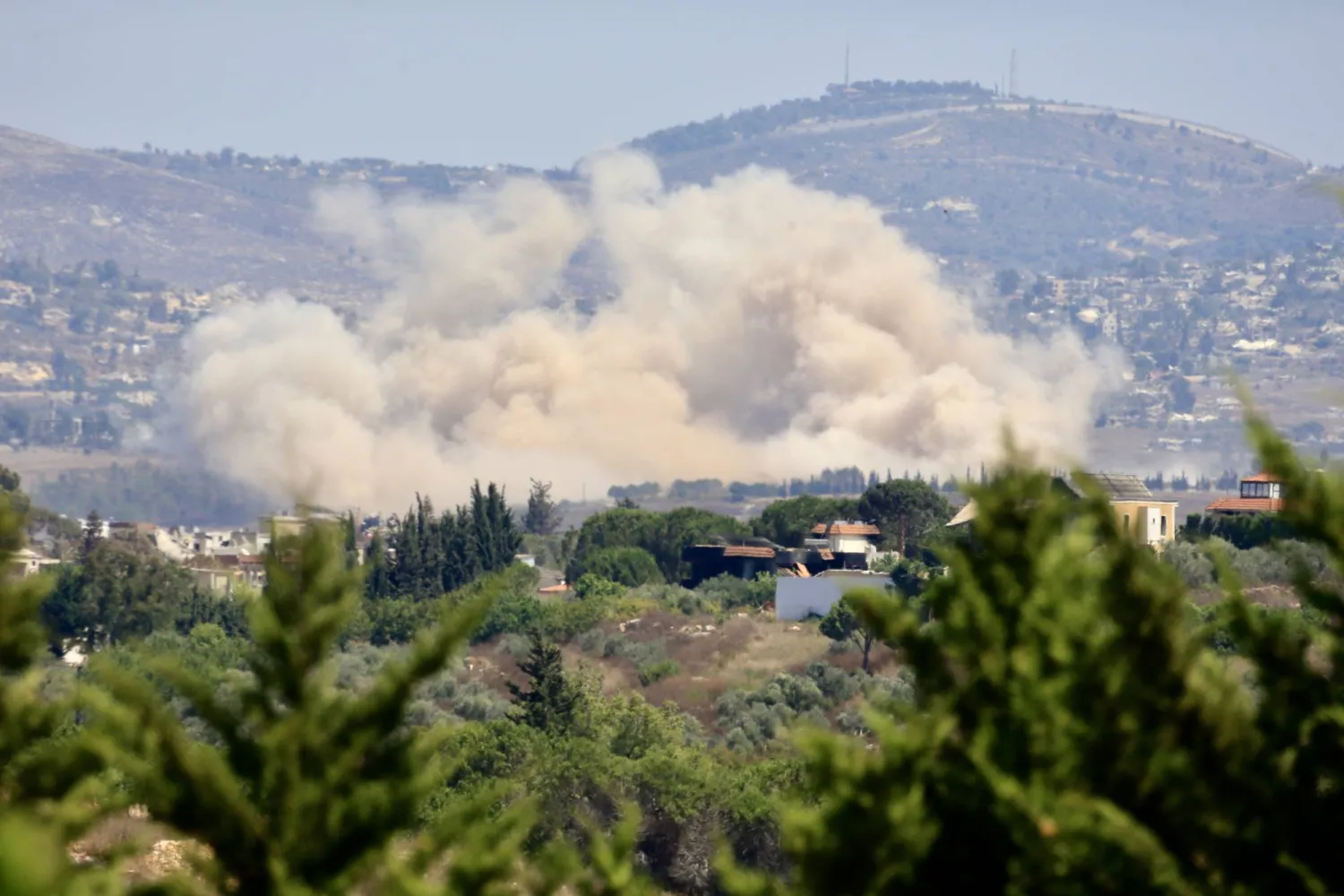
Smoke rises following an Israeli airstrike in the town of Deir Seryan as seen from the 'pilot zone' village of Zawtar al-Gharbiyah, Nabatieh Governorate, southern Lebanon, 31 July 2026, following a US-brokered security agreement between Lebanon and Israel. EPA/STRINGER
TT

Lebanon Says Israeli Strike on South Wounds Two, Damages Ambulance

Smoke rises following an Israeli airstrike in the town of Deir Seryan as seen from the 'pilot zone' village of Zawtar al-Gharbiyah, Nabatieh Governorate, southern Lebanon, 31 July 2026, following a US-brokered security agreement between Lebanon and Israel. EPA/STRINGER

An Israeli double-tap strike on southern Lebanon wounded two people on Tuesday and damaged an ambulance, the Lebanese health ministry said, condemning the "continued targeting" of rescuers. 

The incident is the latest Israeli strike despite an ongoing truce in the war between Israel and Iran-backed Hezbollah. 

Lebanon's state-run National News Agency said the strike targeted a vehicle in the southern city of Nabatieh, with the health ministry reported two wounded. 

The ministry said the Israeli military struck again when rescuers from the Risala Scouts Association, linked to the Hezbollah-allied Amal movement, came to the scene, damaging the ambulance. 

"The ministry reiterates its condemnation of the enemy's continued targeting of rescue teams, which constitutes an unacceptable violation of international humanitarian law and all international norms," it said. 

Lebanon's civil defense meanwhile said that its personnel were targeted by an Israeli drone strike while they were trying to extinguish a bushfire, also in the Nabatieh area. 

No one was wounded, but the incident forced them to leave. 

Hezbollah drew Lebanon into the Middle East war in March with rocket fire at Israel in support of its backer Iran. 

Israel responded with heavy air strikes and a ground invasion that Lebanon says have killed more than 4,300 people. 

While violence has significantly decreased since the signing of a US-Iran memorandum of understanding in June and a framework agreement between Lebanon and Israel days later, Beirut still reports intermittent Israeli strikes and demolitions. 

The Israel-Lebanon deal involves the disarmament of Hezbollah, a gradual withdrawal of Israeli forces from south Lebanon and the deployment of the Lebanese army to the region, starting in two "pilot zones". 

Hezbollah rejects the deal and refuses to disarm. 


Syria Sentences Bashar Al-Assad to Death in Absentia Over Atrocities

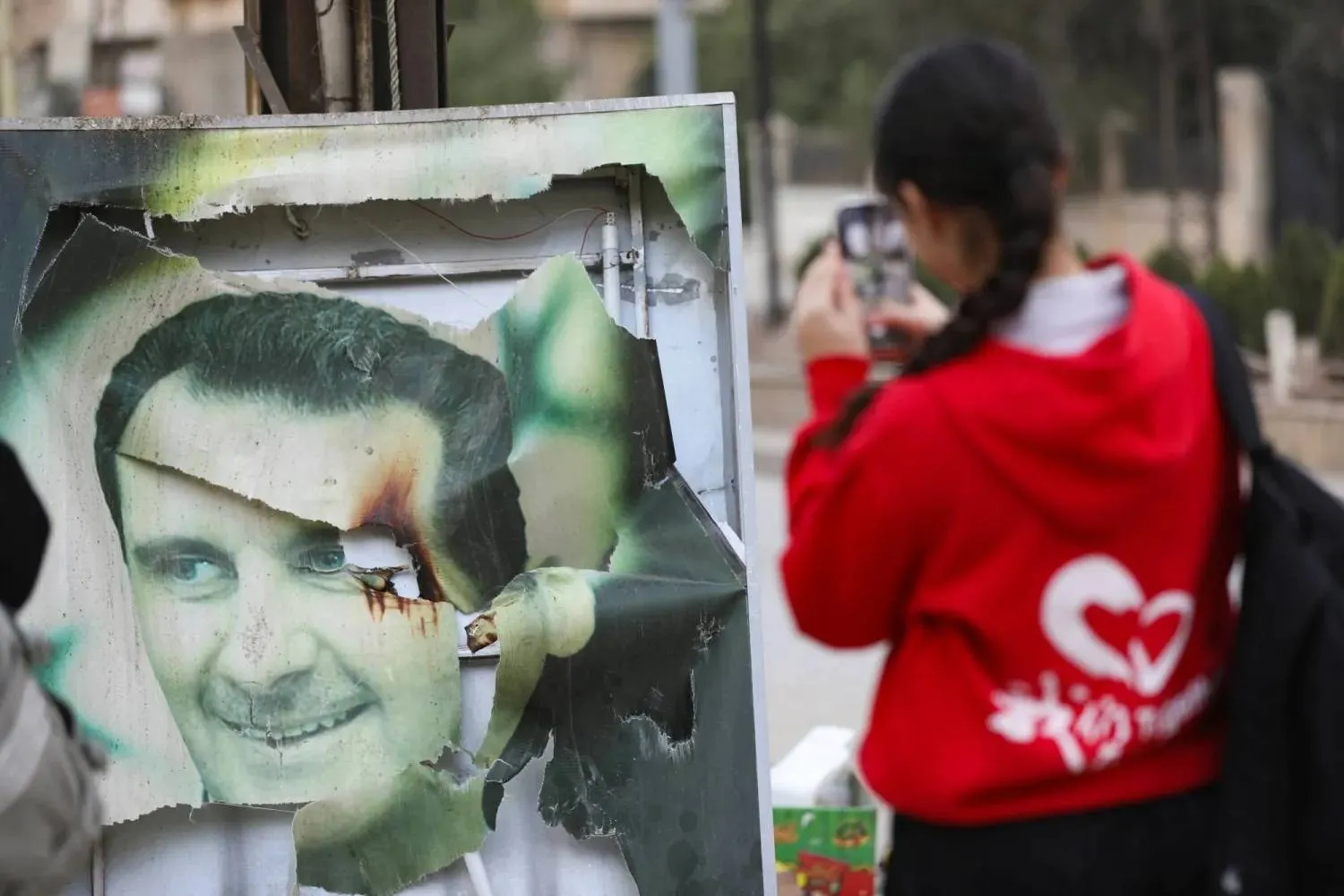
A woman uses her mobile phone near a damaged picture of ousted Syrian ruler Bashar al-Assad as people celebrate, after the Syrian opposition announced that they have ousted President Bashar al-Assad, in Qamishli, Syria December 8, 2024. REUTERS/Orhan Qereman
TT

Syria Sentences Bashar Al-Assad to Death in Absentia Over Atrocities

A woman uses her mobile phone near a damaged picture of ousted Syrian ruler Bashar al-Assad as people celebrate, after the Syrian opposition announced that they have ousted President Bashar al-Assad, in Qamishli, Syria December 8, 2024. REUTERS/Orhan Qereman

A Syrian court on Tuesday sentenced former ruler Bashar al-Assad to death after a trial in absentia, convicting him of atrocities committed during the country's nearly 14-year civil war. 

It is the first such ruling under Syria's transitional leaders who ousted Assad in December 2024, vowing to provide justice and accountability for crimes committed under his rule. 

Assad fled to Moscow as opposition forces closed in on Damascus after a lightning offensive. 

At a court in Damascus, Judge Fakhr al-Din al-Aryan convicted Assad for crimes including "premeditated murder, the intentional killing of more than one person, the intentional killing of children under 15 years... torture, torture leading to death, and deprivation of liberty on multiple occasions -- classified as crimes against humanity and war crimes". 

"He is therefore sentenced to death." 

Syria in April began proceedings against Assad and other officials accused in person and in absentia of atrocities during the country's civil war, which erupted with the former authorities' brutal repression of peaceful pro-democracy protesters. 

More than half a million people were killed and millions displaced, while tens of thousands of people disappeared, many into the country's brutal prison system. 

The court also sentenced six former military and security officials in absentia to death including Assad's brother Maher, who ran the army's elite Fourth Division and also fled the country. 

Those convicted included former defense minister Fahd al-Freij and Louay al-Ali, who headed military intelligence in Daraa province in 2011. 

- Torture - 

The court convicted the officials for crimes including murder, incitement to murder, torture leading to death and repeated deprivation of liberty, also considered "crimes against humanity" and "war crimes". 

Former security official Atif Najib -- the only one in the dock -- was also sentenced to death for "crimes against humanity" committed when he was head of political security in Daraa province, the cradle of the country's 2011 uprising. 

Najib, a cousin of Assad who was arrested in January last year, was convicted for crimes including murder, "the intentional killing of children under 15", and "torture leading to death". 

The acts attributed to him are "crimes against humanity", the court said as it handed down "the harshest punishment against him, which is the death penalty". 

Syria's uprising began in Daraa in March 2011, after 15 students were arrested for allegedly writing anti-government slogans on the city's walls. 

Residents said the students were tortured, leading to a protest to demand their release that ended in bloodshed. 

Security personnel suppressed peaceful demonstrations with force and fired live ammunition to disperse sit-ins at several locations. 

Najib was dismissed after the crackdown, as the protests spread to other provinces. 

Aryan said Najib had denied the charges against him and showed "no remorse". 

Assad took the Syrian presidency in 2000 after the death of his father Hafez. 


Lebanon’s Ali al-Taher Back at Center of Escalation

The Ali al-Taher Heights, located east of the city of Nabatieh in southern Lebanon, with the towns of Kafr Tebnit and Nabatieh al-Fawqa in the foreground. (Asharq Al-Awsat).
TT

Lebanon’s Ali al-Taher Back at Center of Escalation

The Ali al-Taher Heights, located east of the city of Nabatieh in southern Lebanon, with the towns of Kafr Tebnit and Nabatieh al-Fawqa in the foreground. (Asharq Al-Awsat).

Intensified Israeli operations have thrust the Ali al-Taher Heights back to the forefront of tensions in southern Lebanon, days after the town of Mansouri came under Israeli attack.

Repeated artillery fire and strikes have targeted the heights and surrounding areas amid Israeli claims of underground military facilities in the area.

Israeli Prime Minister Benjamin Netanyahu announced Sunday that his army was carrying out a “highly important operation” in Lebanon, specifically citing the targeting of operatives at Ali al-Taher.

Some assessments link the intensity of Israeli operations to the area’s strategic importance and the possibility that Israel may seek to expand its control there. Others view the developments within the broader issue of Hezbollah’s weapons, while the US position remains a key factor in determining the scope and timing of any wider Israeli action.

Heavy shelling

Ali al-Taher came under intense Israeli artillery fire overnight Sunday into Monday, continuing until dawn. Local reports said that more than 70 shells struck the area. The attacks continued Monday morning with drone strikes, while shelling hit the area between Zawtar and Mayfadoun.

Netanyahu adviser Dmitry Gendelman maintained that “Israel would remain in the security zone and act independently to dismantle Hezbollah’s military infrastructure.

Gendelman said Ali al-Taher contained a Hezbollah command center, and claimed the destruction of a tunnel complex beneath Beaufort Castle, along with operations targeting the group’s infrastructure, personnel and weapons.

Israeli claims of having seized the hill come amid conflicting accounts over the nature of its presence there and underground facilities in the area. Reports have suggested that operatives remain inside a facility and that efforts are underway to encircle them and cut supply routes.

Missed opportunity

Retired Brig. Gen. Yaarob Sakher said Lebanon missed a “golden opportunity” at Ali al-Taher, arguing that Hezbollah could have handed the area over to the Lebanese Army as an additional pilot zone.

“There was a golden opportunity for Lebanon at Ali al-Taher,” Sakher told Asharq Al-Awsat. “Hezbollah could have handed it over to the Lebanese Army, which would enter and take control, but the party refused.”

In his assessment, the refusal gave Israel an opportunity to harden its position. He added that Hezbollah is unlikely to surrender the area because of its military significance.

“We do not know everything that is there, but Ali al-Taher appears to contain what could be described as a major operations room, alongside an extensive tunnel network believed to connect with other areas,” he explained.

Sakher added that circulating information points to the possible presence of weapons and ammunition depots and senior personnel, noting that Hezbollah’s determination to hold the area suggests it carries considerable importance.

Beyond Ali al-Taher

Retired Brig. Gen. Khaled Hamadeh, by contrast, cautioned against reducing the escalation to the fate of the heights, viewing the intensified bombardment as part of a broader Israeli course of action.

“The issue goes beyond Ali al-Taher, and we are heading toward further escalation,” Hamadeh told Asharq Al-Awsat, linking the developments to Israeli operations in other southern areas, including Mansouri and Zawtar.

In his view, Israel “will not allow any security or military surprise in areas it considers sensitive,” and the operations are intended to send a message beyond any single position on the ground.

“The fundamental issue is not Ali al-Taher or any particular military position, but Hezbollah’s weapons,” he stressed.

Israel is acting on the premise that the framework agreement with Lebanon requires the weapons to be addressed and that the current situation will leave the door open to further strikes, he remarked.

“The main problem lies in the lack of political will to disarm Hezbollah,” he added.