Arab Parliamentarians Discuss Financial Fraud, Cybersecurity in Jeddahhttps://english.aawsat.com/home/article/3990206/arab-parliamentarians-discuss-financial-fraud-cybersecurity-jeddah
Arab Parliamentarians Discuss Financial Fraud, Cybersecurity in Jeddah
A 3D printed model of men working on computers are seen in front of displayed binary code and words "Hacker" in this illustration taken, July 5, 2021. REUTERS/Dado Ruvic/Illustration
Arab Parliamentarians Discuss Financial Fraud, Cybersecurity in Jeddah
A 3D printed model of men working on computers are seen in front of displayed binary code and words "Hacker" in this illustration taken, July 5, 2021. REUTERS/Dado Ruvic/Illustration
Under the title, “Issues of Financial Fraud, Cyber Security and Their Link to Transnational Organized Crimes”, the second annual meeting of the Arab Parliamentarian Assembly will kick off in Jeddah on Wednesday, with the participation of representatives from the United Nations Office on Drugs and Crime (UNODC) and the International Organization for Migration (IOM).
Organized by the Public Prosecution, the meeting will discuss the international legal framework and the best practices for combating cross-border financial fraud crimes.
Participants will also review the modern methods used in transnational organized crimes, and the role of international organizations in combating them, in addition to the use of cyber-security and modern investigation mechanisms to curb financial fraud crimes.
Saudi Arabia’s hosting of the meeting comes in line with the directives of the Custodian of the Two Holy Mosques, King Salman bin Abdulaziz, and Crown Prince and Prime Minister Prince Mohammad bin Salman, to strengthen and develop relations with Arab countries, and to build bridges of continuous communication, with the aim to combat the dangers of transnational organized crimes and limit their impact on the economies of individuals and society.
The meeting will also emphasize the need to reach legal integration in order to achieve criminal justice, and will review the best practices to confront the spread of financial fraud, as well as the means to overcome the obstacles that could hinder international judicial cooperation.
Saudi Arabia: Global Energy Security and Supply Chain Sustainability Are Shared International Responsibilitieshttps://english.aawsat.com/gulf/5331574-saudi-arabia-global-energy-security-and-supply-chain-sustainability-are-shared
Saudi Arabia: Global Energy Security and Supply Chain Sustainability Are Shared International Responsibilities
Custodian of the Two Holy Mosques King Salman bin Abdulaziz Al Saud chaired the Cabinet session held on Tuesday in Riyadh - SPA
Custodian of the Two Holy Mosques King Salman bin Abdulaziz Al Saud chaired the Cabinet session held on Tuesday in Riyadh.
The Cabinet was briefed on the letter the Custodian of the Two Holy Mosques received from Emir of Qatar Sheikh Tamim bin Hamad Al Thani, and on the meeting between Prince Mohammed bin Salman bin Abdulaziz Al Saud, Crown Prince and Prime Minister, and Iraqi Prime Minister Ali Faleh Al-Zaidi.
In a statement to the Saudi Press Agency following the session, Minister of Media Salman Al-Dossary said that the Cabinet reviewed regional and international developments and the Kingdom's efforts, through communication and consultation with brotherly and friendly countries, to promote regional stability and mitigate the repercussions of conflicts and tensions on global energy security, international trade, supply chain sustainability, and maritime navigation, all of which are shared responsibilities requiring international cooperation to protect the global economy from risks that could affect the entire world.
The Cabinet welcomed the UN Security Council members' presidential statement, which condemned the terrorist Houthi militia's attacks on civilian assets, airports, and energy infrastructure in Saudi Arabia, as well as the continued threats to maritime navigation in the Red Sea and the Bab al-Mandab Strait.
The statement emphasized the importance of fully implementing UN Security Council Resolution 2216 and subsequent resolutions, and called for practical cooperation to prevent the terrorist group from obtaining weapons and other forms of support.
The Cabinet commended the decision by the Council of Foreign Ministers of the Organization of Islamic Cooperation (OIC) to establish an OIC council of ministers of cybersecurity and designate Riyadh as the headquarters of its general secretariat and executive office. The decision followed a proposal submitted by Saudi Arabia as part of its efforts to promote stability in cyberspace and host regional and international cybersecurity headquarters and entities, building on its strong record of supporting strategic initiatives in this field.
The Cabinet also reviewed the outcomes of several international conferences hosted by the Kingdom, commending the recommendations issued by the Riyadh Economic Forum, which will contribute to serving the national economic system, strengthening economic policies and directions, and consolidating the complementary partnership between the public and private sectors, in line with the intended targets and comprehensive development transformations.
The Cabinet considered the 33.5% increase in foreign direct investment in Saudi Arabia in 2025, compared to 2024, as a testament to the Saudi economy's attractiveness and promising future prospects, as well as the effectiveness of the economic and structural reforms implemented in recent years under Saudi Vision 2030.
Official Spokesman for the Coalition to Restore Legitimacy in Yemen Major General Turki Al-Malki (Asharq Al-Awsat)
Saudi forces on Tuesday intercepted a ballistic missile aimed at the Kingdom's capital, the Coalition to Restore Legitimacy in Yemen said.
The Kingdom "intercepted and destroyed a ballistic missile launched by the terrorist Houthi militia towards Riyadh,” Coalition Spokesman Major General Turki Al-Malki said in a post on X.
Earlier, the Saudi civil defense said in a statement on X that a warning had been issued by the National Early Warning Platform in Riyadh City to alert for a potential danger.
Egypt Extends to Next Week Discussions on Military Support for Saudi Arabiahttps://english.aawsat.com/gulf/5331401-egypt-extends-next-week-discussions-military-support-saudi-arabia
Egypt Extends to Next Week Discussions on Military Support for Saudi Arabia
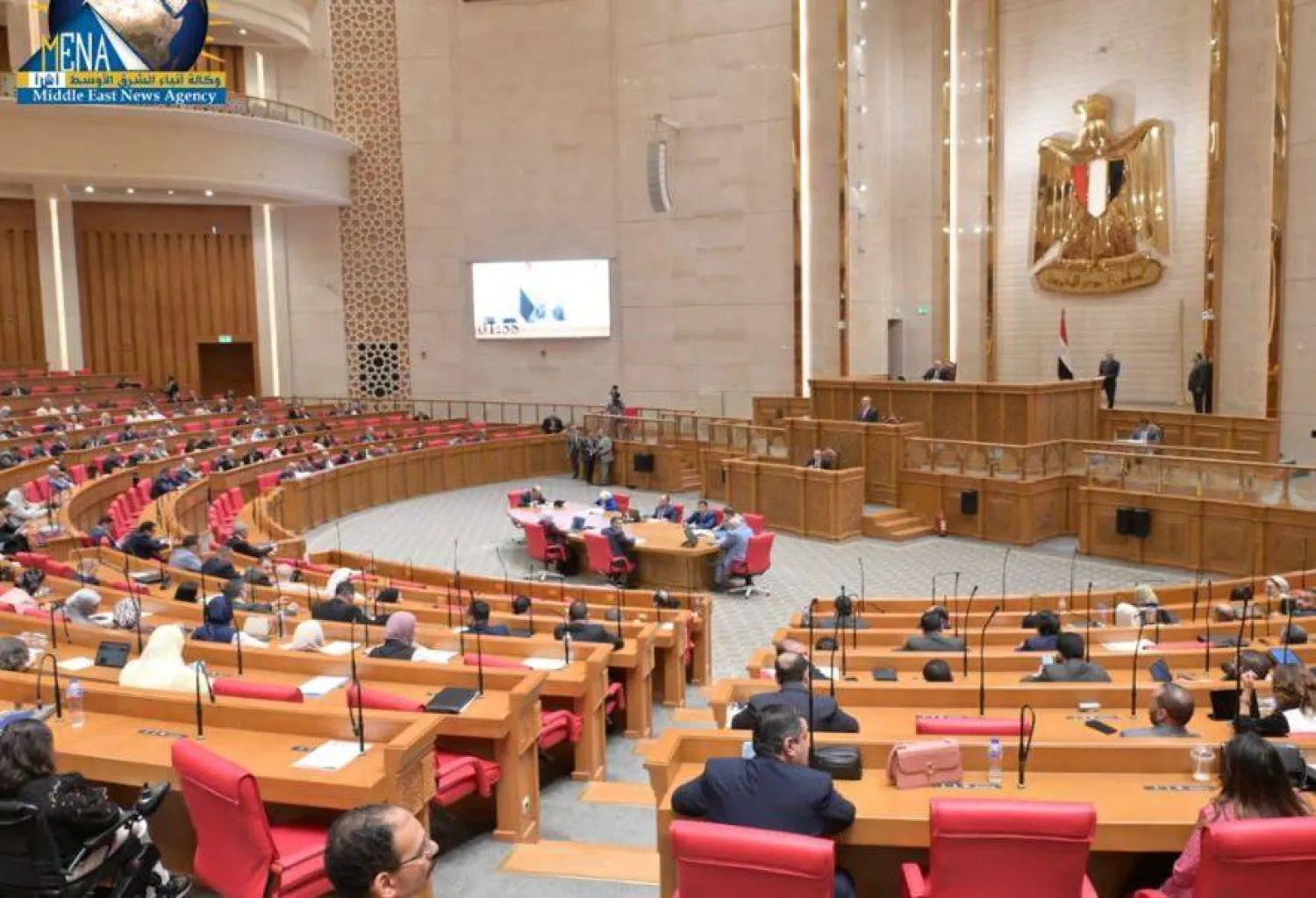
The Egyptian parliament in session. (MENA file)
The Egyptian parliament extended to next week on Monday discussions on President Abdel Fattah al-Sisi's authorization to provide military support to Saudi Arabia, a move that observers have interpreted as a "desire for further clarification on the nature of the Egyptian action."
On Saturday, Sisi requested that parliament hold an emergency session to authorize the defense of Gulf states, stressing that his country is "ready to implement any measure requested by Saudi Arabia to protect its security." This was followed by two parliamentary sessions on Sunday and Monday to discuss the issue.
At the conclusion of Monday's meeting, Speaker Hisham Badawi decided to adjourn the sessions until October 26 to resume discussions.
Parliamentary sources said the decision stemmed from the high number of requests from MPs to speak. The sources told Asharq Al-Awsat that the discussions over the two days witnessed broad support for the Kingdom, as well as several requests to clarify the nature of the support, and how Egypt will defend its security and stability.
They added: "In light of hundreds of requests received from MPs to speak, and given the nature of the issue, discussions were extended to next week for further clarifications."
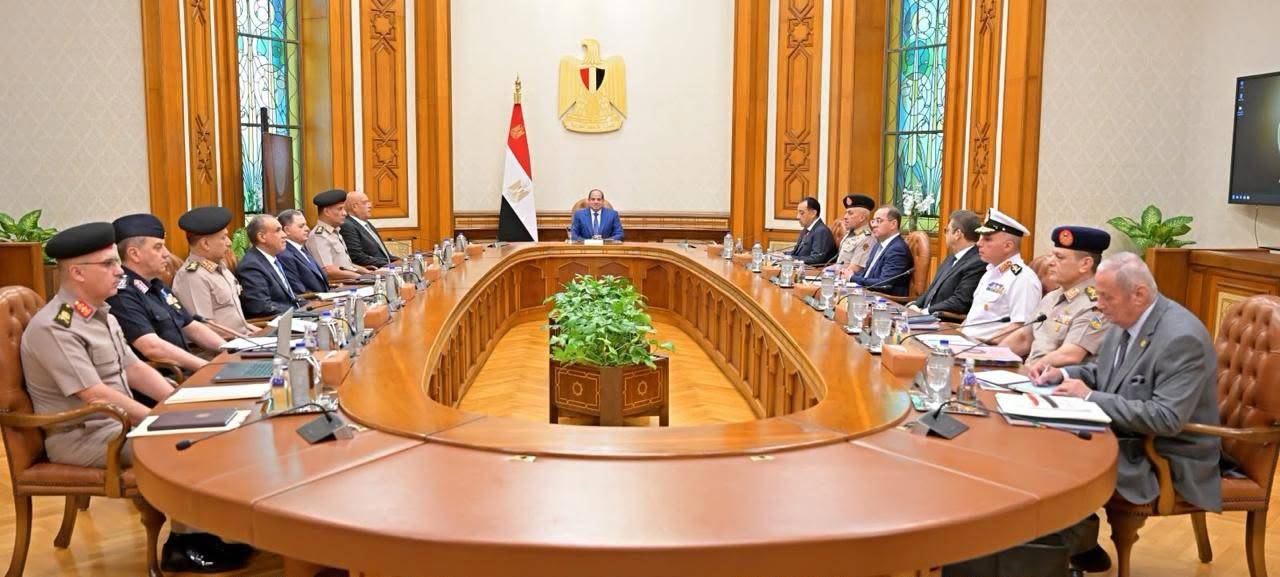
Egyptian President Abdel Fattah al-Sisi chairs a National Defense Council meeting at Ittihadiya Palace on Sunday. (Egyptian Presidency)
This was confirmed by Dr. Abdel Moneim Said, a former member of the Senate, who told Asharq Al-Awsat: "Given the importance of the subject, it was only natural that the discussions would be extended."
He added: "All aspects of the issue must be addressed, starting with the nature of the Egyptian action to defensively support the Kingdom, through to its implications and cost," noting that "the issue enjoys broad support; given its impact on Egyptian national security, which cannot be separated from Gulf security."
Article 152 of the Egyptian Constitution stipulates that "the President of the Republic is the Supreme Commander of the Armed Forces, and shall not declare war, nor send the Armed Forces on a combat mission outside the borders of the State, except after taking the opinion of the National Defense Council, and obtaining the approval of the parliament by a two-thirds majority of its members."
It adds that "if the parliament is dissolved, the opinion of the Supreme Council of the Armed Forces must be taken, alongside the approval of both the Cabinet and the National Defense Council."
Following a meeting chaired by Sisi on Sunday, the National Defense Council decided on "absolute alignment and complete solidarity with Saudi Arabia, and to provide all necessary and possible forms of support to the Kingdom to defend its security and stability, and to safeguard its capabilities, territorial integrity, and Islamic holy sites."
Political parties and MPs stressed their support for the Kingdom.
In a statement on Sunday, the Wafd Party announced its backing, stating that "the security of the Kingdom and Red Sea, and Arab countries bordering it, are closely linked to Egyptian and Arab national security."
لم تشترك بعد
انشئ حساباً خاصاً بك لتحصل على أخبار مخصصة لك ولتتمتع بخاصية حفظ المقالات وتتلقى نشراتنا البريدية المتنوعة