


What Could a World without Twitter Look Like?

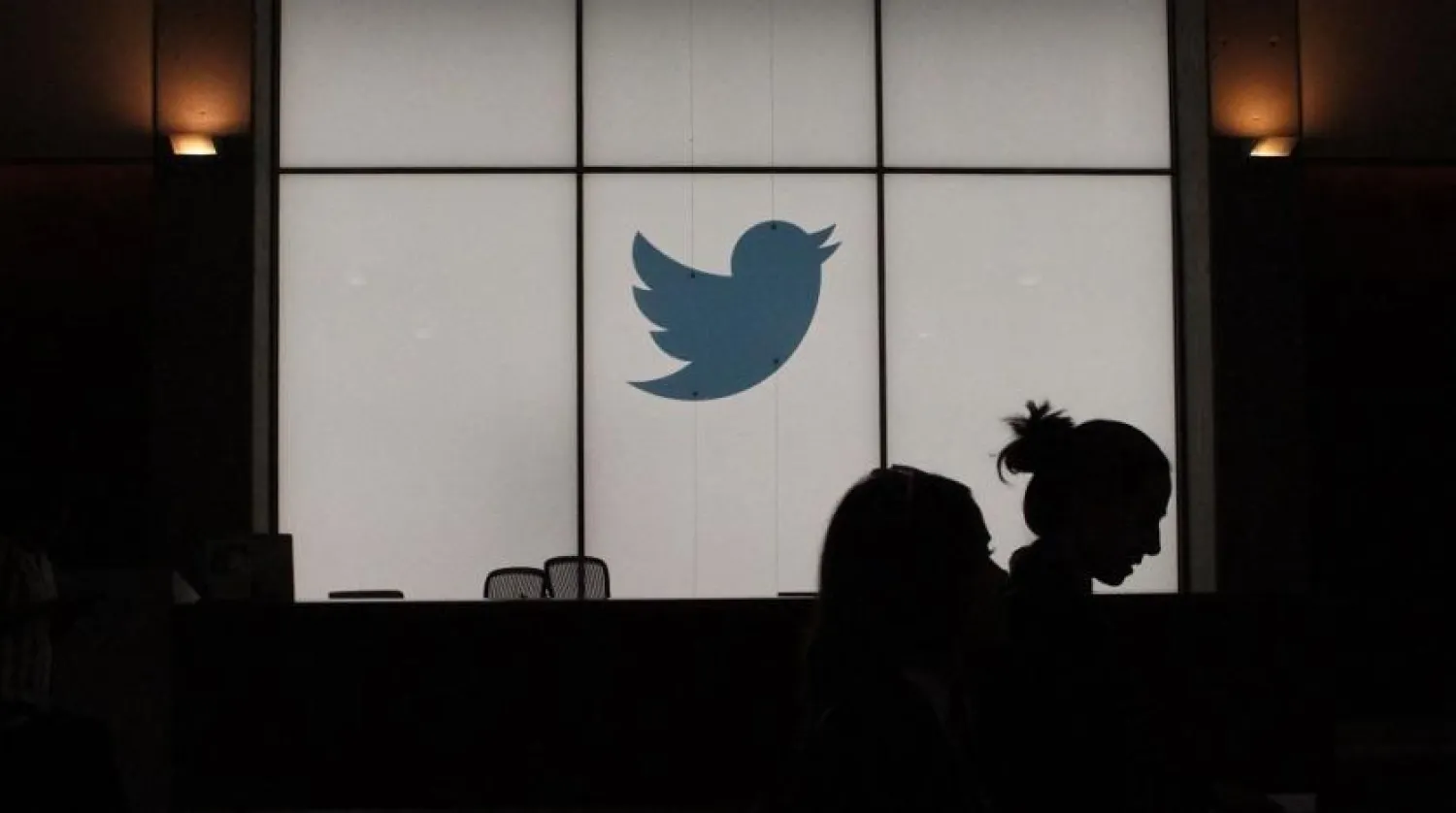
In this file photo taken on August 13, 2019, employees walk past a lighted Twitter log as they leave the company's headquarters in San Francisco. (AFP)
TT

What Could a World without Twitter Look Like?

In this file photo taken on August 13, 2019, employees walk past a lighted Twitter log as they leave the company's headquarters in San Francisco. (AFP)

After another chaotic week of mass staff departures and policy reversals, Twitter's future seems highly uncertain, with users -- and everybody else -- increasingly asking one question: What would a world without the so-called bird app even look like?

With about 237 million daily visitors at the last count in late June, Twitter's user base is still smaller than Facebook's nearly two billion, TikTok's one billion plus and even Snapchat's 363 million, AFP said.

But in Twitter's 15 years of existence, the platform has become the predominant communication channel for political and government leaders, businesses, brands celebrities and news media.

Some, like New York entrepreneur Steve Cohn, are convinced the Twitterverse is only an artificial microcosm of the real world, with limited actual importance.

Twitter is "not 'essential' in any way," Cohn declared -- from his own Twitter account. "The world works just fine without Twitter."

Few people actually tweet, he went on. "Almost all tweets come from (the) 1%. Most normals never log into Twitter."

But for others, including Karen North, a professor at the University of Southern California's Annenberg School for Communication and Journalism, the site is indispensable for bringing light to little-known conversations.

"Most of the time, people without prominence are not heard," she said. But on Twitter, "there's the opportunity to announce things."

In situations of conflict, social movements or crackdowns, "Twitter I think has become the central platform for being able to disseminate the truth and the ground reality," Charles Lister, senior fellow at the Middle East Institute in Washington, told AFP.

Like most other social networks, Twitter is also used to spread propaganda and misinformation, and the company has developed moderation tools to try to limit the worst of it.

But their ability to keep up with the demands of such a task has been thrown into question after more than two-thirds of those teams have left since Elon Musk's controversial takeover.

A 2018 study found that false information circulates faster than posts that have been fact-checked.

"That's an unrealistic expectation to imagine a platform where misinformation and disinformation is impossible," Lister cautioned.

But "to see information, good and bad, vanish," with the potential disappearance of Twitter, "is by definition a bad thing," Lister said.

"Autocrats and anyone who doesn't want information widely shared, would potentially benefit from Twitter being gone," added Mark Hass, a professor at Arizona State University (ASU).

- 'Public square' -
A Twitter fail could have devastating effects on journalism, experts say.

"Twitter... is really not a social network," North explained. "It's a network of news and information."

"It's the place, the core hub of where journalists go to get a heads up, or a story idea or a headline or a source or a quote," she said.

With the reduction of the workforces and budgets in newsrooms, the resources just aren't there, even at the most well-funded news operations, "to go find sources out in the world," North lamented.

Twitter, she said, is where much of that work can be done.

Another knock-on effect of a potential collapse of the platform, according to North, is that without Twitter, the world's rich and powerful stars and politicians will still be able to command the media's attention, while those less in the spotlight will struggle for attention.

"With Twitter, anybody can announce a story," she said.

The site functions as a way to share information in real time.

"Twitter has been a vital source of information, networking, guidance, real-time updates, community mutual aid, & more during hurricanes, wildfires, wars, outbreaks, terrorist attacks, mass shootings... etc," tweeted University of Maryland researcher Caroline Orr.

"It's not something that can be replaced by any existing platforms."

For now, the solution for a potential Twitter alternative is not obvious.

"Facebook is valuable, but I think it's almost a bit old fashioned," Lister said.

Smaller Twitter competitors are likely to syphon off users, including Mastodon, which has grown in popularity since Musk purchased Twitter.

"But these will likely remain niche, with none of them becoming the public square that Twitter tries to create," ASU's Hass said.

He and North both listed Reddit as a possible substitute, though North said the forum-based network is limited by its fragmented and cluttered design that cannot replicate Twitter's ease of use.

Could a replacement emerge? "Of course," Lister added, but he noted such ingenuity takes enormous resources and significant time.

"You can't just do it overnight."


Apple Rolls Out Creator Studio to Boost Services Push, Adds AI Features

A customer compares his old iPhone with the newly launched iPhone 17 pro max at an Apple retail store in Delhi, India, September 19, 2025. (Reuters)
TT

Apple Rolls Out Creator Studio to Boost Services Push, Adds AI Features

A customer compares his old iPhone with the newly launched iPhone 17 pro max at an Apple retail store in Delhi, India, September 19, 2025. (Reuters)

Apple on Tuesday unveiled Apple Creator Studio, a new subscription bundle of professional creative software priced at $12.99 a month or $129 a year, as the iPhone maker steps up its push into paid services for creators, students and professionals.

The company has used its services business, which includes its Apple ‌Music and ‌iCloud services, to drive ‌growth ⁠in recent ‌years, helping counter slower hardware growth and generate recurring revenue.

Apple Creator Studio bundles some of the company's best-known creative tools into a single subscription, including Final Cut Pro, Logic Pro ⁠and Pixelmator Pro across Mac and iPad.

The ‌package also adds premium ‍content and ‍new AI-powered features to Apple's productivity apps ‍Keynote, Pages and Numbers, while digital whiteboarding app Freeform will gain enhanced features later.

Final Cut Pro will offer new tools such as transcript-based search, visual search and beat detection to ⁠speed up video editing, while Logic Pro introduces AI-powered features like Synth Player and Chord ID to assist with music creation.

The company's Photoshop-alternative Pixelmator Pro will be available on iPad for the first time and will offer Apple Pencil support.

The subscription launches January 28 on ‌the App Store, Apple said.


Social Media Harms Teens, Watchdog Warns, as France Weighs Ban

The TikTok app logo is seen in this illustration taken January 16, 2025. (Reuters)
TT

Social Media Harms Teens, Watchdog Warns, as France Weighs Ban

The TikTok app logo is seen in this illustration taken January 16, 2025. (Reuters)

Social media harms the mental health of adolescents, particularly girls, France's health watchdog said Tuesday as the country debates banning children under 15 from accessing the immensely popular platforms.

The results of an expert scientific review on the subject were announced after Australia became the first country to prohibit big platforms including Instagram, TikTok and YouTube for under 16s last month, while other nations consider following its lead.

Using social media is not the sole cause of the declining mental health of teenagers, but its negative effects are "numerous" and well documented, the French public health watchdog ANSES wrote in its opinion, the result of five years of work by a committee of experts.

France is currently debating two bills, one backed by President Emmanuel Macron, that would ban social media for under 15s.

The ANSES opinion recommended "acting at the source" to ensure that children can only access social networks "designed and configured to protect their health".

This means that the platforms would have to change their personalized algorithms, persuasive techniques and default settings, according to the agency.

"This study provides scientific arguments for the debate about social networks in recent years: it is based on 1,000 studies," the expert panel's head Olivia Roth-Delgado told a press conference.

Social media can create an "unprecedented echo chamber" that reinforces stereotypes, promotes risky behavior and promotes cyberbullying, the ANSES opinion said.

The content also portrays an unrealistic idea of beauty via digitally altered images that can lead to low self-esteem in girls, which creates fertile ground for depression or eating disorders, it added.

Girls -- who use social media more than boys -- are subjected to more of the "social pressure linked to gender stereotypes," the opinion said.

This means girls are more affected by the dangers of social media -- as are people with pre-existing mental health conditions, it added.

On Monday, tech giant Meta urged Australia to rethink its teen social media ban, while reporting that it has blocked more than 544,000 Instagram, Facebook and Threads accounts under the new law.

Meta said parents and experts were worried about the ban isolating young people from online communities, and driving some to less regulated apps and darker corners of the internet.


New Process for Stable, Long-Lasting Batteries

The image shows a test cell used to fabricate and test the all-solid-state battery developed at PSI. (Paul Scherrer Institute PSI/Mahir Dzambegovic) 
TT

New Process for Stable, Long-Lasting Batteries

The image shows a test cell used to fabricate and test the all-solid-state battery developed at PSI. (Paul Scherrer Institute PSI/Mahir Dzambegovic) 

Researchers at the Paul Scherrer Institute PSI have achieved a breakthrough on the path to practical application of lithium metal all-solid-state batteries.

The team expects the next generation of batteries to store more energy, are safer to operate, and charge faster than conventional lithium-ion batteries.

The team has reported these results in the journal Advanced Science.

All-solid-state batteries are considered a promising solution for electromobility, mobile electronics, and stationary energy storage – in part because they do not require flammable liquid electrolytes and therefore are inherently safer than conventional lithium-ion batteries.

Two key problems, however, stand in the way of market readiness: On the one hand, the formation of lithium dendrites at the anode remains a critical point.

On the other hand, an electrochemical instability – at the interface between the lithium metal anode and the solid electrolyte – can impair the battery’s long-term performance and reliability.

To overcome these two obstacles, the team led by Mario El Kazzi, head of the Battery Materials and Diagnostics group at the Paul Scherrer Institute PSI, developed a new production process:

“We combined two approaches that, together, both densify the electrolyte and stabilize the interface with the lithium,” the scientist explained.

Central to the PSI study is the argyrodite type LPSCl, a sulphide-based solid electrolyte made of lithium, phosphorus, and sulphur. The mineral exhibits high lithium-ion conductivity, enabling rapid ion transport within the battery – a crucial prerequisite for high performance and efficient charging processes.

To densify argyrodite into a homogeneous electrolyte, El Kazzi and his team did incorporate the temperature factor, but in a more careful way: Instead of the classic sintering process, they chose a gentler approach in which the mineral was compressed under moderate pressure and at a moderate temperature of only about 80 degrees Celsius.

The result is a compact, dense microstructure resistant to the penetration of lithium dendrites. Already, in this form, the solid electrolyte is ideally suited for rapid lithium-ion transport.

To ensure reliable operation even at high current densities, such as those encountered during rapid charging and discharging, the all-solid-state cell required further modification.

For this purpose, a coating of lithium fluoride (LiF), only 65 nanometres thick, was evaporated under vacuum and applied uniformly to the lithium surface – serving as a ultra-thin passivation layer at the interface between the anode and the solid electrolyte.

In laboratory tests with button cells, the battery demonstrated extraordinary performance under demanding conditions.

“Its cycle stability at high voltage was remarkable,” said doctoral candidate Jinsong Zhang, lead author of the study.

After 1,500 charge and discharge cycles, the cell still retained approximately 75% of its original capacity.

This means that three-quarters of the lithium ions were still migrating from the cathode to the anode. “An outstanding result. These values are among the best reported to date.”

Zhang therefore sees a good chance that all-solid-state batteries could soon surpass conventional lithium-ion batteries with liquid electrolyte in terms of energy density and durability.

Thus El Kazzi and his team have demonstrated for the first time that the combination of solid electrolyte mild sintering and a thin passivation layer on lithium anode effectively suppresses both dendrite formation and interfacial instability.

This combined solution marks an important advance for all-solid-state battery research – not least because it offers ecological and economic advantages: Due to the low temperatures, the process saves energy and therefore costs.

“Our approach is a practical solution for the industrial production of argyrodite-based all-solid-state batteries,” said El Kazzi. “A few more adjustments – and we could get started.”
