


UN Complains about Syria’s ‘Procrastination’ in Eliminating its Chemical Program

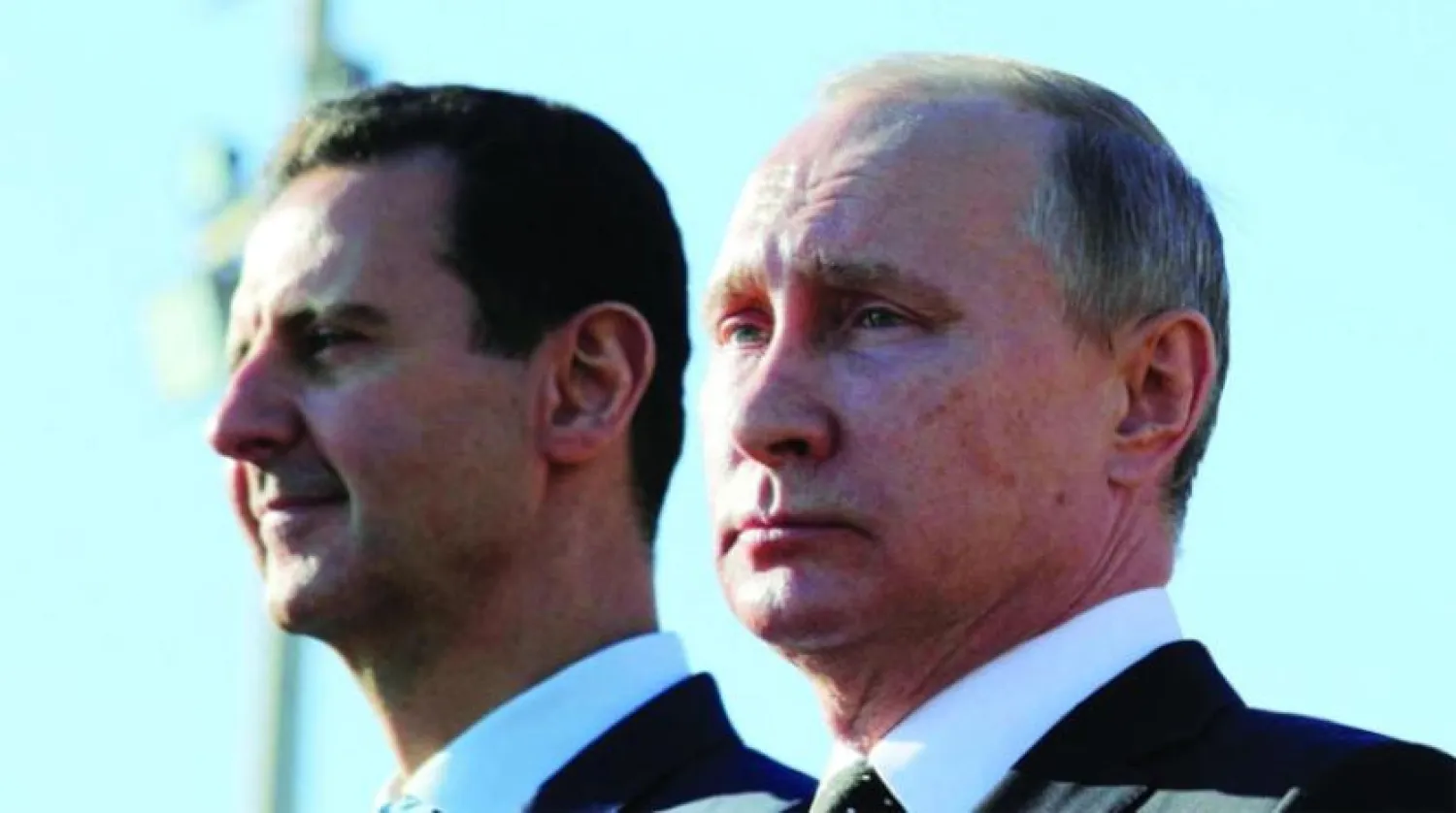
Washington accuses President Bashar al-Assad's regime of “insulting” the Organization for the Prohibition of Chemical Weapons and says it is fully supported by Russia. (Sputnik - Reuters)
TT

UN Complains about Syria’s ‘Procrastination’ in Eliminating its Chemical Program

Washington accuses President Bashar al-Assad's regime of “insulting” the Organization for the Prohibition of Chemical Weapons and says it is fully supported by Russia. (Sputnik - Reuters)

The High Representative of the United Nations Office for Disarmament Affairs, Izumi Nakamitsu, complained about the Syrian authorities’ procrastination in responding to requests by the Organization for the Prohibition of Chemical Weapons (OPCW) Technical Secretariat to complete the elimination of its chemical weapons program.

She made her remarks on Monday while briefing the UN Security Council on the progress in the implementation of Security Council resolution 2118 (2013) on the elimination of the Syrian chemical weapons program.

Nakamitsu affirmed that her office has been in regular contact with its counterparts at the OPCW on its activities related to resolution 2118.

She said that efforts by the OPCW Declaration Assessment Team (DAT) to clarify all outstanding issues regarding the initial declaration and the Syrian government’s subsequent declarations have not progressed since the Council last met on this issue.

She regretted the unsuccessful efforts by the OPCW Technical Secretariat to organize the next round of consultations between the DAT and the Syrian National Authority.

Nakamitsu attributed the postponement of inspections of the two facilities of the Scientific Studies and Research Centre (SSRC) scheduled for December 2022 to “operational reasons.”

“I have been advised that the OPCW Technical Secretariat has not yet received the requested information from the Syrian Arab Republic,” she noted.

The Secretariat proposed to hold a meeting with Syria in Beirut in November 2022 to identify limited in-country activities in line with the plan of activities agreed in 2019, to receive declarations or documents it had previously requested, and to provide the Syrian National Authority with the results of the analysis of samples collected in April 2019, together with an assessment of an outstanding issue opened in 2016.

However, she told the Council that efforts by the OPCW Technical Secretariat to convene this meeting were “unsuccessful.”

“Full cooperation by the Syrian Arab Republic with the OPCW Technical Secretariat is essential to closing all outstanding issues,” the UN officials stressed.

She added that due to the identified gaps, inconsistencies and discrepancies that remain unresolved, the declaration submitted by Syria cannot be considered accurate and complete in accordance with the Chemical Weapons Convention.

Commenting on Nakamitsu’s briefing, the political counselor at the US Mission to the UN, John Kelley, said obfuscation and delay are still the only terms to describe the Assad regime’s effort to address its chemical weapons stockpiles.

He said that the Assad regime’s continuous obstruction is an “insult” to the OPCW, the Security Council, and the international community, affirming that the Syrian regime continues to enjoy the “full support of the Russian Federation.”

Syria’s representative to the UN Al-Hakam Dandy, for his part, said the Syrian government refutes the false accusations against Syria by some Western countries.

He went on to underscore the illegitimacy of the Investigation and Identification Team, stating that its mandate was the result of certain States’ attempts to pursue their own ulterior motives in Syria.

He called on the Council to reconsider its approach, address all relevant developments objectively, and avoid politicization or exerting pressure on the OPCW Technical Secretariat.


Meeting between al-Zaidi, Trump Raises Questions in Baghdad

Iraqi Prime Minister Ali al-Zaidi meets with US President Donald Trump in New York on September 23, 2026. (Iraqi government)
TT

Meeting between al-Zaidi, Trump Raises Questions in Baghdad

Iraqi Prime Minister Ali al-Zaidi meets with US President Donald Trump in New York on September 23, 2026. (Iraqi government)

A meeting between US President Donald Trump and Iraqi Prime Minister Ali al-Zaidi in New York has raised questions due to the complete absence of the Iraqi delegation, coming just one day after Baghdad’s announcement that it would complete the plan to impose state monopoly over arms in June 2027.

The plan was supposed to be complete by the end of September, but it was postponed to next year.

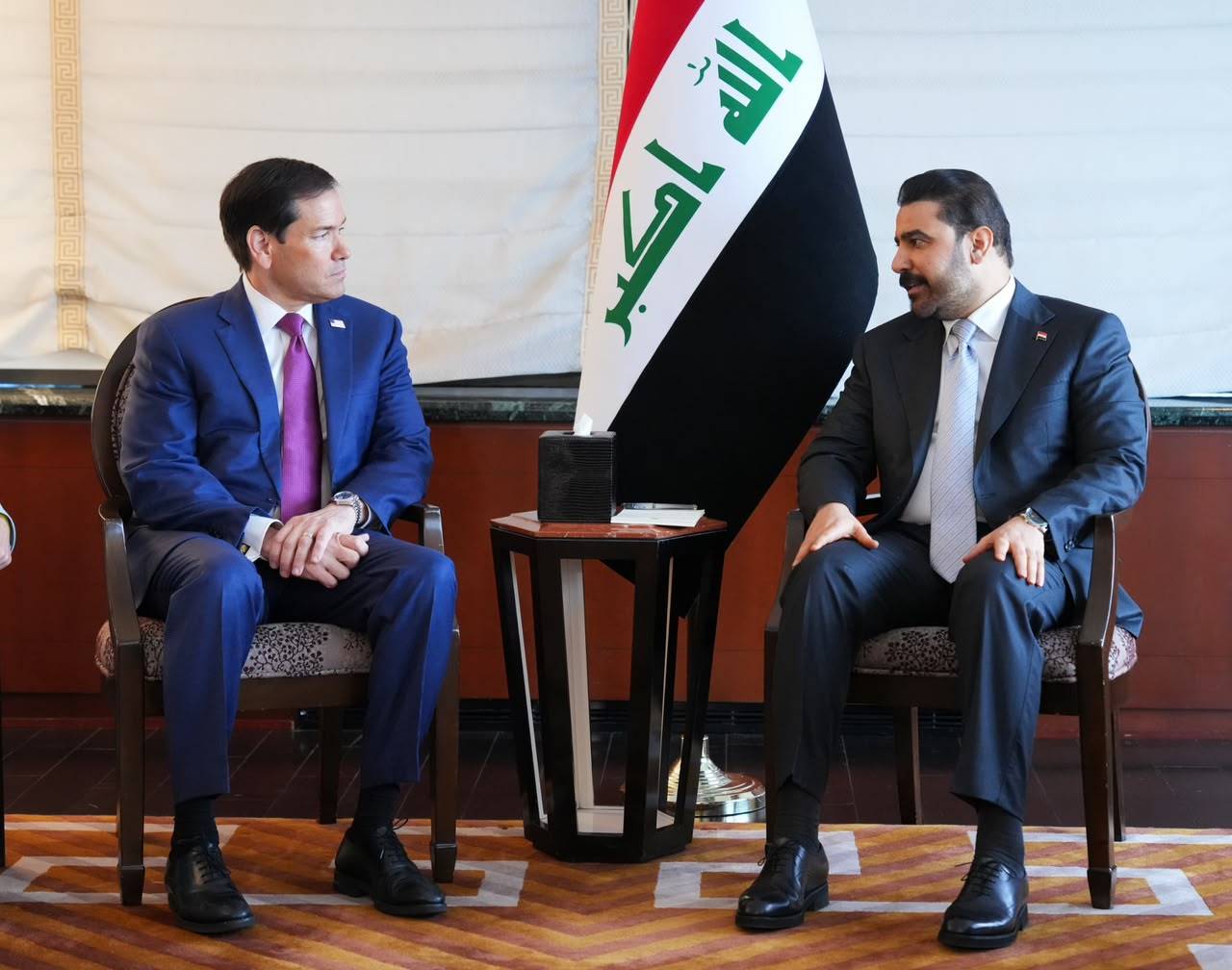
A photograph released by the Iraqi government's media office on Wednesday showed al-Zaidi alone during the meeting, which was attended by Trump alongside senior US administration officials, including US Secretary of State Marco Rubio and Treasury Secretary Scott Bessent.

Al-Zaidi's office said that he discussed with Trump efforts by Iraq and the US to boost regional and international security and stability.

The government offered no explanation about the absence of the Iraqi delegation, which included the ministers of foreign affairs, finance, and electricity, and other officials.

Iraqi observers said al-Zaidi attended the meeting alone due to American suspicions that the discussions may be leaked to other delegation members, who are members of the Iran-aligned Coordination Framework coalition.

An Iraqi politician close to the State Administration coalition said the way the meeting was held “reflects American unease, especially by Trump, over the stalled process to impose state monopoly over weapons.”

According to official statements, September 30 will not mark the completion of the arms control process, but it will instead serve as the launching point for a new phase extending until June 2027.

Iraqi Prime Minister Ali al-Zaidi meets with US Secretary of State Marco Rubio in New York. (Iraqi government)

Al-Zaidi has evidently managed to convince the Americans to grant an additional grace period for the arms control plan, particularly after the new deadline was backed by US envoy to Iraq Tom Barrack.

Independent Iraqi politician Salah al-Arbawi said it remains to be seen whether the timetable that will be announced at the end of the month will tip the balance in favor of any political parties in the dispute over the factions’ weapons.

In remarks to Asharq Al-Awsat, he said the political parties must handle the factions’ weapons “rationally and calmly.”

He noted that al-Zaidi has managed to restore his control over the plan after it encountered obstacles in recent weeks.

Experts believe that recent discussions on the amendment of the arms control plan could turn into an opportunity to improve Iraqi-American relations.

Researcher Abbas Abboud said that the Iraqi-American relationship is being “restructured” by Barrack.

Baghdad’s relations with Washington’s allies in the region hinge on “decoupling Iraq from Iran”, he told Asharq Al-Awsat.

US Secretary of State Marco Rubio had issued a direct warning to Baghdad to "disarm the militias to avoid the balkanization of Iraq."

Rubio underlined US support for al-Zaidi's government in its efforts to consolidate state authority, urging the need to dismantle armed factions.


Lebanon PM Tells Iran President Country Cannot Be Arena for Regional Wars

Lebanese Prime Minister Nawaf Salam and Iranian President Masoud Pezeshkian meet on the sidelines of the UN General Assembly in New York. (NNA)
TT

Lebanon PM Tells Iran President Country Cannot Be Arena for Regional Wars

Lebanese Prime Minister Nawaf Salam and Iranian President Masoud Pezeshkian meet on the sidelines of the UN General Assembly in New York. (NNA)

Lebanese Prime Minister Nawaf Salam told Iranian President Masoud Pezeshkian on Thursday that his country did not want to be an arena for regional wars, after Tehran-backed Hezbollah drew it into the Middle East conflict.

Lebanon has repeatedly accused Iran of interfering in its affairs, especially since the start of the latest war, saying that Tehran was using it as a "bargaining chip" in talks with the United States.

Salam's office said in a statement that he met with Pezeshkian on the sidelines of the United Nations General Assembly in New York.

Salam "stressed that Lebanon has paid a heavy price in terms of its security, stability and economy, and that it does not want to become an arena for regional conflicts or a venue for the exchange of messages between others", it said.

Hezbollah dragged Lebanon into the broader Middle East war, which began with Israeli-US strikes on Iran, by attacking Israel in support of Tehran on March 2.

Israel responded with major airstrikes and a ground invasion that killed more than 4,300 people.

The war followed a 2023-2024 conflict between Hezbollah and Israel, which started when the group attacked Israel in support of its ally Hamas in the Gaza Strip.

Violence declined following a June framework agreement between Lebanon and Israel and a wider US-Iran deal, but Israel has continued to carry out attacks on its northern neighbor.

Salam said his country looked forward "to turning a new page" in its ties with Iran.

He called for "building a sound state-to-state relationship based on mutual respect for each country's sovereignty and independence, non-interference in each other's affairs and shared interests".

Salam said the priority was for "Israel to fully withdraw from Lebanese territory and cease its attacks, and for Lebanon to move forward with extending the authority of the Lebanese state over all of its territory".

He said Lebanon needed to ensure "that weapons are held exclusively by the state", in a jab at Hezbollah, which has so far refused to lay down its arms.

In an interview with AFP last week, Lebanese President Joseph Aoun said bilateral relations "must be based on mutual respect and non-interference".


US to Hand Over Center at Baghdad Airport, Says Iraqi FM

A man walks past a billboard displaying the Iraqi flag in Baghdad's central Tahrir Square on September 22, 2026. (AFP)
TT

US to Hand Over Center at Baghdad Airport, Says Iraqi FM

A man walks past a billboard displaying the Iraqi flag in Baghdad's central Tahrir Square on September 22, 2026. (AFP)

The United States will transfer to Iraq a diplomatic and logistics hub at Baghdad airport that was repeatedly targeted by Iran-backed groups during the Middle East war, the foreign ministry said Thursday.

It said an agreement was signed with the US charge d'affaires Steven Fagin "to hand over the diplomatic support center affiliated with the US embassy at Baghdad International Airport to the Iraqi government".

The move, it added, was part of efforts to end the US-led coalition's military presence in Iraq, with the remaining troops set to complete their exit by September 30.

For years, Iran-backed armed groups that have long called for the withdrawal of foreign troops have targeted US facilities and coalition forces in Iraq.

During the Middle East war, those groups targeted US sites more than 600 times, including the Baghdad airport facility.

An Iraqi security official and a diplomatic source told AFP earlier this month that US troops have already evacuated the site.

Baghdad and Washington agreed in 2024 to end the coalition's mission against the ISIS group in Iraq.

Coalition forces are now only present at Erbil airport after having withdrawn from other bases.

The coalition's presence, especially after the defeat of ISIS, has been a persistent point of friction between Iraqi authorities and Tehran-backed factions in the country.

Since taking office this year, Prime Minister Ali al-Zaidi has pledged to reinforce the state's monopoly on arms and ensure that armed factions hand over their arms to the state.

Authorities say that ending the coalition's mission removes a key justification used by those groups to keep their weapons.
