
Iraq's Mosul Healing Slowly, Five Years after ISIS Defeat

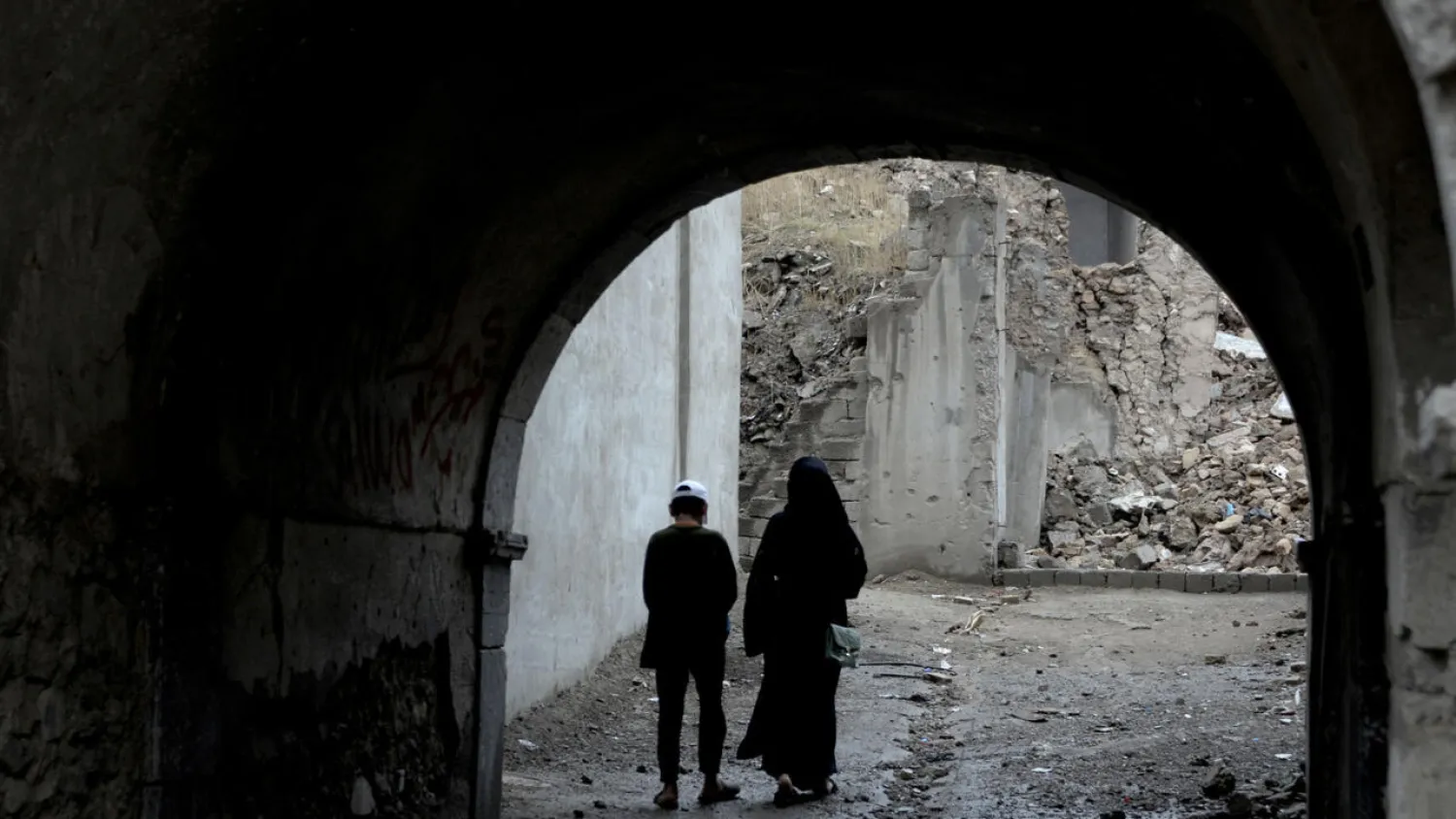
Ramshackle public services and deep economic difficulties continue to hamper people's daily lives in Mosul and elsewhere in Iraq. Zaid AL-OBEIDI / AFP
TT

Iraq's Mosul Healing Slowly, Five Years after ISIS Defeat

Ramshackle public services and deep economic difficulties continue to hamper people's daily lives in Mosul and elsewhere in Iraq. Zaid AL-OBEIDI / AFP

Five years after it emerged from the ISIS group's extremist rule, Iraq's once thriving cultural center of Mosul has regained a semblance of normalcy despite sluggish reconstruction efforts.

However, like in much of oil-rich but war-ravaged Iraq, ramshackle public services and deep economic difficulties continue to hamper people's daily lives, AFP said.

Ghazwan Turki is just one of Mosul's many residents who struggle to make ends meet in the former ISIS stronghold, where the extremists declared the establishment of a "caliphate" in 2014.

Mosul urgently needs "job opportunities for families that have no income, to improve their living conditions", Turki said.

The father of 12 and aged in his 40s, who lived for years in displacement camps, juggles shifts as a taxi driver and different odd jobs.

"We have to borrow money and get into debt to cover half of our family's needs," said Turki, who shares a single-storey house with his brother.

While acknowledging "progress" in rebuilding efforts, he described "overcrowded schools, where there are 60 or 70 students in a classroom".

Iraqi forces with the help of a US-led coalition wrested back Mosul in July 2017 after grueling street fighting, and Iraq claimed victory over ISIS on December 9 that year.

Signs of reconstruction dot the city of 1.5 million, with workers constructing a new bridge, and cafes and restaurants buzzing.

But many buildings and public hospitals are still in ruins, and in the Old City, some areas are still just piles of rubble.

- 'Lack of jobs' -
Mosul, Iraq's second city, has historically been among the Arab world's most culturally significant settlements -- a hub for trade and home to mosques, churches, shrines, tombs and libraries.

Today, in the wider Nineveh province, a third of people are estimated to be unemployed and 40 percent live in poverty, according to local authorities.

The Norwegian Refugee Council, which has provided aid to some 100,000 Mosul residents, has noted "rising unemployment, high dropout rates (at schools), and limited economic opportunities across the city".

NRC's communication coordinator Noor Taher said that although reconstruction continues, many people are particularly worried about "under-resourced schools, overstretched teachers and lack of jobs".

The International Rescue Committee says that "economic conditions in Mosul remain dire for many families".

An IRC survey of over 400 homes reported "an alarming spike" in child labor rates, with around 90 percent of families sending at least one minor to work and some three-quarters toiling in "informal and dangerous roles" such as construction, or litter and scrap metal collection.

Mayor Amin al-Memari said the city was working on several "strategic projects", but funding remained a key obstacle.

Despite the construction of about 350 schools in just two years, Mosul still needs 1,000 more to end the "chokehold" in education, Memari added.

There is also "a significant shortage in the health sector," he said, with more hospitals needed, including with oncology and cardiovascular surgery departments.

"Before, we had all of this in Mosul," Memari said.

- 'Spirit of Old Mosul' -
In Mosul's war-damaged Old City -- only steps from the iconic Al-Nuri mosque, where former ISIS leader Abu Bakr al-Baghdadi made his only confirmed public appearance -- Bytna ("Our Home") café is busy.

But when co-founder Bandar Ismail opened it in 2018, people were skeptical.

"We tried to revive the spirit of Old Mosul by opening this café, to attract residents and draw them back to this neighborhood," 26-year-old Ismail said.

"At first... people mocked us and said 'who will come here?' The whole area was destroyed, there must have been just two families here."

Today, customers sip coffee and smoke their hookahs in the café, which also hosts musical performances and art events.

Even French President Emmanuel Macron dropped by during a visit in 2021.

Nearby, bakeries and restaurants have reopened.

"There is more stability, more security," Ismail said.


Italian Authorities Arrest 9 for Allegedly Funding Hamas Through Charities

Palestinian Hamas members secure the area as Egyptian workers accompanied by members of the International Committee of the Red Cross (ICRC) search for the remains of the last Israeli hostage in the Zeitoun neighborhood of Gaza City on December 8, 2025. (Photo by Omar AL-QATTAA / AFP)
TT

Italian Authorities Arrest 9 for Allegedly Funding Hamas Through Charities

Palestinian Hamas members secure the area as Egyptian workers accompanied by members of the International Committee of the Red Cross (ICRC) search for the remains of the last Israeli hostage in the Zeitoun neighborhood of Gaza City on December 8, 2025. (Photo by Omar AL-QATTAA / AFP)

Italian authorities arrested nine people linked to three charitable organizations on suspicion of raising millions of euros in funds for the Palestinian group Hamas, anti-terrorism prosecutors said in a statement Saturday. 

The suspects are accused of sending about 7 million euros ($8.2 million) to “associations based in Gaza, the Palestinian territories, or Israel, owned, controlled, or linked to Hamas,” the statement said. 

Among those arrested was Mohammad Hannoun, president of the Palestinian Association in Italy, prosecutors said, describing him as the “head of the Italian cell of the Hamas organization.” 

The European Union has Hamas listed on its terror list. 

According to Italian prosecutors, who collaborated with other EU countries in the probe, the illegal funds were delivered through “triangulation operations” via bank transfers or through organizations based abroad to associations based in Gaza, which have been declared illegal by Israel for their ties to Hamas. 

Interior Minister Matteo Piantedosi wrote on X that the operation “lifted the veil on behavior and activities which, pretending to be initiatives in favor of the Palestinian population, concealed support for and participation in terrorist organizations.” 

There was no immediate comment from the suspects or the associations. 

In January 202, the European Council decided to extend existing restrictive measures against 12 individuals and three entities that support the financing of Hamas and the Palestinian Islamic Jihad. 


Türkiye Holds Military Funeral for Libyan Officers Killed in Plane Crash

The Libyan national flag flies at half-mast in Tripoli on December 24, 2025, after the head of Libya's armed forces and his four aides died in a plane crash in Türkiye. (AFP)
TT

Türkiye Holds Military Funeral for Libyan Officers Killed in Plane Crash

The Libyan national flag flies at half-mast in Tripoli on December 24, 2025, after the head of Libya's armed forces and his four aides died in a plane crash in Türkiye. (AFP)

Türkiye held a military funeral ceremony Saturday morning for five Libyan officers, including western Libya’s military chief, who died in a plane crash earlier this week.

The private jet with Gen. Muhammad Ali Ahmad al-Haddad, four other military officers and three crew members crashed on Tuesday after taking off from Ankara, Türkiye’s capital, killing everyone on board. Libyan officials said the cause of the crash was a technical malfunction on the plane.

Al-Hadad was the top military commander in western Libya and played a crucial role in the ongoing, UN-brokered efforts to unify Libya’s military.

The high-level Libyan delegation was on its way back to Tripoli, Libya’s capital, after holding defense talks in Ankara aimed at boosting military cooperation between the two countries.

Saturday's ceremony was held at 8:00 a.m. local time at the Murted Airfield base, near Ankara, and attended by the Turkish military chief and the defense minister. The five caskets, each wrapped in a Libyan national flag, were then loaded onto a plane to be returned to their home country.

Türkiye’s military chief, Selcuk Bayraktaroglu, was also on the plane headed to Libya, state-run news agency TRT reported.

The bodies recovered from the crash site were kept at the Ankara Forensic Medicine Institute for identification. Justice Minister Yilmaz Tunc told reporters their DNA was compared to family members who joined a 22-person delegation that arrived from Libya after the crash.

Tunc also said Germany was asked to help examine the jet's black boxes as an impartial third party.


Syrian Foreign Ministry: Talks with SDF Have Not Yielded Tangible Results

SDF fighters are seen at a military parade in Qamishli. (Reuters file)
TT

Syrian Foreign Ministry: Talks with SDF Have Not Yielded Tangible Results

SDF fighters are seen at a military parade in Qamishli. (Reuters file)

A source from the Syrian Foreign Ministry said on Friday that the talks with the Kurdish Syrian Democratic Forces (SDF) over their integration into state institutions “have not yielded tangible results.”

Discussions about merging the northeastern institutions into the state remain “hypothetical statements without execution,” it told Syria’s state news agency SANA.

Repeated assertions over Syria’s unity are being contradicted by the reality on the ground in the northeast, where the Kurds hold sway and where administrative, security and military institutions continue to be run separately from the state, it added.

The situation “consolidates the division” instead of addressing it, it warned.

It noted that despite the SDF’s continued highlighting of its dialogue with the Syrian state, these discussions have not led to tangible results.

It seems that the SDF is using this approach to absorb the political pressure on it, said the source. The truth is that there is little actual will to move from discussion to application of the March 10 agreement.

This raises doubts over the SDF’s commitment to the deal, it stressed.

Talk about rapprochement between the state and SDF remains meaningless if the agreement is not implemented on the ground within a specific timeframe, the source remarked.

Furthermore, the continued deployment of armed formations on the ground that are not affiliated with the Syrian army are evidence that progress is not being made.

The persistence of the situation undermines Syria’s sovereignty and hampers efforts to restore stability, it warned.