


Iranian FM Arrives in Mauritania Heading Political Delegation

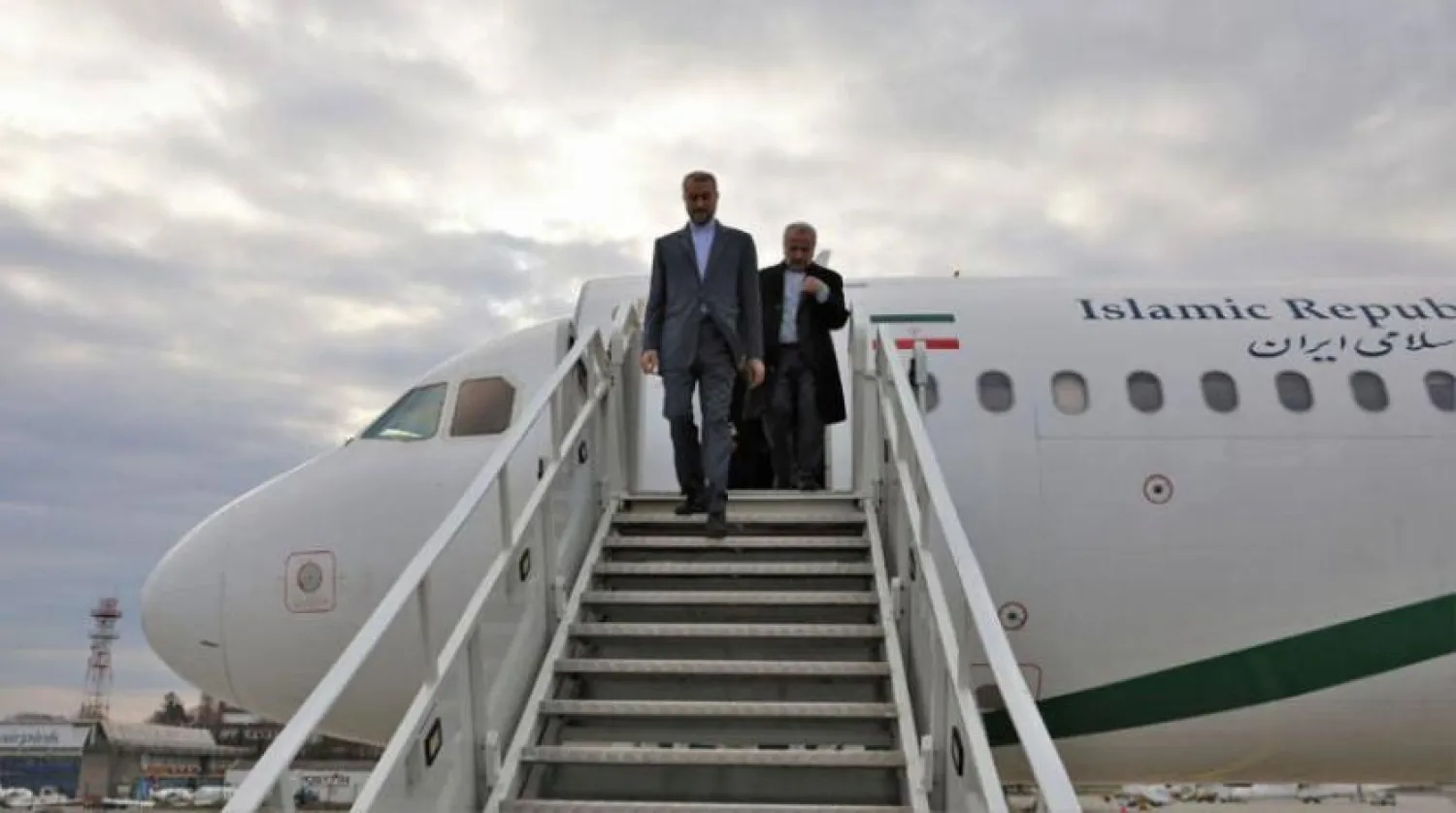
Iranian Foreign Minister Hossein Amir Abdollahian (File photo: Iranian Foreign Ministry)
TT

Iranian FM Arrives in Mauritania Heading Political Delegation

Iranian Foreign Minister Hossein Amir Abdollahian (File photo: Iranian Foreign Ministry)

Iranian Foreign Minister Hossein Amir-Abdollahian began an official visit to Mauritania Tuesday accompanied by a high-ranking political delegation.

Amir-Abdollahian is expected to meet with Mauritanian President Mohammed Ould Ghazouani and Foreign Minister Mohamed Salem Ould Marzouk, announced a government-affiliated news agency in Iran.

The source explained that the visit falls within Iran's interest in the African market, a "wide and suitable platform for selling Iranian goods."

The visit comes two weeks after Iranian President Ibrahim Raisi sent a written message to his Mauritanian counterpart inviting him to visit Tehran.

Raisi sent a similar letter to Ghazouani in February last year, delivered by the Minister of Culture and Islamic Guidance, Mohammad Mehdi-Esmaili, in his capacity as Raisi's special envoy to Mauritania.

Mehdi-Esmaili said in a press statement after handing over the letter to the Mauritanian President that Iran seeks to develop its relations with Mauritania in all fields without revealing more details.

Despite highlighting the economic and commercial aspects of the visit, security and military files are believed to be behind Iran's rapprochement toward the Sahel region.

Amir-Abdollahian's visit to Mauritania coincides with similar trips by Iranian diplomats to the capitals of the Group of Five for the Sahel countries (G5 Sahel).

The Group of Five for the Sahel (G5 Sahel) was founded in 2014 as a regional, intergovernmental organization. It provides an institutional framework to promote development and security within its five member countries: Burkina Faso, Chad, Mauritania, Niger, and Mali, which suspended its membership in the group last year.

Tehran is seeking to find a foothold in the Sahel region, which is witnessing a raging international conflict, in light of the decline of French influence. Many Sahel countries tend to cooperate with Russia within the framework of new policies to diversify international partnerships to combat terrorism.

Deputy Iranian Foreign Minister for Political Affairs Ali Bagheri-Kani visited Niger and Burkina Faso two weeks ago and held meetings with the two countries' leaders, during which he carried messages from Tehran.

Bagheri-Kani also invited Prime Minister Apollinaire Joachim Kyelem de Tambela to visit Tehran, stressing that Iran aims to boost its relations with Burkina Faso in various fields, namely economic, political, and health.

He added that Tehran would appoint an ambassador to Burkina Faso and provide scholarships for Burkinabe students in Iranian universities.

The diplomat strongly criticized Western policies to combat terrorism in the Sahel region, accusing the West of standing behind ISIS terrorist organization, reiterating that France provides support to terrorists.

Bagheri-Kani stressed that Iran was willing to share its experience in combating terrorism with Burkina Faso.

The Prime Minister announced that his country was seeking Iran's help with military equipment to fight terrorism, adding that Burkina Faso also has products to offer to Iran, such as cotton, gold, cattle, and tomatoes.

Bagheri-Kani also visited Bamako, the capital of Mali, at the end of last December and met with Mali Foreign Minister Abdoulaye Diop.

During the meeting, the two officials described the developments in the bilateral relations as a "new dynamic path," noting that they are establishing a "partnership," focusing on enhancing the capabilities of defense and security forces in terms of military equipment and training.

Bagheri-Kani referred to bilateral relations as the "Bamako-Tehran axis."

Last August, Iran's foreign minister announced from Bamako his country's desire to develop economic and trade relations with Mali.

He also expressed his country's rejection of the sanctions imposed on Mali by African countries following the military coup and said that Iran intends to organize a technology exhibition in Bamako.


Türkiye and Armenia Agree to Simplify Visa Procedures to Normalize Ties

Türkiye’s President Recep Tayyip Erdogan, right, and Armenia's Prime Minister Nikol Pashinyan shake hands before a meeting at Prague Castle in Prague, Czech Republic, Thursday, Oct. 6, 2022. (Turkish Presidency via AP, File)
TT

Türkiye and Armenia Agree to Simplify Visa Procedures to Normalize Ties

Türkiye’s President Recep Tayyip Erdogan, right, and Armenia's Prime Minister Nikol Pashinyan shake hands before a meeting at Prague Castle in Prague, Czech Republic, Thursday, Oct. 6, 2022. (Turkish Presidency via AP, File)

Türkiye and Armenia have agreed to simplify visa procedures as part of efforts to normalize ties, Türkiye’s Foreign Ministry announced Monday, making it easier for their citizens to travel between the two countries.

Relations between Türkiye and Armenia have long been strained by historic grievances and Türkiye’s alliance with Azerbaijan. The two neighboring countries have no formal diplomatic ties and their joint border has remained closed since the 1990s.

The two countries, however, agreed to work toward normalization in 2021, appointing special envoys to explore steps toward reconciliation and reopening the frontier. Those talks have progressed in parallel with efforts to ease tensions between Armenia and Azerbaijan.

Türkiye supported Azerbaijan during its 2020 conflict with Armenia for control of the Karabakh region, known internationally as Nagorno-Karabakh, a territorial dispute that had lasted nearly four decades.

The Turkish Foreign Ministry said in a statement posted on social platform X that Ankara and Yerevan agreed that holders of diplomatic, special and service passports from both countries would be able to obtain electronic visas free of charge as of Jan. 1.

“On this occasion, Türkiye and Armenia reaffirm once again their commitment to continue the normalization process between the two countries with the goal of achieving full normalization without any preconditions,” the ministry said.

Türkiye and Armenia also have a more than century-old dispute over the deaths of an estimated 1.5 million Armenians in massacres, deportations and forced marches that began in 1915 in Ottoman Türkiye. Historians widely view the event as genocide.

Türkiye denies the deaths constituted genocide, saying the toll has been inflated and those killed were victims of civil war and unrest. It has lobbied to prevent countries from officially recognizing the massacres as genocide.


Russia Says Ukraine Tried to Attack Putin's Residence so Moscow's Negotiating Stance under Review

Russian President Vladimir Putin chairs a meeting on the "special military operation" amid the ongoing Russia-Ukraine conflict in Moscow, Russia, December 29, 2025. Sputnik/Mikhail Metzel/Pool via REUTERS
TT

Russia Says Ukraine Tried to Attack Putin's Residence so Moscow's Negotiating Stance under Review

Russian President Vladimir Putin chairs a meeting on the "special military operation" amid the ongoing Russia-Ukraine conflict in Moscow, Russia, December 29, 2025. Sputnik/Mikhail Metzel/Pool via REUTERS

Russian Foreign Minister Sergei Lavrov said on Monday that Ukraine had tried to attack President Vladimir Putin's residence ‌in the Novgorod ‌region and so ‌Moscow's ⁠negotiating ​position ‌would be reviewed.

Lavrov said that on Dec. 28-29, Ukraine had attacked the Russian president's state residence in the Novgorod region with 91 long-range drones which were all ⁠destroyed by Russian air defenses.

"Such reckless actions will ‌not go unanswered," ‍Lavrov said, adding ‍that the attack amounted to "state ‍terrorism."

He said that targets had already been selected for retaliatory strikes by Russia's armed forces, Reuters reported.

Lavrov noted that the ​attack took place during negotiations about a possible Ukrainian peace ⁠deal and that while Russia would not leave the negotiations, Moscow's position will be reviewed.

Ukrainian President Volodymyr Zelenskiy said the accusation was a lie, adding that Moscow was preparing the ground to strike government buildings in Kyiv.

It was not immediately clear if Putin ‌was in the residence at the time.


Paris Metro Stabbing Suspect is French, Says Ministry

The attacks happened on a central line of Paris's metro, seen here in a file picture © JULIEN DE ROSA / AFP/File
TT

Paris Metro Stabbing Suspect is French, Says Ministry

The attacks happened on a central line of Paris's metro, seen here in a file picture © JULIEN DE ROSA / AFP/File

The suspect in the stabbing of three women in the Paris metro last week is French, the interior ministry said Monday, after previously saying he was an undocumented Malian ordered to leave the country.

A source with knowledge of the case, requesting anonymity because not allowed to speak to the press, said he had held a French passport since 2018, AFP reported.

The 25-year-old man was arrested on suspicion of having stabbed and injured three women along the Paris metro's Line 3 on Friday, then admitted to a psychiatric hospital the next day.

"The investigation uncovered a French passport belonging to the suspect," the ministry said, adding that he had not once mentioned his French nationality during previous run-ins with police.

The ministry said on Friday the man was a Malian citizen imprisoned in January last year for aggravated theft and sexual assault, and required to leave France after being released in July.

The man had been placed in an administrative detention centre, but failure to obtain a consular travel document required for his deportation meant he was released after 90 days as required by law, it said.

Interior Minister Laurent Nunez last week called for "maximum vigilance" during the festive season in France.
