Europe in Crossfire of US-China Economic Rivalry

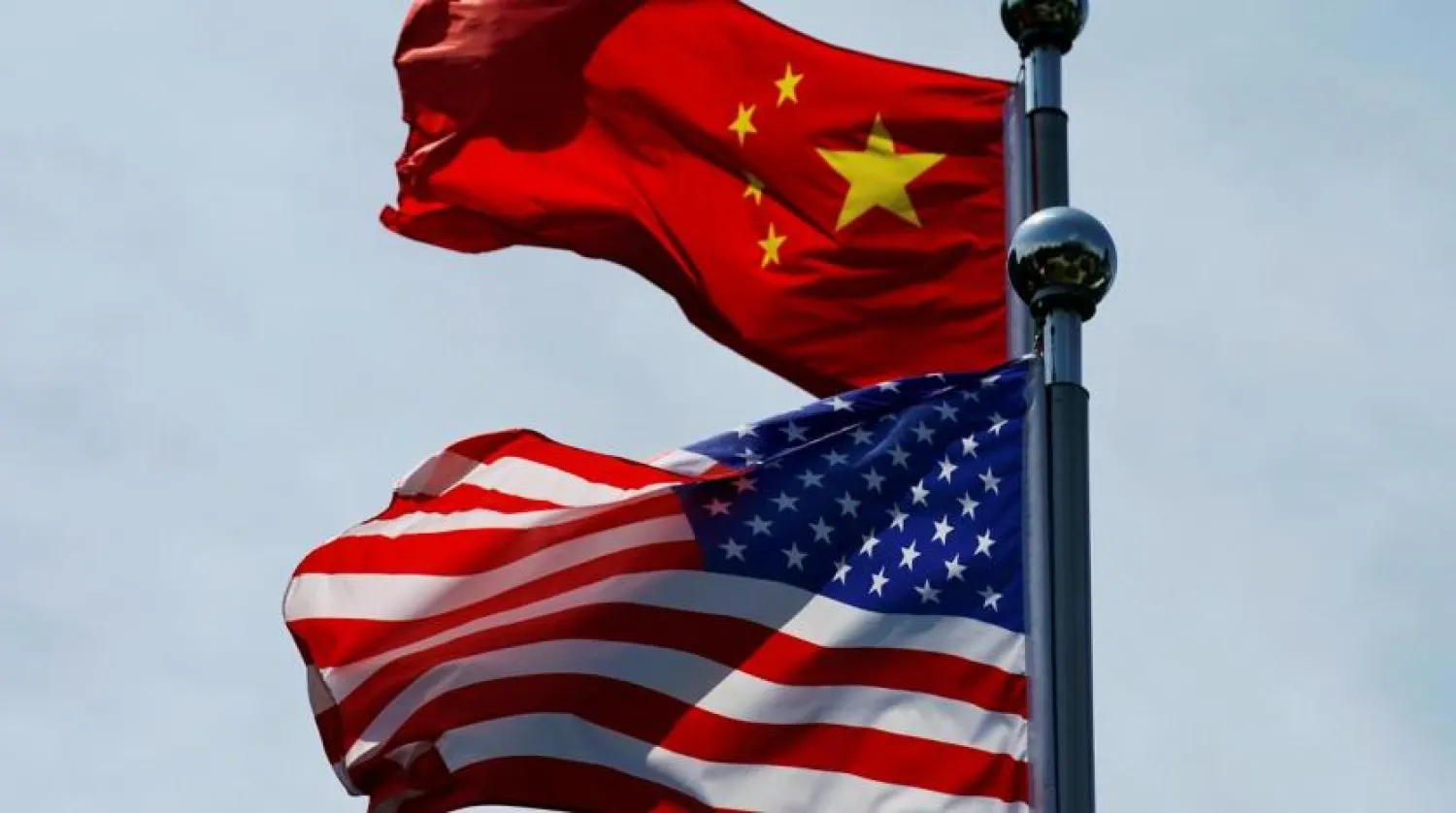
FILE PHOTO: Chinese and US flags flutter in Shanghai, China July 30, 2019. REUTERS/Aly Song
TT

Europe in Crossfire of US-China Economic Rivalry

FILE PHOTO: Chinese and US flags flutter in Shanghai, China July 30, 2019. REUTERS/Aly Song

The economic confrontation between the United States and China has put Europe in the crossfire, with Washington's plan to boost green industries threatening to cause collateral damage to a key ally.

The United States has adopted the Inflation Reduction Act (IRA), which contains $370 billion in sweeping investments, subsidies and tax cuts to reduce greenhouse gas emissions, making it the largest-ever US program to combat climate change, AFP said.

But some of its provisions have been criticized by European Union officials as discriminatory against European carmakers, with some saying it smacks of protectionism.

French Economy Minister Bruno Le Maire and his German counterpart Robert Habeck travel to Washington to meet Treasury Secretary Janet Yellen on Tuesday and try to resolve the impasse.

EU leaders will hold a summit later in the week that aims to begin crafting a response to the US measures.

The IRA aims to bolster green industries that will be key to the future economy, such as the manufacturing of batteries and solar panels.

US firms will be able to receive subsidies similar to those their Chinese rivals receive, on the condition that they manufacture domestically.

"One of the key objectives of the IRA is to exclude Chinese suppliers from clean energy supply chains," said Tobias Gehrke, a fellow at the European Council on Foreign Relations.

He said the priority was reducing US dependence on Chinese imports.

China dominates the electric vehicle sector, with 78 percent of the global production of battery cells and three-quarters of the big plants to manufacture the lithium-ion batteries they use, according to a study by the Washington-based Brookings Institution.

- 'An afterthought' -
The IRA has sent chills down the spines of European leaders, who fear the generous support will encourage firms to shift production to the United States.

The EU has called on the United States to provide European firms exemptions -- like those granted to trade bloc partners Canada and Mexico.

However, attempts to find a resolution have so far failed to bear fruit.

Gehrke said Washington was thinking about manufacturing jobs and reducing dependence upon Chinese imports first and foremost, and the impact on its European, Japanese and South Korean allies was more of an "afterthought".

"I don't think America wants to punish Europe ... I don't think they thought about Europe at all," he said.

Cecilia Malmstroem, the EU's former trade commissioner and now a senior fellow at the Peterson Institute think tank in Washington, agreed.

"Europe has become a bit of collateral damage in this" effort to reduce dependence on China, she said.

"I do not think it was intentional to target the Europeans," she added.

Rather, it is a product of the trade war with China started during Donald Trump's presidency.

First, Trump imposed punitive customs taxes on China in 2018, which President Joe Biden has maintained -- along with Washington's combative tone towards Beijing.

This was followed by restrictions on the export of certain electronic components to China, and the 2022 CHIPS Act which includes $53 billion in spending to boost the production of semiconductors in the United States.

Then came the IRA.

- Subsidies race -
Europe's fears have deepened in the wake of economic and supply crises sparked by the Covid pandemic and war in Ukraine that have cast the rules of globalization into question.

A global focus on reindustrialization has led to fears of a subsidies race in the United States, China, and Europe -- where the European Commission wants to make it easier to hand out state assistance to companies.

Pascal Lamy, a former director-general of the World Trade Organization, said Europe must "put pressure" on Washington, as the IRA is "more anti-European than anti-Chinese".

Gehrke said the deadlock between the historical allies also raised questions about Europe's own strategy towards China, as its reliance increases on Chinese-made components for electric vehicles.

"Like those in the US, Europe's clean energy supply chains are already dangerously dependent on China," he said.

"Targeting these dependencies is in the EU's economic interests and could help convince Washington that Europe is a necessary and useful partner on China."


2 Planes Collide on the Ground in Miami, Only Minor Injuries Reported

FILE - Vehicles drive past the entrance to Miami International Airport in Miami May 12, 2020, (AP Photo/Wilfredo Lee, File)
TT

2 Planes Collide on the Ground in Miami, Only Minor Injuries Reported

FILE - Vehicles drive past the entrance to Miami International Airport in Miami May 12, 2020, (AP Photo/Wilfredo Lee, File)

Federal aviation safety officials on Sunday were investigating a minor collision between two planes at a taxiway intersection at Miami International Airport, where one aircraft's wingtip struck the nose of another, authorities said. Two people reported minor injuries.

The accident happened at about 9 p.m. Saturday and involved a Copa Airlines Boeing 737 passenger aircraft with 172 people aboard and a UPS Boeing 767 cargo plane, according to the National Transportation Safety Board and Copa Airlines. The wing of the Copa flight and the nose of the UPS plane collided, the NTSB said.

Photos taken at the scene show the UPS plane nose with a horizontal gash on one side and a larger hole in the middle, The Associated Press reported.

On audio recorded by ATC.com, a pilot on the UPS plane told air traffic control that he went too far at the intersection and his plane was clipped by the Copa flight. Air traffic control told the UPS pilot that he was supposed to yield to the Copa aircraft.

The NTSB said it was gathering information and may provide an update on Sunday.

The Copa plane had just arrived from Panama City and the UPS plane was headed to Bogota, Colombia, officials said.

In a statement on social media, Copa called the collision minor and said two of its passengers were treated at the scene for minor injuries.

UPS said it was working with authorities to determine what happened.

“We cannot speculate on the details of the incident,” UPS said in a statement.

“The National Transportation Safety Board is responsible for investigating incidents like this and will control the flow of information.”

The mishap came two months after an Amazon cargo plane careened off a runway at Miami International and smashed into a van carrying workers for a company that cleans airplanes, killing five people.


Nearly 1,500 Migrants Arrive in Canary Islands in One Day

Rescued migrants disembark from a Spanish Maritime Rescue Service vessel with assistance from emergency workers and Civil Guard officers at the port of La Restinga in El Pinar on the island of El Hierro, Canary Islands, Spain, 14 November 2026. EPA/GELMERT FINOL
TT

Nearly 1,500 Migrants Arrive in Canary Islands in One Day

Rescued migrants disembark from a Spanish Maritime Rescue Service vessel with assistance from emergency workers and Civil Guard officers at the port of La Restinga in El Pinar on the island of El Hierro, Canary Islands, Spain, 14 November 2026. EPA/GELMERT FINOL

Almost 1,500 migrants arrived in Spain's Canary Islands on Saturday, the highest number in a single day since 2020, the EFE news agency reported on Sunday, citing the maritime rescue service.

A total of 1,488 people in 14 boats were rescued by the Spanish coastguard, EFE reported, continuing a surge of arrivals from West African countries to the Spanish archipelago since October.

The previous one-day record was the 1,461 people rescued in waters off the Canary Islands on November 7, 2020, maritime rescue services said ⁠on Sunday, according to Reuters.

While migrant ⁠arrivals have declined so far this year compared with the same period last year, the sharp increase last month placed additional pressure on reception and emergency services on some of the Canary Islands, particularly the smaller and less densely populated ones.

One boat on ⁠Saturday was carrying 240 people, including 12 women and 36 children, authorities said. The rescued migrants were taken to El Hierro, one of the smallest Canary Islands. Most of the people were from Senegal, Gambia and Guinea Conakry.

Twelve boats arrived in El Hierro, plus one in Gran Canaria and another in Tenerife.

Spain's Territorial Policy Minister Angel Victor Torres will visit El Hierro on Sunday to discuss the surge in migrant arrivals.

The Atlantic ⁠route ⁠from West Africa to the Canary Islands is one of the world's deadliest migration crossings. Thousands of migrants attempt the journey each year in overcrowded boats, seeking to reach Spanish territory despite rough seas, strong currents and long distances.

Arrivals tend to pick up in the autumn months, when sea conditions along the route are generally calmer and more favorable for crossings.

Migrant arrivals to the Canary Islands between January and October 31 were down 5.5% from the same period last year, government data show.


Iranian Lawmaker: A Nuclear Bomb is a ‘Public Demand’

Satellite imagery from Jun 9th, 2025 via Airbus/Bulletin, shows a truck at Iran’s Isfahan underground complex carrying 18 sealed containers (AP)
TT

Iranian Lawmaker: A Nuclear Bomb is a ‘Public Demand’

Satellite imagery from Jun 9th, 2025 via Airbus/Bulletin, shows a truck at Iran’s Isfahan underground complex carrying 18 sealed containers (AP)

Iranian lawmaker Hosseinali Haji Deligani said on Saturday that building a nuclear bomb has become a public demand, just days before a meeting of the International Atomic Energy Agency’s Board of Governors to discuss Iran.

“Today, one of the people's demands is that Iran, in addition to its faith and missiles, must build and possess a nuclear bomb,” said Haji Deligani, the deputy head of the Article 90 Commission in the Iranian Parliament, according to Fars news agency.

He argued that Tehran should possess nuclear weapons regardless of whether it intends to use them.

“We must have this capability. Whether it is used or not is a separate matter,” the lawmaker noted.

He said, “based on current assessments, the enemy would not launch a nuclear attack on Iran because of the country’s vast size and the significant repercussions of such an attack.”

The Article 90 Commission of Iran's parliament is mandated to receive, investigate, and respond to written complaints regarding the performance of the legislative, executive, and judicial branches.

Iran has made no official decision to change its nuclear doctrine despite growing calls from lawmakers and members of the public to reconsider its position if war resumes.

Iranian Foreign Ministry spokesperson Esmaeil Baghaei said on Monday that Tehran had not suspended its obligations under its safeguards agreement with the International Atomic Energy Agency (IAEA).

Speaking to reporters, Baghaei said Iran remained a party to the Treaty on the Non-Proliferation of Nuclear Weapons (NPT) and continued to uphold both the treaty and its safeguards agreement. He said the country had demonstrated its adherence to those commitments.

Grossi’s Report

Haji Deligani’s statements came one day after the UN’s nuclear watchdog said it cannot confirm that Tehran hasn’t diverted nuclear material away from peaceful purposes.

In a confidential report on Iran seen by media outlets on Friday, the UN’s nuclear watchdog said because of a lack of cooperation from Iran, it “is not able to conclude that there has been no diversion of declared nuclear material from peaceful nuclear activities in Iran.”

IAEA said it is “increasingly concerned” about a uranium-enrichment plant at Isfahan that Iran declared to it last year but has still not let the watchdog inspect.”

“It is more than a year since the Agency lost continuity of knowledge in relation to the previously declared inventories of LEU (low-enriched uranium) and HEU (highly enriched ⁠uranium) enriched up to 60% U-235 at the declared nuclear facilities affected by the attacks of June 2025,” IAEA Director General Rafael Grossi wrote in his last report on Iran.

He added that Iran needs to allow inspectors back in “with the utmost urgency.”

Inspectors have yet to return to nuclear sites the United States and Israel bombed in June 2025.

Until those attacks, the IAEA estimates Iran had 440.9 kg of uranium enriched to up to 60% purity, a short step from the roughly 90% of weapons-grade uranium. That is enough material, if enriched further, for 10 nuclear weapons, according to an IAEA yardstick, and Iran also had material enriched to lower levels.

“The director general encourages Iran to consider technical and gradual measures by which conditions are achieved that allow for the return of agency inspectors to Iran,” the report said.

But Iran told the IAEA that discussions on restarting inspections in the country cannot resume amid “a series of persistent, explicit, and public threats by the President of the United States of America.”

Criticizing legal and technical basis of IAEA’s reports, Iran Mission to UN Office in Vienna said normal execution of safeguards cannot resume under the abnormal condition created by attacks on Iran’s safeguarded nuclear sites.

In a message posted on its X account on Saturday, the Iranian mission also criticized Grossi’s reporting, arguing that the Board’s decisions have been adopted through an abuse of process and that the US-Israeli attacks on Iran have disrupted inspections and forced the withdrawal of the IAEA’s inspectors.

“The United States removed aggression from bias resolutions, but its consequences cannot be erased from reality,” the statement added.

An Unavoidable Necessity

Last Thursday, Iran’s Assembly of Experts called for considering the country’s withdrawal from the Nuclear Non-Proliferation Treaty (NPT), alongside a review of Iran’s defense doctrine and the establishment of what it described as necessary deterrence.

In a statement carried by Iranian media, the Assembly said that reviewing withdrawal from the NPT, revising the country’s defense doctrine and establishing the necessary deterrence had become an “unavoidable necessity” and a “public and national demand.”

Two weeks ago, Mohsen Araki, a member of the Assembly of Experts and the Expediency Discernment Council, said Iran should reconsider its membership in the Nuclear Non-Proliferation Treaty. He also noted that the country had suffered setbacks without gaining comparable benefits.

“The Islamic Republic has suffered considerable harm and setbacks over the years because of its membership in and continued adherence to this treaty, while gaining no commensurate benefit from that membership,” said Araki.