


Powerful Quake Rocks Türkiye and Syria, Kills More than 2,300

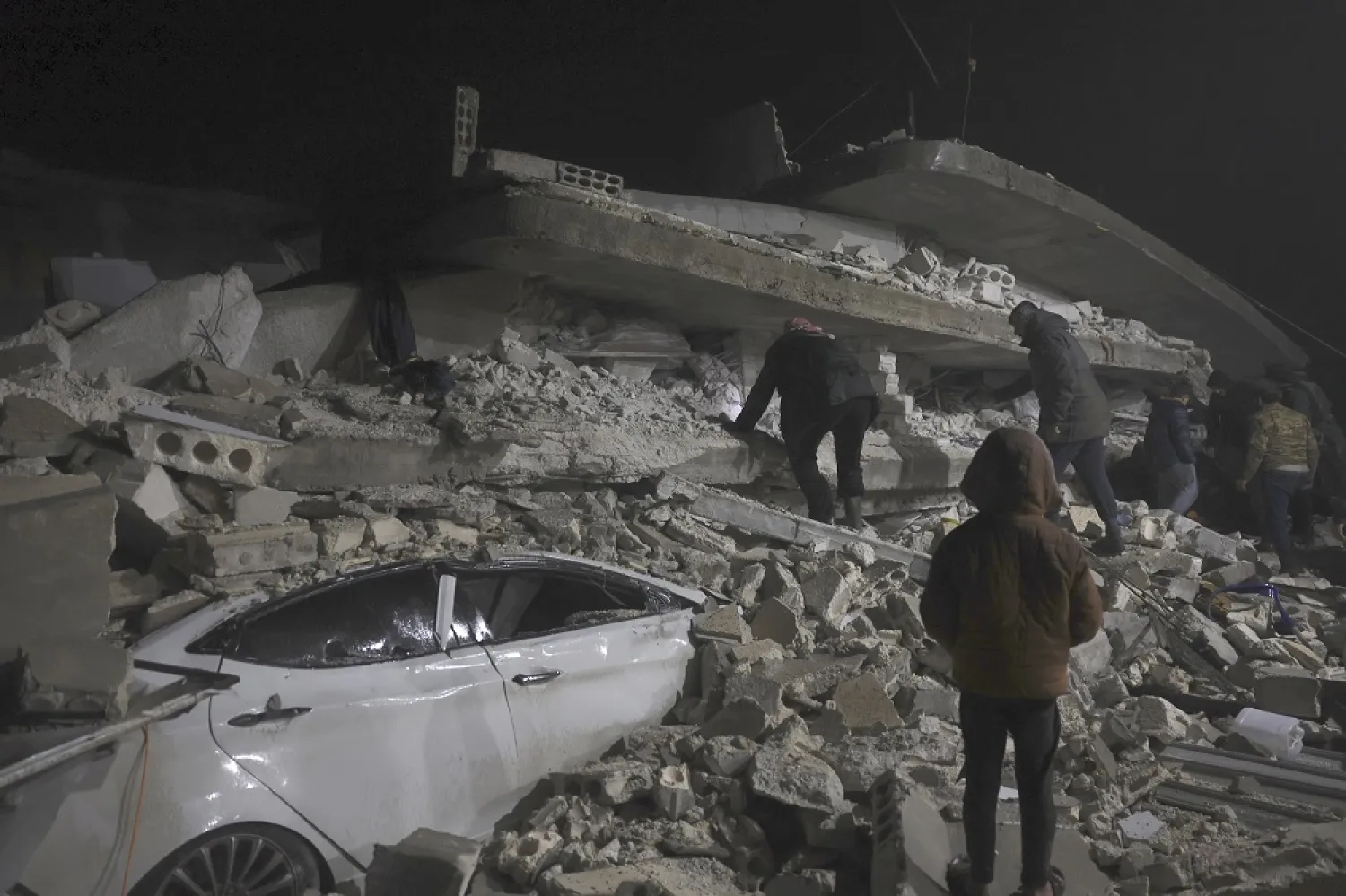
Syrian citizen search through the wreckage of a collapsed building, in Azmarin town, in Idlib province north Syria, Monday, Feb. 6, 2023. (AP)
TT

Powerful Quake Rocks Türkiye and Syria, Kills More than 2,300

Syrian citizen search through the wreckage of a collapsed building, in Azmarin town, in Idlib province north Syria, Monday, Feb. 6, 2023. (AP)

A powerful, 7.8 magnitude earthquake rocked wide swaths of Türkiye and neighboring Syria on Monday, killing more than 2,300 people and injuring thousands more as it toppled hundreds of buildings and trapped residents under mounds of rubble or pancaked floors.

Authorities feared the death toll would rise further as rescuers searched through tangles of metal and concrete for survivors in a region beset by more than a decade of Syria’s war and a refugee crisis.

Residents jolted out of sleep by the pre-dawn quake rushed outside in the rain and snow to escape falling debris, while those who were trapped cried for help. Major aftershocks, including one nearly as strong as the initial quake, continued to rattle the region.

“I don’t have the strength anymore,” one survivor could be heard calling out from beneath the rubble in the Turkish city of Adana, as rescue workers tried to reach him, said a resident, journalism student Muhammet Fatih Yavuz. He said three buildings near his home were toppled.

The quake, which was centered on Türkiye’s southeastern province of Kahramanmaras, sent residents of Damascus rushing into the street and was felt as far away as Cairo and Beirut.

“Because the debris removal efforts are continuing in many buildings in the earthquake zone, we do not know how high the number of dead and injured will rise,” Turkish President Recep Tayyip Erdogan said.

The quake piled more misery on a region that has seen tremendous suffering over the past decade. On the Syrian side, the area affected is divided between government-held territory and the country’s last opposition-held enclave, which is surrounded by Russian-backed government forces. Türkiye, meanwhile, is home to millions of refugees from the war.

In the opposition-held enclave, hundreds of families remained trapped in rubble, the opposition emergency organization, called the White Helmets, said in a statement. The area is packed with some 4 million people displaced from other parts of the country by the war. Many of them live in buildings that are already wrecked from past bombardments.

Strained health facilities and hospitals quickly filled with injured, rescue workers said. Others had to be emptied, including a maternity hospital, according to the SAMS medical organization.

The region sits on top of major fault lines and is frequently shaken by earthquakes. Some 18,000 were killed in similarly powerful earthquakes that hit northwest Türkiye in 1999.

The US Geological Survey measured Monday’s pre-dawn quake at 7.8, with a depth of 18 kilometers (11 miles). Hours later, a 7.5 magnitude one struck more than 100 kilometers (60 miles) away.

The second jolt in the afternoon caused a multistory apartment to topple face-forward onto the street in the Turkish city of Sanliurfa, smashing into rubble and raising a cloud of dust as bystanders screamed, according to video of the scene.

Orhan Tatar, an official from Türkiye’s disaster management agency, said it was a new earthquake, but Yaareb Altaweel, a seismologist with the USGS, said it was considered an aftershock because it took place on the same fault line as the first.

Thousands of buildings were reported collapsed in a wide area extending from Syria’s cities of Aleppo and Hama to Türkiye’s Diyarbakir, more than 330 kilometers (200 miles) to the northeast. A hospital came down in the Mediterranean coastal city of Iskenderun, but casualties were not immediately known, Turkish Vice President Fuat Oktay said.

Such severe damage typically leads to a significant death toll, but bitterly cold temperatures could make matters even worse, reducing the timeframe that rescuers have to save trapped survivors, said Dr. Steven Godby, an expert in natural hazards at Nottingham Trent University. He added that the difficulty of working in areas beset by civil war would only complicate rescue efforts.

Televisions stations in Türkiye aired screens split into four or five, showing live coverage from rescue efforts in the worst-hit provinces. In the city of Kahramanmaras, rescuers pulled two children alive from the rubble, and one could be seen lying on a stretcher on the snowy ground.

Offers of help — from search-and-rescue teams to medical supplies and money — poured in from dozens of countries, as well as the European Union and NATO. The vast majority were for Türkiye, with Russian and even an Israeli promise of help to the Syrian government, but it was not clear if any would go to the devastated opposition-held pocket in the northwest.

In Türkiye, people trying to leave the quake-stricken regions caused traffic jams, hampering efforts of emergency teams. Mosques around the region were opened to provide shelter for people unable to return to damaged homes amid temperatures that hovered around freezing.

In Diyarbakir, hundreds of rescue workers and civilians formed lines across a mountain of wreckage, passing down broken concrete pieces, household belongings and other debris as they searched for trapped survivors while excavators dug through the rubble below.

In northwest Syria, the quake added new woes to the opposition-held enclave centered on the province of Idlib, which has been under siege for years, with frequent Russian and government airstrikes. The territory depends on a flow of aid from nearby Türkiye for everything from food to medical supplies.

The opposition’s Syrian Civil Defense described the situation there as “disastrous.”

At a hospital in Idlib, Osama Abdel Hamid said most of his neighbors died. He said their shared four-story building collapsed just as he, his wife and three children ran toward the exit. A wooden door fell on them and acted as a shield.

“God gave me a new lease on life,” he said.

In the small Syrian opposition-held town of Azmarin in the mountains by the Turkish border, the bodies of several dead children, wrapped in blankets, were brought to a hospital.

The Directorate-General of Antiquities and Museums in Syria said the earthquake has caused some damage to the Crusader-built Marqab, or Watchtower Castle, on a hill overlooking the Mediterranean. Part of a tower and parts of some walls collapsed.

In Türkiye, meanwhile, the quake damaged a historic castle perched atop a hill in the center of the provincial capital of Gaziantep, about 33 kilometers (20 miles) from the epicenter. Parts of the fortresses’ walls and watch towers were leveled and other parts heavily damaged, images from the city showed.

More than 1,500 people were killed in 10 Turkish provinces, with some 9,700 injured, according to Turkish authorities. The death toll in government-held areas of Syria climbed to over 460 people, with some 1,300 injured, according to the Health Ministry. In the country’s opposition-held northwest, groups that operate there said the death toll was at least 380, with many hundreds injured.

Huseyin Yayman, a legislator from Türkiye’s Hatay province, said several of his family members were stuck under the rubble of their collapsed homes.

“There are so many other people who are also trapped,” he told HaberTurk television by telephone. “There are so many buildings that have been damaged. People are on the streets. It’s raining, it’s winter.”


Yemen's PLC Imposes No Fly-Zone, Sea and Ground Blockade on All Ports and Crossings

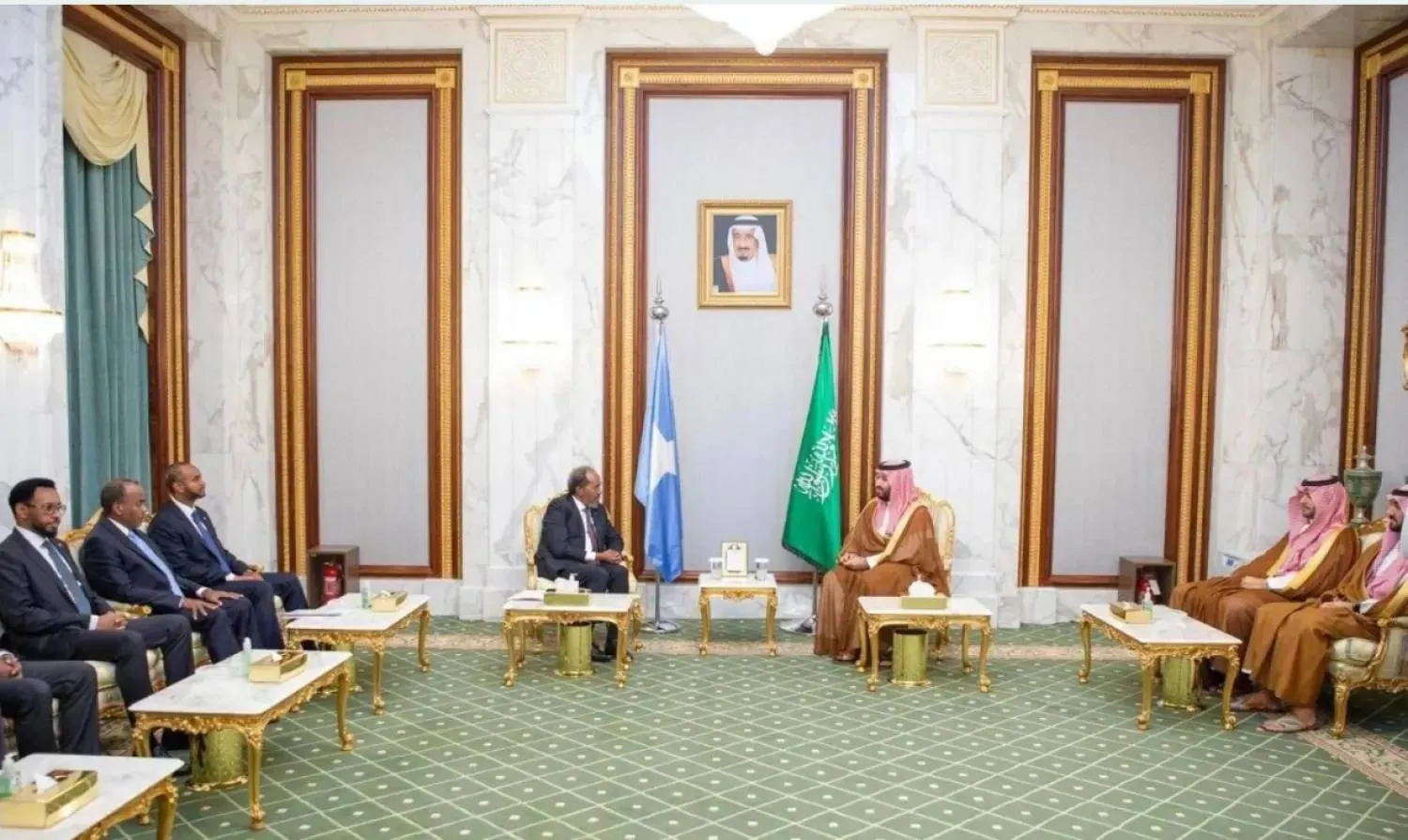
Chairman of Yemen's Presidential Leadership Council Dr. Rashad al-Alimi. (Saba)
TT

Yemen's PLC Imposes No Fly-Zone, Sea and Ground Blockade on All Ports and Crossings

Chairman of Yemen's Presidential Leadership Council Dr. Rashad al-Alimi. (Saba)

Chairman of Yemen's Presidential Leadership Council Dr. Rashad al-Alimi declared on Tuesday a state of emergency throughout the country in wake of the "internal strife caused by the military rebellion in eastern provinces aimed at dividing the republic."

He called for all military formations and forces in the Hadhramaut and Al-Mahra governorates to coordinate completely with the Coalition to Restore Legitimacy in Yemen, represented by Saudi Arabia, and to immediately return to their original positions without a fight. They should cede their positions in the two governorates to the National Shield forces.

Al-Alimi said the state of emergency will last 90 days, which can be extended. He also imposed a no fly-zone, sea and ground blockade on all ports and crossings for 72 hours.

The move also stems from "the commitment to the unity of Yemen, its sovereignty, independence, and territorial integrity and the need to confront the Houthi coup that has been ongoing since 2014," he stressed.

Moreover, al-Alimi called on "all United Arab Emirates forces to leave the country within 24 hours."

"We will firmly deal with any rebellion against state institutions," he warned.

He called on the Southern Transitional Council to "return to reason and quickly and unconditionally withdraw its forces from Hadhramaut and Al-Mahra."

Al-Alimi announced the state of emergency shortly after the Saudi-led Arab coalition carried out a "limited" airstrike targeting a military shipment that had arrived in Yemen's Al-Mukalla port.

In a statement, coalition spokesman Major General Turki al-Malki said the forces detected on Saturday and Sunday the arrival of two vessels from the Port of Fujairah to Mukalla without obtaining any permits from the Joint Forces Command.

Saudi Arabia expressed on Tuesday its disappointment in the United Arab Emirates for pressuring the STC to carry out military operations on the Kingdom's southern borders in Hadhramaut and Al-Mahra.

A Saudi Foreign Ministry statement said: "The steps taken by the UAE are considered highly dangerous, inconsistent with the principles upon which the Coalition to Restore Legitimacy in Yemen was established, and do not serve the coalition's purpose of achieving security and stability for Yemen."

"The Kingdom stresses that any threat to its national security is a red line, and the Kingdom will not hesitate to take all necessary steps and measures to confront and neutralize any such threat," it declared.


STC Accused of Committing Hundreds of Violations in Yemen's Hadhramaut 

A person waves a South Yemen flag during a rally in the southern port city of Aden, Yemen, 25 December 2025. (EPA)
TT

STC Accused of Committing Hundreds of Violations in Yemen's Hadhramaut 

A person waves a South Yemen flag during a rally in the southern port city of Aden, Yemen, 25 December 2025. (EPA)

Yemeni Defense Minister Mohsen Mohammed al-Daeri welcomed on Monday Saudi Defense Minister Prince Khalid bin Salman's message to the Yemeni people in which he called on the Southern Transitional Council (STC) to withdraw its forced from the Hadhramaut and al-Mahra governorates.

He said the message underscores "Saudi Arabia's firm support to Yemen and its legitimate authorities and its constant keenness on backing its unity."

The Kingdom has backed Yemen's efforts to restore state institutions, liberate all of its territories and achieve the goals of the Arab coalition and therefore bolster security and stability in Yemen and the region, he added in a post on Facebook.

He expressed his "absolute trust in the Saudi leadership and its ability to overcome and resolve any differences to help guide both northern and southern Yemen to safety."

He hailed the "Saudi sacrifices and its continuous generous support" to Yemen in all fields, voicing his pride "in this strategic partnership that will remain a cornerstone to completing the liberation and building a secure and prosperous future."

Hundreds of violations

Separately, as the STC continues its unilateral military escalation, reports have emerged of hundreds of violations it has committed in Hadhramaut.

The Yemeni Network for Rights and Freedoms (YNRF) documented 614 violations in the governorate between December 2 and 25. It spoke of a "systematic" targeting of civilians and social infrastructure that has displaced some 5,000 families.

In a report on Monday, it said that the "extent of the violations reflects a systematic pattern of practices that cannot be described as incidental. Rather, they are part of a methodical policy that threatens social peace and undermines the rule of law in one of Yemen's most relatively stable governorates."

The violations include murder, extrajudicial killings, arbitrary arrests, forced disappearances and displacement, and looting of private and public property. It documented the killing of 35 members of the army and 12 civilians, and the injury of 56 others, in Hadhramaut.

It documented seven cases of extrajudicial killings of prisoners and 316 cases of arbitrary arrest against civilians. It reported 216 cases of forced disappearances in Hadhramaut, Raymah, Hajjah, Taiz, Dhumar, Abyan, Ibb and other provinces.

The network noted the looting of 112 homes and 56 commercial establishments.

It said that it has received dozens of notices about the detention and forced disappearance of civilians. It revealed that hundreds of military personnel have been reported missing in grave violation of national law and international standards.

The network said the STC violations are a flagrant violation of international humanitarian law and commitments that have been made in Yemen. Some of the violations can also amount to war crimes and crimes against humanity.

It warned of the "catastrophic" humanitarian consequences of the violations, such as the breakup of the social fabric, greater internal displacement, and collapse of the local economy.

It demanded clear international condemnation of the violations in Hadhramaut, urging an immediate and unconditional end to them. It called for the immediate release of all arbitrarily held detainees and that looted property be returned to their owners. It also demanded that those responsible be held to account.

The developments in Hadhramaut "were not an isolated incident, but part of a systematic pattern that undermines the opportunities for stability and peace in Yemen," it warned.


Syria Reveals New Post-Assad Banknotes

Syria's President Ahmed al-Sharaa (L) and Syria's Central bank chief Abdul Qadir al-Hasriya (R) hold one of the country's new revamped currency notes at the Conference Palace in the Syrian capital Damascus on December 29, 2025. (AFP)
TT

Syria Reveals New Post-Assad Banknotes

Syria's President Ahmed al-Sharaa (L) and Syria's Central bank chief Abdul Qadir al-Hasriya (R) hold one of the country's new revamped currency notes at the Conference Palace in the Syrian capital Damascus on December 29, 2025. (AFP)

Syrian leader Ahmed al-Sharaa unveiled on Monday new banknotes replacing those showing ousted ruler Bashar al-Assad and his family, hoping the Syrian pound can regain some of the value lost to over a decade of war.

Improving the standing of the Syrian pound is among the greatest challenges for Syria's new authorities, who will remove two zeros, in a process known as redenomination.

The new bills, which range from 10 to 500 Syrian pounds, will enter circulation on January 1. They show images of roses, wheat, olives, oranges and other agricultural symbols for which Syria is famous.

After unveiling the banknotes, Sharaa said the new currency marks "the end of a previous, unlamented phase and the beginning of a new phase that the Syrian people... aspire to".

"The new currency design is an expression of the new national identity and a move away from the veneration of individuals."

Since the start of Syria's civil war in 2011, the pound has plunged from 50 to around 11,000 against the greenback, and Syrians are forced to carry huge wads of banknotes even for basic needs like grocery shopping.

The removal of the zeros, which does not impact the currency's value, was done to make transactions easier and restore trust in the Syrian pound.

"If someone wants to buy something simple, they need to carry bags in order to trade, so people go for dollars," Sharaa said, adding that the currency revamp will boost "the national currency within the country and strengthen trust".

"Syria deserves a strong economy and a stable currency."

Syria's old banknotes were printed in Russia, Assad's former backer.

When asked by journalists, Syrian central bank chief Abdul Qadir al-Hasriya did not specify where the new currency will be printed.