Governmental, International Strategies to Address Food Insecurity in Yemen

UN aid distributed to Yemeni displaced citizens in Hajjah (AFP)
TT

Governmental, International Strategies to Address Food Insecurity in Yemen

UN aid distributed to Yemeni displaced citizens in Hajjah (AFP)

The Yemeni government, in cooperation with international organizations, is seeking to build alliances and strategies to confront the growing threat of food insecurity in the country.

The authorities began discussions on the "Livelihoods and Improving Resilience in Rural Areas" program, adopted by the UN Development Program (UNDP), the Food and Agriculture Organization (FAO), the European Union, and the Swedish International Development Cooperation Agency (SIDA).

The program targets nearly one million Yemeni citizens in the agricultural sector in seven governorates.

The Minister of Planning and International Cooperation, Waed Bathib, said the program represents a distinguished model for three-dimensional projects that combine humanitarian support and development work.

Bathib also noted that it contributes to developing livelihoods and providing job opportunities for farmers, raising the productivity of the agricultural sector, and empowering youth and women.

It supports sustainable development, especially in the agricultural sector, food security, and value chains, and responds to limiting the repercussions of crises in the farming industry, climate changes, and resisting economic shocks.

The World Food Program recently stated that food insecurity in Yemen still exists despite the increase in fuel and food imports to Hodeidah ports over the past year, hinting at the failure of the Houthi militia to fulfill its obligations to pay public servants' wages per the UN armistice.

The report warned that food insecurity is concerning nationwide, and adequate food consumption remained beyond reach for 53 percent of the surveyed families under government control, compared to 47 percent under Houthi control.

In cooperation with the UN and its affiliated organizations, the government is trying to boost efforts to confront the growing food crisis and the economic situation.

Meanwhile, the Minister of Local Administration for Relief Affairs, General Coordinator of the Higher Committee for Relief, Jamal Balfakih, stated that the Yemeni government is seeking to mobilize efforts with donor countries to increase support for the response plan.

Balfakih told Asharq Al-Awsat that the steadfastness of Yemeni society depends on the continuous support of the coalition supporting legitimacy led by Saudi Arabia.

He explained that the war and Chapter VII of the UN Charter made it dependent on humanitarian aid.

The official noted that the long war led to the most significant internal displacement in Yemen and resulted in a major demographic change and pressure on services in the host provinces.

A source at the Ministry of Planning and International Cooperation told Asharq Al-Awsat that the government and the special committee for improvement are in permanent session.

He indicated that they are exerting efforts to assess the situation of food security in Yemen, set the requirements to face food shortage, find appropriate solutions and remedies, and create networks to support the plans and projects agreed upon with the UN and its bodies.

The source, who asked not to be named because he was not authorized to speak to the media, added that the government also began implementing the policy of exempting basic materials from customs duties and taxes.

Furthermore, the Professor of Economics at Taiz University, Mohammad Qahtan, believes that there is an urgent need to reform the salary and wages system or take effective financial and monetary policies to restore the Yemeni riyal's value against the dollar.

Qahtan told Asharq Al-Awsat that although public servants in the liberated areas receive their salaries regularly, the wages have lost over 80 percent of their value following the drop in the exchange rate.

He explained that the deterioration of living conditions is due to the division between the Central Bank of Yemen and the banking system between Sanaa and Aden and the subsequent differences in the purchasing value of the local currency in its old and new editions.

The expert warned that this led to a massive rise in unemployment and poverty rates throughout Yemen and major collapses in various fields.

Lebanese Expat Admits to Working with Israel in Abduction of Former Officer

Retired Lebanese General Security officer Ahmad Shukr, who was abducted in eastern Lebanon (Family file photo / Asharq Al-Awsat)
TT

Lebanese Expat Admits to Working with Israel in Abduction of Former Officer

Retired Lebanese General Security officer Ahmad Shukr, who was abducted in eastern Lebanon (Family file photo / Asharq Al-Awsat)

Lebanese authorities have concluded their investigation into the abduction and disappearance of retired General Security captain Ahmed Shukr, reaching what officials described as a “decisive conclusion” three weeks after he vanished under mysterious circumstances.

A senior judicial source told Asharq Al-Awsat that Shukr was kidnapped in a “highly precise and complex security operation” planned and executed by Israel’s Mossad, which exploited security gaps and relied on the direct cooperation of a Lebanese operative recruited specifically for the mission.

The source stressed that the operation “was not random, but part of an organized intelligence effort,” adding that Shukr was targeted for reasons that remain unknown.

Public Prosecutor Judge Jamal Hajjar ordered the closure of the investigation’s preliminary phase, during which only one suspect was arrested: A Lebanese expatriate residing in Africa, believed to have worked for the Mossad and to have played a central role in luring and abducting Shukr.

According to the judicial source, the suspect initially denied any involvement but soon confessed to cooperating with the Mossad and carrying out multiple assignments, including the task of luring Shukr prior to his abduction.

He admitted to meeting Mossad officers in Africa and receiving payments ranging from $5,000 to $10,000 for each mission.

Investigators said the suspect had prior acquaintance with Shukr, enabling him to build a relationship of trust. After returning to Lebanon roughly ten days ago — apparently in an attempt to dispel suspicion — the suspect rented an apartment owned by Shukr in the town of Choueifat.

Investigators described this detail as crucial in understanding how Shukr was drawn into the trap, alongside other technical and logistical evidence that reinforced the conclusion the operation was carried out with high precision under the supervision of a professional intelligence service.

The suspect’s confessions were corroborated by technical evidence, particularly telecommunications data tracing Shukr’s movements and the timing of his disappearance.

While the initial phase of the investigation has been concluded, authorities say it remains open to the possible involvement of additional suspects believed to be inside Lebanon. Efforts are also ongoing to determine Shukr’s fate, which remains unknown.

The case is expected to be referred to Government Commissioner to the Military Court Judge Claude Ghanem for prosecution of the suspect and anyone else implicated.

Hajjar has also issued search warrants for two individuals—a Swedish national of Syrian origin and a French national of Lebanese origin, suspected of luring Shukr from his hometown of Nabi Sheet to an area near Zahle under the pretext of assisting with a property purchase.

Both men disappeared following Shukr’s abduction. The Swedish suspect is known to have left Lebanon via Beirut’s international airport within hours, while it remains unclear whether the French suspect fled illegally.

Investigators believe the operation may be linked to the long-standing case of Israeli pilot Ron Arad, who went missing in Lebanon in 1986.

Shukr’s family has rejected links to Fuad Shukr, a Hezbollah official killed by Israel in July 2024 in Beirut’s southern suburbs, saying no one in the town even knew him.


Lebanon: Army Says Achieved State Monopoly on Arms in the South in 'Effective’ Way

FILE - Lebanese army soldiers walk through a tunnel dug into a mountain that was used by Hezbollah fighters as a clinic and storage facility near the Lebanese-Israeli border in the Zibqin Valley, southern Lebanon, Nov. 28, 2025. (AP Photo/Bilal Hussein, File)
TT

Lebanon: Army Says Achieved State Monopoly on Arms in the South in 'Effective’ Way

FILE - Lebanese army soldiers walk through a tunnel dug into a mountain that was used by Hezbollah fighters as a clinic and storage facility near the Lebanese-Israeli border in the Zibqin Valley, southern Lebanon, Nov. 28, 2025. (AP Photo/Bilal Hussein, File)

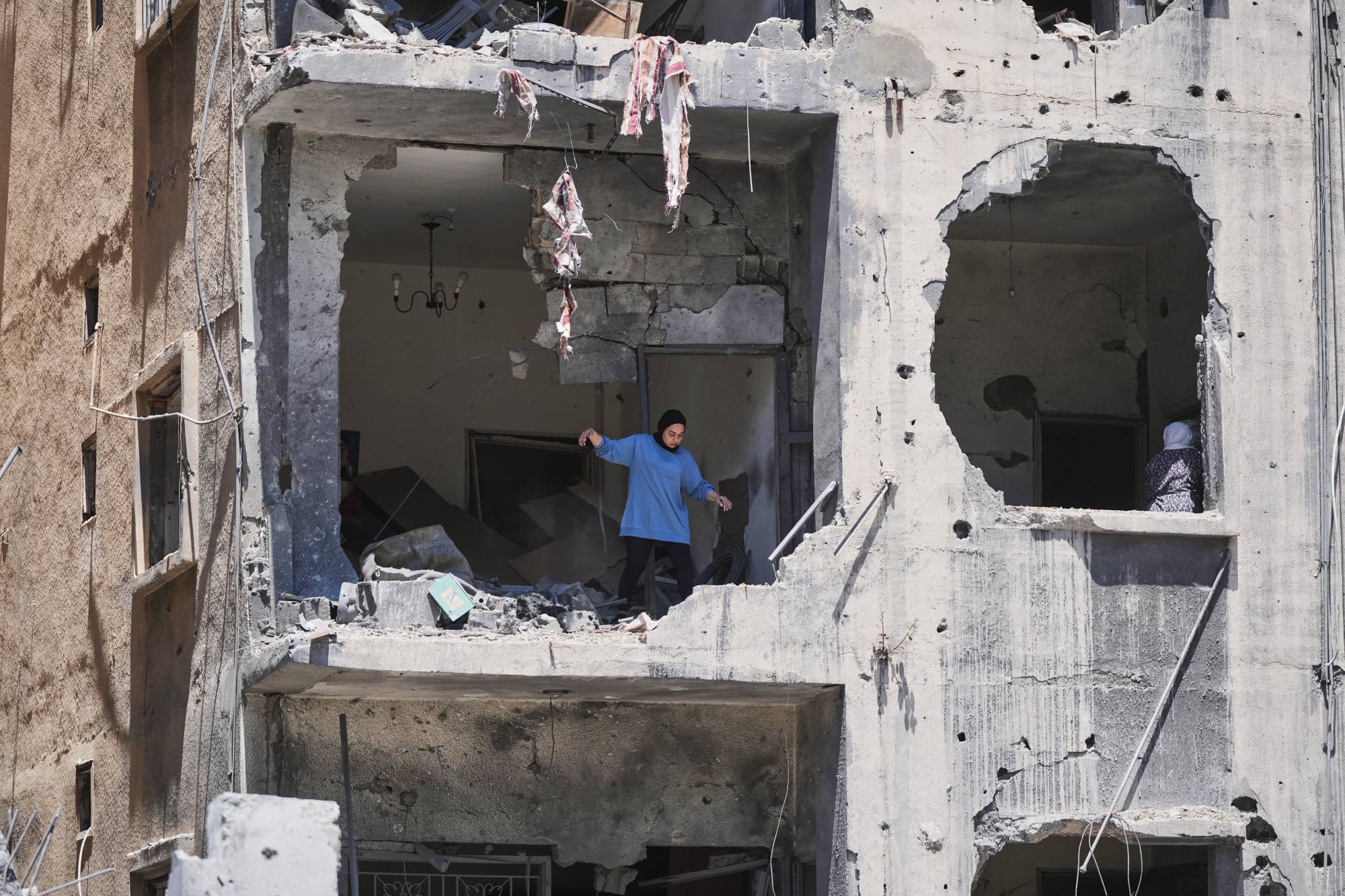
The Lebanese army said on Thursday that it had achieved the goal of a state monopoly on arms in the country’s south in an "effective and tangible way", but said there was more work to be done to clear unexploded ordnance and tunnels in the area.

The army had set a year-end deadline to clear non-state weaponry from southern Lebanon, which ⁠borders Israel, before moving on to other areas of the country.

It said it had extended operational control over the south, except for areas still occupied by Israeli troops.

The statement did not mention Hezbollah, which ⁠fought a year-long war with Israel that ended in a 2024 ceasefire that stipulated that only Lebanon’s state security forces were allowed to carry arms.

A Lebanese security source told Reuters that the statement signaled that no group would be able to launch attacks from southern Lebanon.

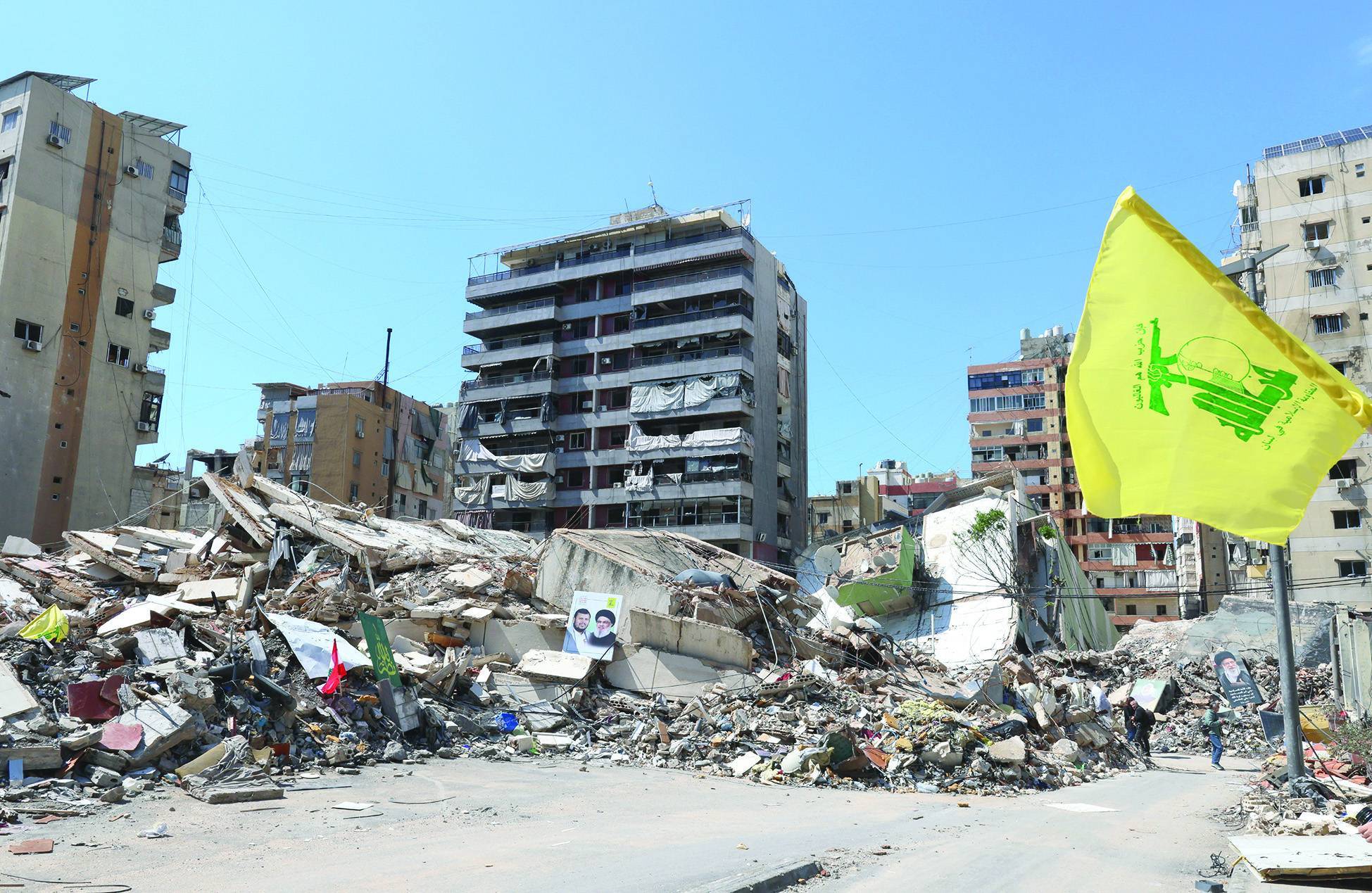
Israel and Lebanon agreed to a US-brokered ceasefire in 2024, ending more than a year of fighting between Israel and Hezbollah. That culminated in Israeli strikes that severely weakened the group. Since then, the sides have traded accusations of violations.


Egypt Calls for Safe Shelter, Humanitarian Access to Sudanese

Abdel Fattah el-Sisi during the reception of Abdel Fattah al-Burhan in Cairo last month (Egyptian Presidency)
TT

Egypt Calls for Safe Shelter, Humanitarian Access to Sudanese

Abdel Fattah el-Sisi during the reception of Abdel Fattah al-Burhan in Cairo last month (Egyptian Presidency)

Cairo on Wednesday affirmed the need to provide safe shelter and unimpeded humanitarian access to Sudanese, condemning the massacres and serious violations against civilians in El Fasher and North Kordofan.

Egypt’s position was conveyed by Foreign Minister Badr Abdelatty during a phone call with Tom Fletcher, the United Nations (UN) Under-Secretary-General for Humanitarian Affairs and Emergency Relief Coordinator.

Abdelatty called for urgent measures to protect civilians and affirmed Egypt’s full support for the work of the UN Office for the Coordination of Humanitarian Affairs (OCHA) and its central role in strengthening effective responses to humanitarian crises in the region, whether in the occupied Palestinian territories or Sudan.

Recently, Egypt has intensified contacts to support Sudan's sovereignty, protect its national institutions, and push towards a comprehensive ceasefire within the framework of the “Quad Mechanism.”

Last August, the Mechanism, comprising Saudi Arabia, Egypt, United States, and United Arab Emirates, proposed a roadmap in which it called for a three-month initial humanitarian truce, then an inclusive and transparent transition process within nine months to meet the aspirations of the Sudanese people towards smoothly establishing an independent, civilian-led government with broad-based legitimacy and accountability.

During the phone call on Wednesday, Abdelatty stressed the importance of close coordination with the UN and its specialized agencies to ease civilian suffering and support regional stability.

On Dec. 28, the Egyptian Red Crescent (ERC), in coordination with the Sudanese Red Crescent Society, sent a humanitarian aid convoy to support the Sudanese people, carrying around 70 tons of food, medical supplies, and other relief items.

Last month, the Egyptian presidency issued a statement on the war in Sudan outlining three points it described as “red lines.”

Egypt would not allow any of them to be crossed or compromised, as they directly affect Egypt’s national security, which it said is inseparable from Sudan’s national security.

The reference to activating the joint defense agreement between the two countries was seen as a signal that Egypt could bring its military, political, and diplomatic weight in support of the Sudanese army.

President Abdel Fattah el-Sisi had received last month Lt. Gen. Abdel Fattah al-Burhan, Chairman of Sudan’s Transitional Sovereignty Council in Cairo.

El-Sisi reaffirmed Egypt’s “full support for the Sudanese people in overcoming the current critical phase,” stressing his country’s unwavering commitment to Sudan’s unity, sovereignty, security, and stability.

Meanwhile, Egypt’s Foreign Ministry said Abdelatty discussed with Fletcher the humanitarian situation in Gaza.

The minister urged intensified international action to ensure full and unhindered access for humanitarian, medical, and relief aid into Gaza, calling for the removal of Israeli restrictions that he said were blocking sufficient aid deliveries as winter conditions worsen.

He also stressed the need to protect civilians and speed up the entry of essential supplies, including relief materials and mobile housing units, to mitigate civilian suffering in the Gaza Strip.