Warm Water Melts Weak Spots on Antarctica’s ‘Doomsday Glacier’, Say Scientistshttps://english.aawsat.com/home/article/4160591/warm-water-melts-weak-spots-antarctica%E2%80%99s-%E2%80%98doomsday-glacier%E2%80%99-say-scientists
Warm Water Melts Weak Spots on Antarctica’s ‘Doomsday Glacier’, Say Scientists
A robot nicknamed Icefin operates under the sea ice near McMurdo Station in Antarctica in 2020. (Icefin/NASA PSTAR RISE UP via AP)
Scientists studying Antarctica's vast Thwaites Glacier - nicknamed the Doomsday Glacier - say warm water is seeping into its weak spots, worsening melting caused by rising temperatures, two papers published in Nature journal showed on Wednesday.
Thwaites, which is roughly the size of Florida, represents more than half a meter (1.6 feet) of global sea level rise potential, and could destabilize neighboring glaciers that have the potential to cause a further three-meter (9.8-foot) rise.
As part of the International Thwaites Glacier collaboration - the biggest field campaign ever attempted in Antarctica - a team of 13 US and British scientists spent about six weeks on the glacier in late 2019 and early 2020.
Using an underwater robot vehicle known as Icefin, mooring data and censors, they monitored the glacier's grounding line, where ice slides off the glacier and meets the ocean for the first time.
In one of the papers, led by Cornell University-based scientist Britney Schmidt, researchers found that warmer water was making its way into crevasses and other openings known as terraces, causing sideways melt of 30 meters (98 feet) or more per year.
"Warm water is getting into the weakest parts of the glacier and making it worse," Schmidt told Reuters.
"That is the kind of thing we should all be very concerned about," she said about the findings which underscored how climate change is reaching isolated Antarctica.
The other paper's findings, which Schmidt also worked on, showed about five meters (16 feet) per year of melt near the glacier's grounding line - less than what the most aggressive thinning models previously predicted.
But she said the melting was still of grave concern.
"If we observe less melting... that doesn't change the fact that it's retreating," Schmidt said.
Scientists have previously depended on satellite images to show the behavior of the ice, making it difficult to get granular details. The papers represent the first time a team has been to the grounding line of a major glacier, providing a look right where "the action begins," Schmidt said.
The findings will help in the development of climate change models, said Paul Cutler, program director of Antarctic Sciences at the National Science Foundation. He reviewed the papers, but was not involved in the research.
"These things can now be taken on board in the models that will predict the future behavior, and that was exactly the goal of this work," he said.
Directors Yuval Abraham, left, and Rachel Szor pose for photographers at the photo call for the film "NAZA" during the 83rd edition of the Venice Film Festival in Venice, Italy, on Thursday, Sept. 10, 2026. (AP)
Gaza Documentary 'NAZA' to be Available Online Free
Directors Yuval Abraham, left, and Rachel Szor pose for photographers at the photo call for the film "NAZA" during the 83rd edition of the Venice Film Festival in Venice, Italy, on Thursday, Sept. 10, 2026. (AP)
Israeli director Yuval Abraham said Thursday that his documentary "NAZA", which won an award at the Venice Film Festival and has faced fierce backlash at home, will be made available online for free in November.
The film is based on testimony from 24 anonymous Israeli military whistleblowers who accuse the army of widespread killing of civilians in Gaza with the use of AI-powered targeting systems.
In a message posted on X also on behalf of co-director Rachel Szor, Abraham said that he wanted to make the film accessible to as many people as possible to allow the "truth to emerge."
"I made this film to spark a public debate about the government's actions in Gaza, the killing of more than 73,000 people, most of them civilians, and the normalization of a war of annihilation," the filmmaker wrote, AFP reported.
"NAZA" takes its name from the Israeli military term for civilian casualties expected in airstrikes, an abbreviated form of the Hebrew phrase for "collateral damage".
The film has triggered strong reactions in Israel. Culture Minister Miki Zohar requested that authorities consider revoking the citizenship of the two filmmakers on account of "treason", while Prime Minister Benjamin Netanyahu described it as "shocking".
Shortly after the documentary was screened in Venice, a crowd of protestors marched to Szor's parents' home two nights in a row, calling on authorities to "expel the traitors".
The Israeli military, for its part, has "categorically rejected" the allegations, stressing that the anonymity of those interviewed and the absence of locations or dates made any verification impossible.
It reiterated that decisions on strikes are made by humans and that significant efforts are made to protect civilians.
Abraham said he believed his film had "cracked the screen of indifference" in Israel despite a "high personal cost", adding that he and Rachel Szor would return to Israel to "continue fighting" for the country's future.
Launched in retaliation for the deadly attacks carried out by Hamas on Israeli soil on October 7, 2023, Israel's military offensive in Gaza has killed more than 73,000 people, according to the health ministry in the territory controlled by the Islamist movement, whose figures are considered reliable by the United Nations.
Saudi Flag Flies High in Makkah for National Dayhttps://english.aawsat.com/varieties/5322122-saudi-flag-flies-high-makkah-national-day
Flying the flag at such a height underscores its national significance and the values of monotheism - SPA
The Saudi flag was raised high in Makkah to celebrate the National Day, reflecting dignity, pride, and honor, and serving as a symbol of the Saudi state's unity and sovereignty.
Located on Prince Mohammed bin Salman Road, the flagpole is one of Makkah's most prominent national landmarks.
Standing more than 80 meters tall, it is among the city's tallest flagpoles, with the flag visible from afar at one of its main gateways, according to SPA.
Flying the flag at such a height underscores its national significance and the values of monotheism, justice, and strength it represents, while reflecting a deep sense of belonging and loyalty to the nation and its leadership.
India Takes Battle Against Junk Food to Shops Near Schoolshttps://english.aawsat.com/varieties/5322023-india-takes-battle-against-junk-food-shops-near-schools
India Takes Battle Against Junk Food to Shops Near Schools
A schoolchild inside a grocery shop in Cuttack, Odisha, India, September 18, 2026. REUTERS/Priyanshu Singh
India is moving closer to new regulations to restrict the sale of foods high in fat and sugar within a 50-meter radius of schools, the latest proposal to cut the consumption of junk food in a country battling growing rates of obesity, especially among children.
The rule would impact family-run stores, restaurants and food stands selling everything from sugary soft drinks and salty chips to greasy samosas and fatty pizzas or burgers close to India's 1.5 million schools.
It could prove another hurdle for multinationals such as PepsiCo, Coca-Cola, Mondelez and Nestle, which already face proposed rules to put red warning labels on products high in fat, salt and sugar (HFSS), bringing India into line with markets such as Chile and Mexico that have tougher food safety regulations.
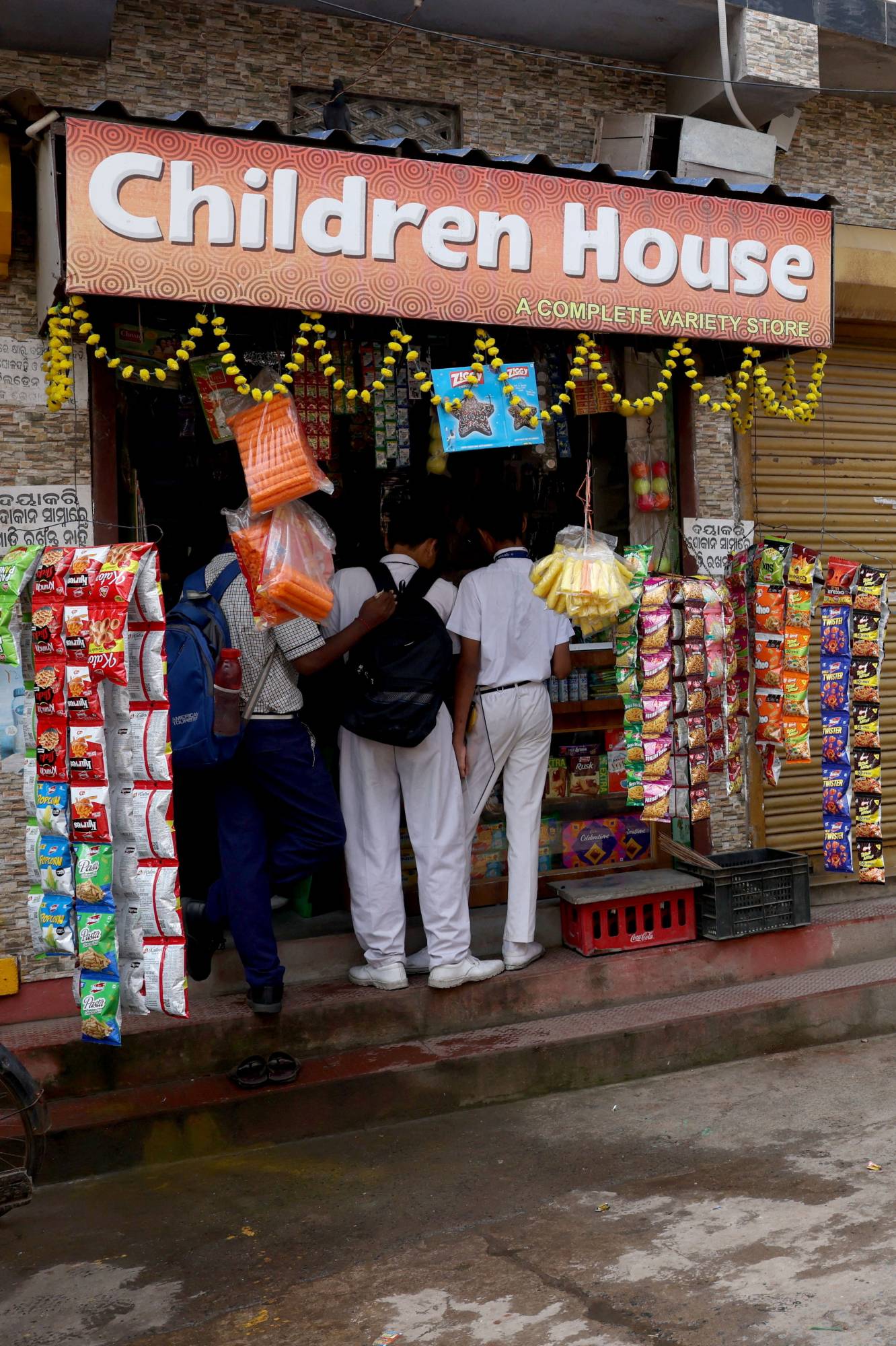
Some Indian businesses and grocery shop owners near schools are already fretting. In Bhubaneswar city in eastern India, a dozen shopkeepers said sales could drop by a third or more, Reuters reported.
At one shop, 15-year-old Priyanshu Palei bought two packets of PepsiCo's popular Uncle Chipps, stuffing them into his backpack on the way to class. "I will have these during recess," he said, preferring them over his mother's packed lunch of rice and lentil stew.
That's the habit India wants to break.
Rajit Punhani, the chief executive of the Food Safety and Standards Authority of India, which is driving the changes, said the "safe food" schools plan aimed to steer children away from unhealthy habits early on.
"We have to discourage children from having these. We have to inculcate this habit," he told Reuters. "It will not have an impact on businesses in a major way. Shop owners can sell non-HFSS foods," he added, saying regulations are aimed at nudging companies to reformulate recipes.
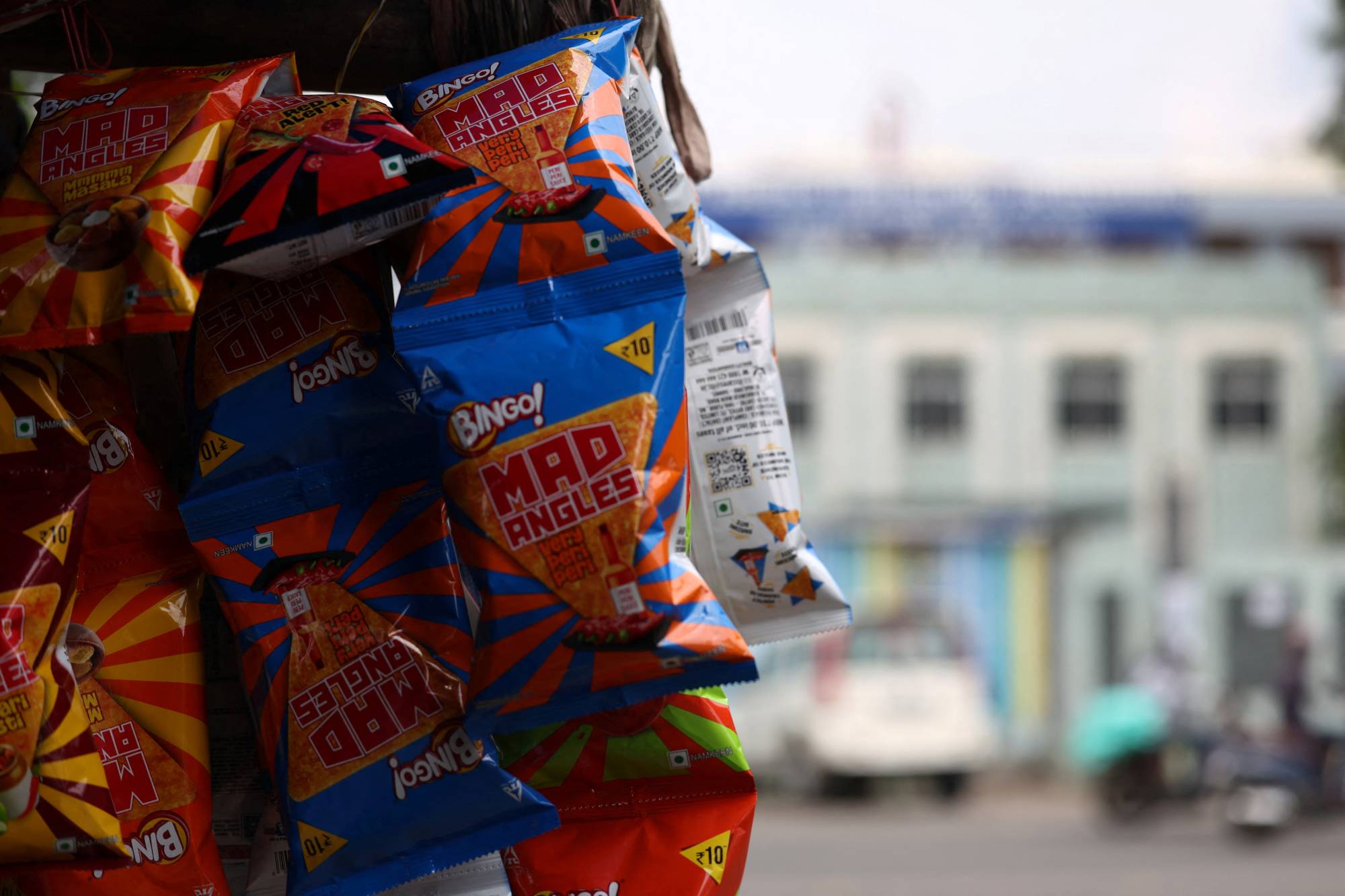
Packets of chips and snacks hang at a grocery shop in Bhubaneswar, Odisha, India, September 17, 2026. REUTERS/Priyanshu Singh
There is no fixed timeline for the law, first proposed in 2020. Amid a nationwide food safety crackdown, the authority in August published thresholds for fat, salt and sugar content that would trigger restrictions on sales near and inside schools, inviting public feedback until October 6.
In recent years, products ranging from Lay's chips to Cadbury chocolates and Maggi noodles have grown in popularity. Some Indians with lower incomes view buying foreign brands as a mark of an improving lifestyle, while also being drawn by cheap prices. In 2023, Domino's launched its cheapest pizza in the world in India, selling for just 49 rupees (50 US cents).
As diets changed, the number of Indian children aged 5-19 deemed overweight or obese has also climbed. From 28 million in 2015, it surged nearly 50% to 41 million by 2025 and will touch 56 million by 2040, World Obesity Federation data shows.
While India's federal law aims to block near-school shops from selling and advertising HFSS products only to schoolchildren, the western state of Maharashtra, home to Mumbai, has taken a stricter approach - no shop within 50 meters of schools can carry such products, state food safety commissioner Tukaram Mundhe told Reuters.
"There will be hundreds of such shops near schools. How will one regulate if they are selling to schoolchildren or not? Shops cannot stock these items," said Mundhe.
State data accessed by Reuters showed inspectors have so far found violations at 133 shops within 50 meters of schools, and ordered 51 to discontinue their business.
The Confederation of Indian Food Trade and Industry is concerned, saying compliance would be difficult as many schools are close to congested markets serving the general public, according to its confidential draft submission made to respond to the proposal, and reviewed by Reuters. The trade group did not respond to queries.
The law can cause "loss of business and livelihood," the document said, arguing restrictions should only apply inside schools.
Asked about the schools proposal, PepsiCo, which owns Lay's, referred Reuters to its global policy which limits what products it allows to be sold in schools. Nestle, which makes Maggi noodles, said it follows its global policy which only allows the sale in primary and secondary schools of products that meet specific nutrition criteria.
Coca-Cola and Mondelez, owner of Cadbury, did not respond to Reuters queries.
Rahul Khanna, a food regulations specialist at Indian law firm RAKLaw, said there was a "wave of concern" among his firm's clients, especially confectionery makers for whom children are an "important consumer segment". He did not name the clients.
Schoolchildren stand at the front of a grocery shop in Bhubaneswar, Odisha, India, September 18, 2026. REUTERS/Priyanshu Singh
Around the world, five countries have proposed or implemented sale restrictions around schools, while 48 have restricted junk food sales inside schools, according to researchers at the University of North Carolina.
In 2016, Chile imposed new rules on warning labels and prohibited the sale and promotion of junk food in schools. A Lancet study this year said that 18 months of exposure to the law saw a 2.85% lower probability of excess weight among girls, and 2.4% among boys.
The law also pushed manufacturers to reformulate recipes of many products in Chile.
"If the law were ineffective and consumers did not change their behavior, producers would not push back," said Guillermo Paraje, a professor at Adolfo Ibáñez Business School in Chile.
"They know the law will make them reformulate as much as they can."
لم تشترك بعد
انشئ حساباً خاصاً بك لتحصل على أخبار مخصصة لك ولتتمتع بخاصية حفظ المقالات وتتلقى نشراتنا البريدية المتنوعة