


People across the World Gather to Mark War Anniversary

People with a huge Ukrainian flag attend a demonstration against Russia's war on Ukraine to mark the first anniversary of Russia's full-scale invasion of Ukraine, in Berlin, Germany, Friday, Feb. 24, 2023. (AP)
TT

People across the World Gather to Mark War Anniversary

People with a huge Ukrainian flag attend a demonstration against Russia's war on Ukraine to mark the first anniversary of Russia's full-scale invasion of Ukraine, in Berlin, Germany, Friday, Feb. 24, 2023. (AP)

World landmarks were lit up in the colors of Ukraine’s national flag as people across the globe threw their support behind the country Friday on the anniversary of Russia's full-scale invasion.

The Empire State Building, the Eiffel Tower and Sydney Opera House gleamed in yellow and blue in solemn remembrance of the outbreak of the war on Feb. 24, 2022.

The conflict has affected economies worldwide, bringing shortages of energy, grain and fertilizer, and the date drew people to peace rallies and other events in the Middle East, Asia and Latin America, as well as Europe.

Among the memorials, stunts and ceremonies, a wrecked Russian tank was put on display in Berlin, a bloody cake with a skull on top of it was left in a Belgrade street, Ukraine’s flag was held aloft amid tears in the sizzling Bangkok sun, and Japanese monks prayed for the dead.

A rusting T-72 tank was placed outside the prominent Russian Embassy building on the German capital’s Unter den Linden boulevard.

The tank was struck in the Kyiv region in the early stages of the war, which began on Feb. 24, 2022. It was taken to Berlin by a private group, which said that the Ukrainian defense ministry’s Military History Museum loaned it. Destroyed Russian armor litters parts of Ukraine after months of battlefield setbacks for the Kremlin’s forces.

“The whole world should see that there are many people in Germany who stand behind Ukraine, so that’s why we’re putting the Russians’ scrap tank in front of their door,” said Wieland Giebel of the Berlin Story group, who was one of the exhibit’s organizers.

In Serbia, whose government has maintained friendly relations with Russia and has refused to join Western sanctions designed to punish Moscow for its invasion, police moved in to stop a group of anti-war activists from reaching the Russian Embassy in the capital, Belgrade.

The activists wanted to hand over a demand for Russian President Vladimir Putin to be put on trial for genocide in Ukraine. They left a cake, covered with red icing representing blood and with a skull on top of it, on the pavement near the embassy.

UK Prime Minister Rishi Sunak stepped outside his office at No. 10 Downing Street, joining Ukraine’s ambassador and some Ukrainian soldiers being trained in the United Kingdom for a minute’s silence in commemoration of those killed in the fighting.

King Charles III published a message lauding the “remarkable courage and resilience” of the Ukrainian people.

A teenage Ukrainian pianist forced to flee her country with her mother when the war broke out gave a solo performance at a shopping mall in the city of Liverpool in northwest England.

Alisa Bushuieva, age 13, wore a traditional Ukrainian floral headband and dress as she played her country’s national anthem.

At a convention center in Utrecht, Netherlands, about 2,000 Ukrainian refugees gathered to hear by video link a speech by Ukrainian President Volodymyr Zelensky, and in Brussels hundreds gathered to wave the Ukrainian flag and chant “Slava Ukraini!” (Glory to Ukraine).

In northern Europe, people placed candles on the steps of Helsinki Cathedral at a memorial event for Ukraine war victims, and in southern Europe peace quotations printed on jute bags were displayed in Rome as part of an installation by Italian artist Gianfranco Meggiato entitled “The Meeting: The Symbol of Peace.”

Moscow planned no special events for Friday, as most Russians took a nationwide day off amid an extended public holiday. As part of authorities’ relentless effort to prevent any sign of dissent, police in some areas visited activists’ homes to warn them against trying to stage any demonstrations.

Ukrainians living in Brazil protested outside the Russian Consulate in Sao Paulo, with one sign comparing Putin to Adolf Hitler.

Ukrainians in Lebanon chanted slogans during a Beirut rally and held up signs saying, “Stand strong with Ukraine” and “No terrorism.” Ukrainians and their supporters also marked the anniversary in Tel Aviv.

Dozens of South Koreans and Ukrainian expatriates gathered outside the Russian Embassy in Seoul. They held candles and banners demanding the immediate withdrawal of Russian troops from Ukrainian territory.

About 1,000 people protested in Tokyo’s Hibiya Park, holding banners that said: “Russia, stop invading Ukraine.” Outside the city’s United Nations’ University, demonstrators held a candlelight vigil, and at Zenkoji temple in Nagano in central Japan, about 30 monks prayed for the lives lost in the war.

People placed flowers outside the Ukrainian consulate in Bali, Indonesia in tribute to those killed in the war.

Ukrainians living in Thailand gathered outside their embassy in Bangkok. About 50 people, many wearing their national colors, sang the national anthem as an embassy official raised the flag. Several wept during a speech by the embassy’s charge d’affaires, in which he urged them to stay strong.

Iliana Martsenyak, originally from the eastern Ukrainian city of Kharkiv, which has been pummeled by Russian barrages, wiped tears from her eyes as she spoke of how the anniversary made her feel.

“Honestly, I cannot find any words to describe how me and every single Ukrainian feels today because of this absolutely irrational, cruel and awful war that has been brought to our land,” she said.

The group marched to a nearby city park, holding Ukrainian flags and protest signs aloft. They stopped at the library of Lumpini park, largely in silence as a mother embraced her young daughter and others stared resolutely into the distance.



Top NATO Commander Set to Issue Warning to Russia over Any Attack

The move from the top military commander comes as NATO seeks to send a message to Moscow to halt what Western officials say is a 'hybrid' campaign of sabotage and interference against Ukraine's backers. NICOLAS MAETERLINCK / Belga/AFP
TT

Top NATO Commander Set to Issue Warning to Russia over Any Attack

The move from the top military commander comes as NATO seeks to send a message to Moscow to halt what Western officials say is a 'hybrid' campaign of sabotage and interference against Ukraine's backers. NICOLAS MAETERLINCK / Belga/AFP

NATO's top military commander is expected to deliver a warning to Russia on Monday over the alliance's ability to counter any attack, as worries grow over the threat from Moscow.

NATO officials have said US General Alexus Grynkewich -- the alliance's Supreme Allied Commander Europe -- will elaborate his "theory of victory" over any potential attack at a security conference in Warsaw, reported AFP.

The move from the top military commander comes as NATO seeks to send a message to Moscow to halt what Western officials say is a "hybrid" campaign of sabotage and interference against Ukraine's backers in the war against Russia.

Fears have grown in recent months that the Kremlin is stepping up its actions after high-profile incidents including the discovery of an explosive-laden drone at a German airport.

"The Supreme Allied Commander Europe's theory of victory is simple: maintain NATO's advantage, which is consistent with and grounded upon the alliance's deterrence and defense plans," Colonel Martin O'Donnell, a spokesman for the US general, said last week.

"But given the unsettled and complex global security environment, we need to set conditions now to deter aggression and, if necessary, win if attacked," O'Donnell said, noting the theory sets out a framework to do just that.

NATO -- which was founded in the wake of World War II to counter the Soviet Union -- traditionally closely guards its defense plans to counter any attack by Russia.

Grynkewich's intervention looks unlikely to divulge many new details on NATO's strategy and is intended to both send a signal to Moscow and reassure members on the alliance's eastern flank.

NATO insists it remains a defensive alliance and has no intention of attacking Russia.

Western officials say that Moscow's "hybrid attacks" have become more reckless as the Kremlin's forces are stalled in Ukraine, and that they risk causing significant loss of life.

The alliance -- whose primary purpose is deterring an armed Russian invasion -- has struggled to work out how to cope with incidents in the grey zone beneath open conflict.

NATO civilian head Mark Rutte has urged countries to keep "calm, carry on and support Ukraine".

"We should not be naive... about Russia, but they know we are stronger," Rutte said last month.

But the uptick in Russian activity comes at a time of potential vulnerability for Europe. Allies are currently bracing for possible cuts to US forces in Europe as the Pentagon conducts a review of its deployments on the continent.

The results of the process are expected to be announced towards the end of the year.

European countries are already rushing to bolster their militaries as doubts have soared over the reliability of the United States under President Donald Trump.


Israeli Media: Israel Threatened to Cut Intelligence Cooperation with Britain Amid Jerusalem Consulate Crisis

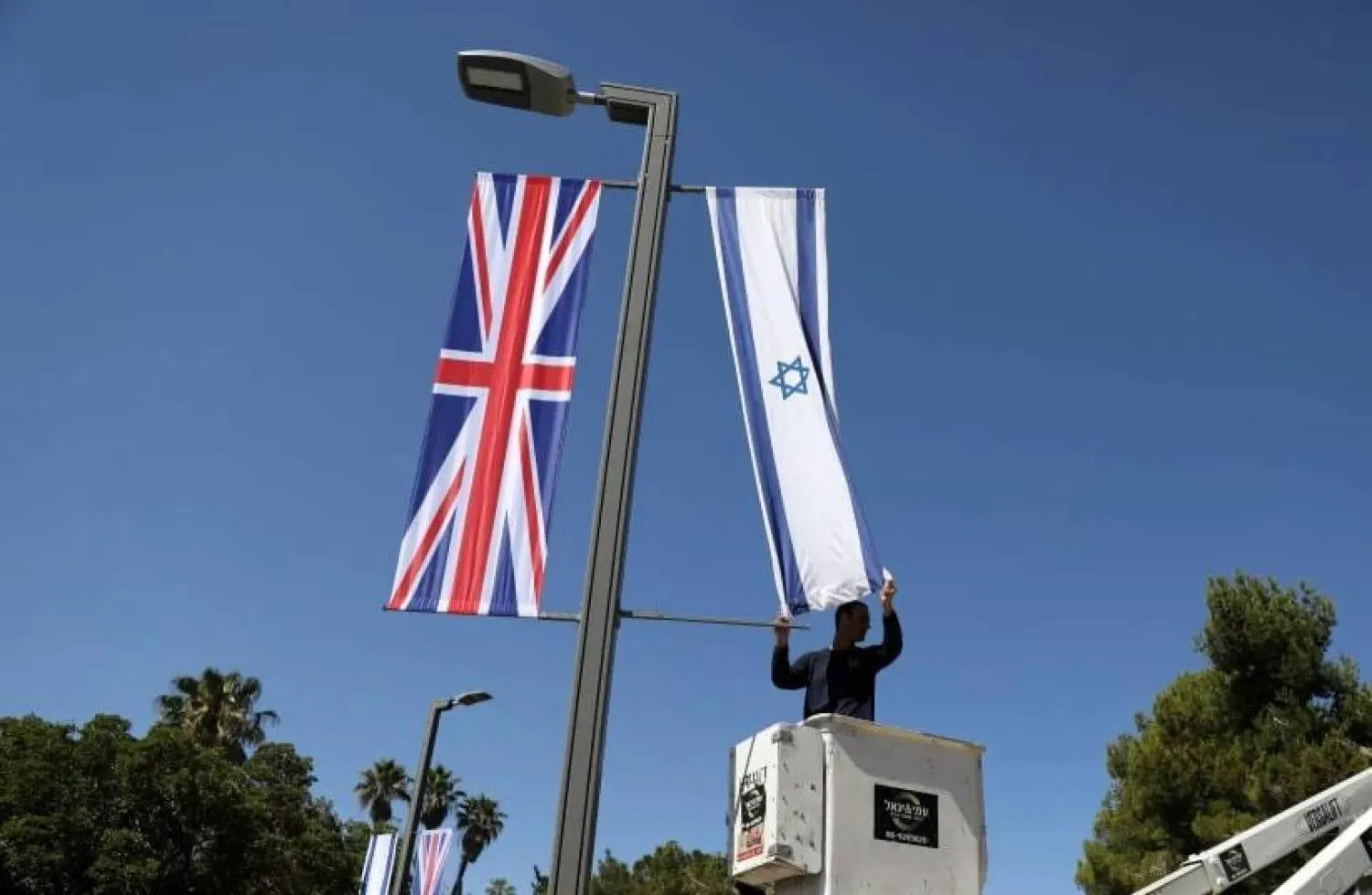
A Jerusalem municipality worker hangs an Israeli flag next to the British flag, the Union Jack, as he stands on a platform near Israel's presidential residence in Jerusalem ahead of the upcoming visit of Britain's Prince William, June 25, 2018 (Reuters)
TT

Israeli Media: Israel Threatened to Cut Intelligence Cooperation with Britain Amid Jerusalem Consulate Crisis

A Jerusalem municipality worker hangs an Israeli flag next to the British flag, the Union Jack, as he stands on a platform near Israel's presidential residence in Jerusalem ahead of the upcoming visit of Britain's Prince William, June 25, 2018 (Reuters)

The right-wing Israeli newspaper Israel Hayom revealed on Sunday details of an agreement reached between Israel and the United Kingdom following a diplomatic row over Tel Aviv’s decision to suspend operations of the British consulate in Jerusalem, which handles Palestinian affairs.

“Israel and the UK have reached a compromise over Britain’s diplomatic presence in Jerusalem, ending a standoff that had threatened to further strain relations between the two countries,” the newspaper wrote.

It said Britain had backed down from imposing measures against Israel, including the expulsion of Israeli diplomats from the UK.

The decision came after security agencies in London warned the government of the risks of further escalating the crisis. The agencies informed the government that Israel was threatening to sever security cooperation with British intelligence, a move that would seriously undermine national security, according to Israel Hayom.

Last Thursday, Britain announced its consulate in Jerusalem, which began operating in the city nearly 200 years ago, would continue its work on a more limited scale under the title “UK Mission, Jerusalem.” The decision came after Israel ordered the closure of the British consulate in response to the UK's sanctions on Israeli settlements.

Israel Hayom, which is close to Prime Minister Benjamin Netanyahu’s government, claimed that “in recent weeks, Israel has shared highly sensitive intelligence that enabled the foiling of Palestinian and Iranian terrorist plots in Britain, including at the military base hosting US fighter jets.”

Therefore, the two countries agreed to continue a dialogue to address the points of contention and prevent further deterioration in relations, while Israel backed down from imposing tough conditions.

Also under the reached agreement, the British consul general and 19 other diplomats will leave, while seven diplomats will remain, Israel Hayom wrote.

Although the British Consulate General in Jerusalem will no longer have a sign at the building's entrance bearing that title, it will retain its status as an official diplomatic mission serving Palestinians with a scaled-down presence, rebranded as “UK Mission, Jerusalem” and reporting directly to the UK Foreign Office.

The newspaper said the remaining consular services that will no longer be provided at the Jerusalem office will be made available to Palestinians through the British Embassy in Jordan, where most of the diplomats have relocated.

Israel on September 8 ordered Britain to close the East Jerusalem consulate within 30 days and remove its diplomats from the city, after Britain said it would impose a ban on trade of goods made in Israeli settlements in the occupied West Bank, including a ban on trade in goods produced there.

Israel had been adamant that the consulate will close even as Britain sought to keep it open, including sending the country’s top national security adviser to Israel last week for talks.

Britain’s consulate was founded in 1839, more than a century prior to the establishment of the State of Israel in 1948. The closure order does not affect Britain’s embassy in Tel Aviv, which handles diplomatic relations with Israel’s government.

The consulate, in the Sheikh Jarrah neighborhood of East Jerusalem, handles Britain’s relations with Palestinians in Jerusalem, as well as in the West Bank and Gaza. It also provides consular services to Palestinians.

Shortly before the 30-day deadline for Britain to close the consulate ended last Thursday, Reuters said Britain was likely to expel Israeli diplomats if Israel carries out its order to shut the British consulate in East Jerusalem.

It noted that if the consulate is closed, Britain is likely to respond ‌by expelling ⁠a similar number ⁠of Israeli diplomats from Israel's embassy to the United Kingdom, the sources said, speaking on the condition of anonymity.

But the two sides reached an 11th-hour compromise after the Israeli Foreign Ministry authorized the British to operate a reduced task force of just seven diplomats at the site.

The two countries also agreed to continue a dialogue to address the points of contention and prevent further deterioration in relations, with Britain, under the understandings, refraining from taking any further response measures, according to Israel Hayom.

In a post on X, Israeli Foreign Minister Gideon Sa'ar announced an agreement with London on the continuation of dialogue between the governments, within which both sides will be able to raise issues important to them.

“We believe in dialogue and will continue to believe in dialogue. Unfortunately, in recent years, no genuine dialogue has taken place with the Labor Government. This is despite good relations with Britain, reflected, among other things, in security and intelligence cooperation,” he wrote.

The minister added that “relations between Israel and Britain are important and have repeatedly proven their value also in protecting the lives and interests of British citizens.”


North Korea Fires Multiple Ballistic Missiles, Adding to Streak of Weapons Tests

News coverage showing file footage of a North Korean missile launch is seen on a screen at Seoul Station in Seoul on October 12, 2026. Philip FONG / AFP
TT

North Korea Fires Multiple Ballistic Missiles, Adding to Streak of Weapons Tests

News coverage showing file footage of a North Korean missile launch is seen on a screen at Seoul Station in Seoul on October 12, 2026. Philip FONG / AFP

North Korea on Monday fired multiple ballistic missiles toward its eastern waters, South Korea’s military said, adding to a recent streak of weapons demonstrations that has heightened tensions during a prolonged freeze in diplomacy.

Jang Do-young, spokesperson of South Korea’s Joint Chiefs of Staff, said missiles of various types were fired from an area around the North Korean capital of Pyongyang, where the country’s main airport has been a major launch site in recent years.

Jang said one of the missiles flew more than 900 kilometers (559 miles) before falling into the sea but didn’t comment on the flight details of the other weapons. The joint chiefs didn’t specify how many missiles it detected.

Japan’s Deputy Defense Minister Takashi Koyari said Japan detected at least two missiles launched 17 minutes apart and that the weapons landed in waters outside of its exclusive economic zone. Koyari said the first missile flew about 220 kilometers (137 miles) and the second more than 910 kilometers (565 miles), following an “irregular” flight path that he said suggested it may have been a hypersonic weapon. There were no reports of damage to aircraft or vessels.

While maintaining a hard line toward Seoul, North Korea has been ramping up weapons testing as it seeks to expand its arsenal of nuclear-capable systems, including an Oct. 3 test of what the North described as a hypersonic intermediate-range missile designed to evade missile defenses in South Korea and Japan.

North Korea has also conducted other missile tests and live-fire drills and commissioned a new warship as leader Kim Jong Un continues to flaunt his nuclear weapons program while rejecting US and South Korean offers to resume long-stalled diplomacy.

The latest launch came days after South Korea on Friday flight-tested its own domestically developed hypersonic weapon, designed to fly at least five times the speed of sound and evade missile defense systems, which President Lee Jae Myung described as critical in strengthening the South’s conventional defense capabilities. Without directly addressing the growing threat from North Korea, Lee’s office said the hypersonic weapon, once fully developed, would enhance South Korea’s ability to strike key targets by surprise in the “Korean Peninsula theater of operations.”

Jang, the South Korean military official, said the latest North Korean launches likely were intended to advance the country’s missile technologies while also serving as a possible response to South Korea’s hypersonic test.

The South’s presidential national security office called for North Korea to “immediately cease” its repeated ballistic launches, which violate UN Security Council resolutions against the North and “do not help manage the current situation on the Korean Peninsula.” Koyari said Japan lodged a protest to North Korea through their embassies in Beijing.

Tensions were further worsened after three South Korean soldiers were injured in land mine explosions last month near the heavily armed inter-Korean border. The South’s military and the US-led United Nations Command concluded the blasts were caused by devices planted by North Korea, which has denied responsibility and ridiculed the South’s demands for an apology.

Kim in recent years has halted all diplomacy and cooperation with South Korea and described the neighbor as a permanent enemy during a prolonged stalemate in larger nuclear negotiations with Washington. He has so far rebuffed US President Donald Trump’s calls to revive their diplomacy, which broke down in 2019, with his government demanding that Washington abandon its “hostile” policy toward Pyongyang and drop demands for North Korea’s denuclearization as a precondition for talks.