Egypt Hikes Gasoline Prices in Quarterly Review

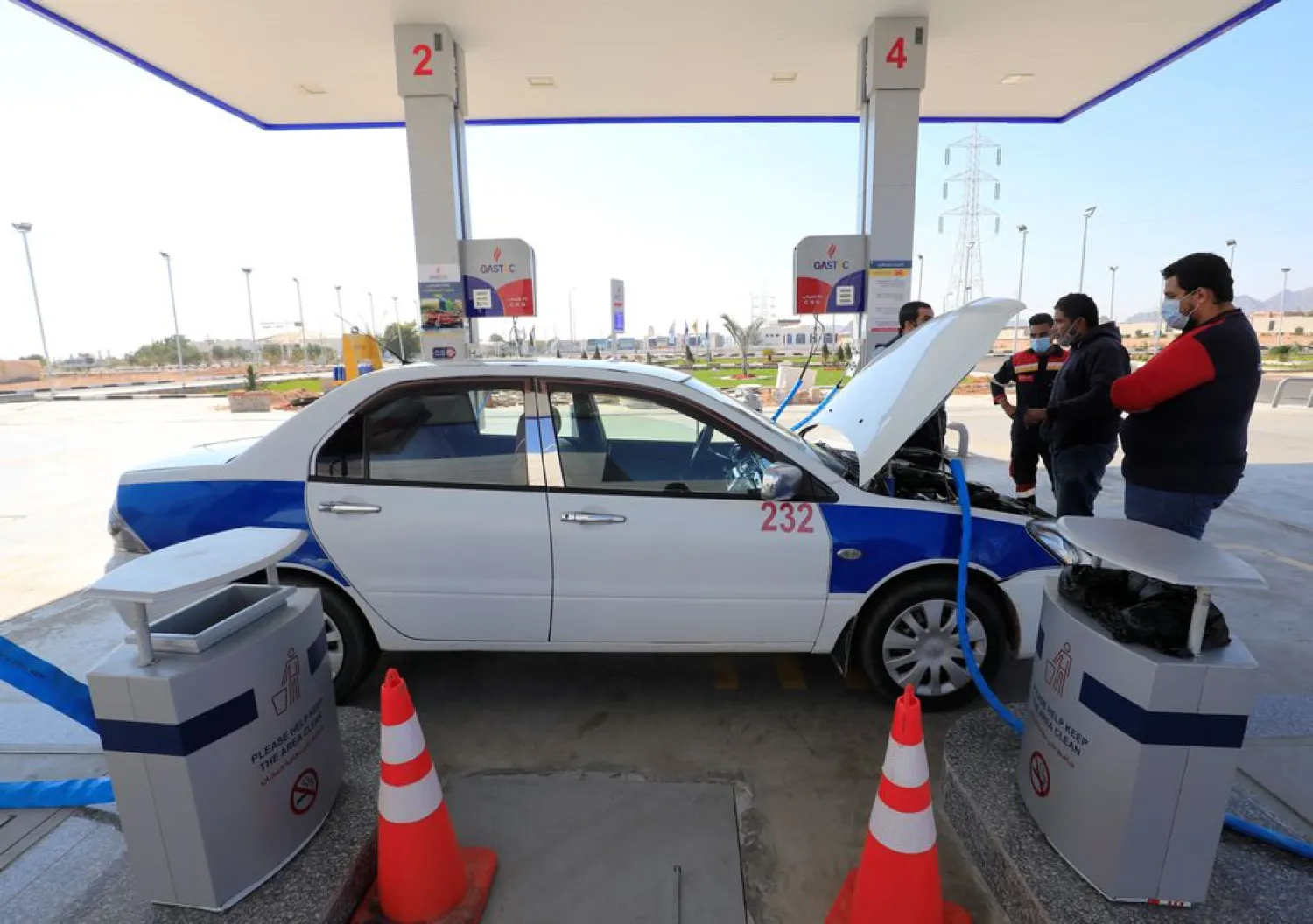
A car is being filled with fuel at a gas station in the Red Sea resort of Sharm el-Sheikh, Egypt February 6, 2021. REUTERS/Amr Abdallah Dalsh
TT

Egypt Hikes Gasoline Prices in Quarterly Review

A car is being filled with fuel at a gas station in the Red Sea resort of Sharm el-Sheikh, Egypt February 6, 2021. REUTERS/Amr Abdallah Dalsh

Egypt raised domestic gasoline prices on Thursday in line with a commitment under a financial support package with the International Monetary Fund, while keeping the diesel price unchanged, the petroleum ministry said in a statement.

The country's fuel pricing committee set the prices in a quarterly review, raising the price by 0.75 Egyptian pounds for 80-octane petrol, 1 pound for 92-octane petrol, and 0.75 pounds for 95-octane petrol, to 8.75 Egyptian pounds ($0.29), 10.25 and 11.50 per liter, respectively, Reuters reported.

The diesel price was kept at 7.25 pounds.

Under a letter of intent to the IMF late last year, Egypt said it would allow most fuel product prices to rise until they were in line with the country's fuel index mechanism to make up for a slowdown in such increases over the last fiscal year.

In July 2022, the government announced a rare hike to the price of diesel, but said it was still subsidizing the fuel at the rate of about 55 billion Egyptian pounds per year.

Since 2019, pricing of fuel has been set under quarterly reviews that take into account global markets and the exchange rate, in line with previous commitments to the IMF.


Syria Opens its Energy Sector to Global Oil Majors

A man walks past oil pumps in the oil-rich city of Rmelan in Syria (Reuters)
TT

Syria Opens its Energy Sector to Global Oil Majors

A man walks past oil pumps in the oil-rich city of Rmelan in Syria (Reuters)

Syria is moving swiftly to reclaim its role as a regional energy player, as the head of the Syrian Petroleum Company, Youssef Qiblawi, outlined ambitious plans to open the country’s oil and gas sector to major international firms, including Chevron, ConocoPhillips, TotalEnergies and Eni.

In comments to The Financial Times, Qiblawi said Syria has explored less than a third of its hydrocarbon potential. He noted that trillions of cubic meters of gas remain untapped in largely untouched areas, awaiting international expertise and technology to be brought into production.

Strategic alliances and offshore exploration

Signs of a new energy map are already emerging. Chevron has signed an agreement with Qatar’s Power International Holding to begin exploration in an offshore block, with field operations expected to start within two months.

Plans extend beyond that first project. QatarEnergy and TotalEnergies are considering participation in a second offshore block, while talks are under way with Italy’s Eni over a third.

ConocoPhillips has also strengthened its presence through a previously signed memorandum of understanding, reflecting what Qiblawi described as growing confidence among global energy companies in the commercial potential of Syria’s energy sector.

The production challenge

After years of conflict, the Syrian government has reasserted control by force over oilfields in the northeast that were previously held by Kurdish forces. Qiblawi described the condition of these fields as poor, saying production has fallen from about 500,000 barrels a day to roughly 100,000.

He attributed the decline to sabotage and the use of explosives to boost short-term output at the expense of long-term reservoir health.

Qiblawi said he would offer international companies existing fields to rehabilitate, allowing them to use the revenues to fund exploration elsewhere. “That would be costly, but I will give them some pieces of cake to generate money,” he said.

Closing the technology gap

Syria is seeking to bridge a significant technical gap, particularly in deep-water exploration. While seismic surveys and preliminary mapping of potential fields have been completed, advanced technology is lacking. Talks are planned with BP in London, while the government says it remains open to cooperation with Russian and Chinese firms.

Industry estimates suggest Syria holds proven reserves of around 1.3 billion barrels of oil, alongside vast unexplored areas, especially offshore.

Separately, Reuters reported that a large consortium is preparing to launch extensive exploration and production operations in northeastern Syria.

The group includes Saudi Arabia’s TAQA alongside US energy and oilfield services companies Baker Hughes, Hunt Energy and Argent LNG.

The consortium aims to develop four to five exploration blocks in areas previously under Kurdish control, with executives framing the effort as a step toward unifying the country’s resources and delivering tangible economic gains.

Toward energy stability

With around 2,000 engineers currently assessing damage in the northeast, the Syrian government hopes to publish a full recovery timetable by the end of February.

Officials at the Syrian Petroleum Company say they are optimistic that gas production can be doubled to 14 million cubic meters a day by the end of 2026, supported by renewed regional investment led by Saudi and US firms in energy and infrastructure projects.



TotalEnergies Tells Trump ‘Too Expensive’ to Reinvest in Venezuela

FILE PHOTO: A logo of French oil and gas company TotalEnergies is seen on the eve of the opening of the 2025 Paris International Agriculture Fair (Salon International de l'Agriculture) at the Porte de Versailles exhibition center in Paris, France, February 21, 2025. REUTERS/Sarah Meyssonnier/File Photo
TT

TotalEnergies Tells Trump ‘Too Expensive’ to Reinvest in Venezuela

FILE PHOTO: A logo of French oil and gas company TotalEnergies is seen on the eve of the opening of the 2025 Paris International Agriculture Fair (Salon International de l'Agriculture) at the Porte de Versailles exhibition center in Paris, France, February 21, 2025. REUTERS/Sarah Meyssonnier/File Photo

The CEO of French oil major TotalEnergies said it was “too expensive and too polluting” to return to Venezuela, despite calls from US President Donald Trump for oil giants to invest billions in the country.

The company quit Venezuela in 2022 but the Trump administration has urged oil majors to return since the US military operation to capture the country’s president, Nicolás Maduro, on Jan. 3.

Speaking on Wednesday, TotalEnergies CEO Patrick Pouyanné told reporters the company quit the country “because it clashed with our strategy. It was too expensive and too polluting and that is still the case,” according to Reuters.

The Trump administration has called on US energy giants to invest $100 billion to rebuild Venezuela’s oil industry.

Trump has pledged to support American oil companies that invest in Venezuela with government security assistance, saying last month that energy firms previously had problems “because they didn’t have Trump as a president.”

Venezuela boasts the world’s largest oil reserves but some US oil firms have expressed caution about rushing to re-enter — including Exxon Mobil.

Exxon CEO Darren Woods recently made headlines for saying at a White House meeting with Trump that the Venezuelan market is “uninvestable” in its current state.
Trump subsequently lashed out at Woods, threatening to sideline the oil giant and accusing the company of “playing too cute.”

Infrastructure Constraints
TotalEnergies started operating in Venezuela in the 1990s. Its departure followed a strategic shift away from heavy and high-sulfur crude and amid safety concerns.

Pouyanné has previously said that Venezuela is not high on the firm’s agenda.

TotalEnergies on Wednesday reported a slight drop in fourth-quarter profit and reduced share buybacks amid a weaker crude price environment.

Shares of the Paris-listed company rose nearly 2% during morning deals, notching a new 52-week high.


OPEC Forecasts World Demand for OPEC+ Crude Dropping in Q2

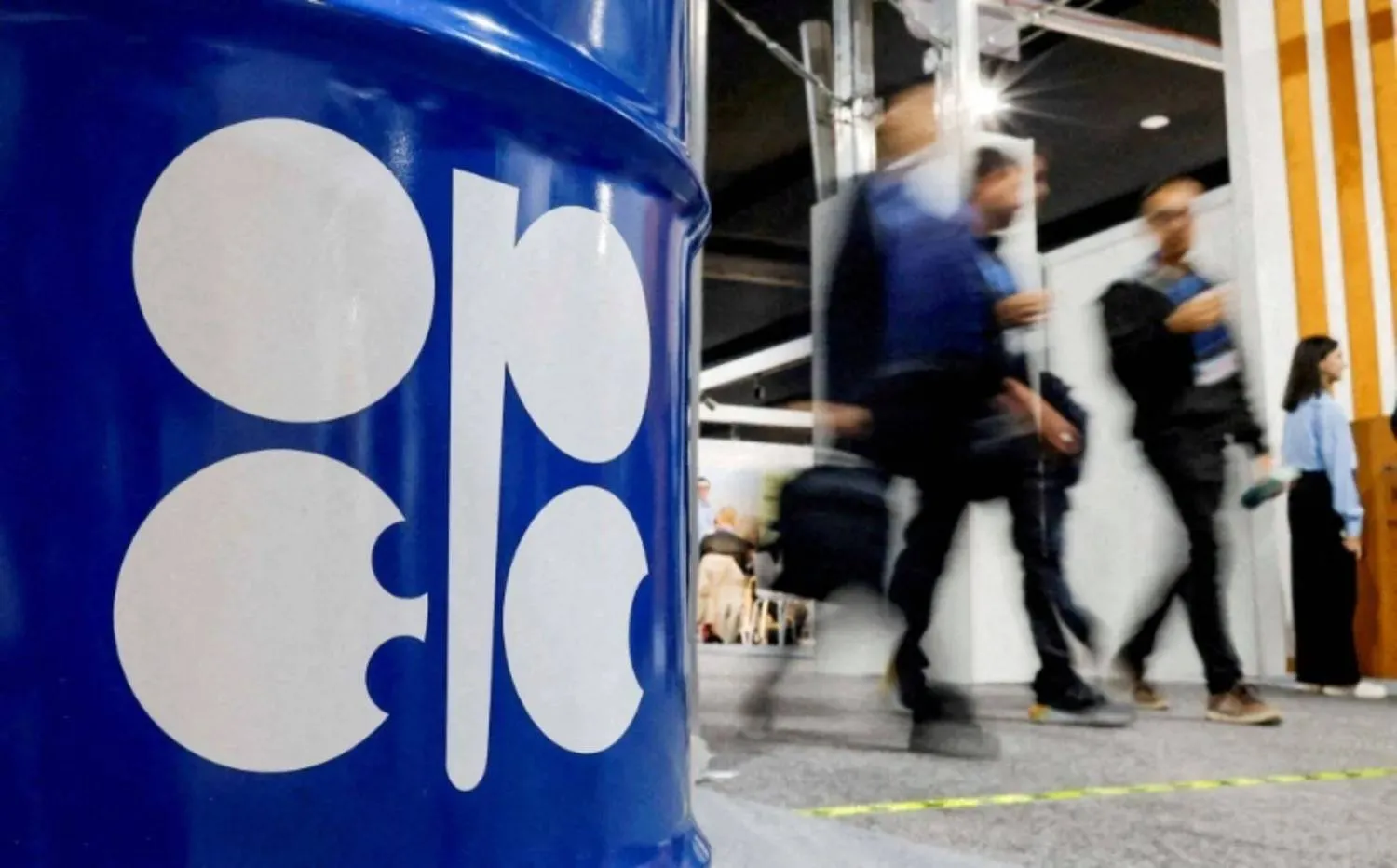
People walk past an installation depicting barrel of oil with the logo of Organization of the Petroleum Exporting Countries (OPEC) during the COP29 United Nations climate change conference in Baku, Azerbaijan November 19, 2024. REUTERS/Maxim Shemetov/File Photo 
TT

OPEC Forecasts World Demand for OPEC+ Crude Dropping in Q2

People walk past an installation depicting barrel of oil with the logo of Organization of the Petroleum Exporting Countries (OPEC) during the COP29 United Nations climate change conference in Baku, Azerbaijan November 19, 2024. REUTERS/Maxim Shemetov/File Photo 

The Organization of the Petroleum Exporting Countries (OPEC) on Wednesday forecast world oil demand for crude from the wider OPEC+ producer group will drop by 400,000 barrels per day in ‌the second quarter of this year, a copy of its monthly oil report on OPEC’s website shows.

World demand for OPEC+ crude ‌will average 42.20 million bpd in ⁠the second quarter, ⁠OPEC said in the report, down from 42.60 million bpd in the first quarter. Both forecasts were unchanged from last month’s report.

The OPEC+ group comprising OPEC nations, plus Russia and other allies, began raising oil output ⁠last year after years ⁠of cuts, and paused production hikes in the first quarter of 2026 amid predictions of a glut.

Eight OPEC+ members meet on ‌March 1 where they are expected to make a decision on whether to resume the hikes in April.

In the report, OPEC also left unchanged its forecasts that world oil demand will rise by 1.34 million bpd in 2027 and by 1.38 million bpd this year. The 2026 forecast is higher than that of other analysts such as the International Energy Agency.

OPEC+ pumped 42.45 million bpd in January, 2026, down 439,000 bpd from December, 2025, driven by reductions in Kazakhstan, Russia, Venezuela and Iran, OPEC said in the report.

OPEC has maintained its forecast for global oil demand in 2026 at approximately 106.5 million barrels per day (mb/d), keeping the projection it announced four months ago.

It also projected that world oil consumption will grow by 1.3 million bpd in 2027 and an average of 107.9 million bpd, unchanged from last month.

OPEC+ oil production declined last month amid losses in Venezuela and Iran, supported by geopolitical tensions, the group said.

Venezuelan and Iranian crude production declined by 87,000 barrels a day and 81,000 barrels a day, respectively.

Meanwhile, the global economic growth forecasts remained unchanged from last month's assessment at 3.1% in 2026 and 3.2% in 2027.

OPEC said world oil demand was gaining support from air travel and road transport, as well as from a drop in the value of the US dollar against a basket of currencies.

“This decline has made dollar-priced commodities, including oil, cheaper for consumers and provided some additional support for global demand,” OPEC said in the report.

Oil prices gained around 2% on Wednesday, buoyed by potential supply risks should US–Iran tensions escalate, while draws of crude from key stockpiles suggested stronger demand.

Brent crude oil futures were up $1.52, or 2.2%, at $70.32 a barrel by 01:20 GMT. US West Texas Intermediate crude rose $1.50, or nearly 2.4%, to $65.46.