


Prince Harry Contacted about Coronation; Attendance Unclear

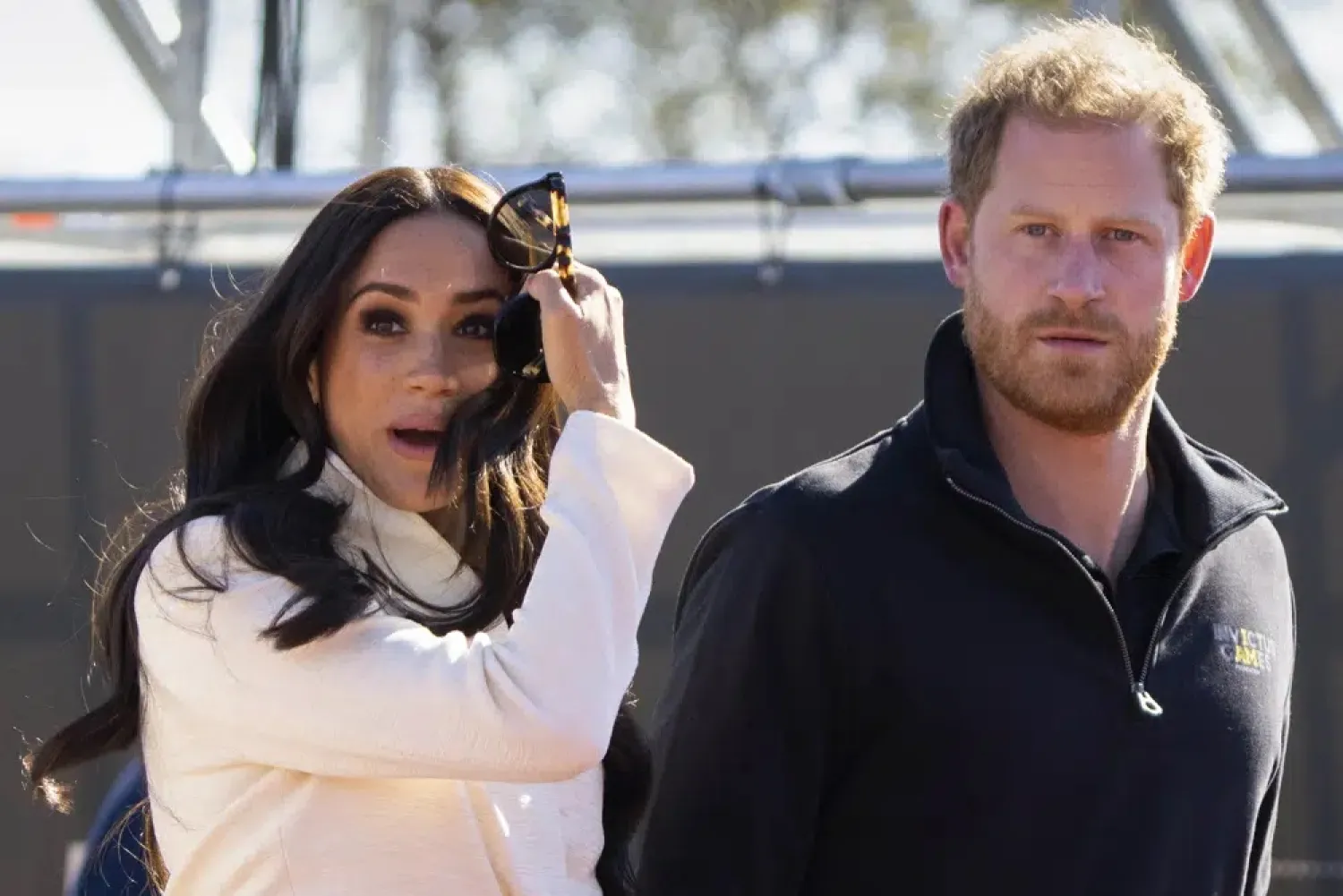
Prince Harry and Meghan Markle, Duke and Duchess of Sussex visit the track and field event at the Invictus Games in The Hague, Netherlands, Sunday, April 17, 2022. (AP)
TT

Prince Harry Contacted about Coronation; Attendance Unclear

Prince Harry and Meghan Markle, Duke and Duchess of Sussex visit the track and field event at the Invictus Games in The Hague, Netherlands, Sunday, April 17, 2022. (AP)

King Charles III’s office has been in touch with Prince Harry about the new monarch’s coronation, raising the possibility the prince will attend the historic ceremony despite tensions within the royal family.

If Harry and his wife, Meghan, were to attend the May 6 coronation at Westminster Abbey in London, it would be the first meeting between Charles and his younger son since Harry deepened the rift within the House of Windsor by revealing family secrets in his bestselling book, “Spare.”

A spokesperson for Harry and Meghan, also known as the Duke and Duchess of Sussex, confirmed Sunday that Harry had received “email correspondence” from the king’s office about the coronation. Buckingham Palace did not immediately respond to a request for comment.

“An immediate decision on whether the Duke and Duchess will attend will not be disclosed by us at this time,” the couple’s office said in a statement.

Speculation about whether Harry and Meghan would be invited to the coronation has raged since the release of Harry’s explosive memoir, which contained damning allegations of intrigue behind the palace walls.

The disclosures, including details of private conversations with his father and brother, Prince William, fanned tensions between Harry and his family that became public when he and his wife moved to North America in 2020.

The book also included allegations that members of the royal family regularly feed the press unflattering information about other members of the House of Windsor in exchange for positive coverage of themselves.

The prince singled out Camilla, the queen consort, accusing her of leaking private conversations to the media as she sought to rehabilitate her image after marrying Charles. Camilla was once reviled for her long-term affair with Charles, which contributed to the breakdown of his marriage to the late Prince Diana, Harry and William’s mother.

The acrimony between Harry and his family once again spilled into public view this week when the Sussexes acknowledged they were asked to vacate their home in Britain.

Frogmore Cottage, on the grounds of Windsor Castle west of London, was the couple’s main residence before they gave up royal duties and moved to Montecito, a wealthy enclave in Southern California.

The Sun newspaper reported that Charles asked them to relinquish the dwelling on Jan. 11, the day after Harry’s memoir was published.

But issues other than the book may have sparked the request.

Charles, who became king after the death of Queen Elizabeth II in September, has said he plans to cut the number of working royals and reduce the cost of the monarchy as he seeks to modernize the 1,000-year-old institution in hopes of ensuring its survival.

With Harry and Meghan now living in California, leaving a royal residence without occupants so they have a place to stay on their occasional visits to the UK may have been seen as a bad look.

Harry, meanwhile, continues to share his personal experiences and critique of the royal family as he promotes his book.

While taking part Saturday in a live-streamed conversation with Dr. Gabor Mate, author of “The Myth Of Normal: Trauma, Illness & Healing In A Toxic Culture,” the prince discussed his past drug use and said he had urged other members of the family to have therapy.

He said criticism of “Spare″ won’t make him be silent because talking about these issues has helped him deal with the trauma in his life.

“The more they criticize, the more they comment, the more I feel the need to share,” Harry said. “I found a way to be able to look around, and firstly ignore, the criticisms and the abuse.”


Beirut's 'Mother of Cats' Who Rescues Felines

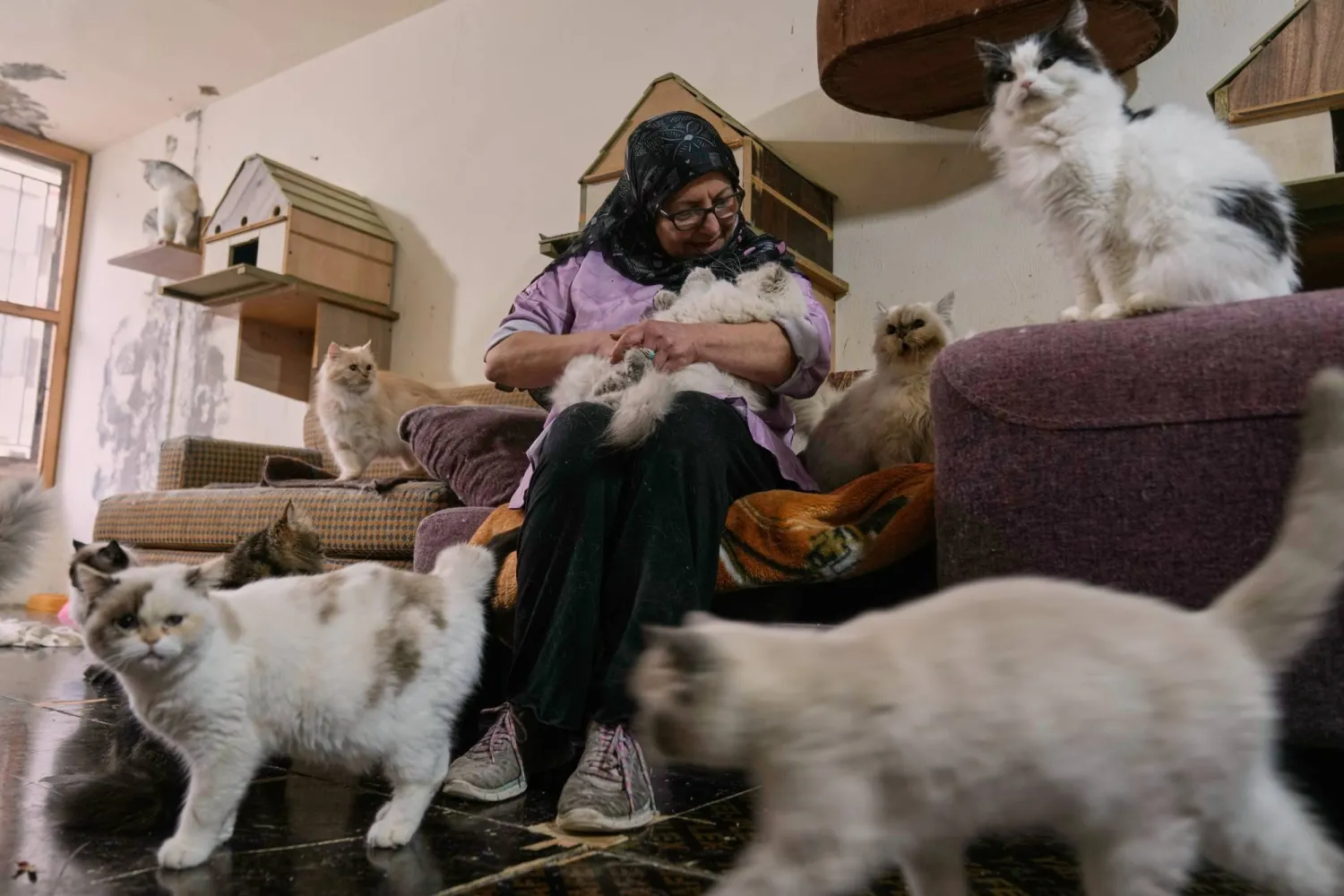
Diana Abadi, known as "the mother of cats," sits with felines waiting for adoption at her small pet food and plant shop in Hadath, in Beirut's southern suburbs known as Dahiyeh, in Lebanon, Saturday, Feb. 7, 2026. (AP Photo/Bilal Hussein)
TT

Beirut's 'Mother of Cats' Who Rescues Felines

Diana Abadi, known as "the mother of cats," sits with felines waiting for adoption at her small pet food and plant shop in Hadath, in Beirut's southern suburbs known as Dahiyeh, in Lebanon, Saturday, Feb. 7, 2026. (AP Photo/Bilal Hussein)

Diana Abadi is known in the southern suburbs of Beirut as the “Mother of Cats.”

For the past 12 years, she has turned her home and shop into a refuge for abandoned felines who now number between 50 and 70, and she often sleeps beside the cats as she cares for them full time.

Abadi began by taking in a single kitten.

Word spread, and residents started bringing her injured and unwanted animals, especially during periods of crisis. At its peak, the shelter housed more than 150 cats, especially during the COVID-19 pandemic and the recent Israel-Hezbollah war, when fear and displacement led many people to abandon their pets.

Her plant and pet food shop in the southern suburbs known as Dahiyeh serves as both her livelihood and the cats’ shelter. Among those currently in her care are Joujou, 13, the oldest, as well as cats named Loulou, Fluffy, Emma and Panda.

One of the most challenging cases involves a cat that was completely blind when abandoned. A woman offered to cover the animal’s expenses if Abadi would take him in. After months of treatment, the cat has partially regained vision in one eye.

Social media has recently helped improve adoption rates, reducing the number of cats under Abadi's care. Rising costs, however, threaten the shelter’s future. Monthly rent has climbed to $800, up from $250 before the war, forcing Abadi to cover most expenses herself.

“These are living beings,” she said. “I don’t take holidays or Sundays off.”


Face of 400-Year-Old 'Vampire' Recreated

Scientists have given a face to a decapitated skull which was uncovered in Croatia. (Croatia’s excavation team)
TT

Face of 400-Year-Old 'Vampire' Recreated

Scientists have given a face to a decapitated skull which was uncovered in Croatia. (Croatia’s excavation team)

The face of a "vampire", whose remains were posthumously mutilated to prevent them from rising from the dead, can be seen for the first time in more than 400 years, reported Sky News.

Discovered in a grave at Racesa, a fortress in eastern Croatia, the body had been exhumed, beheaded and reburied face down beneath heavy stones.

And since the desecration cannot be explained by environmental factors, experts believe it was done to stop the dead man returning as a vampire.

Now the face of the deceased can be seen for the first time in centuries, after scientists rebuilt his likeness from his skull.

Archaeologist Natasa Sarkic, part of the excavation team, said the fear inspired by the man in death may stem from the fear he inspired in life.

She said: “Bioarchaeological analysis showed that this man often participated in violent conflicts, and died a violent death. He experienced at least three episodes of serious interpersonal violence during his lifetime.”

“One of those attacks left his face disfigured, which could cause fear and repulsion, leading to social exclusion. Before even recovering from the penultimate trauma, he sustained a final fatal attack,” she revealed.

“Individuals who died violently, behaved violently in life, or were considered sinful or socially deviant, were believed to be at risk of becoming vampires,” she continued.

“He may have been regarded as a 'vampire', or a supernatural threat due to his facial disfigurement and his marginal lifestyle, characterized by repeated interpersonal violence,” Sarkic explained.

She said such beings were thought to be restless, vengeful, and capable of harming the living, spreading disease and killing people or livestock.

Sarkic said that, in the Slavic tradition, the soul remains attached to the body for about 40 days after death.


Caffeinated Beverages May Help Protect the Brain, Study Says

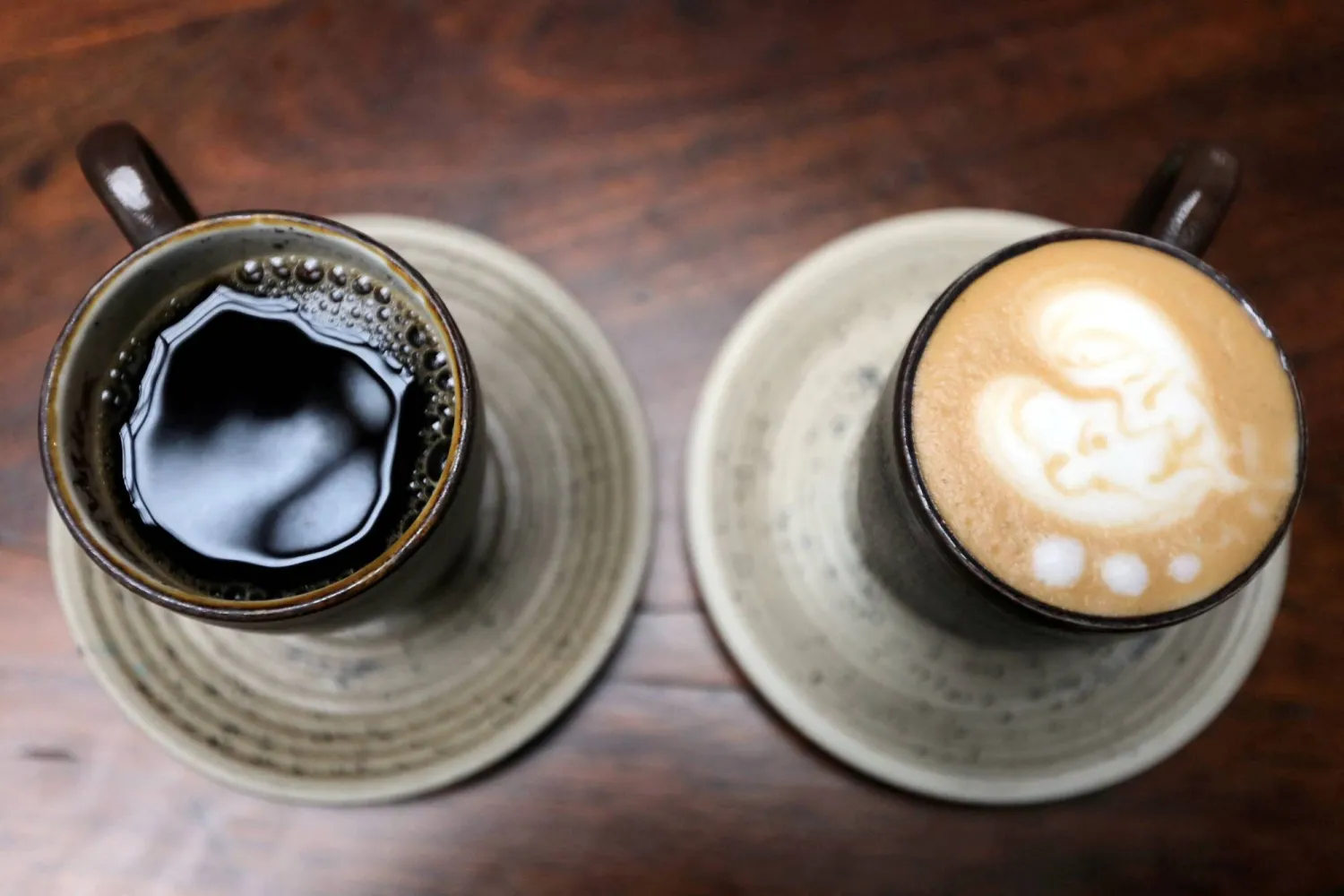
A cup of coffee and a cappuccino are seen at a Juan Valdez store in Bogota, Colombia June 5, 2019. (Reuters)
TT

Caffeinated Beverages May Help Protect the Brain, Study Says

A cup of coffee and a cappuccino are seen at a Juan Valdez store in Bogota, Colombia June 5, 2019. (Reuters)

Drinking a few cups of caffeinated coffee or tea every day may help in a small way to preserve brain power and prevent dementia, researchers reported on Monday.

People with the highest daily intake of caffeinated coffee had an 18% lower risk of developing dementia compared to those with the lowest such intake, according to a study based on responses to questionnaires by 132,000 U.S. adults spanning four decades.

The study, published in JAMA, also found that the people with the highest intake had a lower rate - by nearly 2 percentage points - of ‌self-perceived memory ‌or thinking problems compared to those with ‌the ⁠lowest intake.

Results were ‌similar with caffeinated tea, but not with decaffeinated beverages, the researchers said.

While the findings are encouraging, the study does not prove caffeine helps protect the brain, they said.

The magnitude of caffeine's effect, if any, was small, and there are other better-documented ways to protect cognitive function as people age, study leader Dr. Daniel Wang ⁠of Harvard Medical School said in a statement.

Lifestyle factors linked with lower risks of ‌dementia include physical exercise, a healthy diet ‍and adequate sleep, according to previous ‍research.

"Our study suggests that caffeinated coffee or tea consumption can ‍be one piece of that puzzle," Wang said.

The findings were most pronounced in participants who consumed two to three cups of caffeinated coffee or one to two cups of caffeinated tea daily, the researchers reported.

Those who drank caffeinated coffee also showed better performance on some objective tests of cognitive function, according to the ⁠study funded by the National Institutes of Health.

Further research is needed to validate the factors and mechanisms responsible for the findings, the researchers said.

They noted that bioactive ingredients in coffee and tea such as caffeine and polyphenols have emerged as possible factors that reduce nerve cell inflammation and damage while protecting against cognitive decline.

"We also compared people with different genetic predispositions to developing dementia and saw the same results - meaning coffee or caffeine is likely equally beneficial for people with high and low genetic risk of developing ‌dementia," study coauthor Dr. Yu Zhang of the Harvard T.H. Chan School of Public Health said in a statement.