


Saudi FM to Asharq Al-Awsat: Agreement with Iran Sign of Joint Will to Resolve Disputes through Dialogue

Prince Faisal says he hopes China’s sponsorship of the agreement will bolster regional security

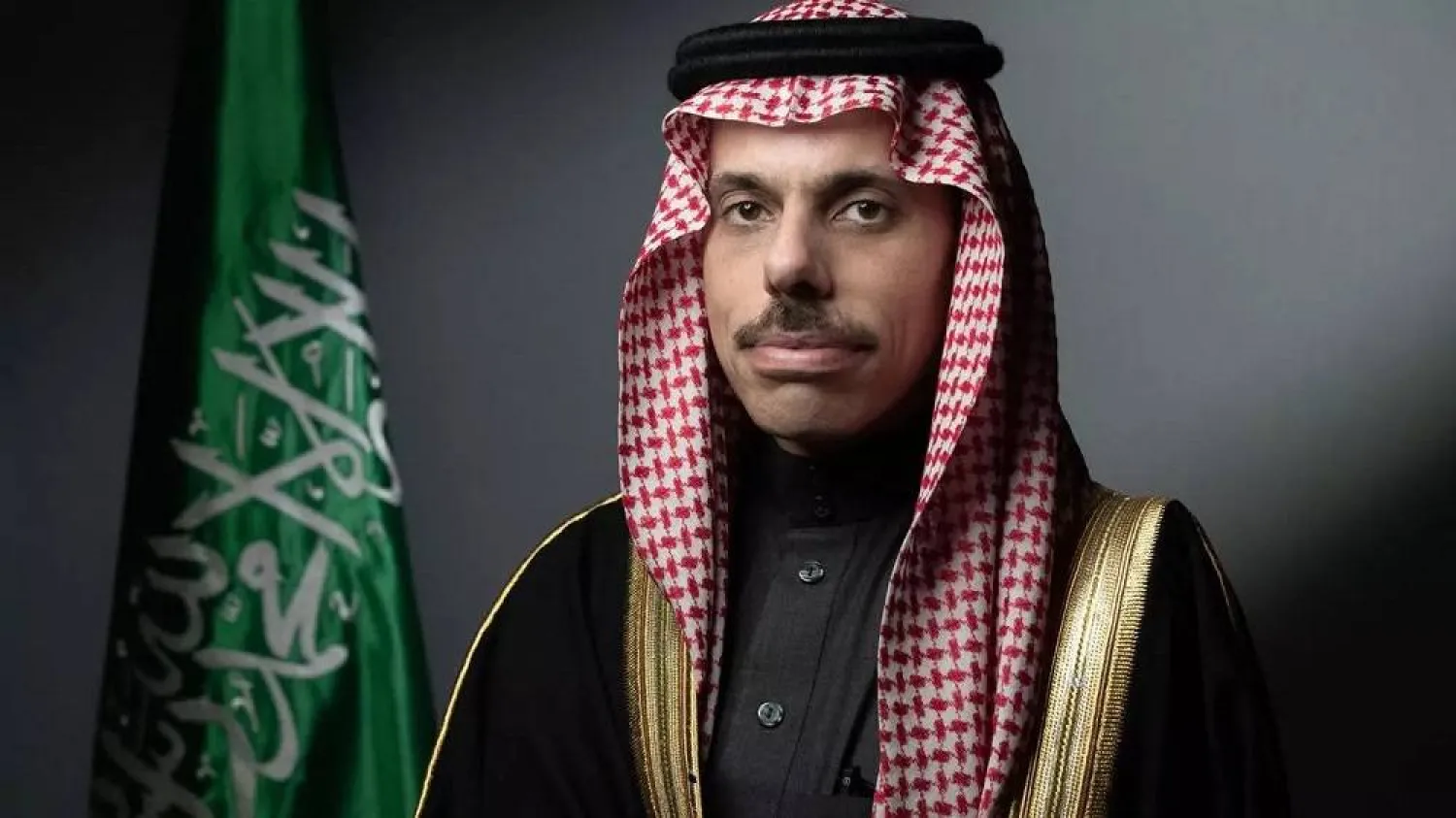
Saudi Foreign Minister Prince Faisal bin Farhan bin Abdullah. (SPA)
TT

Saudi FM to Asharq Al-Awsat: Agreement with Iran Sign of Joint Will to Resolve Disputes through Dialogue

Saudi Foreign Minister Prince Faisal bin Farhan bin Abdullah. (SPA)

Saudi Foreign Minister Prince Faisal bin Farhan bin Abdullah said the Saudi-Iranian agreement to restore diplomatic relations underscores the joint desire by both sides to “resolve disputes through communication and dialogue.”

He added, however: “This does not mean that an agreement has been reached to resolve all pending disputes between them.”

Riyadh and Tehran agreed in Beijing on Friday to reestablish ties that were severed in 2016. They also agreed to reopen their embassies within two months.

In his first interview since the China-sponsored agreement was reached, Prince Faisal said he was looking forward to meeting his Iranian counterpart soon to build on the deal.

“We are preparing to restore our diplomatic ties within two months, so it is normal for us to exchange visits in the future,” he remarked.

On his latest visit to Kyiv and Moscow and talks about a Saudi mediation to stop the Ukraine-Russia war, he stressed that the Kingdom was “prepared to exert efforts and work with the two countries to reach a political solution that ends the crisis and fighting and saves lives.”

Saudi Arabia and Iran agreed to restore diplomatic ties and reopen their embassies within two months. What is Saudi Arabia’s direct interest in such a deal? Will it pave the way for a new phase in the region, on the political and economic levels, and in complicated regional files?

Diplomatic ties are at the core of relations between countries. This is doubly significant for two neighboring countries of the size of Saudi Arabia and Iran. They share several religious, historic and cultural ties.

So, the agreement was reached through China’s sponsorship and mediation and after several rounds of talks over the past two years in Iraq and Oman.

Saudi Arabia is forging ahead in the path of de-escalation it has chosen because of its sense of responsibility in bolstering regional and international security and stability.

Agreeing to restore diplomatic ties does not mean we have reached a solution to all disputes between us. Rather, it is a sign of our joint will to resolve them through communication and dialogue and peaceful and diplomatic means.

We, in the Kingdom, hope to open a new chapter with Iran and bolster cooperation that would consolidate security and stability and push forward development and prosperity, not just in both our countries, but the entire region.

When will you meet with the Iranian foreign minister to activate the agreement and arrange for the exchange of ambassadors? Will we soon see you in Tehran?

I am looking forward to meeting with the Iranian foreign minister soon to build on the agreement. We will prepare to restore diplomatic relations within the next two months. It is natural to exchange visits.

Riyadh and Tehran stressed in their joint statement “non-interference in the affairs of other countries and respect for their sovereignty.” Washington has cast doubt on Iran’s commitment. Does the agreement have any conditions related to meddling in the affairs of others and do you believe Iran will respect this?

One of the most important demands for opening a new chapter in ties with Iran is committing to the agreement signed between us. There is no doubt that both our countries and the region have an interest in activating joint cooperation and coordination and focusing on development instead of hegemony.

Such an approach will achieve the aspirations and hopes of our peoples and generations to come for a better future that is secure, stable and prosperous. We hope the Iranians share our hope and goals and we look forward to working with them to achieve them.

Iran has for some time now been grappling with several crises, such as the collapse of the negotiations over its nuclear program and internal problems that have led to one crisis after another, as well as its struggling economy. Some voices, especially western ones, believe this new agreement may be a lifeline to the Iranian regime. What do you think?

I won’t reply to most of what was brought up in the question because they are mostly related to Iran’s internal affairs. What I can say is that Iran is a neighboring country, whose stability and development will benefit the interest and development of the region. We, in Saudi Arabia, only wish it well.

As for Iran’s continued development of its nuclear capabilities, this, no doubt, is cause for alarm. We have repeatedly called for the Gulf region and Middle East to be free of weapons of mass destruction. We call on Iran to commit to its nuclear pledges and intensify its cooperation with the International Atomic Energy Agency. We will continue to work with allies and friends to ensure that.

China is not in the habit of throwing its diplomatic weight in initiatives aimed at resolving regional crises. The question is: Why was China specifically the mediator, not another country?

As the joint statement said, Saudi Arabia welcomed the initiative proposed by Chinese President Xi Jinping. It worked with it as an extension of the negotiations that it has been holding with the Iranians for two years. It is no secret that China enjoys positive relations with Saudi Arabia and Iran that has helped achieve rapprochement and highlight the Kingdom’s legitimate concerns.

We hope China’s sponsorship of the agreement would bolster coexistence and security in our region, and good neighborliness between countries. The three countries have a joint interest in preparing a regional environment that is marked by peace, security and stability so that they can work on building and developing regional and international partnerships that achieve economic development and prosperity for the people.

You had proposed an initiative in Moscow to end the Ukraine conflict. Can you shed more light on your diplomatic efforts there, specifically how accepting the warring parties were of any Saudi role? Have you made progress in this area and are you optimistic over your success?

We were and are still ready to exert efforts and to work with both countries to reach a political solution that would end the crisis and fighting and save lives.

The efforts of Prince Mohammed bin Salman, Crown Prince and Prime Minister, led to a prisoner exchange between the two sides. The Kingdom has been focusing on meeting the immediate humanitarian needs that emerged from the war. Our humanitarian response in Ukraine is evidence of this drive.

The situation requires both parties, as well as the international community, to stop the dangerous escalation that has harmed the two countries and Europe’s security and weakened international cooperation.



Arab, Muslim States Alarmed by Israeli Plan to Move Gazans to Egypt

Rafah border crossing (Reuters file photo)
TT

Arab, Muslim States Alarmed by Israeli Plan to Move Gazans to Egypt

Rafah border crossing (Reuters file photo)

Saudi Arabia, Egypt, Jordan, the United Arab Emirates, Indonesia, Pakistan, Türkiye and Qatar said on Friday they were deeply concerned over Israeli statements about opening the Rafah crossing in one direction to push Gaza residents into Egypt.

In a joint statement, the foreign ministers of the eight countries underlined their total rejection of any attempt to displace the Palestinian people from their land.

They said full adherence was needed to US President Donald Trump’s plan, which called for opening the Rafah crossing in both directions, safeguarding freedom of movement and preventing any resident of the enclave from being forced to leave.

The ministers said conditions must be created for Palestinians to remain on their land and to take part in rebuilding their homeland within an integrated vision to restore stability and improve humanitarian conditions.

The ministers reiterated their appreciation for Trump’s commitment to establishing peace in the region, saying it was important to move forward with the plan and carry out all its requirements without delay or obstruction in order to achieve security and peace and to strengthen the foundations of regional stability.

They called for a full and lasting ceasefire, an end to civilian suffering, and unrestricted humanitarian access into Gaza. They also urged the start of early recovery and reconstruction efforts and the creation of conditions that would allow the Palestinian Authority to resume its responsibilities in the territory, paving the way for a new phase of security and stability in the region.

The ministers affirmed their countries’ readiness to continue working and coordinating with the United States and all relevant regional and international parties to ensure full implementation of Security Council Resolution 2803 and all related resolutions.

They said the objective was to provide an environment conducive to achieving a just, comprehensive and sustainable peace in line with international legitimacy and the two state solution, leading to the establishment of an independent Palestinian state on the June 4, 1967 borders, including the occupied territories in Gaza and the West Bank, with East Jerusalem as its capital.


Saudi FM, Qatari PM Co-Chair Coordination Council Executive Committee Meeting

Prince Faisal bin Farhan and Sheikh Mohammed Al Thani co-chair the Executive Committee meeting of the Saudi-Qatari Coordination Council. SPA
TT

Saudi FM, Qatari PM Co-Chair Coordination Council Executive Committee Meeting

Prince Faisal bin Farhan and Sheikh Mohammed Al Thani co-chair the Executive Committee meeting of the Saudi-Qatari Coordination Council. SPA

Saudi Minister of Foreign Affairs Prince Faisal bin Farhan bin Abdullah met on Thursday with Qatari Prime Minister and Minister of Foreign Affairs Sheikh Mohammed bin Abdulrahman bin Jassim Al Thani in Riyadh.

The meeting reviewed bilateral relations, aspects of cooperation, and ways to develop them in a manner that meets the aspirations of the leaderships and peoples of the two countries.

Following the meeting, Prince Faisal and Sheikh Mohammed co-chaired the Executive Committee meeting of the Saudi-Qatari Coordination Council.

They reviewed the strong fraternal relations and ways to enhance them at bilateral and multilateral levels. They also discussed strengthening cooperation through several initiatives that would elevate relations to broader prospects.

Both sides praised the cooperation and coordination among the committees and working groups formed under the coordination council, stressing the importance of maintaining this level of progress to serve the mutual interests of both nations and their peoples.

The Executive Committee Secretariat presented an overview of the council’s activities and its committees over the past period, along with the latest updates and preparatory work for the eighth meeting of the Saudi-Qatari Coordination Council.

At the end of the meeting, the two ministers signed the minutes of the Executive Committee of the Saudi-Qatari Coordination Council.


Albudaiwi: GCC is a Global Investment Magnet, Driven by Stability and Economic Strength

Secretary General of the Gulf Cooperation Council Jasem Mohamed Albudaiwi. GCC
TT

Albudaiwi: GCC is a Global Investment Magnet, Driven by Stability and Economic Strength

Secretary General of the Gulf Cooperation Council Jasem Mohamed Albudaiwi. GCC

Secretary-General of the Gulf Cooperation Council (GCC) Jasem Albudaiwi stated that the strategic geographical location, political stability, and strong economic foundations of the Gulf states, coupled with the acceleration of Gulf integration projects, make the GCC a global destination attractive for investment and a key platform for international partnerships.

These factors, he added, enhance the status of the council states as a major player in shaping the future of the global economy, reported the Saudi Press Agency on Thursday.

The secretary-general's remarks were made during his participation in the opening session of the seventh Milken Institute Middle East and Africa Summit, held in Abu Dhabi, United Arab Emirates.

Reviewing global economic transformations, Albudaiwi emphasized that the Gulf economy is undergoing a strong and sustainable phase, reflecting the success of economic reforms and strategic investments in future sectors.

He said that the Gross Domestic Product (GDP) of the GCC states reached approximately $2.3 trillion in 2024, positioning the council states in ninth place globally and accounting for 63% of the total Arab economy. He added that the contribution of non-oil sectors exceeded 76% of the GDP, an indicator reflecting the success of economic diversification policies.

Albudaiwi also pointed to the strength and stability of the GCC financial sector, which boasts a market value exceeding $4.2 trillion, banking assets amounting to $3.5 trillion, and reserves approaching $800 billion. This is in addition to sovereign wealth funds exceeding $4.8 trillion, a fact that solidifies the council states' position as a key player in enhancing global economic stability, he stressed.

The secretary-general revealed that the GCC states are negotiating free trade agreements (FTAs) with numerous international partners, including the United Kingdom, China, Türkiye, Japan, Indonesia, New Zealand, Pakistan, and Korea. These negotiations aim to enhance trade and investment flows, diversify income sources, and open new markets for Gulf products, thereby elevating competitiveness and reducing consumer prices within the GCC states.

Regarding artificial intelligence, he confirmed that the GCC states treat AI as a fundamental pillar for economic and social transformation.

The General Secretariat has adopted several regulatory frameworks and guiding principles, including the Guiding Framework for AI Ethics (2024), the General Framework for AI Applications in Public Services (October 2025), and the General Framework for Climate Forecasting and Disaster Management using AI (October 2025). Furthermore, the comprehensive Gulf Strategy for Artificial Intelligence is set to be adopted in December 2025.