


Makiya to Asharq Al-Awsat: Bush Wanted an Army to Oust Saddam, an Army to Rebuild Iraq

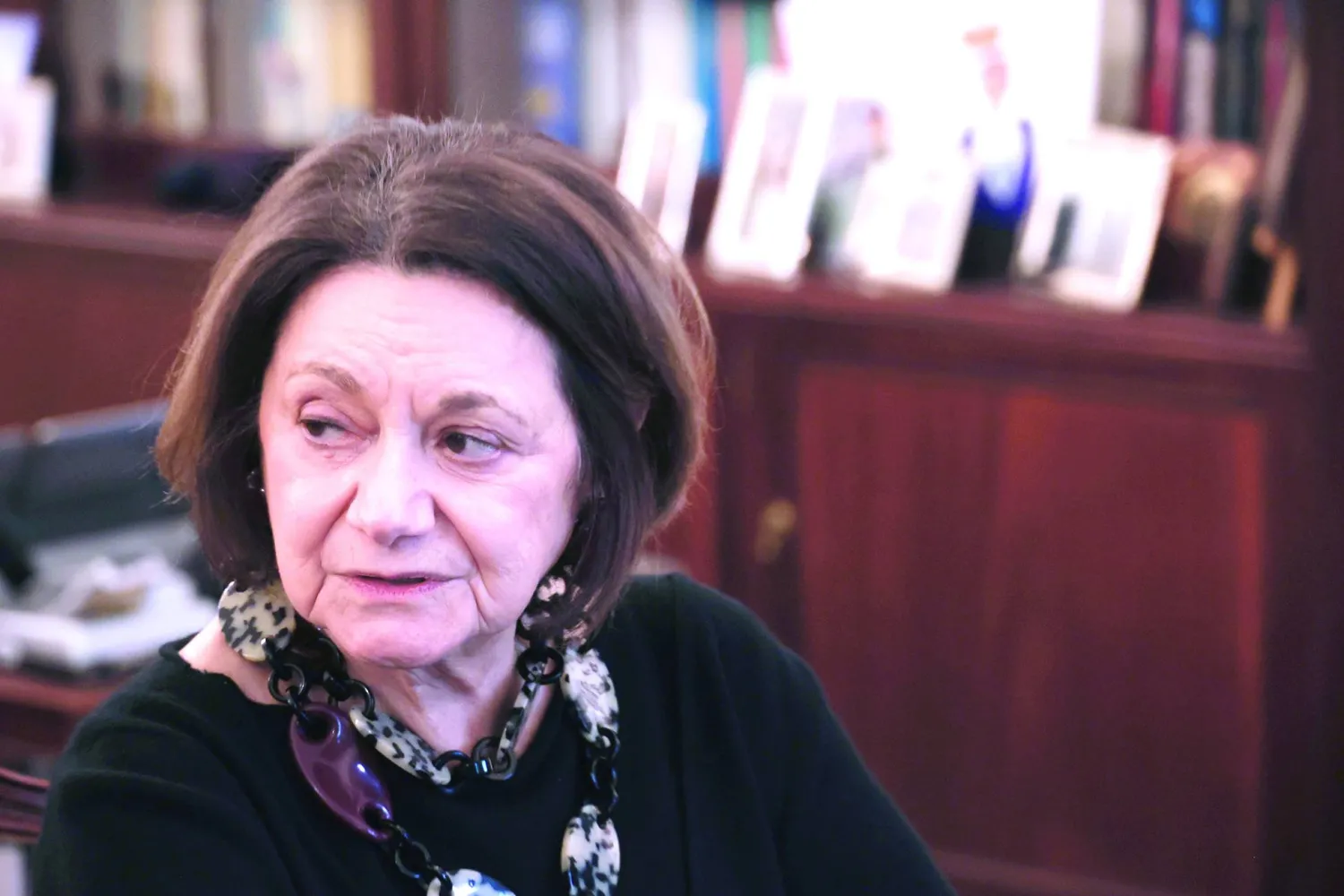
Kanan Makiya. (Asharq Al-Awsat)
TT

Makiya to Asharq Al-Awsat: Bush Wanted an Army to Oust Saddam, an Army to Rebuild Iraq

Kanan Makiya. (Asharq Al-Awsat)

Kanan Makiya, Iraqi architect and author of the “Republic of Fear” (1989), a best-selling book after Saddam Hussein’s invasion of Kuwait, described the Baathist regime in Iraq as “exceptional” in terms of totalitarian and authoritarian rule in the world.

Overthrowing Saddam’s regime in Iraq was a matter of “morality, not politics,” Makiya told Asharq Al-Awsat in an interview on the 20th anniversary of the US invasion of Iraq.

In another book, “Cruelty and Silence” (1991), a critique of the Arab intelligentsia, he not only talked about how the Baathists established an intelligence state that led to Saddam’s takeover of power in 1979, but he also documented how the Baathists fought war after war, committed genocide and repressed a revolution brewing south of the country.

Makiya recounted details from the eve of the US invasion of Iraq in 2003, when he met with then-US President George W. Bush. Makiya also met Bush after the toppling of Saddam.

He also encountered Vice President Dick Cheney, Secretary of Defense Donald Rumsfeld, National Security Adviser Condoleezza Rice, and other senior US officials before and after the invasion.

When asked about his lobbying for the invasion of Iraq and the ouster of Saddam, Makiya acknowledged that he did hold that political stance back in the 1990s based on the need to get rid of the Baathist regime, which he called an “anomaly.”

Makiya argued that the Baathists would have repeated their invasion of Kuwait and decimated Iraqi society if left in power.

He later admitted he was mistaken and even apologized for his thinking at the time.

“My big mistake was misjudging the Iraqi opposition that I worked with and supported after the 1991 war,” he said.

Recounting events from two decades ago, he confirmed that “the idea of completely overthrowing Saddam for the US administration crystallized after the September 11 attacks in 2001.”

On January 31, 2003, the White House summoned Makiya to a meeting with Bush.

Besides Makiya, another three independent Iraqi opposition figures were at the meeting. Cheney, Rice, and former US Deputy Secretary of Defense Paul Wolfowitz were present from the US side.

Bush started the meeting by announcing that his administration had decided to overthrow Saddam.

He said, “not one army, but two will enter Iraq,” according to Makiya, who says he interrupted the president in surprise to ask what he had meant by two armies.

Makiya, quoting Bush, said that the US is deploying “an army to remove Saddam and an army to rebuild Iraq.”

Jay Garner, a retired US lieutenant general who in 2003 was appointed as Director of the Office for Reconstruction and Humanitarian Assistance for Iraq, had contacted Makiya after the meeting with Bush.

Garner asked him if he would work with the US administration’s team to rebuild Iraq. Makiya declined. He told Garner he was an Iraqi academic and writer working with the opposition.

“I am neither a politician nor an administrator, and the Iraqi interest may not always coincide with US interests,” Makiya told Garner, thanking him regardless for the invitation.



Libya Says UK to Analyze Black Box from Crash That Killed General

Military personnel carry portraits of the Libyan chief of staff, General Mohamed al-Haddad (2-R), and his four advisers, who were killed in a plane crash in Türkiye, during an official repatriation ceremony at the Ministry of Defense headquarters in Tripoli, Libya, 27 December 2025. (EPA)
TT

Libya Says UK to Analyze Black Box from Crash That Killed General

Military personnel carry portraits of the Libyan chief of staff, General Mohamed al-Haddad (2-R), and his four advisers, who were killed in a plane crash in Türkiye, during an official repatriation ceremony at the Ministry of Defense headquarters in Tripoli, Libya, 27 December 2025. (EPA)

Libya said on Thursday that Britain had agreed to analyze the black box from a plane crash in Türkiye on December 23 that killed a Libyan military delegation, including the head of its army.

General Mohammed al-Haddad and four aides died after a visit to Ankara, with Turkish officials saying an electrical failure caused their Falcon 50 jet to crash shortly after takeoff.

Three crew members, two of them French, were also killed.

The aircraft's black box flight recorder was found on farmland near the crash site.

"We coordinated directly with Britain for the analysis" of the black box, Mohamed al-Chahoubi, transport minister in the Government of National Unity (GNU), said at a press conference in Tripoli.

Haddad was very popular in Libya despite deep divisions between west and east.

Haddad was chief of staff for the Tripoli-based GNU.

Chahoubi told AFP a request for the analysis was "made to Germany, which demanded France's assistance" to examine the aircraft's flight recorders.

"However, the Chicago Convention stipulates that the country analyzing the black box must be neutral," he said.

"Since France is a manufacturer of the aircraft and the crew was French, it is not qualified to participate. The United Kingdom, on the other hand, was accepted by Libya and Turkey."

After meeting the British ambassador to Tripoli on Tuesday, Foreign Minister Taher al-Baour said a joint request had been submitted by Libya and Türkiye to Britain "to obtain technical and legal support for the analysis of the black box".

Chahoubi told Thursday's press briefing that Britain "announced its agreement, in coordination with the Libyan Ministry of Transport and the Turkish authorities".

He said it was not yet possible to say how long it would take to retrieve the flight data, as this depended on the state of the black box.

"The findings will be made public once they are known," Chahoubi said, warning against "false information" and urging the public not to pay attention to rumors.


STC Says Handing over Positions to National Shield Forces in Yemen's Hadhramaut, Mahra

National Shield forces in Hadhramaut. (National Shield forces)
TT

STC Says Handing over Positions to National Shield Forces in Yemen's Hadhramaut, Mahra

National Shield forces in Hadhramaut. (National Shield forces)

Southern Transitional Council (STC) forces in Yemen began on Thursday handing over military positions to the government’s National Shield forces in the Hadhramaut and al-Mahra provinces in eastern Yemen.

Local sources in Hadhramaut confirmed to Asharq Al-Awsat that the handover kicked off after meetings were held between the two sides.

Speaking on condition of anonymity, the sources said the National Shield commanders met with STC leaderships to discuss future arrangements. The sourced did not elaborate, but they confirmed that Emirati armored vehicles, which had entered Balhaf port in Shabwah were seen departing on a UAE vessel, in line with a Yemeni government request.

The National Shield is overseen by Presidential Leadership Council (PLC) Chairman Dr. Rashad al-Alimi.

A Yemeni official described Thursday’s developments as “positive” step towards uniting ranks and legitimacy against a common enemy – the Houthi groups.

The official, also speaking on condition of anonymity, underscored to Asharq Al-Awsat the importance of “partnership between components of the legitimacy and of dialogue to resolve any future differences.”

Meanwhile, on the ground, Yemeni military sources revealed that some STC forces had refused to quit their positions, prompting the forces to dispatch an official to Hadhramaut’s Seiyun city to negotiate the situation.


One Dead as Israeli Forces Open Fire on West Bank Stone-Throwers

Israeli troops during a military operation in the Palestinian village of Qabatiya, near the West Bank city of Jenin, 27 December 2025. (EPA)
TT

One Dead as Israeli Forces Open Fire on West Bank Stone-Throwers

Israeli troops during a military operation in the Palestinian village of Qabatiya, near the West Bank city of Jenin, 27 December 2025. (EPA)

The Israeli military said its forces killed a Palestinian in the occupied West Bank in the early hours on Thursday as they opened fire on people who were throwing stones at soldiers.

Two other people were hit on a main ‌road near the ‌village of Luban ‌al-Sharqiya ⁠in Nablus, ‌the military statement added. It described the people as militants and said the stone-throwing was part of an ambush.

Palestinian authorities in the West Bank said ⁠a 26-year-old man they named as ‌Khattab Al Sarhan was ‍killed and ‍another person wounded.

Israeli forces had ‍closed the main entrance to the village of Luban al-Sharqiya, in Nablus, and blocked several secondary roads on Wednesday, the Palestinian Authority's official news agency WAFA reported.

More ⁠than a thousand Palestinians were killed in the West Bank between October 2023 and October 2025, mostly in operations by security forces and some by settler violence, the UN has said.

Over the same period, 57 Israelis were killed ‌in Palestinian attacks.