


Israeli Attorney General Warns Netanyahu Defied Conflict of Interest Rule

Israeli Prime Minister Benjamin Netanyahu (File photo: Reuters)
TT

Israeli Attorney General Warns Netanyahu Defied Conflict of Interest Rule

Israeli Prime Minister Benjamin Netanyahu (File photo: Reuters)

Israel's attorney general on Friday warned Prime Minister Benjamin Netanyahu that he has violated the Supreme Court's conflict of interest ruling, which barred him from direct involvement in his government's divisive plans for a judicial overhaul.

Netanyahu’s far-right government has barreled ahead with plans to weaken the Supreme Court and grant politicians less judicial oversight in their policymaking despite massive protests from across Israeli society.

On Thursday, just hours after his coalition passed a law that would protect the Israeli leader from being deemed unfit to rule because of his corruption trial and claims of a conflict of interest, Netanyahu defiantly pledged to proceed with the overhaul.

Netanyahu contended that stripping the attorney general of the power to remove him from office was necessary to clear the way for him to participate in the negotiations on the judicial overhaul in spite of her instructions, and try to “mend the rift” in the polarized nation, The Associated Press reported.

“Until today my hands were tied,” Netanyahu said in a prime-time TV address Thursday, referring to the change in the law on removing a prime minister.

Attorney General Gali Baharav-Miara thoroughly disagreed, sharply criticizing him in a letter Friday for violating a conflict of interest agreement that had allowed him to continue leading the country while charged with corruption, bribery and breach of trust. The deal Netanyahu was pressed to sign in 2020 prevented him from being involved in legislative issues or key judicial appointments that could affect his ongoing trial.

“Your statement last night and any further actions by you that violate that agreement are completely illegal and in conflict of interest,” Baharav-Miara wrote in Friday's letter. “The legal situation is clear — you must avoid any involvement in measures to change the judicial system.”

The contentious law that makes it harder to remove Netanyahu from office, passed late Wednesday by a slim majority of 61 in the 120-seat parliament, does not undo the court's earlier conflict of interest ruling, Baharav-Miara said. The consequences of Netanyahu's violations of the agreement were not immediately clear.

Netanyahu, on an official visit to Britain, did not immediately respond to her letter.

The Movement for Quality Government in Israel, a good governance organization, warned of a constitutional crisis. It pledged to file a petition urging that Netanyahu be held in contempt of court. “A prime minister who does not obey the court and its orders is an anarchist,” the group said.

Supporters of the judicial overhaul say it will restore power to elected legislators and make the courts less interventionist. Critics say the move upends Israel’s system of checks and balances and pushes it toward autocracy.



EU Moves to Sanction Iran over Hormuz Blockade

Traffic through Hormuz, a vital global shipping conduit, has come under Iranian control since the outbreak of war with Israel and the United States on February 28. (Photo by AFP) /
TT

EU Moves to Sanction Iran over Hormuz Blockade

Traffic through Hormuz, a vital global shipping conduit, has come under Iranian control since the outbreak of war with Israel and the United States on February 28. (Photo by AFP) /

European Union nations moved Friday towards imposing sanctions on Iranian officials and others responsible for blocking the Strait of Hormuz, the EU said.

Tehran effectively closed the key shipping lane for global gas and oil in retaliation to US-Israeli strikes launched in February.

Deeming the blockade "contrary to international law", EU governments took a technical step to extend the scope of its existing Iran sanctions regime allowing for more individuals to be targeted under it.

"The EU will now be able to introduce further restrictive measures in response to Iran's actions undermining the freedom of navigation in the Strait of Hormuz," the European Council representing EU nations said.

Brussels' punitive measures on Iran previously targeted the country's military support for Russia in its war against Ukraine and for armed groups across the Middle East.

The European Union has also imposed sanctions over human rights violations in the country.

The EU did not immediately name any individual or entities that would be targeted by the new sanctions, consisting of travel bans and asset freezes.

EU citizens and companies will also be banned from making funds, financial assets or other economic resources available to those listed.

The Iran war and the closure of Hormuz, which normally carries a fifth of global oil production, have sent ripples across the global economy, sending energy prices soaring.


Rubio Cites Some Progress on Iran Talks but 'We're Not There Yet'

United States Secretary of State Marco Rubio during a signing ceremony on the sidelines of a meeting of NATO foreign ministers in Helsingborg, Sweden, Friday, May 22, 2026. Julia Demaree Nikhinson/Pool via REUTERS
TT

Rubio Cites Some Progress on Iran Talks but 'We're Not There Yet'

United States Secretary of State Marco Rubio during a signing ceremony on the sidelines of a meeting of NATO foreign ministers in Helsingborg, Sweden, Friday, May 22, 2026. Julia Demaree Nikhinson/Pool via REUTERS

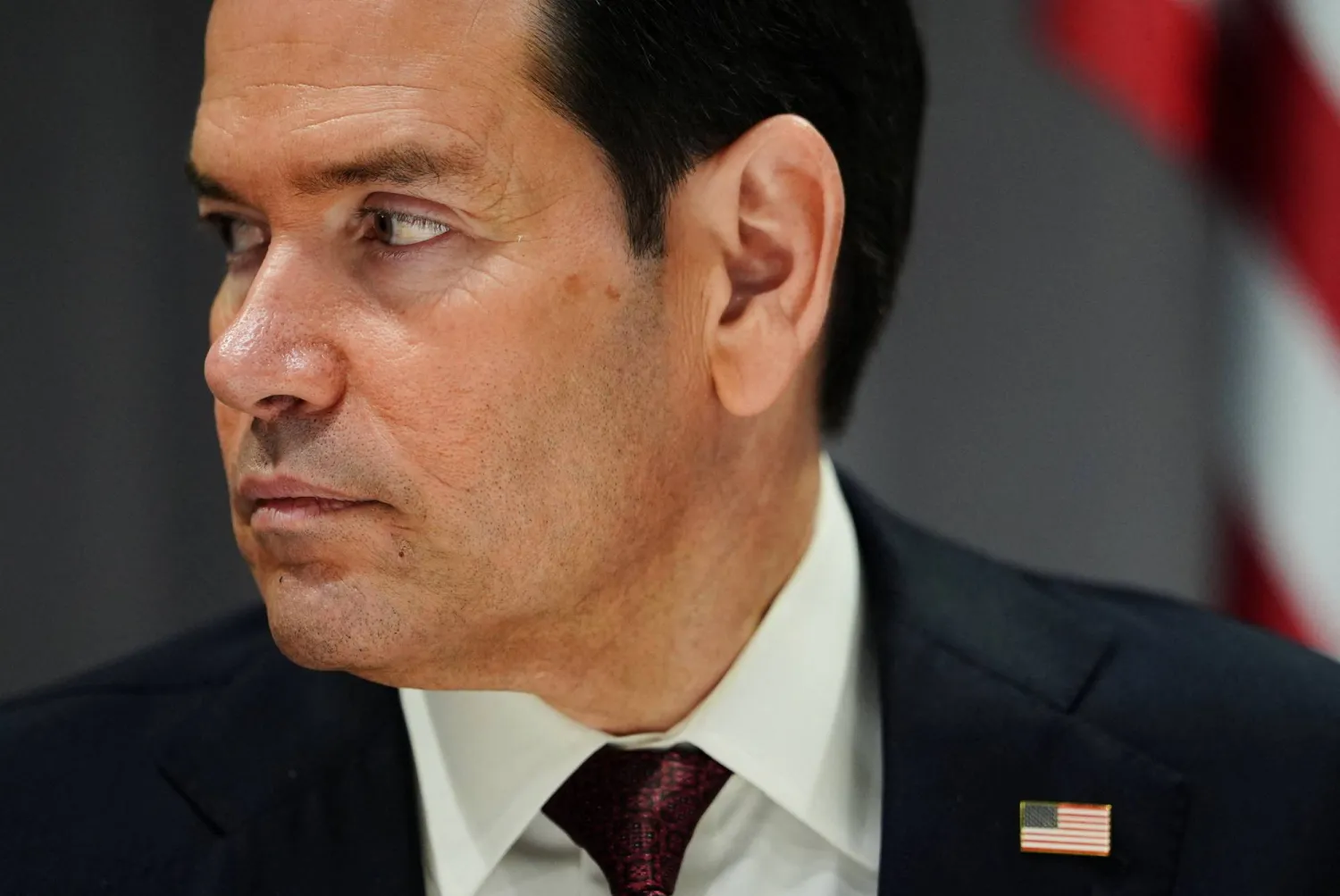
The United States has seen some progress in talks with Iran and is in constant communication with the Pakistani mediators, but there is more work to be done, Secretary of State Marco Rubio said on Friday.

"There's been some progress. I wouldn't exaggerate it. I wouldn't diminish it," Rubio told reporters after a NATO ministers meeting in Sweden.

"There's more work to be done," he added. "We're not there yet. I hope we get there."

President Donald Trump would prefer to do a good deal, Rubio said. The core concern remains that Iran cannot have a nuclear weapon and the issue of future uranium enrichment needs to be discussed as well as reopening the Strait of Hormuz, he said.

"We're dealing with a very difficult group of people, and if it doesn't change, then the president's been clear he has other options," Rubio said.

"He prefers the negotiated option and having a good deal, but he himself has expressed concern that maybe that's not possible. But we're going to keep trying."

Rubio said the United States was in constant communication with the Pakistanis who are facilitating the talks with Iran.

There was no specific ask from the US on Friday for help from NATO on the Strait of Hormuz but there needs to be a Plan B if Iran refuses to reopen the supply route, Rubio said after the close of the NATO meeting.


Netherlands to Ban Imports from Israel's Jewish Settlements

The Neve Yaakov settlement north of East Jerusalem, with the Israeli wall visible separating the Palestinian neighborhood of al-Ram in the West Bank (AFP). 
TT

Netherlands to Ban Imports from Israel's Jewish Settlements

The Neve Yaakov settlement north of East Jerusalem, with the Israeli wall visible separating the Palestinian neighborhood of al-Ram in the West Bank (AFP). 

The Dutch government has agreed to impose a ban on imports of goods produced in Jewish settlements in Israeli-occupied Palestinian territories, Dutch Prime Minister Rob Jetten said on Friday.

The ban is meant to prevent "any contribution through economic activities by the Netherlands to the unlawful occupation", Jetten said.

The previous Dutch government last year said it was planning the ban, which is now expected to take effect in the second half of the year.

The Netherlands is a leading global buyer of Israeli goods, but the government has never disclosed what volume of goods are currently imported from Jewish settlements.

Most world powers deem Israel's settlements, on land it captured in a 1967 war, illegal. Numerous UN Security Council resolutions have called on Israel to halt all settlement activity.

Israel disputes this, saying it has historical and biblical ties to the land.