Egypt’s Central Bank Faces Multiple Crises, Limited Optionshttps://english.aawsat.com/home/article/4242956/egypt%E2%80%99s-central-bank-faces-multiple-crises-limited-options
Egypt’s Central Bank Faces Multiple Crises, Limited Options
The Central Bank of Egypt (CBE) in Cairo, Egypt (Reuters)
The Monetary Policy Committee (MPC) of the Central Bank of Egypt (CBE) will hold a periodic meeting on Thursday when options to contain successive shocks to the Egyptian economy remain limited before growing local and global crises.
CBE will likely raise interest rates at today’s meeting to curb inflation, which has risen to unprecedented levels in Egypt.
Raising interest, however, will reduce chances of increasing growth rates in a country where the population exceeds 100 million people.
Moreover, it will increase the burden of debt service on the government.
CBE is forecast to hike its overnight interest rates by 200 basis points as it struggles to bring soaring inflation under control, a Reuters poll showed on Monday.
The median forecast in a poll of 15 analysts is for the bank to increase its deposit rate to 18.25% and its lending rate to 19.25% at its regular monetary policy committee (MPC) meeting. Seven of the analysts expected an increase of 300 bps.
At its last meeting on Feb. 2, the central bank left rates steady despite analyst expectations of a 150 bps increase, saying steep rate hikes put in place over the previous year should help to tame inflation, which in December had accelerated to a five-year high of 21.3%.
The central bank had raised rates by a total of 800 bps since Russia invaded Ukraine in early 2022.
With 12-month non-deliverable forward (NDF) rates now over 40 per dollar, another large-scale pound devaluation was just a matter of time, said Gergely Urmossy at Societe Generale.
“No time like the present to align foreign exchange rates with fundamentals,” Urmossy said, adding that the March 30 policy announcement was "one of the most anticipated events in the African Frontier space."
The weakening currency and soaring inflation, which in February hit a five-and-a-half-year high of 31.9%, also put more pressure on the central bank to raise rates, even if it adds to the costs of servicing climbing government debt.
Gold Falls as Renewed US-Iran Tensions Dampen Peace Hopes, Clouds Interest Rate Outlook
A saleswoman adjusts gold jewellery for sale at a shop in Lianyungang_ in China痴 eastern Jiangsu province - AFP
Gold slipped on Tuesday as US strikes in Iran pushed Brent prices higher, stoking inflation worries and clouding the outlook for US interest rates.
Spot gold was down 0.7% at $4,537.10 per ounce, as of 1052 GMT. US gold futures for June delivery was unchanged at $4,536.80.
"The uncertainty triggered an uptick in oil prices, sharpening inflationary fears and reinforcing hawkish Federal Reserve expectations, creating a headwind for non-yielding gold," ActivTrades analyst Ricardo Evangelista said.
"The path of least resistance for gold prices remains to the downside... Traders will remain focused on the US-Iran talks, while also looking ahead to the release of US PCE inflation data."
Brent crude oil prices rose sharply after the US military carried out strikes in Iran, dampening hopes of a swift resolution to the Middle East conflict.
US Secretary of State Marco Rubio said on Tuesday that negotiating a deal with Iran could "take a few days."
Elevated crude oil prices can accelerate inflation and keep interest rates higher for longer. While gold is seen as a hedge against inflation, higher rates tend to weigh on the non-yielding metal.
Markets are pricing in a Fed rate hike before year-end, with a 41% chance of a 25-basis-point hike in December, according to CME Group's FedWatch tool, according to Reuters.
Investors now await the US Personal Consumption Expenditures (PCE) data for April due on Thursday, for more cues on US monetary policy.
Meanwhile, UBS lowered its year-end gold price target by $400 to $5,500 due to persistent risks from higher yields and a stronger dollar.
However, "elevated global debt burdens, persistent fiscal deficits in the US, and continued reserve diversification trends should again elevate the strategic case for hard assets, especially as oil prices likely moderate toward the end of the year," UBS said in a note.
Spot silver fell 2.2% to $76.37 per ounce, platinum lost 0.9% to $1,949.54, and palladium slid 1.7% to $1,374.
Azerbaijan Promotes Caucasus Corridors to Link Saudi Logistics With Central Asiahttps://english.aawsat.com/business/5277382-azerbaijan-promotes-caucasus-corridors-link-saudi-logistics-central-asia
Azerbaijan Promotes Caucasus Corridors to Link Saudi Logistics With Central Asia
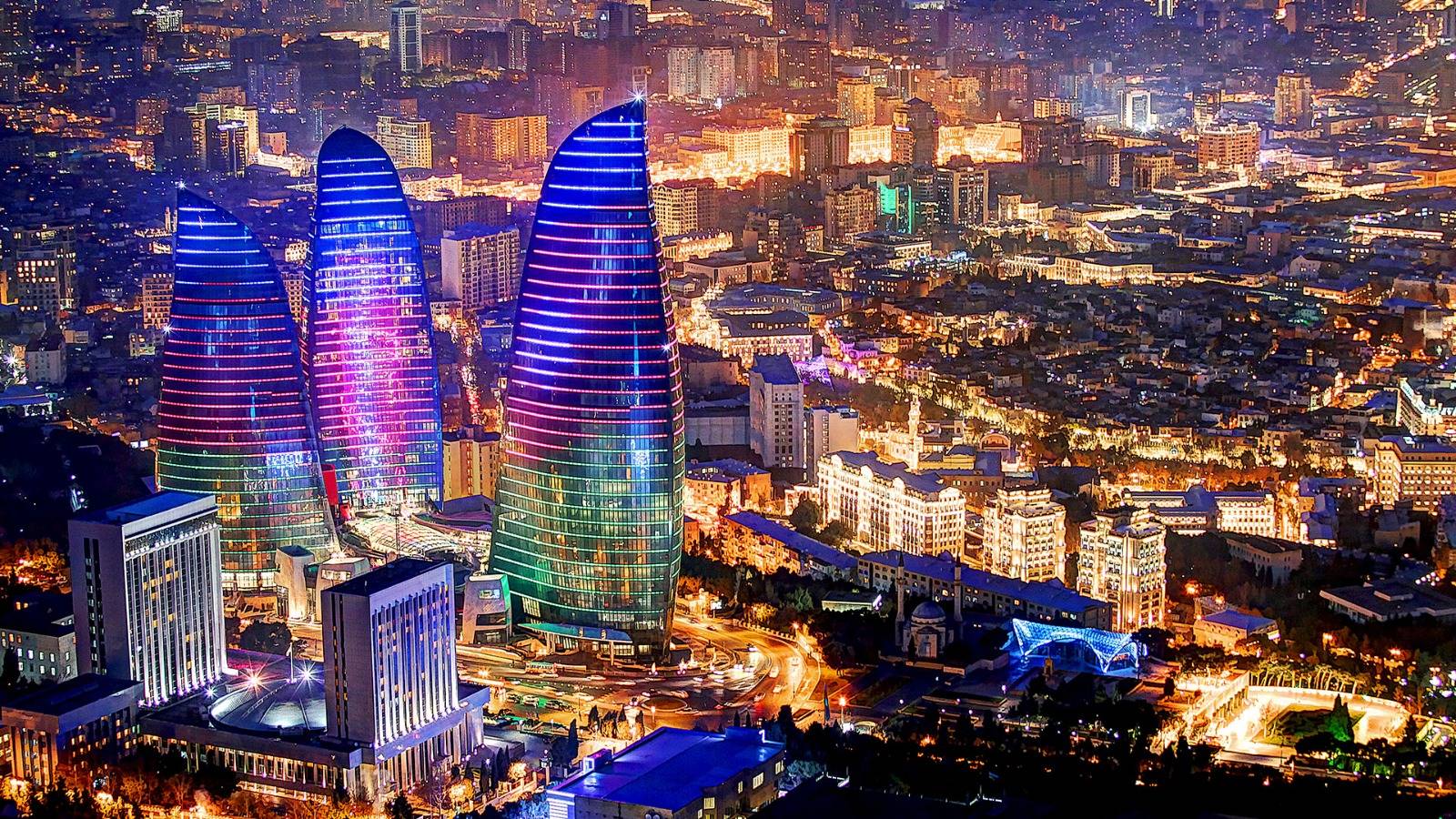
Azerbaijan's capital Baku with the city's famous architectural landmarks in the background (X)
As global markets search for logistical lifelines to secure supply chains and energy flows amid ongoing geopolitical disruptions, Azerbaijan is promoting major transport and logistics projects, foremost among them overland freight routes through the Caucasus and across the Caspian Sea, as a strategic safeguard for the future. These initiatives aim to create faster and more efficient shipping links while integrating the Gulf Cooperation Council states, particularly Saudi Arabia's logistics strategy, into a vital connectivity network stretching across the South Caucasus and deep into Central Asia.
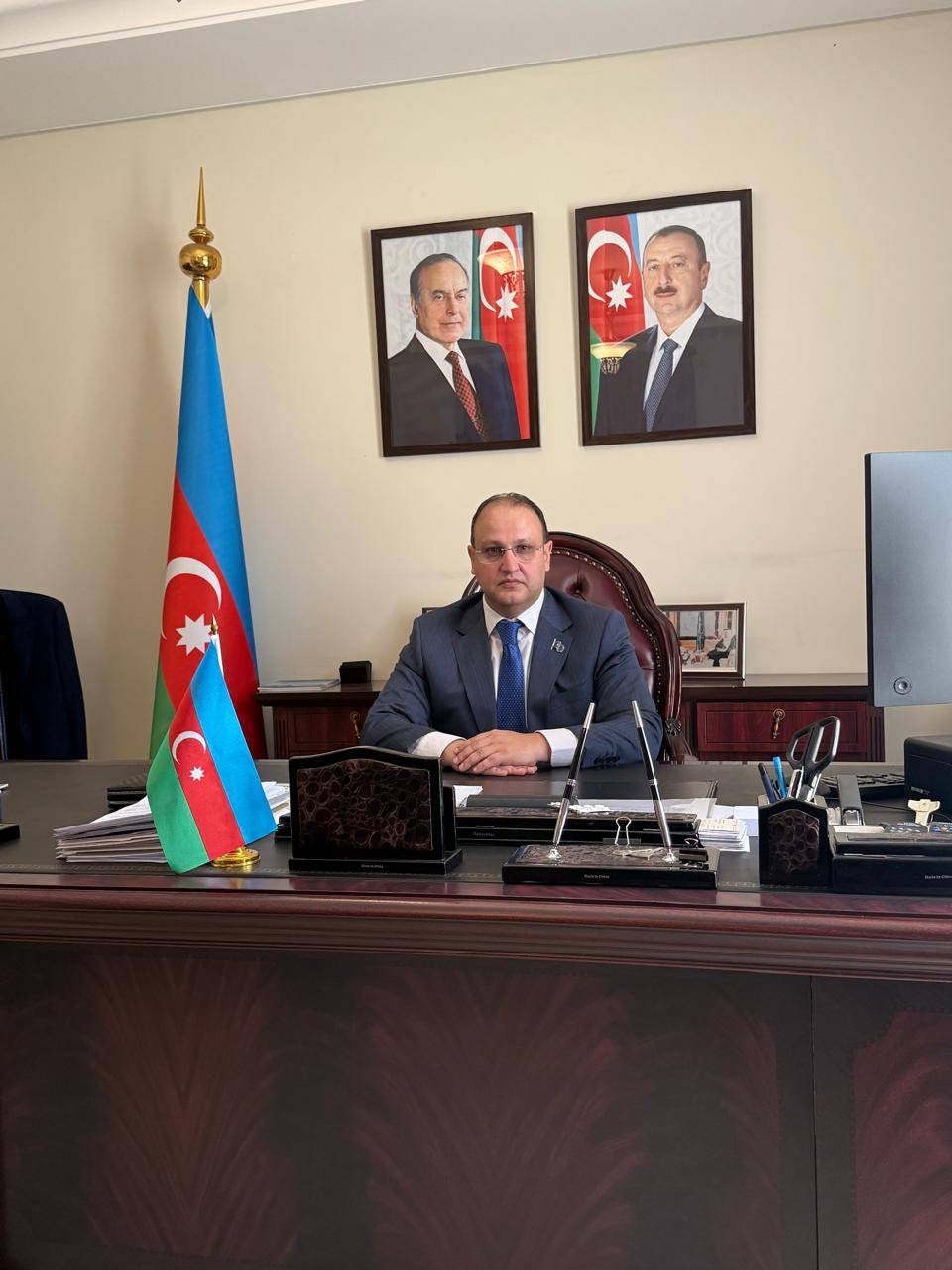
Ahead of his country's Independence Day on May 28, Azerbaijan's Ambassador to Saudi Arabia Mutallim Mirzayev told Asharq Al-Awsat that Baku is leveraging its unique position as a strategic bridge to strengthen investment flows and trade, driven by a strong desire to deepen its comprehensive partnership with Riyadh and translate existing understandings into concrete projects on the ground. These include nearly 30 official agreements and important contracts covering the economy, trade, investment, and agriculture, in addition to a proposed joint investment fund. Mirzayev stressed that Azerbaijan is "uniquely positioned as a strategic bridge connecting Central Asia, the South Caucasus, and the Gulf region."
These logistics ambitions come at a time when Saudi-Azerbaijani relations are experiencing a peak in investment activity, with the two countries pursuing major strategic partnerships in both conventional and renewable energy sectors. In this regard, the ambassador praised the leading role played by Saudi companies in Azerbaijan, particularly ACWA Power, which he described as a vital partner driving the country's green energy transition, water management projects, and sustainable infrastructure development. He noted that cooperation is expanding rapidly, reflecting the peak level of investment activity between the two nations.
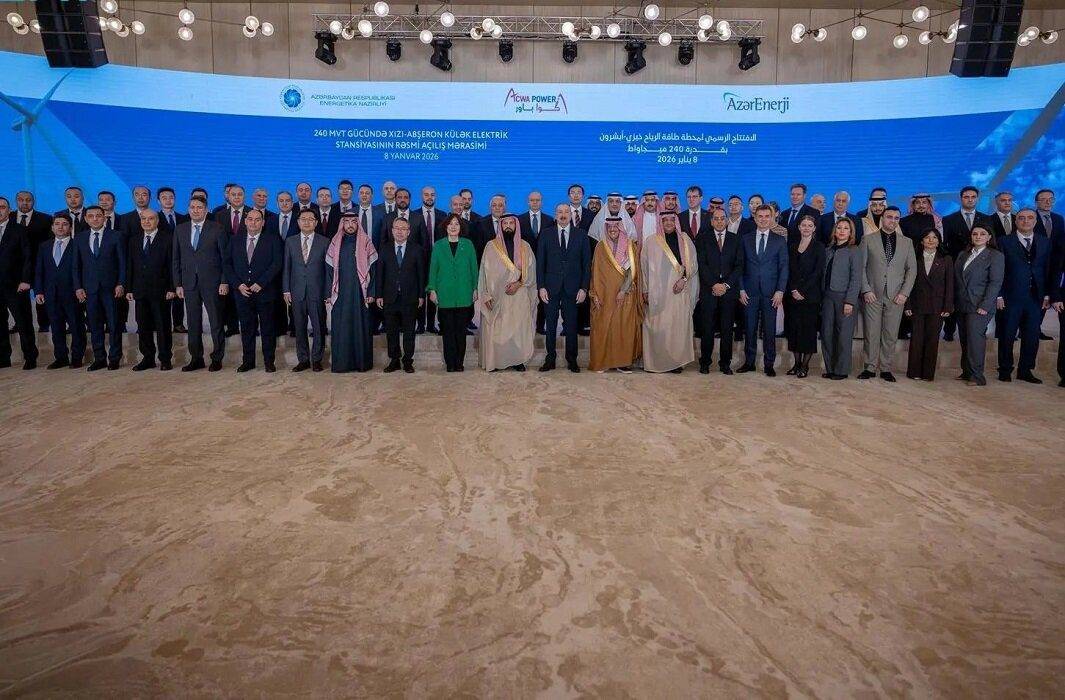
A key example is the Khizi-Absheron Wind Power Plant, officially inaugurated by Saudi Arabia's ACWA Power earlier this year. The project has a generation capacity of 240 megawatts and an investment value of $300 million. It is the first and largest fully foreign-funded renewable energy project in Azerbaijan and is expected to contribute significantly to the country's energy security.
In conventional energy, Saudi investments also maintain a significant presence through the participation of companies affiliated with the Kingdom's sovereign and development institutions in strategic oil and gas projects in Azerbaijan. These include contributions to the development of the giant Azeri-Chirag-Gunashli oil field, reinforcing the role of both countries in regional and international energy security.
Mutallim Mirzayev, Azerbaijan's ambassador to Saudi Arabia. (Asharq Al-Awsat)
Urban Momentum and the Joint Fund
Mirzayev praised Saudi Arabia's active, high-level participation in the 13th session of the World Urban Forum (WUF13), hosted recently in Baku. The forum featured leading Saudi initiatives and projects in urban development and sustainable housing, reflecting the growing depth of bilateral coordination.
The Azerbaijani ambassador noted that the forum successfully transformed Baku into a global platform for dialogue on the future of smart cities, modern urban planning, and climate resilience. He said these strategic principles are fully embedded in Azerbaijan's ongoing reconstruction and redevelopment plans, under which entire cities and villages are being rebuilt in the liberated territories.
Trade Momentum and the Joint Fund
Turning to economic cooperation, Mirzayev said efforts are advancing steadily to activate the proposal for a joint investment fund aimed at pooling capital and directing it toward priority sectors and shared economic objectives, including agriculture, food security, tourism, advanced technologies, and infrastructure, as well as strengthening trade in industry and advanced logistics services.
On people-to-people ties, he said tourism has become a key pillar of growth amid increasing visitor flows and growing interest among Saudi tourists in Azerbaijan as a distinctive cultural and tourism destination.
The official inauguration of the Khizi-Absheron Wind Power Plant, developed by ACWA Power, in January 2026. (X)
Vision 2030 and the Organization of Islamic Cooperation
"On the occasion of our Independence Day, I would like to express my sincere appreciation for the friendship, solidarity, and close cooperation between our two countries," Mirzayev said. He also praised the remarkable achievements and transformation witnessed in the Kingdom, noting that "the ambitious reforms and development initiatives implemented within the framework of Saudi Vision 2030 are making significant contributions to sustainable development, economic diversification, regional stability, and prosperity."
He added that Azerbaijan "highly values the Kingdom's principled support for Azerbaijan's sovereignty," while emphasizing that Baku attaches great importance to its relations with Saudi Arabia as one of the leading countries in the region. He reiterated Azerbaijan's future-oriented vision, highlighting the country's ongoing large-scale reconstruction and redevelopment efforts in the liberated territories, where entire cities and villages are being rebuilt in accordance with modern urban planning principles, smart city concepts, green energy, and sustainable development.
In the multilateral arena, Mirzayev revealed that Azerbaijan's upcoming chairmanship of the Organization of Islamic Cooperation summit will focus heavily on strengthening economic cooperation among member states, supporting climate action, science and innovation, youth empowerment, and sustainable development, all in the service of global stability.
He also reiterated that tourism has become an increasingly important pillar of bilateral relations, driven by the growing number of Saudi visitors traveling to Azerbaijan.
A view of Baku illuminated at night. (X)
The Geopolitics of the Middle Corridor and Shipping Alternatives
Azerbaijan's transport and logistics proposals are gaining strategic significance in economic circles. At the center of these plans is the Middle Corridor, officially known as the Trans-Caspian International Transport Route, which serves as a secure land-and-sea alternative connecting China with Central Asia, the Caucasus, Türkiye, and ultimately Europe. The corridor is particularly attractive because it can reduce cargo transit times to approximately 12 to 15 days, bypassing the constraints of traditional maritime shipping and the geopolitical complications associated with northern transport routes.
In the same logistics framework, the planned Zangazur Corridor, which would connect mainland Azerbaijan with the Nakhchivan Autonomous Republic and onward to Türkiye, represents a vital artery for regional economic integration. The corridor would establish direct and rapid road and rail connectivity and intersect with the Middle Corridor, creating an extensive logistics network stretching from the Turkic world and Central Asia to the ambitious transport systems being developed by the Gulf Cooperation Council states.
Shaping the Logistics Map
Regarding regional integration between the Gulf and Central Asia, Mirzayev emphasized that Azerbaijan's strategic location makes it a vital link connecting Central Asia, the South Caucasus, and the Gulf region. This geographical advantage is reinforced by modern transport infrastructure that enables Azerbaijan to facilitate trade, investment, and energy flows between the two regions in the face of global economic challenges.
The ambassador stressed that regional cooperation mechanisms are becoming increasingly important in addressing current global economic and geopolitical challenges, adding that Azerbaijan actively supports all initiatives aimed at strengthening integration, connectivity, and economic partnership between Central Asia and the Gulf region.
In this context, Mirzayev said major transport projects, particularly the Middle Corridor and the Zangazur Corridor, carry exceptional strategic weight for regional transportation, logistics services, international trade, and cross-border economic integration. Their ability to create faster, safer, and more efficient land and rail shipping links connecting Central Asia, the South Caucasus, and Türkiye with the Gulf region can strengthen global supply-chain security and open promising investment opportunities for all parties, including Saudi Arabia's logistics strategy as it seeks to diversify its gateways to the world.
Paris Mint to Issue 1st Solid-gold Coins in a Centuryhttps://english.aawsat.com/business/5277333-paris-mint-issue-1st-solid-gold-coins-century
Paris Mint to Issue 1st Solid-gold Coins in a Century
A worker holds a Marianne-Or gold coin bullion replica at La Monnaie de Paris in Paris on May 21, 2026. (Photo by SIMON WOHLFAHRT / AFP)
The Paris Mint said Tuesday that it would soon start selling solid-gold coins for investment, the first since it quit making Napoleons and Louis a century ago.
Four versions of the new Marianne coins will go on sale June 16, ranging from one-tenth of an ounce (3.1 grams) to a full ounce (31.1 grams).
One side will feature the symbolic Marianne face representing the French republic, while the other will show a map of the nation's territories, the Mint said.
They will compete on the global market with South African Krugerrands, Canadian Maple Leafs or American Gold Eagles.
The goal is to "democratize the gold market in France", the Mint's chief Marc Schwartz told journalists ahead of the launch, citing "investor demand" as prices have soared in recent years.
Most investors wanting to buy gold, considered a safe haven compared to other investments, usually opt for market-traded funds that track the metal's price, or buy shares in gold mining firms.
Gold and silver coins currently issued by the Mint are commemorative or collector items made of alloys with lower percentages of the precious metals.
But the new coins will be sold at market prices -- currently around $4,600 an ounce after surging more than 65 percent last year, AFP reported.
For investors who want to avoid the cost of storing and protecting gold in their homes, the Mint will offer a digital "e-Marianne" coin that it will hold until the day the owner wants to sell.
The Paris Mint, headquartered on the Right Bank of the Seine since 1775, did not say how many coins it expected to sell. Its revenues rose 1.7 percent last year to reach 197 million euros ($230 million).
لم تشترك بعد
انشئ حساباً خاصاً بك لتحصل على أخبار مخصصة لك ولتتمتع بخاصية حفظ المقالات وتتلقى نشراتنا البريدية المتنوعة