

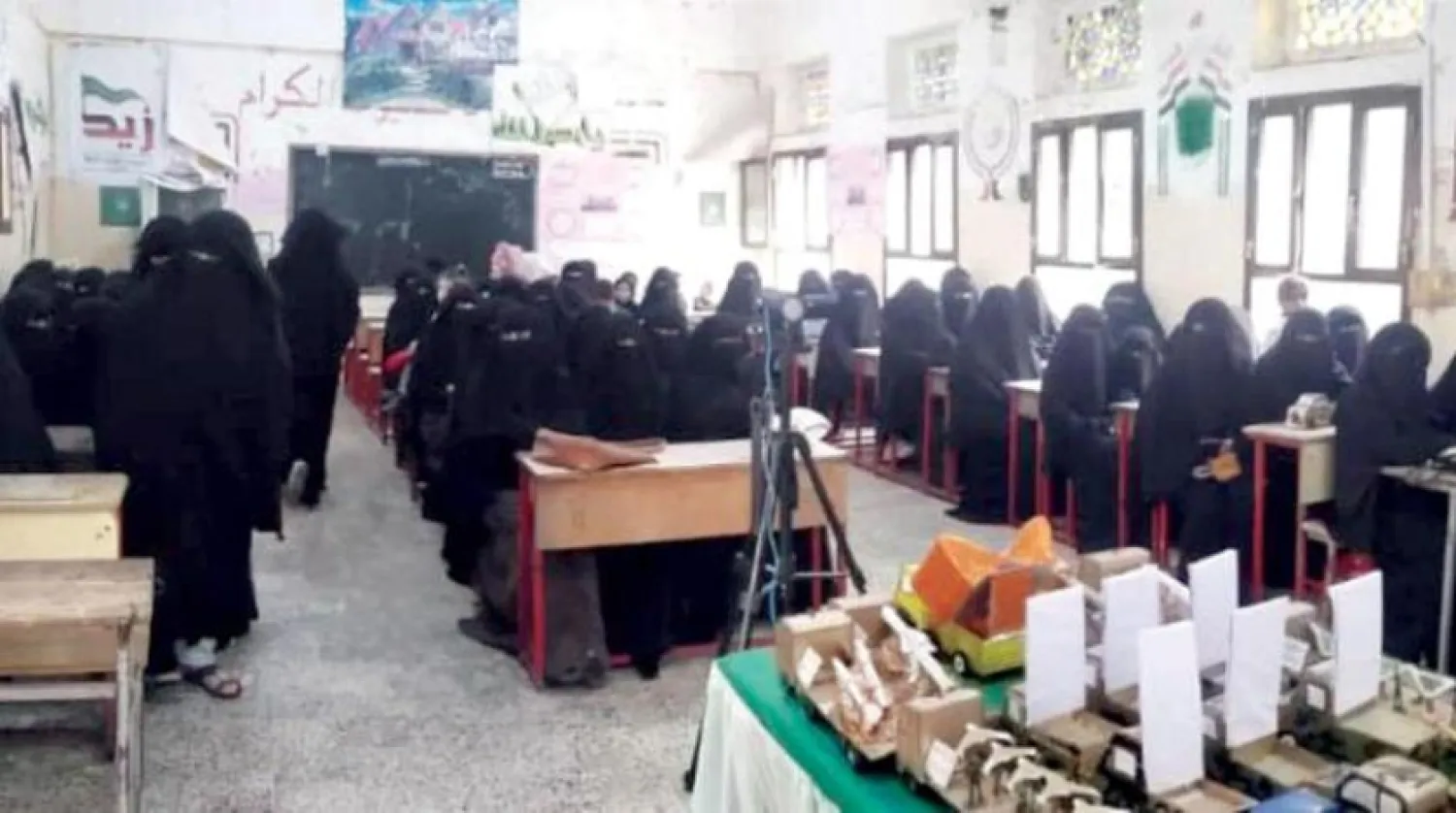

Houthis Allocate $500,000 for Sectarian Events

Yemenis during a sectarian event in Sanaa (Houthi media)
TT

Houthis Allocate $500,000 for Sectarian Events

Yemenis during a sectarian event in Sanaa (Houthi media)

Houthi militia has allocated, within a week, about half a million dollars for a series of sectarian events in Sanaa and the other cities under their control celebrating the so-called "Day of Resilience," according to informed sources.

A source close to the group told Asharq Al-Awsat that the militias organized more than 180 political and mobilization events and forced officials managing the ministries and state institutions to organize events for millions of Yemeni riyals.

The militias also forced the residents of the areas under their control to attend and forcibly participate in the vigils and events.

The sources confirmed that only the group's followers and loyalists benefit from the funds allocated for the Houthi events. At the same time, millions of other Yemenis face the threat of starvation and the spread of deadly epidemics.

Before celebrating the so-called "Day of Resilience," the Houthi leaders held meetings with loyalists urging them to mobilize the population and organize events.

The celebrations come amid deteriorating and miserable economic, security, and living conditions in the country, angered the residents who expressed their discontent against the militias.

Mohammed A., a government employee in Sanaa, slammed the Houthi expenditure on sectarian events while disregarding interest in the suffering of the majority.

Mohammed told Asharq Al-Awsat that the Houthi extravagant events no longer surprise Yemenis in Sanaa, noting that all political and sectarian events are a gateway to plundering public and private funds.

Meanwhile, several international organizations, such as the UN, warn that famine may affect 20 million Yemenis due to the war and that Yemen is witnessing the worst humanitarian crisis in the world.

Yemeni human rights activists in Sanaa said various Houthi events such as the Day of Resilience, the anniversary of the coup, Martyr's Week, the Day of Wilayah, Ashura, the Prophet's birthday, and other occasions had become a nightmare for millions of Yemenis.

Political activists assert that the insurgents exploit these occasions to influence the Yemenis, hoping to attract more recruits and embrace their sectarian ideas.

According to informed sources in Sanaa, the Houthi militia held more than 700 sectarian events on the anniversary of the Birth of the Prophet, allocating more than YR65 billion.


Syria Imposes Night Curfew on Port City of Latakia

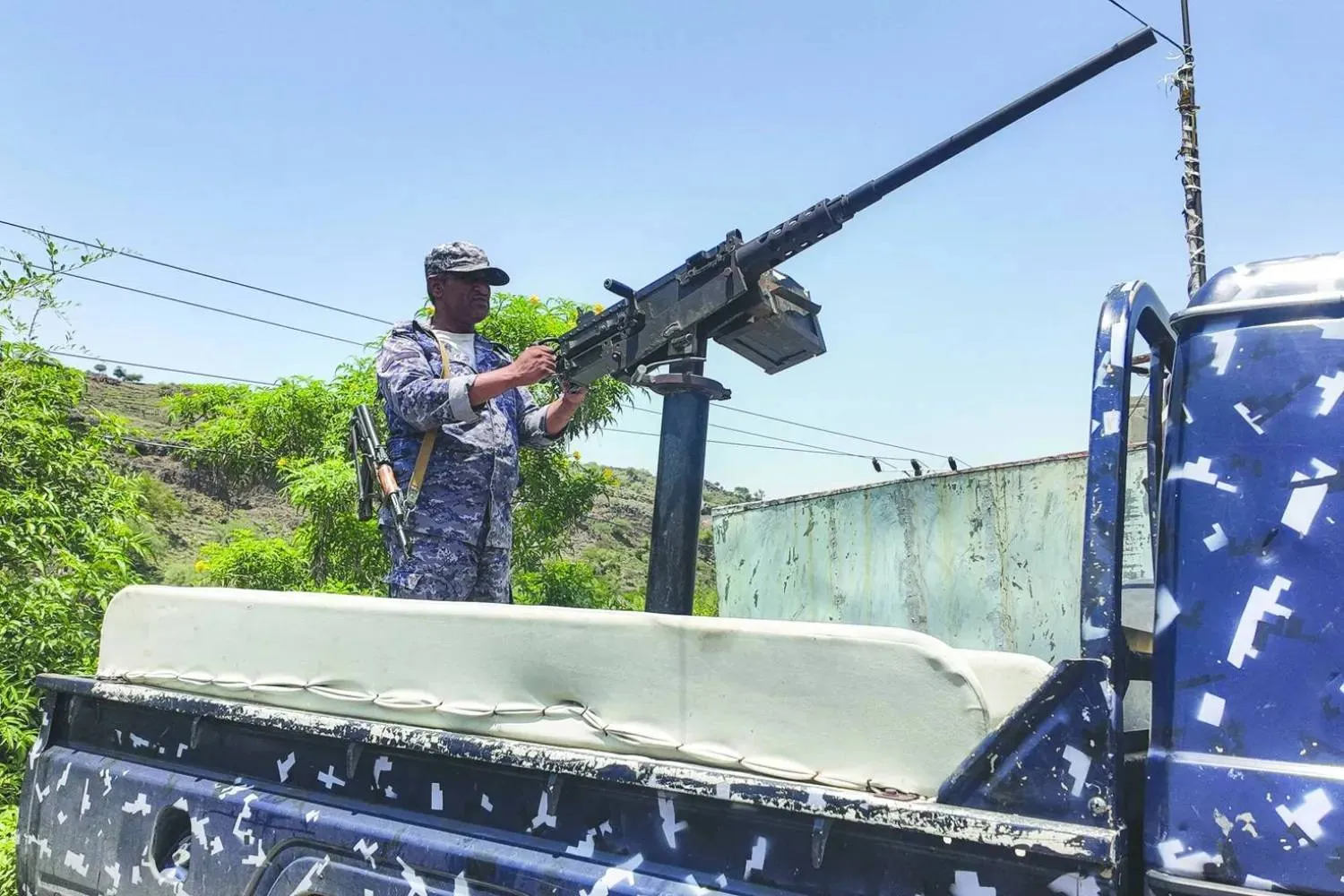
People watch as Syrian Security forces are deployed after clashes erupted during a protest in the city of Latakia, Syria, 28 December 2025. EPA/AHMAD FALLAHA
TT

Syria Imposes Night Curfew on Port City of Latakia

People watch as Syrian Security forces are deployed after clashes erupted during a protest in the city of Latakia, Syria, 28 December 2025. EPA/AHMAD FALLAHA

Syrian authorities imposed an overnight curfew in the coastal city of Latakia on Tuesday.

Authorities announced a "curfew in Latakia city, effective from 5:00pm (1400 GMT) on Tuesday, December 30, 2025, until 6:00am (0300 GMT) on Wednesday, December 31, 2025".


Jailed Turkish Kurd Leader Calls on Government to Broker Deal for Syrian Kurds

(FILES) Supporters display a poster depicting jailed leader of the Kurdistan Workers' Party (PKK) Abdullah Ocalan, after he called on the Kurdistan Workers' Party (PKK) to disarm and dissolve itself in Diyarbakir, southeastern Türkiye, on February 27, 2025. (Photo by Yasin AKGUL / AFP)
TT

Jailed Turkish Kurd Leader Calls on Government to Broker Deal for Syrian Kurds

(FILES) Supporters display a poster depicting jailed leader of the Kurdistan Workers' Party (PKK) Abdullah Ocalan, after he called on the Kurdistan Workers' Party (PKK) to disarm and dissolve itself in Diyarbakir, southeastern Türkiye, on February 27, 2025. (Photo by Yasin AKGUL / AFP)

Jailed Turkish Kurd leader Abdullah Ocalan said Tuesday that it was "crucial" for Türkiye’s government to broker a peace deal between the Kurdish-led Syrian Democratic Forces (SDF) and the Damascus government.

Clashes between Syrian forces and the SDF have cast doubt over a deal to integrate the group's fighters into the army, which was due to take effect by the end of the year, reported AFP.

Ocalan, founder of the Kurdistan Workers' Party (PKK) group, called on Türkiye to help ensure implementation of the deal announced in March between the SDF and the Syrian government.

"It is essential for Türkiye to play a role of facilitator, constructively and aimed at dialogue," he said in a message released by Türkiye's pro-Kurdish DEM party.

"This is crucial for both regional peace and to strengthen its own internal peace," Ocalan, who has been jailed for 26 years, added.

"The fundamental demand made in the agreement signed on March 10 between the SDF and the government in Damascus is for a democratic political model permitting (Syria's) peoples to govern together," he added.

"This approach also includes the principle of democratic integration, negotiable with the central authorities. The implementation of the March 10 agreement will facilitate and accelerate that process."

The backbone of the US-backed SDF is the YPG, a Kurdish group seen by Türkiye as an extension of the PKK.

Türkiye and Syria both face long-running unrest in their Kurdish-majority regions, which span their shared border.

In Türkiye, the PKK agreed this year at Ocalan's urging to end its four-decade armed struggle.

In Syria, Sharaa has agreed to merge the Kurds' semi-autonomous administration into the central government, but deadly clashes and a series of differences have held up implementation of the deal.

The SDF is calling for a decentralized government, which Sharaa rejects.

Turkish Foreign Minister Hakan Fidan, whose country sees Kurdish fighters across the border as a threat, urged the SDF last week not to be an "obstacle" to stability.

Syrian Kurdish leader Mazloum Abdi said Thursday that "all efforts" were being made to prevent the collapse of talks.


Yemen's PLC Imposes No Fly-Zone, Sea and Ground Blockade on All Ports and Crossings

Chairman of Yemen's Presidential Leadership Council Dr. Rashad al-Alimi. (Saba)
TT

Yemen's PLC Imposes No Fly-Zone, Sea and Ground Blockade on All Ports and Crossings

Chairman of Yemen's Presidential Leadership Council Dr. Rashad al-Alimi. (Saba)

Chairman of Yemen's Presidential Leadership Council Dr. Rashad al-Alimi declared on Tuesday a state of emergency throughout the country in wake of the "internal strife caused by the military rebellion in eastern provinces aimed at dividing the republic."

He called for all military formations and forces in the Hadhramaut and Al-Mahra governorates to coordinate completely with the Coalition to Restore Legitimacy in Yemen, represented by Saudi Arabia, and to immediately return to their original positions without a fight. They should cede their positions in the two governorates to the National Shield forces.

Al-Alimi said the state of emergency will last 90 days, which can be extended. He also imposed a no fly-zone, sea and ground blockade on all ports and crossings for 72 hours.

The move also stems from "the commitment to the unity of Yemen, its sovereignty, independence, and territorial integrity and the need to confront the Houthi coup that has been ongoing since 2014," he stressed.

Moreover, al-Alimi called on "all United Arab Emirates forces to leave the country within 24 hours."

"We will firmly deal with any rebellion against state institutions," he warned.

He called on the Southern Transitional Council to "return to reason and quickly and unconditionally withdraw its forces from Hadhramaut and Al-Mahra."

Al-Alimi announced the state of emergency shortly after the Saudi-led Arab coalition carried out a "limited" airstrike targeting a military shipment that had arrived in Yemen's Al-Mukalla port.

In a statement, coalition spokesman Major General Turki al-Malki said the forces detected on Saturday and Sunday the arrival of two vessels from the Port of Fujairah to Mukalla without obtaining any permits from the Joint Forces Command.

Saudi Arabia expressed on Tuesday its disappointment in the United Arab Emirates for pressuring the STC to carry out military operations on the Kingdom's southern borders in Hadhramaut and Al-Mahra.

A Saudi Foreign Ministry statement said: "The steps taken by the UAE are considered highly dangerous, inconsistent with the principles upon which the Coalition to Restore Legitimacy in Yemen was established, and do not serve the coalition's purpose of achieving security and stability for Yemen."

"The Kingdom stresses that any threat to its national security is a red line, and the Kingdom will not hesitate to take all necessary steps and measures to confront and neutralize any such threat," it declared.
