


SKorea, US, Japan Call for Support of Ban on NKorea Workers

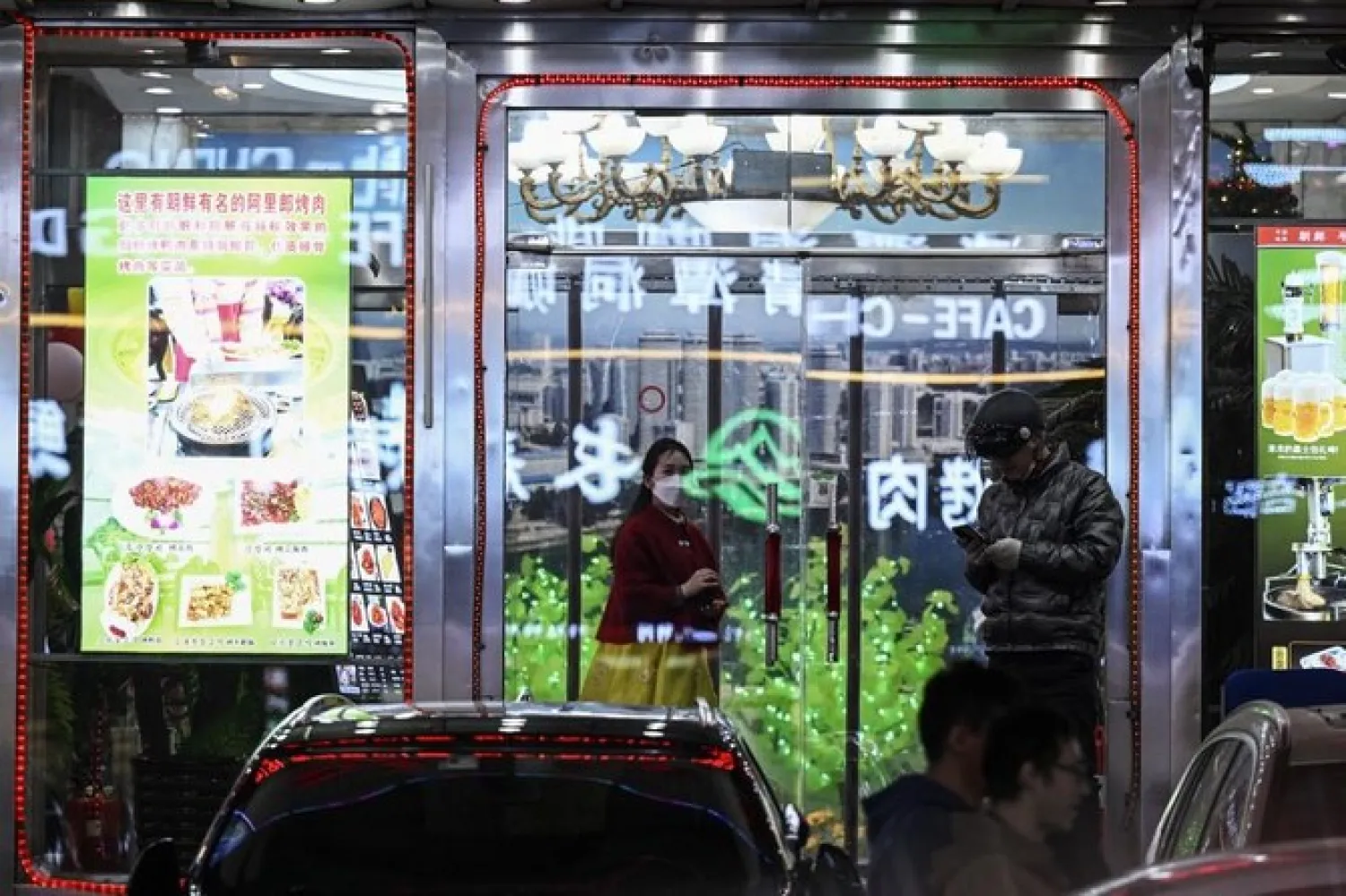
Above, a North Korean worker, left, stands at the entrance of a North Korean restaurant in Shenyang of China’s northeastern Liaoning province on March 31, 2023. (AFP)
TT

SKorea, US, Japan Call for Support of Ban on NKorea Workers

Above, a North Korean worker, left, stands at the entrance of a North Korean restaurant in Shenyang of China’s northeastern Liaoning province on March 31, 2023. (AFP)

South Korea, the US and Japan called for stronger international support of efforts to ban North Korea from sending workers abroad and curb the North’s cybercrimes as a way to block the country’s means to fund its nuclear program.

The top South Korean, US and Japanese nuclear envoys met in Seoul on Friday in their first gathering in four months to discuss how to cope with North Korea’s growing nuclear arsenal. The North’s recent weapons tests show it is intent on acquiring more advanced missiles designed to attack the US and its allies, rather than returning to talks, The Associated Press said.

Despite 11 rounds of UN sanctions and pandemic-related hardships that have worsened its economic and food problems, North Korea still devotes much of its scarce resources to its nuclear and missile programs. Contributing to financing its weapons program is also likely the North’s crypto hacking and other illicit cyber activities and the wages sent by North Korean workers remaining in China, Russia and elsewhere despite an earlier UN order to repatriate them by the end of 2019, experts say.

In a joint statement, the South Korean, US and Japanese envoys urged the international community to thoroughly abide by UN resolutions on the banning of North Korean workers overseas, according to Seoul’s Foreign Ministry.

The ministry said a large number of North Korean workers remains engaged in economic activities around the world and transmits money that is used in the North’s weapons programs. It said the three envoys tried to call attention to the North Korean workers because the North may further reopen its international borders as the global COVID-19 situation improves.

It is not known exactly how many North Korean workers remain abroad. But before the 2019 UN deadline passed, the US State Department had estimated there were about 100,000 North Koreans working in factories, construction sites, logging industries and other places worldwide. Civilian experts had said that those workers brought North Korea an estimated $200 million to $500 million in revenue each year.

“We need to make sure that its provocations never go unpunished. We will effectively counter North Korea’s future provocations and cut their revenue streams that fund these illegal activities,” Kim Gunn, the South Korean envoy, said in televised comments at the start of the meeting.

Sung Kim, the US envoy, said that with its nuclear and missile programs and "malicious cyber program that targets countries and individuals around the globe,” North Korea threatens the security and prosperity of the entire international community.

South Korea’s spy agency said in December that North Korean hackers had stolen an estimated 1.5 trillion won ($1.2 billion) in cryptocurrency and other virtual assets in the past five years, more than half of it last year alone. The National Intelligence Service said North Korea’s capacity to steal digital assets was considered among the best in the world because it has focused on cybercrimes since UN economic sanctions were toughened in 2017 in response to its earlier nuclear and missile tests.

Friday’s trilateral meeting will likely infuriate North Korea, which has previously warned that the three countries’ moves to boost their security cooperation prompted urgent calls to reinforce its own military capability.

North Korea has long argued the UN sanctions and US-led military exercises in the region are proof of Washington’s hostility against Pyongyang. The North has said it was compelled to develop nuclear weapons to deal with US military threats, though US and South Korean officials have steadfastly said they have no intention of invading the North.
Earlier this week, the United States conducted anti-submarine naval drills with South Korean and Japanese forces in their first such training in six months. The US also flew nuclear-capable bombers for separate, bilateral aerial training with South Korean warplanes.

North Korea hasn’t performed weapons tests in reaction to those US-involved drills. But last month, it carried out a barrage of missile tests to protest the earlier South Korean-US military training that it sees as an invasion rehearsal.

Takehiro Funakoshi, the Japanese envoy, said North Korea's recent weapons tests and fiery rhetoric pose a grave threat to the region and beyond. “Under such circumstances, our three countries have significantly deepened our coordination,” he said.

Sung Kim reiterated that Washington seeks diplomacy with Pyongyang without preconditions. North Korea has previously rejected such overtures, saying it won't restart talks unless Washington first drops its hostile policies, in an apparent reference to the sanctions and US-South Korean military drills. Many experts say North Korea would still eventually use its enlarged weapons arsenal to seek US concessions such as the lifting of the sanctions in future negotiations.

There are concerns that North Korea could conduct its first nuclear test in more than five years, since it unveiled a new type of nuclear warhead last week. Foreign experts debate whether North Korea has developed warheads small and light enough to fit on missiles.



North Korea Says Tested AI-assisted Torpedo System

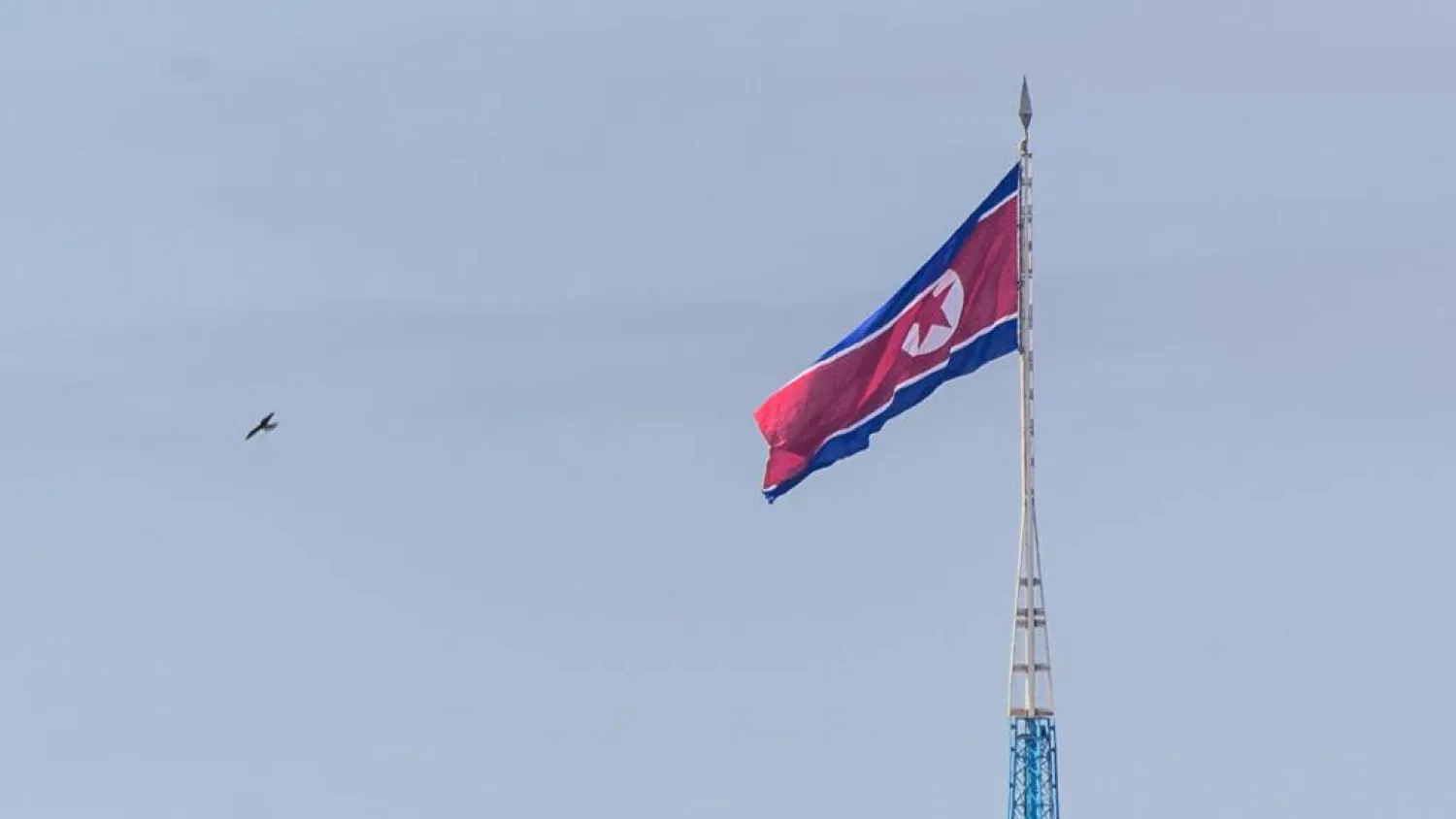
North Korea has tested a "new-type" precision-guided torpedo system that uses artificial intelligence for target detection and guidance, state media reports. ANTHONY WALLACE / AFP/File
TT

North Korea Says Tested AI-assisted Torpedo System

North Korea has tested a "new-type" precision-guided torpedo system that uses artificial intelligence for target detection and guidance, state media reports. ANTHONY WALLACE / AFP/File

North Korea said Saturday it had successfully tested a new torpedo system that uses artificial intelligence for target detection and guidance.

The Korean Central News Agency said the weapon tested Thursday was a “super-speed, precisely guided” torpedo system named Zam-2.0. It didn't explain what was meant by artificial intelligence.

The report added that test verified the weapon’s propulsion systems, which were developed through more than 180 tests over the past five years.

South Korea’s military, which often accuses the North of exaggerating its military technologies, did not immediately comment on KCNA’s report.

North Korea has been ramping up weapons demonstrations in recent weeks, including conducting its first underwater-launched missile tests in nearly three years, as leader Kim Jong Un shifts his focus to naval capabilities after years of ballistic missile development. Experts say the missile tests, carried out Wednesday, likely involved a yet-to-be-deployed submarine that Pyongyang has said is designed to launch nuclear weapons.

North Korea also tested hypersonic missile systems of various ranges on Sept. 20 and Oct. 3 as it seeks to expand its arsenal of weapons designed to overwhelm missile defenses in South Korea and Japan. Kim Yo Jong, the powerful sister of North Korean leader Kim Jong Un, claimed that the missiles tested on Oct. 3 also used artificial intelligence technology.

But some experts say that while North Korea is likely improving its guidance software, it's doubtful that the country's weapons really have advanced digital capabilities such as autonomous target designation,

Kim Jong Un in recent years has halted all diplomacy and cooperation with South Korea and described it as a permanent enemy, as a yearslong stalemate in nuclear negotiations with Washington drags on.


Russia Hails Trump Waiving Sanctions as 'Historic'

FILE - US President Donald Trump greets Russian President Vladimir Putin, Aug. 15, 2025, at Joint Base Elmendorf-Richardson, Alaska. (AP Photo/Julia Demaree Nikhinson, File)
TT

Russia Hails Trump Waiving Sanctions as 'Historic'

FILE - US President Donald Trump greets Russian President Vladimir Putin, Aug. 15, 2025, at Joint Base Elmendorf-Richardson, Alaska. (AP Photo/Julia Demaree Nikhinson, File)

Russia on Saturday hailed US President Donald Trump's move to waive new sanctions on it as "historic", as Ukraine worries he is taking Moscow's side in Europe's worst conflict since World War II.

Trump signed an executive order Friday that waived sweeping US sanctions targeting Russia's energy revenues amid a clash with Ukrainian President Volodymyr Zelensky.

The decision came despite Russia increasing strikes on Ukraine -- especially its capital, Kyiv -- in the fifth year of its offensive, which has killed hundreds of thousands of people and displaced millions.

"The Trump administration's suspension of the Graham Act is an important and truly historic moment," Kirill Dmitriev, envoy for Russian President Vladimir Putin, said on social media.

The Lindsey Graham Act -- named after the deceased US senator who sponsored the bill -- targeted Russia's energy and defense sectors, as well as Putin and the so-called "shadow fleet" of tankers used by Moscow to circumvent Western sanctions.

The Kremlin and Putin have not yet reacted to the move, which is a major diplomatic win for Moscow.

Dmitriev said the act would have caused "serious damage first and foremost to the US economy and global markets".

Trump's waiver comes after he struck a deal with Putin to ease existing sanctions on Russia in exchange for Moscow releasing large amounts of diesel onto global markets.

He announced the executive order Friday, shortly after Putin appeared in military uniform and said Moscow aims to capture the rest of east Ukraine.

US-led talks to end the war in Ukraine have not led to a breakthrough. Both Putin and Zelensky have frustrated Trump in the past with a lack of progress in halting the grinding war.

The move is bound to spook Ukraine's European allies, who worry the White House is taking the Kremlin's side.

Zelensky rallied his allies Friday on a visit to Brussels for a European Union summit, urging them to keep financing Ukraine's fight and insisting he was standing up for his country amid the row with Trump.

Russian forces struck Ukraine's southern city of Kherson Saturday after Trump's announcement, killing one person and wounding 22, local officials said.

- Putin vows more -

Russia has increased strikes on Kyiv in recent weeks, squeezing the city as Ukrainians brace for another winter of war.

Ukraine has been struggling to shoot down Russian missiles and has been left scrambling to boost defenses ahead of winter.

Russia controls large swathes of eastern and southern Ukraine and Putin has repeatedly said Moscow intends to seize the rest of east Ukraine by force.

"On the whole I see a positive trend in the operations of the troop groupings," Putin told army leaders Friday, dressed in military attire.

"Undoubtedly, one of the main objectives remains the liberation of the Donetsk People's Republic," he added, using the Kremlin's name for the eastern Donetsk region.

European leaders put on a show of unity with Zelensky Friday as he grappled with Trump.

"This is no time to withdraw the support to Ukraine. This is no time to relieve Russia's sanctions," said European Council chief Antonio Costa.

"Now it is time to increase our support, to increase our pressure."

European concerns have been heightened by disruptions to a critical US-provided satellite system that has hampered Ukraine's ability to counter Russia's intense bombardments.


Bangladesh is Battling Measles. It's a 'Real Warning' to Other Nations

Patients suspected of having measles receive treatment on the floor of the overcrowded measles isolation ward at Shahid Shamsuddin Ahmed Hospital in Sylhet, Bangladesh, September 12, 2026. REUTERS/Mohammad Ponir Hossain
TT

Bangladesh is Battling Measles. It's a 'Real Warning' to Other Nations

Patients suspected of having measles receive treatment on the floor of the overcrowded measles isolation ward at Shahid Shamsuddin Ahmed Hospital in Sylhet, Bangladesh, September 12, 2026. REUTERS/Mohammad Ponir Hossain

Bangladesh is battling to contain the world’s worst measles outbreak, a crisis exacerbated by weak data, inadequate outreach and vaccination gaps that experts say offers a warning to other nations about the deadly risk of falling immunization rates.

Bangladesh, whose routine vaccination program faltered in 2025, reported 202,000 suspected measles cases – 22,000 of them laboratory-confirmed – since the start of the outbreak in mid-March to October 9, the World Health Organization said. That’s more suspected cases than any other country this year, Reuters said.

So far, 1,147 people have died of the highly contagious disease, with 94% of reported deaths among children under five years old, the WHO said.

Bangladesh's experience shows the challenge of containing an outbreak when vaccination coverage falls below 95%, a level the WHO says is needed to prevent outbreaks. Bangladesh almost achieved that in recent years but in 2025 coverage dropped.

A Reuters review of WHO documents, alongside interviews with more than a dozen scientists, health workers and officials, shows Bangladesh was also hampered in its emergency response by data that left out millions of children, shortcomings in preparation and a failure to reach enough parents.

"This is a real warning to every country," said Mark Jit, a WHO vaccine adviser and professor at the School of Global Public Health at New York University.

Preventing an outbreak through vaccinations was easier, cheaper and safer than responding to an emergency, he said.

"The response will stop the outbreak eventually, but in the meantime, many will have had measles, and some will have died," he said.

Ziauddin Hyder, special assistant on health affairs to Prime Minister Tarique Rahman, told Reuters in September the government was doing everything it could to end the outbreak. The government did not respond to further questions sent in October for this article.

‘THEY CAME ONLY AFTER I BURIED MY SON’

In the northeast Sylhet region, one of the worst-hit areas in the nation of 178 million people, two-year-old Arman ‌Hossain died unvaccinated in July, 24 ‌hours after admission to hospital for treatment paid for by selling the family's three-wheeled auto rickshaw. His unvaccinated four-year-old sister survived.

His father Amin Mia, 26, said ‌no health ⁠workers came to their remote ⁠village in Sylhet to offer vaccinations in time. "They came only after I buried my son," he said.

Measles usually kills two or three people in every 1,000 cases, the WHO says, but the disease can be more deadly in poorer nations because of factors such as malnutrition.

In the town of Chhatak, also in the Sylhet region, the daughter of 30-year-old carpenter Humayun Rashid died unvaccinated in June aged nine months. Labiba Akter could have received an inoculation in April when an emergency program lowered the vaccination age to six months from nine.

"No health worker came to tell us," her father said.

In May, Health Minister Sardar Md. Sakhawat Husain said the emergency drive had brought cases in hotspots "almost to zero" and the outbreak was under control.

Yet in September, Bangladesh reported a daily average of 1,198 new cases of measles, which causes a high fever, cough and telltale rash. That was the highest total since May.

The Bangladesh outbreak comes as vaccine hesitancy is rising, particularly in wealthier nations, amid skepticism championed by figures such as US Health Secretary Robert F. Kennedy Jr.

In Bangladesh, access to inoculations and awareness are bigger hurdles, experts said.

Until recently, Bangladesh had been a vaccination success story. The WHO and the United Nations children’s agency UNICEF estimated that in 2024 it achieved 96% coverage ⁠for the first vaccine dose and 93% for the second, which is given to capture the small percentage of children who don't develop immunity after one shot.

But that same ‌year, protests erupted that ended 15 years of rule by Prime Minister Sheikh Hasina. In the ensuing political turmoil, health workers went on strike, vaccine orders ‌were delayed and follow-up vaccinations that usually accompany routine programs were disrupted.

In a report published in July this year, WHO and UNICEF estimated first-dose coverage in 2025 had fallen to 90%, while second-dose coverage was 86%, several percentage points below the 95% needed for herd ‌immunity.

The report also raised questions about the quality of official data on vaccinations for measles and other diseases for the years 2023 to 2025.

It said preliminary figures sometimes showed numbers of those inoculated exceeded 100% of those targeted, ‌indicating mistakes in counting doses or target numbers.

EMERGENCY PROGRAMME MISSED MILLIONS

Still, when the measles outbreak erupted, Bangladesh responded swiftly and initially seemed to be winning the battle.

An emergency program was followed by an initial slowdown in new cases after almost 20 million children received a vaccination in April and May. The government said it had covered every child in the target age group of six months to five years.

But in reality the program fell short. This emerged when another routine health intervention in June had a target list with 4 million more children than the measles campaign despite covering the same age group.

"There is a gap," prime ministerial adviser Hyder told Reuters on September 14, as measles cases rose again, blaming vaccine hesitancy by parents or child illnesses for keeping kids away.

Other challenges have also ‌emerged.

Documents detailing meetings in April and August between the government, the WHO and other health partners, reviewed by Reuters and not previously reported, show how efforts to act fast may have led to shortcomings.

Minutes from the April 19 meeting outlined how the government opted for just one round of so-called readiness checks before launching its ⁠emergency vaccination program due to time constraints, instead of the typical ⁠four rounds. Checks cover everything from ensuring fridges are available for keeping vaccines cool to determining how many children should be vaccinated.

The single round of checks suggested most - but not all - districts were ready, according to the minutes.

THE POOREST ‘PAY THE PRICE’

"When preparedness checks are not done properly, it is often the poorest and hardest-to-reach children who miss out on vaccination and pay the price," said Professor Mahmudur Rahman, an epidemiologist and chair of Bangladesh's National Verification Committee for Measles and Rubella Elimination.

Hyder said the April campaign was launched in four weeks. Yet Tajul Islam Abdul Bari, who led immunization in Bangladesh until 2017, said campaigns usually demand months of planning.

By the August meeting, shortcomings in the rollout were identified. Minutes noted the proportion of children with confirmed measles cases who had not been vaccinated was "virtually unchanged between pre-campaign (82%) and post-campaign (85%) ... underscoring persistent coverage gaps".

The WHO did not respond to questions about the April and August meetings. But deputy WHO representative to Bangladesh, Dr Rajesh Narwal, said the WHO was determined to support the government in its goal of vaccinating every child at risk.

"Routine immunization must become more effective and resilient so that these gaps do not develop again," he said.

In Sylhet, where official records show 180 children have died, 8 of 16 families Reuters interviewed in September said they had not seen health workers offering vaccinations. At least six families said health workers visited only after a child had died from measles in their community.

At the end of September, the government launched a new campaign to target 3.4 million children previously missed.

"We will involve people across villages so that no child is left behind," the health minister told a news conference.

Yet reaching every child remains a challenge. UNICEF and the Bangladesh Bureau of Statistics say as many as 40% of children go unregistered, while government data showed around a third of health worker posts are unfilled.

Health experts are also pushing the government to expand the program to vaccinate children over five. That age group represents a third of measles cases, the WHO says.

In addition, scientists in Bangladesh are studying why immunity is waning faster than expected in babies up to six months or so. They are usually still protected by maternal antibodies, experts say.

Ensuring prompt medical care is vital, the WHO says, another challenge for Bangladesh as it also fights a dengue epidemic.

In September, every ward in Sylhet's 100-bed Shahid Shamsuddin Ahmed Hospital, which is treating measles, appeared overwhelmed. On the day Reuters visited, 178 patients were admitted.