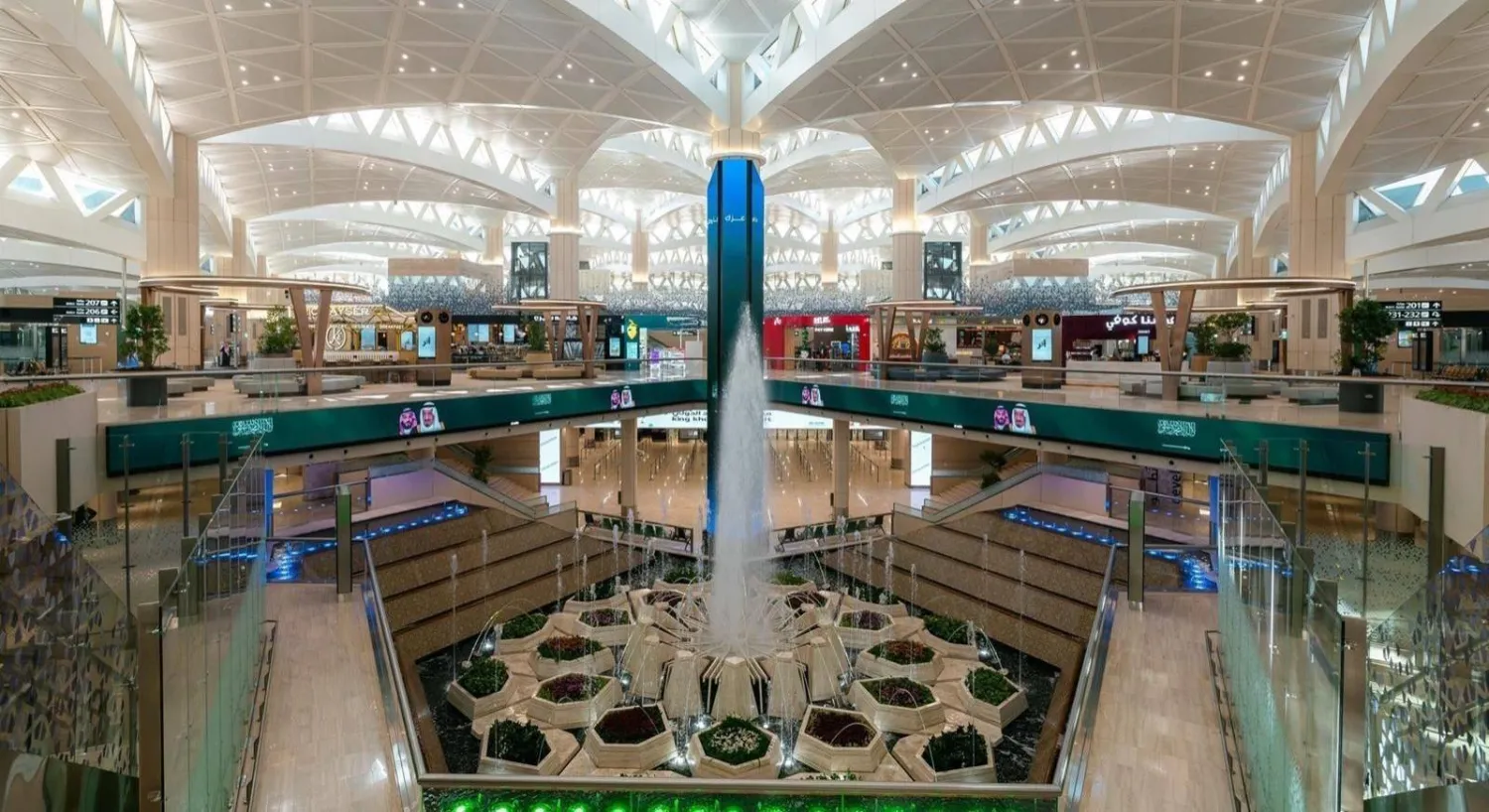
King Khalid International Airport in the Saudi capital, Riyadh, is one of the world’s major aviation hubs and a key air transport gateway for Saudi Arabia and the wider region. Since opening four decades ago, it has reflected the kingdom’s urban and economic development.
Opened in 1983, the airport has played a central role in keeping pace with Riyadh’s rapid growth and meeting rising domestic and international travel demand. It serves as an international gateway to the country and connects the capital with the rest of the world.
The airport is located about 35 km north of central Riyadh and covers an area of nearly 225 square km. Its facilities include five main passenger terminals offering a wide range of services, as well as a royal terminal and two private aviation terminals.
To ensure smooth operations, the airport has 40 passenger boarding bridges and parking facilities with capacity for more than 11,600 vehicles.
The airport operates with a central control tower and two parallel runways, each measuring 4,260 meters (13,980 feet), enabling it to accommodate various types of aircraft and maintain round-the-clock operations.
Extensive operations
King Khalid International Airport is a major hub for an extensive air transport network, with more than 64 international and domestic airlines connecting Riyadh to over 121 destinations worldwide.
The scale of its operations reflects heavy air traffic, with more than 299,000 flights annually and over 40 million passengers served each year.
As part of efforts to improve operational efficiency and upgrade the airport’s infrastructure, Riyadh Airports Company took over the management and operation of the airport. The company was established in 2016 as part of Saudi Arabia’s aviation sector privatization program.
The company is working to operate, modernize and expand existing facilities, while adding new services and amenities to improve the passenger experience and meet the Saudi capital’s future needs.