


Sudani Tests Political Parties with Determination to Reshuffle the Cabinet

Iraqi Prime Minister Muhammad Shia al-Sudani recently inaugurated a project in Karbala. (AFP)
TT

Sudani Tests Political Parties with Determination to Reshuffle the Cabinet

Iraqi Prime Minister Muhammad Shia al-Sudani recently inaugurated a project in Karbala. (AFP)

Two remarkable statements were made on Tuesday in the Iraqi capital. The first by Prime Minister Muhammad Shia al-Sudani, and the other by his Foreign Minister, Fuad Hussein.

During a televised interview, Sudani stressed that he would not succumb to the demands of any leader or party during the cabinet reshuffle, which he pledged to undertake at the end of the six-month that he set to evaluate the performance of his ministers.
 
Hussein noted, for his part, that the Iraqi premier was “not interested in traveling to Washington during the next stage, because he is preoccupied with internal issues.”

He continued: “There are no agendas for a near visit to Washington, despite Iraq’s success in developing relations with all neighboring countries.”
 
Although Sudani has made several visits to Arab and regional countries and European capitals immediately after assuming office, unlike most of his predecessors - if not all - he has not traveled to Washington.

Yet, relations seem normal and are witnessing remarkable development, especially with the adjustment of the US dollar against the Iraqi dinar, following a visit by an Iraqi delegation to the US capital.
 
Meanwhile, reports pointed to the possibility of replacing at least five ministers and four governors in the coming days. But as long as the political forces are not informed about those included in the reshuffle process, none of them is seeking now to challenge or oppose the decision.
 
The final decision rests with Parliament, which has to vote on which minister or governor the prime minister requests to be replaced. But Sudani raised the level of the challenge, by announcing that he would not succumb to the demands of any leader or party.
 
Sudani, who made the decision to carry out a reshuffle six months after the formation of his cabinet, broke a golden rule followed by all of his predecessors, which is not to bother any minister, as long as he belonged to a political bloc that is “stronger” than the prime minister.
 
But the Iraqi premier insists on his march towards reform and the effective implementation of projects.


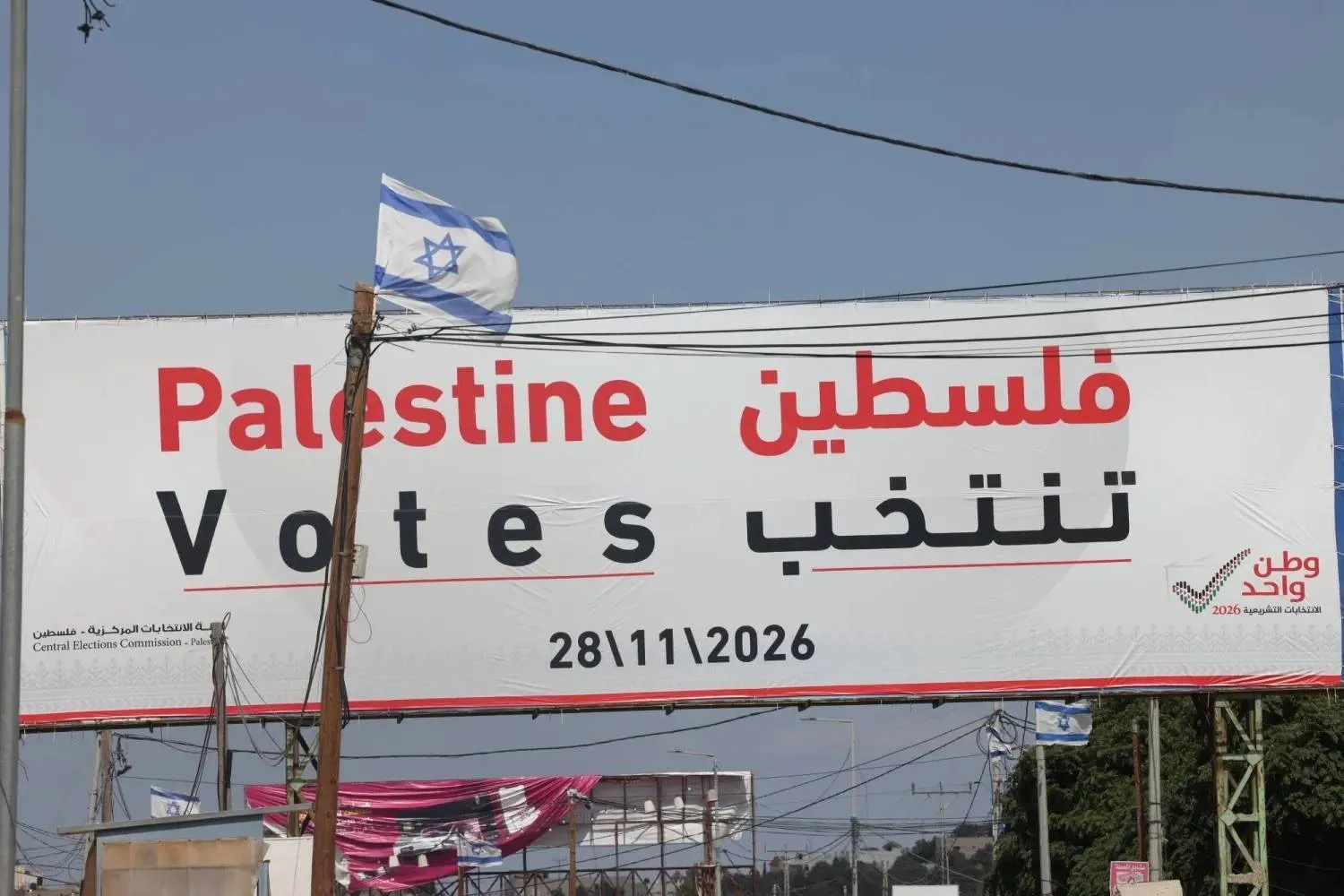

EU Condemns Israel's West Bank Control Measures

The Israeli settlement of Har Homa, seen from the West Bank city of Bethlehem, Tuesday, Dec. 17, 2024. (AP)
TT

EU Condemns Israel's West Bank Control Measures

The Israeli settlement of Har Homa, seen from the West Bank city of Bethlehem, Tuesday, Dec. 17, 2024. (AP)

The European Union on Monday condemned new Israeli measures to tighten control of the West Bank and pave the way for more settlements in the occupied Palestinian territory, AFP reported.

"The European Union condemns recent decisions by Israel's security cabinet to expand Israeli control in the West Bank. This move is another step in the wrong direction," EU spokesman Anouar El Anouni told journalists.


Atrocities in Sudan's El-Fasher Were 'Preventable Human Rights Catastrophe'

Sudanese displaced people who left El Fasher after its fall, sit in the shade in Tawila at the Rwanda camp reception point on December 17, 2025. (Photo by AFP)
TT

Atrocities in Sudan's El-Fasher Were 'Preventable Human Rights Catastrophe'

Sudanese displaced people who left El Fasher after its fall, sit in the shade in Tawila at the Rwanda camp reception point on December 17, 2025. (Photo by AFP)

The atrocities unleashed on El-Fasher in Sudan's Darfur region last October were a "preventable human rights catastrophe", the United Nations said Monday, warning they now risked being repeated in the neighbouring Kordofan region.


"My office sounded the alarm about the risk of mass atrocities in the besieged city of El-Fasher for more than a year ... but our warnings were ignored," UN rights chief Volker Turk told the Human Rights Council in Geneva.


He added that he was now "extremely concerned that these violations and abuses may be repeated in the Kordofan region".


Arab League Condemns Israel's Decisions to Alter Legal, Administrative Status of West Bank

A general view shows the opening session of the meeting of Arab foreign ministers at the Arab League Headquarters (Reuters)
TT

Arab League Condemns Israel's Decisions to Alter Legal, Administrative Status of West Bank

A general view shows the opening session of the meeting of Arab foreign ministers at the Arab League Headquarters (Reuters)

The General Secretariat of the Arab League strongly condemned decisions by Israeli occupation authorities to impose fundamental changes on the legal and administrative status of the occupied Palestinian territories, particularly in the West Bank, describing them as a dangerous escalation and a flagrant violation of international law, international legitimacy resolutions, and signed agreements, SPA reported.

In a statement, the Arab League said the measures include facilitating the confiscation of private Palestinian property and transferring planning and licensing authorities in the city of Hebron and the area surrounding the Ibrahimi Mosque to occupation authorities.

It warned of the serious repercussions of these actions on the rights of the Palestinian people and on Islamic and Christian holy sites.

The statement reaffirmed the Arab League’s firm support for the legitimate rights of the Palestinian people, foremost among them the establishment of their independent state on the June 4, 1967 borders, with East Jerusalem as its capital.