


Egyptian Minister: Our Economy is Sound, Can Overcome Challenges

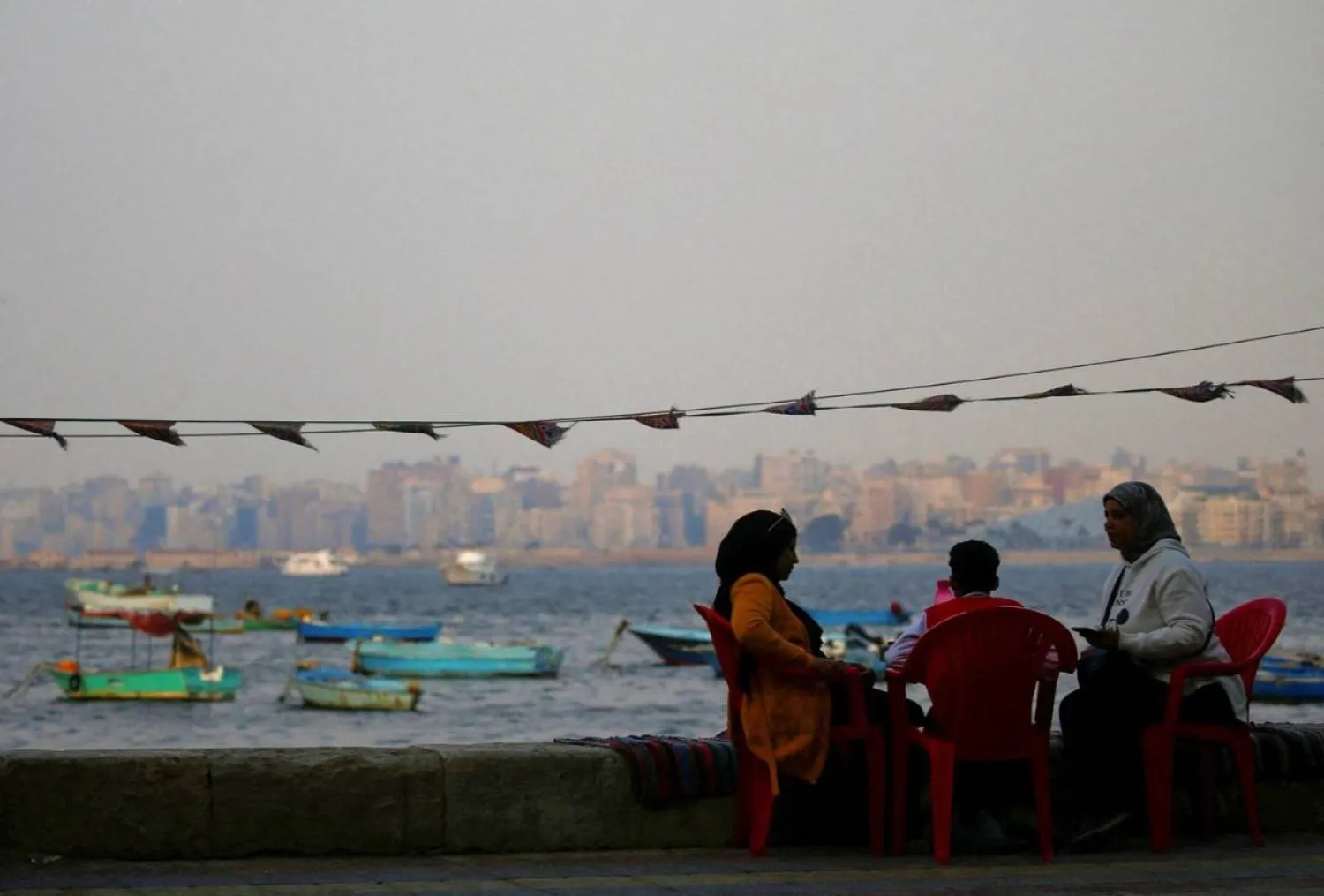
An Egyptian family at a café on the Mediterranean coast in Alexandria (Reuters)
TT

Egyptian Minister: Our Economy is Sound, Can Overcome Challenges

An Egyptian family at a café on the Mediterranean coast in Alexandria (Reuters)

The Egyptian economy is standing on its feet and is capable of facing external shocks and global challenges, announced Egypt’s finance minister Mohammed Maait.

The Egyptian economy will overcome the global crisis, just as it overcame previous challenges, said the Minister, adding that Egypt is entering the new fiscal year with an ambitious budget that is more stimulating to growth, production, and economic recovery.

Maait said Tuesday that the measures taken by the government would enable the speedy return of the Egyptian economy to sustainable growth, explaining that the government IPO program within the framework of the State Ownership Policy Document will open horizons for foreign investments.

The government has allocated about $200 million to reduce electricity prices for industrial activities and $50 million for the real estate tax for the industrial sector.

Minister of Planning Hala al-Saeed told the parliament that Egypt aims to achieve a growth rate of about 4.1 percent in the next fiscal year, compared to an expected growth rate of 4.2 percent in the current fiscal year.

Meanwhile, the Media Observatory of the Finance Ministry denied statements attributed to Maait regarding the dollar pricing in the draft budget.

It added that reports claiming the new budget has set the pound's exchange rate against the dollar at EGP35 were untrue.

The Observatory explained that the Ministry, in preparing the draft state general budget, always uses the average exchange rate from January to March of each year, and this is what happened when preparing the draft state budget for the next fiscal year 23/24.

Simultaneously, data from the Central Agency for Public Mobilization and Statistics (CAPMAS) showed on Wednesday that the annual inflation dropped from 32.7 percent in March to 30.6 percent.

The median forecast of 13 analysts polled had suggested annual urban consumer inflation would slip to 31.0 percent in April.

Month-on-month, urban inflation slowed to 1.7 percent from 2.7 percent in March and 6.5 percent in February.

Inflation had steadily increased over the last year after a series of currency devaluations starting in March 2022, a prolonged shortage of foreign currency, and continuing delays in getting imports into the country.

Egypt has devalued its currency by half since March 2022 after the fallout from Russia's invasion of Ukraine exposed its economic vulnerabilities.

The government secured a $3 billion financial support package from the International Monetary Fund (IMF) in December.

The state-owned asset sale strategy, a key component of the 46-month IMF program that started in December 2022, witnessed slower-than-anticipated progress that risks undermining Egypt's financing plans, weakening the sovereign's foreign exchange liquidity, and eroding confidence in the currency.

Fitch Ratings has downgraded Egypt's Long-Term Foreign-Currency (LTFC) Issuer Default Rating (IDR) to 'B' from 'B+.'

In Fitch's view, external financing risk has increased given high external financing requirements, constrained external financing conditions, and the sensitivity of Egypt's broader financing plan to investor sentiment.

In late April, Standard & Poor's revised Egypt's credit outlook from stable to negative, saying the update reflects concerns that Cairo's economic measures "may be insufficient to stabilize the exchange rate and attract foreign currency inflows to meet the sovereign's high external financing needs."

Last March, the Central Bank announced that Egypt's net foreign reserves rose slightly to $34.447 billion in March from $34.352 billion in February.



Lebanese Cabinet Approves Draft Law on Financial Crisis Losses

A photograph released by the Lebanese Government Press Office on December 26, 2025, show Prime Minister Nawaf Salam speaking during a press conference after a cabinet session in Beirut on December 26, 2025. (Photo by Handout / Lebanese Government Press Office / AFP)
TT

Lebanese Cabinet Approves Draft Law on Financial Crisis Losses

A photograph released by the Lebanese Government Press Office on December 26, 2025, show Prime Minister Nawaf Salam speaking during a press conference after a cabinet session in Beirut on December 26, 2025. (Photo by Handout / Lebanese Government Press Office / AFP)

Lebanon's government on Friday approved a draft law to distribute financial losses from the 2019 economic crisis that deprived many Lebanese of their deposits despite strong opposition to the legislation from political parties, depositors and banking officials.

The draft law will be submitted to the country's divided parliament for approval before it can become effective.

The legislation, known as the "financial gap" law, is part of a series of reform measures required by the International Monetary Fund (IMF) in order to access funding from the lender.

The cabinet passed the draft bill with 13 ministers in favor and nine against. It stipulates that each of the state, the central bank, commercial banks and depositors will share the losses accrued as a result of the financial crisis.

Prime Minister Nawaf Salam defended the bill, saying it "is not ideal... and may not meet everyone's aspirations" but is "a realistic and fair step on the path to restoring rights, stopping the collapse... and healing the banking sector.”

According to government estimates, the losses resulting from the financial crisis amounted to about $70 billion, a figure that is expected to have increased over the six years that the crisis was left unaddressed.

Depositors who have less than $100,000 in the banks, and who constitute 85 percent of total accounts, will be able to recover them in full over a period of four years, Salam said.

Larger depositors will be able to obtain $100,000 while the remaining part of their funds will be compensated through tradable bonds, which will be backed by the assets of the central bank.

The central bank's portfolio includes approximately $50 billion, according to Salam.

The premier told journalists that the bill includes "accountability and oversight for the first time.”

"Everyone who transferred their money before the financial collapse in 2019 by exploiting their position or influence... and everyone who benefited from excessive profits or bonuses will be held accountable and required to pay compensation of up to 30 percent of these amounts," he said.

Responding to objections from banking officials, who claim components of the bill place a major burden on the banks, Salam said the law "also aims to revive the banking sector by assessing bank assets and recapitalizing them.”

The IMF, which closely monitored the drafting of the bill, previously insisted on the need to "restore the viability of the banking sector consistent with international standards" and protect small depositors.

Parliament passed a banking secrecy reform law in April, followed by a banking sector restructuring law in June, one of several key pieces of legislation aimed at reforming the financial system.

However, observers believe it is unlikely that parliament will pass the current bill before the next legislative elections in May.

Financial reforms in Lebanon have been repeatedly derailed by political and private interests over the last six years, but Salam and Lebanese President Joseph Aoun have pledged to prioritize them.


Türkiye Says Russia Gave It $9 Billion in New Financing for Akkuyu Nuclear Plant

Türkiye’s Energy Minister Alparslan Bayraktar talks during a meeting in Ankara, Türkiye, September 14, 2023. (Reuters)
TT

Türkiye Says Russia Gave It $9 Billion in New Financing for Akkuyu Nuclear Plant

Türkiye’s Energy Minister Alparslan Bayraktar talks during a meeting in Ankara, Türkiye, September 14, 2023. (Reuters)

Türkiye's energy minister said Russia had provided new financing worth $9 billion for the Akkuyu nuclear power plant being built by ​Moscow's state nuclear energy company Rosatom, adding Ankara expected the power plant to be operational in 2026.

Rosatom is building Türkiye's first nuclear power station at Akkuyu in the Mediterranean province of Mersin per a 2010 accord worth $20 billion. The plant was expected ‌to be operational ‌this year, but has been ‌delayed.

"This (financing) ⁠will ​most ‌likely be used in 2026-2027. There will be at least $4-5 billion from there for 2026 in terms of foreign financing," Alparslan Bayraktar told some local reporters at a briefing in Istanbul, according to a readout from his ministry.

He said ⁠Türkiye was in talks with South Korea, China, Russia, and ‌the United States on ‍nuclear projects in ‍the Sinop province and Thrace region, and added ‍Ankara wanted to receive "the most competitive offer".

Bayraktar said Türkiye wanted to generate nuclear power at home and aimed to provide clear figures on targets.


China Bets on Advanced Technologies to Revive Tepid Industrial Sector

A humanoid robot Tiangong by Beijing Innovation Center of Humanoid Robotics Co, moves an orange as a demonstration at its company, during an organized media tour to Beijing Robotics Industrial Park, in Beijing Economic-Technological Development Area, also known as Beijing E-Town, China May 16, 2025. (Reuters)
TT

China Bets on Advanced Technologies to Revive Tepid Industrial Sector

A humanoid robot Tiangong by Beijing Innovation Center of Humanoid Robotics Co, moves an orange as a demonstration at its company, during an organized media tour to Beijing Robotics Industrial Park, in Beijing Economic-Technological Development Area, also known as Beijing E-Town, China May 16, 2025. (Reuters)

China pledged on Friday to double down on upgrading its manufacturing base and ​promised capital to fund efforts targeting technological breakthroughs, after its industrial sector delivered an underwhelming performance this year.

China's industry ministry expects output of large industrial companies to have increased 5.9% in 2025 compared with 2024, state broadcaster CCTV said on Friday, almost unchanged from the 5.8% pace in 2024.

It would also be less than the ‌6% pace ‌of the first 11 months of ‌2025, ⁠based ​on ‌data released by the National Bureau of Statistics, as a weak Chinese economy suppressed domestic demand.

Industrial output, which covers industrial firms with annual revenue of at least 20 million yuan ($2.85 million), recorded growth of 4.8% in November, the weakest monthly year-on-year rise since August 2024.

Chinese policymakers have been looking ⁠to create new growth drivers in the economy by focusing on advancing ‌its industrial sector.

China has also vowed stronger ‍efforts to achieve technological self-reliance ‍amid intensifying rivalry with the United States over dominance ‍in advanced technology.

At the annual two-day national industrial work conference in Beijing that ended on Friday, officials pledged to deliver major breakthroughs in building a "modern industrial system" anchored by advanced manufacturing.

The ​focus will be on sectors such as integrated circuits, low-altitude economy, aerospace and biomedicine, an industry ministry ⁠statement showed.

The statement comes after China launched on Friday a national venture capital fund aimed at guiding billions of dollars of capital into "key hard technologies" such as quantum technology and brain-computer interfaces.

On artificial intelligence, the industry ministry said it will expand efforts to help small and medium-sized enterprises adopt the technology, while fostering new intelligent agents and AI-native companies in key industries.

Officials also vowed to "firmly curb" deflationary price wars, dubbed "involution", referring to excessive and low-return competition among ‌firms that erodes profits.