


China Launches Projects to Build 'New-era' Childbearing Culture

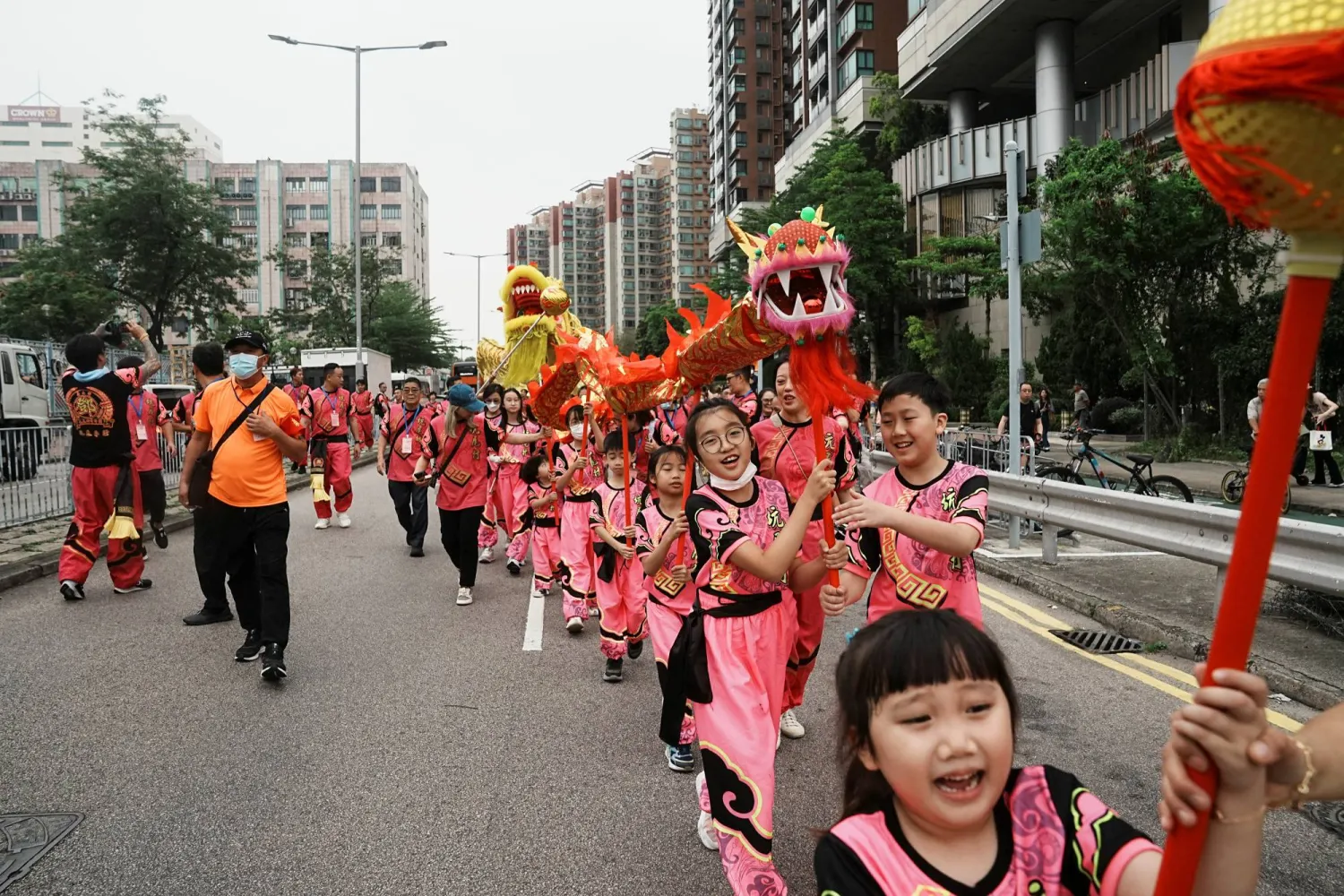
Young participants perform dragon dance during a parade celebrating Tin Hau festival at Yuen Long district, in Hong Kong, China May 12, 2023. REUTERS/Lam Yik
TT

China Launches Projects to Build 'New-era' Childbearing Culture

Young participants perform dragon dance during a parade celebrating Tin Hau festival at Yuen Long district, in Hong Kong, China May 12, 2023. REUTERS/Lam Yik

China will launch pilot projects in more than 20 cities to create a "new-era" marriage and childbearing culture to foster a friendly child bearing environment, the latest move by authorities to boost the country's falling birth rate.

China's Family Planning Association, a national body that implements the government's population and fertility measures, will launch the projects to encourage women to marry and have children, state backed Global Times reported on Monday.

Promoting marrying, having children at appropriate ages, encouraging parents to share child-rearing responsibilities, and curbing high "bride prices" and other outdated customs are the focus of the projects, the Times said.
Cities included in the pilot include the manufacturing hub Guangzhou and Handan in China's Hebei province, Reuters reported. The association already launched projects in 20 cities including Beijing last year, the Times said.
"The society needs to guide young people more on the concept of marriage and childbirth," demographer He Yafu told the Times.
The projects come amid a flurry of measures Chinese provinces are rolling out to spur people to have children, including tax incentives, housing subsidies, and free or subsidized education for having a third child.
China implemented a rigid one-child policy from 1980 until 2015 - the root of many of its demographic challenges that have allowed India to become the world's most populous nation. The limit has since been raised to three children.
Concerned about China's first population drop in six decades and its rapid ageing, the government's political advisers proposed in March that single and unmarried women should have access to egg freezing and IVF treatment, among other services to boost the country's fertility rate.
Many women have been put off having more children or any at all due to the expense of child care and having to stop their


Culture Being Strangled by Kosovo's Political Crisis

The cinema has been waiting for much-needed repairs for years. Armend NIMANI / AFP
TT

Culture Being Strangled by Kosovo's Political Crisis

The cinema has been waiting for much-needed repairs for years. Armend NIMANI / AFP

Kosovo's oldest cinema has been dark and silent for years as the famous theater slowly disintegrates under a leaky roof.

Signs warn passers-by in the historic city of Prizren that parts of the Lumbardhi's crumbling facade could fall while it waits for its long-promised refurbishment.

"The city deserves to have the cinema renovated and preserved. Only junkies gathering there benefit from it now," nextdoor neighbor butcher Arsim Futko, 62, told AFP.

For seven years, it waited for a European Union-funded revamp, only for the money to be suddenly withdrawn with little explanation.

Now it awaits similar repairs promised by the national government that has since been paralyzed by inconclusive elections in February.

And it is anyone's guess whether the new government that will come out of Sunday's snap election will keep the promise.

'Collateral damage'

Cinema director Ares Shporta said the cinema has become "collateral damage" in a broader geopolitical game after the EU hit his country with sanctions in 2023.

The delayed repairs "affected our morale, it affected our lives, it affected the trust of the community in us," Shporta said.

Brussels slapped Kosovo with sanctions over heightened tensions between the government and the ethnic Serb minority that live in parts of the country as Pristina pushed to exert more control over areas still tightly linked to Belgrade.

Cultural institutions have been among the hardest-hit sectors, as international funding dried up and local decisions were stalled by the parliamentary crisis.

According to an analysis by the Kosovo think tank, the GAP Institute for Advanced Studies, sanctions have resulted in around 613 million euros ($719 million) being suspended or paused, with the cultural sector taking a hit of 15-million-euro hit.

'Ground zero'

With political stalemate threatening to drag on into another year, there are warnings that further funding from abroad could also be in jeopardy.

Since February's election when outgoing premier Albin Kurti topped the polls but failed to win a majority, his caretaker government has been deadlocked with opposition lawmakers.

Months of delays, spent mostly without a parliament, meant little legislative work could be done.

Ahead of the snap election on Sunday, the government said that more than 200 million euros ($235 million) will be lost forever due to a failure to ratify international agreements.

Once the top beneficiary of the EU Growth Plan in the Balkans, Europe's youngest country now trails most of its neighburs, the NGO Group for Legal and Political Studies' executive director Njomza Arifi told AFP.

"While some of the countries in the region have already received the second tranches, Kosovo still remains at ground zero."

Although there have been some enthusiastic signs of easing a half of EU sanctions by January, Kurti's continued push against Serbian institutions and influence in the country's north continues to draw criticism from both Washington and Brussels.

'On the edge'

Across the river from the Lumbardhi, the funding cuts have also been felt at Dokufest, a documentary and short film festival that draws people to the region.

"The festival has had to make staff cuts. Unfortunately, there is a risk of further cuts if things don't change," Dokufest artistic director Veton Nurkollari said.

"Fortunately, we don't depend on just one source because we could end up in a situation where, when the tap is turned off, everything is turned off."

He said that many in the cultural sector were desperate for the upcoming government to get the sanctions lifted by ratification of the agreements that would allow EU funds to flow again.

"Kosovo is the only one left on the edge and without these funds."


Saudi Culture Ministry Concludes Intangible Cultural Heritage Documentation Project in Al-Ahsa

Saudi Culture Ministry Concludes Intangible Cultural Heritage Documentation Project in Al-Ahsa
TT

Saudi Culture Ministry Concludes Intangible Cultural Heritage Documentation Project in Al-Ahsa

Saudi Culture Ministry Concludes Intangible Cultural Heritage Documentation Project in Al-Ahsa

The Saudi Ministry of Culture concluded the project to survey, document, and archive intangible cultural heritage in Al-Ahsa Governorate by holding a workshop in the governorate, attended by stakeholders and relevant entities, as part of the ministry’s efforts to preserve national cultural heritage and strengthen Saudi cultural identity, reported the Saudi Press Agency on Thursday.

The project included a field survey covering various cities and villages across Al-Ahsa, during which diverse elements of intangible cultural heritage were identified and documented. These included oral traditions, performing arts, skills associated with traditional cultural crafts, social practices, and knowledge related to nature and the local environment.

The work was carried out in cooperation with concerned entities, specialized experts, and local practitioners.

The workshop reviewed the project’s final outcomes and presented reports on documentation and digital archiving activities.

It discussed mechanisms to ensure the sustainability of these efforts and the transmission of this cultural legacy to future generations, contributing to greater community awareness of the value and importance of intangible cultural heritage.


Hail Region Pavilion Showcases Heritage Artifacts at Camel Festival

The pavilion aims to connect visitors to Hail's history and social legacy - SPA
TT

Hail Region Pavilion Showcases Heritage Artifacts at Camel Festival

The pavilion aims to connect visitors to Hail's history and social legacy - SPA

Hail Region pavilion at the Ministry of Interior’s Security Oasis exhibition, part of the 10th King Abdulaziz Camel Festival in Al-Sayahid, features heritage artifacts that reflect the region's renowned hospitality.

The display includes ancient trays and copperware from nearly seventy years ago.

According to SPA, these traditional food preparation and serving vessels have garnered significant interest from visitors. They document daily life in old Hail and its deep-rooted social traditions, particularly in gatherings and special occasions.

The pavilion aims to connect visitors to Hail's history and social legacy, fostering appreciation for national heritage and ensuring cultural preservation for future generations.
