Amazon's Cloud Unit to Invest $13 Billion in India by 2030

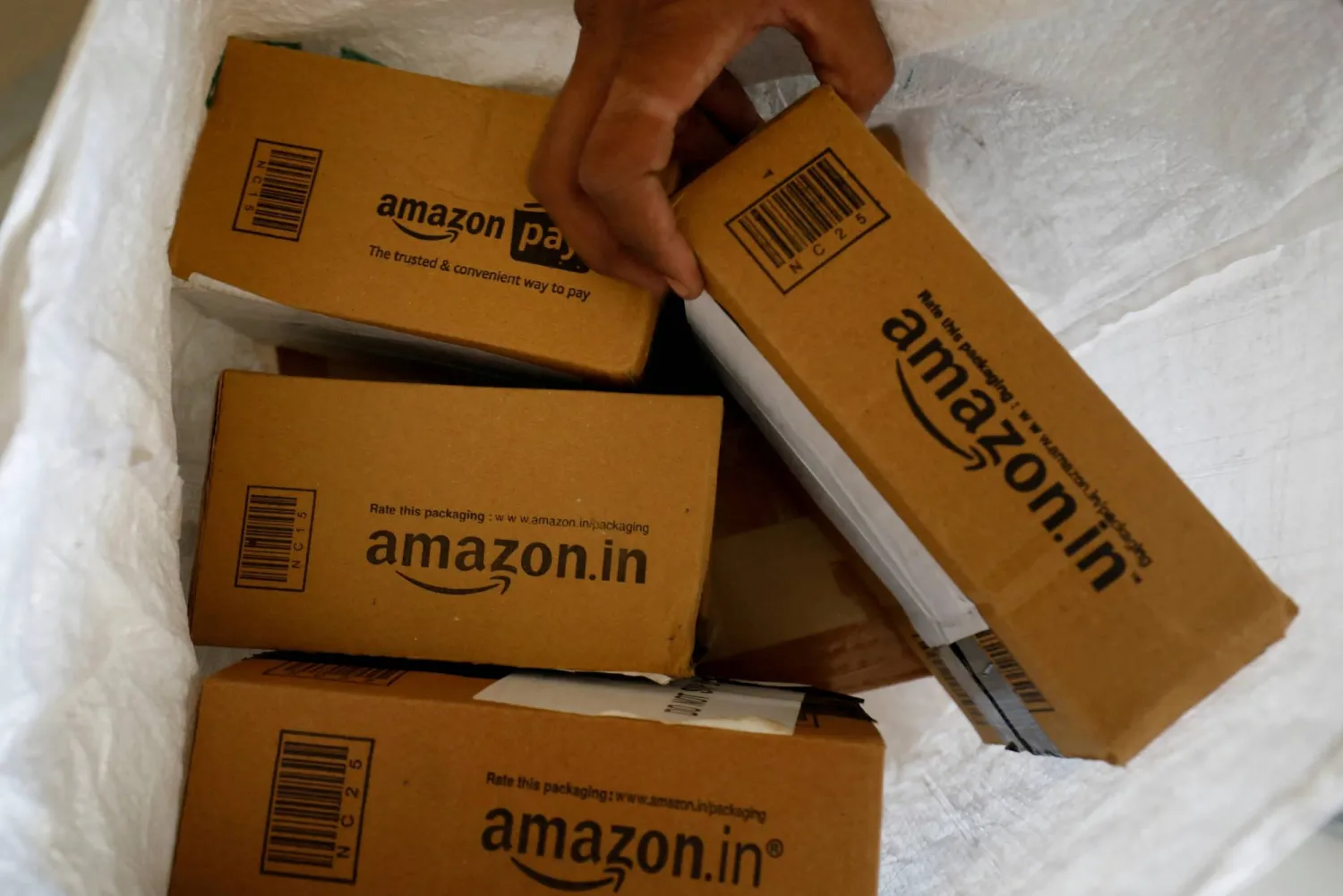
FILE PHOTO: A worker sorts delivery packages in a van outside an Amazon facility in Ahmedabad, India, March 17, 2021. REUTERS/Amit Dave/File Photo
TT

Amazon's Cloud Unit to Invest $13 Billion in India by 2030

FILE PHOTO: A worker sorts delivery packages in a van outside an Amazon facility in Ahmedabad, India, March 17, 2021. REUTERS/Amit Dave/File Photo

Amazon Web Services (AWS), the cloud computing division of Amazon.com Inc, said on Thursday it plans to invest 1.06 trillion rupees ($13 billion) in India by 2030, doubling down on its past investments to cater to an ever-growing demand.

The latest investment will be used to build its cloud infrastructure in India and it will support over 100,000 full-time jobs annually, AWS said.

The company runs two data centers in the Indian subcontinent - one in Mumbai which was launched in 2016, and another in Hyderabad, which started in 2022.

AWS' total planned investment in India adds up to about $16.4 billion by 2030, the company said in a statement.

The cloud platform offers more than 200 services, including storage, robotics and artificial intelligence, Reuters reported.

The proposed investment comes as India steps up efforts to attract more big-ticket investments.

US networking equipment maker Cisco Systems earlier this month said it would start manufacturing from India to diversify its global supply chain, while Apple Inc supplier Foxconn will invest $500 million to set up plants in the southern Indian state of Telangana.

Separately, India's government has been nudging foreign tech companies to store more of their data locally, a move seen as New Delhi's attempt to gain stricter oversight of Big Tech firms. The country is currently in the process of drafting a cloud and data center policy to oversee the sector.

A host of global companies, including Microsoft Corp and Alphabet Inc's Google are ramping up cloud investments in India, betting on the rising digital consumption in one of the fastest-growing markets.


EU Digital Rules Should Apply to Big Tech's Smart TVs, Broadcasters Tell Antitrust Chief

FILE PHOTO: Apple logo is seen in this illustration taken September 24, 2025. REUTERS/Dado Ruvic/Illustration/File Photo
TT

EU Digital Rules Should Apply to Big Tech's Smart TVs, Broadcasters Tell Antitrust Chief

FILE PHOTO: Apple logo is seen in this illustration taken September 24, 2025. REUTERS/Dado Ruvic/Illustration/File Photo

Google, Amazon, Apple and Samsung's smart TVs and virtual assistants should fall under the EU’s toughest tech rules because of their growing market power, the world's largest broadcasters told EU antitrust chief Teresa Ribera on Monday.

The call by the Association of Commercial Television and Video on Demand Services in Europe (ACT) whose members include Canal+, RTL, Mediaset, ITV, Paramount+, NBCUniversal, Walt Disney, Warner Bros Discovery, Sky and TF1 Groupe comes amid mounting concerns among broadcasters over Big Tech's encroachment into their industry as they push back against their rivals.

Android TV, which increased its market share from 16% to 23% from 2019 to 2024, Amazon Fire OS whose market share rose from 5% to 12% ⁠in the same ⁠period and Samsung's Tizen OS with its 24% market share should be designated as gatekeepers under the EU's Digital Markets Act, the broadcasters said, citing data from a 2025 market study.

The DMA, applicable since 2023, sets out obligations aimed at curbing the power of major tech companies, boosting competition and expanding consumer choice.

"A limited number of operators are therefore gaining growing ability to shape outcomes for millions of users and ⁠businesses by controlling access to audiences and content distribution," ACT said in a letter to Ribera seen by Reuters.

"It is crucial that the Commission designate major TV operating systems as gatekeepers and ensure adequate oversight to guarantee fairness and contestability," the broadcasters said.

The lobbying group said their Big Tech rivals may have incentives to retain end-users within their own ecosystem and to contractually or technically restrict linking or redirection, for example from one media application to another media application.

The Commission, which acts as the EU competition enforcer, Google, Amazon, Apple and Samsung did not immediately respond to emailed requests for comment.

The broadcasters also voiced concerns about virtual assistants, the most well known of which are Amazon's Alexa and Apple's Siri, while ⁠OpenAI entered the ⁠field last year with a beta feature called Tasks for its AI chatbot ChatGPT.

The European Commission has yet to label any virtual assistants as gatekeepers under the DMA.

"The lack of designation of virtual assistants creates a regulatory void, allowing powerful AI assistants to become de facto gatekeepers for media content through mobile phones, smart speakers and in-car radio infotainment services, without being subject to DMA obligations," the broadcasters said.

They urged Ribera to subject smart TVs and virtual assistants to the DMA on the basis of qualitative criteria even if they do not meet the quantitative benchmarks which are more than 45 million monthly active users and 75 billion euros ($87 billion) in market capitalization.

Signatories to the letter include the Association of European Radios (AER), the European Broadcasting Union (EBU), the European association of television and radio sales houses (egta), Confindustria Radio Televisioni (CRTV), Televisión Comercial en Abierto (UTECA) and Verband Österreichischer Privatsender (VOP).


Musk Launches 'Terafab' Project to Make Own AI Chips

(FILES) CEO of SpaceX and Tesla, South African-Canadian-US businessman Elon Musk speaks during the World Economic Forum (WEF) annual meeting in Davos on January 22, 2026. (Photo by Fabrice COFFRINI / AFP)
TT

Musk Launches 'Terafab' Project to Make Own AI Chips

(FILES) CEO of SpaceX and Tesla, South African-Canadian-US businessman Elon Musk speaks during the World Economic Forum (WEF) annual meeting in Davos on January 22, 2026. (Photo by Fabrice COFFRINI / AFP)

Elon Musk announced Saturday a plan to make chips for artificial intelligence, robotics and data centers in space, in the latest bold project by the world's richest person.

The "Terafab", a manufacturing facility based near Austin, Texas, will aim to produce one terawatt of computing power per year, Musk said.

A terawatt is equivalent to one trillion watts. That is slightly less than the total power generation capacity of the United States, according to an industry group.

Musk said the project would be run jointly by his electric-vehicle firm Tesla and his rocket company SpaceX.

He did not disclose the initial investment. Previous US media reports have put the figure between $20 billion and $25 billion, AFP said.

Musk, who has no prior experience in semiconductors, said the Terafab was necessary because Tesla and SpaceX's demand for computing power was expected to far exceed that of global chip suppliers.

"We're very grateful to our existing supply chain, to Samsung, TSMC, Micron, and others... but there's a maximum rate at which they're comfortable expanding," Musk said.

"That rate is much less than we would like... and we need the chips, so we're going to build the Terafab."

An "advanced technology fab" in Austin will have the facilities to design, manufacture, test and improve each chip, Musk said.

Eventually, the project aims to make chips to support 100 to 200 gigawatts of computing power on Earth, and a terawatt in space.

Musk did not give a timeline for the Terafab's output, and has previously promised grand results from other projects on compressed time scales.

He said the Terafab would ultimately help humanity become a "galactic civilization" capable of harnessing the resources of other planets and stars.


Tencent Integrates WeChat with OpenClaw AI Agent Amid China Tech Battle

FILE PHOTO: Tencent's logo is displayed at its booth at the China International Fair for Trade in Services (CIFTIS) in Beijing, China, September 11, 2025. REUTERS/Maxim Shemetov/File Photo
TT

Tencent Integrates WeChat with OpenClaw AI Agent Amid China Tech Battle

FILE PHOTO: Tencent's logo is displayed at its booth at the China International Fair for Trade in Services (CIFTIS) in Beijing, China, September 11, 2025. REUTERS/Maxim Shemetov/File Photo

Tencent launched a tool on Sunday to integrate its WeChat messaging platform with the OpenClaw agent, deepening its push into AI agents that have become a key battleground among China's technology companies.

The software, called ClawBot, will appear as a contact within WeChat, allowing users of China's most popular app with over 1 billion monthly active users to connect directly ⁠with OpenClaw, Reuters reported.

Users can send ⁠and receive commands to interact with the AI agent through the messaging interface.

The integration comes as OpenClaw, an open-source AI agent that can perform tasks such as transferring files and ⁠sending emails on users' behalf, has gained traction in recent weeks.

Users have rushed to install and experiment with agent products, prompting tech firms to explore business opportunities even as authorities warn of security risks.

Tencent's WeChat integration follows the company's launch earlier this month of its own AI agent suite, comprising QClaw for individual ⁠users, ⁠Lighthouse for developers and WorkBuddy for enterprises.

Last week, Alibaba launched Wukong, an artificial intelligence platform for enterprises that coordinates multiple AI agents to handle complex business tasks including document editing and meeting transcription within a single interface.

Baidu quickly followed with a series of AI agents built on OpenClaw, spanning desktop software, cloud services, mobile tools and smart-home devices.