


Nvidia Close to Becoming First Trillion-Dollar Chip Firm after Stellar Forecast

H100, Nvidia's latest GPU optimized to handle large artificial intelligence models used to create text, computer code, images, video or audio is seen in this photo, Santa Clara, CA US, September 2022. (NVIDIA/Handout via Reuters)
TT

Nvidia Close to Becoming First Trillion-Dollar Chip Firm after Stellar Forecast

H100, Nvidia's latest GPU optimized to handle large artificial intelligence models used to create text, computer code, images, video or audio is seen in this photo, Santa Clara, CA US, September 2022. (NVIDIA/Handout via Reuters)

Nvidia Corp soared about 25% on Thursday to near a market value of $1 trillion after its stellar forecast showed that Wall Street has yet to price in the game-changing potential of AI spending.

The surge added to a more than two-fold rise in the stock this year and was set to increase the chip designer's value by about $190 billion to nearly $945 billion. That makes Nvidia twice the size of the second-most valuable chip firm, Taiwan's TSMC.

The jump was just shy of the largest one-day value gain for a US firm, a record held by Apple Inc's $190.90 billion valuation rise on Nov. 10.

Nvidia's rosy earnings also sparked a rally in the chip sector and AI-focused firms, lifting stock markets from Japan to Europe. In the US, companies including Alphabet Inc, Microsoft Corp and AMD rose between 3% and 10%.

Analysts rushed to raise their price targets on Nvidia stock, with 27 lifting their view on the idea that all roads in AI lead to the company as it dominates the market for chips used to power ChatGPT and many similar services.

The mean price target has more than doubled this year. At the highest view, a $600 price target from Rosenblatt Securities and HSBC, Nvidia will have a value of $1.48 trillion, more than Amazon.com Inc, the fourth-most valuable US company.

"In the 15+ years we have been doing this job, we have never seen a guide like the one Nvidia just put up with the second-quarter outlook that was by all accounts cosmological, and which annihilated expectations," Stacy Rasgon of Bernstein said.

Nvidia, the fifth-most valuable US company, on Wednesday projected quarterly revenue more than 50% above the average Wall Street estimate and said it would have more supply of AI chips in the second half to meet a surge in demand.

CEO Jensen Huang said $1 trillion worth of current equipment in data centers would have to be replaced with AI chips, as generative AI is applied into every product and service.

The results bode well for Big Tech companies, which have shifted focus to AI on hopes the technology would help attract demand at a time their profit engines of digital advertising and cloud computing are under pressure from a weak economy.

Some analysts said Nvidia's results show that the generative AI boom could be the next big driver of growth.

"We're really just seeing the tip of the iceberg. This really could be another inflection point in technological history, such as the internal combustion engine - or the internet," said Derren Nathan, head of equity analysis at Hargreaves Lansdown.



Russia Confirms Ban on WhatsApp, Says No Plans to Block Google

Men pose with smartphones in front of displayed Whatsapp logo in this illustration September 14, 2017. REUTERS/Dado Ruvic/File Photo
TT

Russia Confirms Ban on WhatsApp, Says No Plans to Block Google

Men pose with smartphones in front of displayed Whatsapp logo in this illustration September 14, 2017. REUTERS/Dado Ruvic/File Photo

Russia has blocked the popular messaging service WhatsApp over its failure to comply with local legislation, the Kremlin said Thursday, urging its 100 million Russian users to switch to a domestic alternative.

Moscow has for months been trying to shift Russian users onto Max, a domestic messaging service that lacks end-to-end encryption and that activists have called a potential tool for surveillance.

"As for the blocking of WhatsApp ... such a decision was indeed made and implemented," Kremlin spokesman Dmitry Peskov told reporters.

Peskov said the decision was due to WhatsApp's "reluctance to comply with the norms and letter of Russian law".

"Max is an accessible alternative, a developing messenger, a national messenger. And it is an alternative available on the market for citizens," he said.

Anton Gorelkin, a member of the Russian parliament and vice chair of its IT committee, said on Thursday that there were no plans to block Google in Russia.

WhatsApp, owned by US social media giant Meta, said Wednesday that it believed Russia was attempting to fully block the service in a bid to force users onto Max.

"We continue to do everything we can to keep users connected," it said.


Samsung Starts Mass Production of Next-gen AI Memory Chip

A man walks past the logo of Samsung Electronics displayed on a glass door at the company's Seocho building in Seoul on January 29, 2026. (Photo by Jung Yeon-je / AFP)
TT

Samsung Starts Mass Production of Next-gen AI Memory Chip

A man walks past the logo of Samsung Electronics displayed on a glass door at the company's Seocho building in Seoul on January 29, 2026. (Photo by Jung Yeon-je / AFP)

Samsung Electronics has started mass production of a next-generation memory chip to power artificial intelligence, the South Korean firm announced Thursday, touting an "industry-leading" breakthrough.

The high-bandwidth "HBM4" chips are a key component for AI data centers, with US tech giant Nvidia -- now the world's most valuable company -- widely expected to be one of Samsung's main customers.

Samsung said it had "begun mass production of its industry-leading HBM4 and has shipped commercial products to customers".

"This achievement marks a first in the industry, securing an early leadership position in the HBM4 market," AFP quoted it as saying in a statement.

A global frenzy to build AI data centers has sent orders for advanced, high-bandwidth memory microchips soaring.

South Korea's two chip giants, SK hynix and Samsung, have been racing to start HBM4 production.

Taipei-based research firm TrendForce predicts that memory chip industry revenue will surge to a global peak of more than $840 billion in 2027.

The South Korean government has pledged to become one of the world's top three AI powers, alongside the United States and China.

Samsung and SK hynix are among the leading producers of high-performance memory chips.


Siemens Energy Trebles Profit as AI Boosts Power Demand

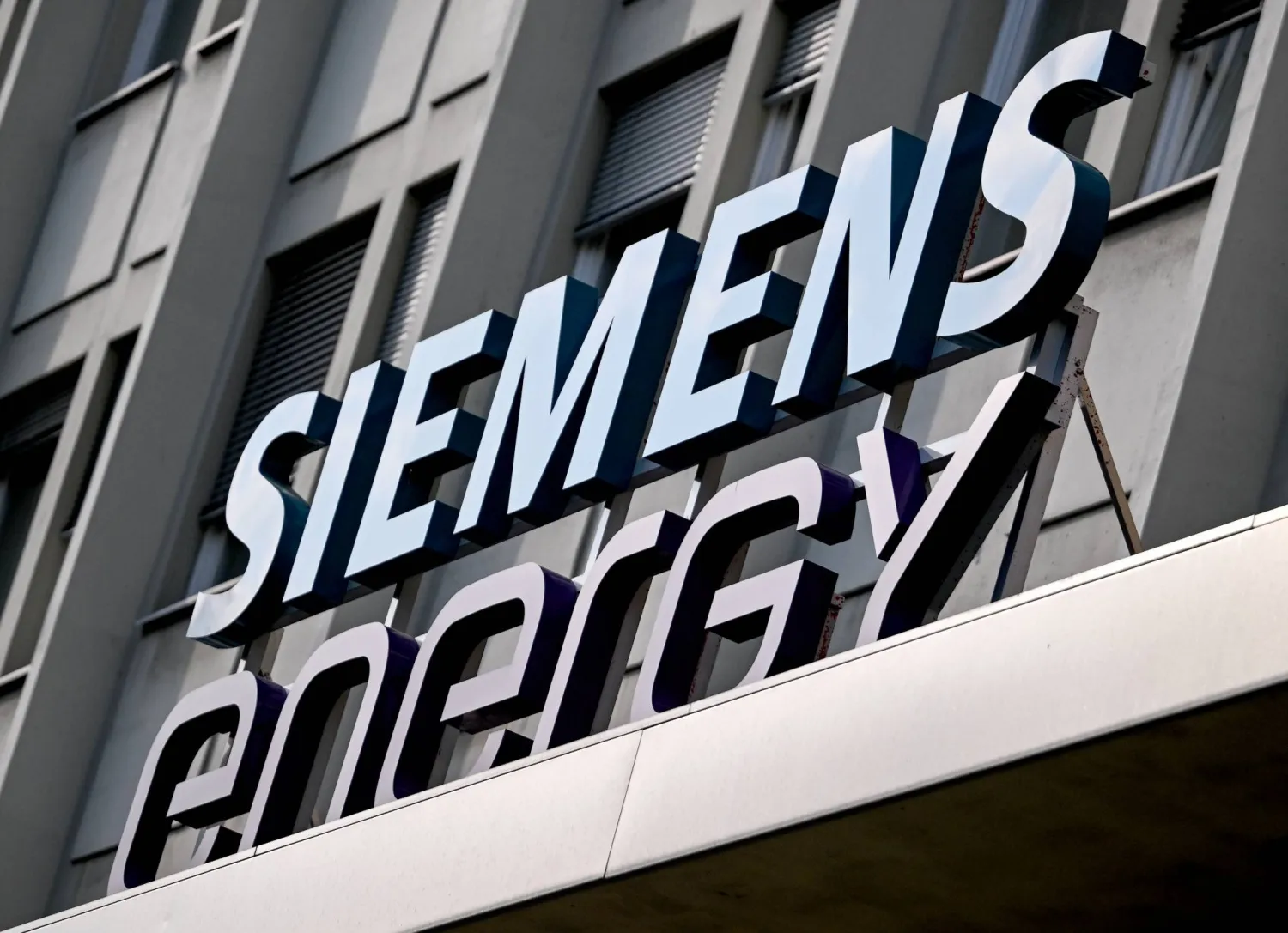
FILED - 05 August 2025, Berlin: The "Siemens Energy" logo can be seen in the entrance area of the company. Photo: Britta Pedersen/dpa
TT

Siemens Energy Trebles Profit as AI Boosts Power Demand

FILED - 05 August 2025, Berlin: The "Siemens Energy" logo can be seen in the entrance area of the company. Photo: Britta Pedersen/dpa

German turbine maker Siemens Energy said Wednesday that its quarterly profits had almost tripled as the firm gains from surging demand for electricity driven by the artificial intelligence boom.

The company's gas turbines are used to generate electricity for data centers that provide computing power for AI, and have been in hot demand as US tech giants like OpenAI and Meta rapidly build more of the sites.

Net profit in the group's fiscal first quarter, to end-December, climbed to 746 million euros ($889 million) from 252 million euros a year earlier.

Orders -- an indicator of future sales -- increased by a third to 17.6 billion euros.

The company's shares rose over five percent in Frankfurt trading, putting the stock up about a quarter since the start of the year and making it the best performer to date in Germany's blue-chip DAX index.

"Siemens Energy ticked all of the major boxes that investors were looking for with these results," Morgan Stanley analysts wrote in a note, adding that the company's gas turbine orders were "exceptionally strong".

US data center electricity consumption is projected to more than triple by 2035, according to the International Energy Agency, and already accounts for six to eight percent of US electricity use.

Asked about rising orders on an earnings call, Siemens Energy CEO Christian Bruch said he thought the first-quarter figures were not "particularly strong" and that further growth could be expected.

"Demand for gas turbines is extremely high," he said. "We're talking about 2029 and 2030 for delivery dates."

Siemens Energy, spun out of the broader Siemens group in 2020, said last week that it would spend $1 billion expanding its US operations, including a new equipment plant in Mississippi as part of wider plans that would create 1,500 jobs.

Its shares have increased over tenfold since 2023, when the German government had to provide the firm with credit guarantees after quality problems at its wind-turbine unit.