


World Bank Expects Economic Growth Amid Lasting Peace in Yemen

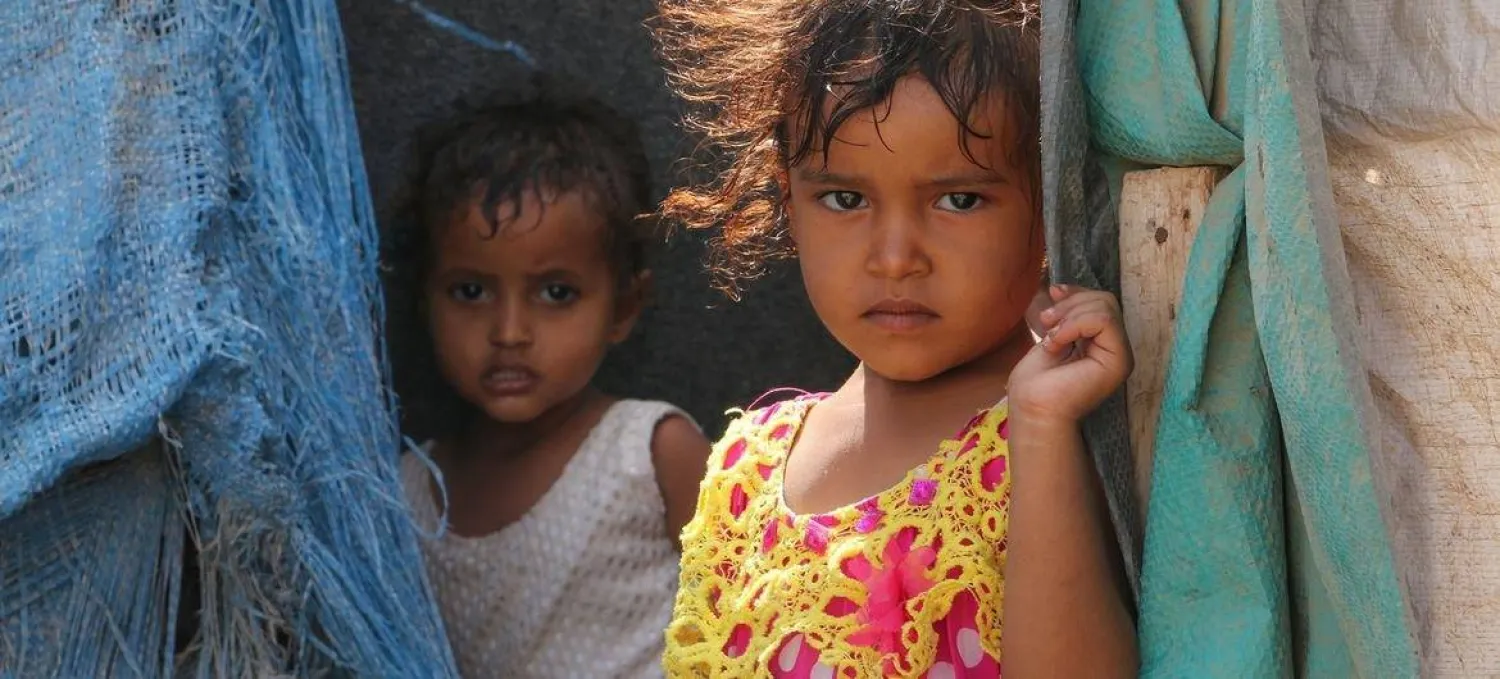
Displaced Yemeni children in Aden (UN)
TT

World Bank Expects Economic Growth Amid Lasting Peace in Yemen

Displaced Yemeni children in Aden (UN)

The World Bank expected that a permanent peace agreement in Yemen would achieve significant economic revenues and contribute to economic growth, despite its previous assessment of Yemen's need for billions of dollars for economic recovery.

In its report entitled "The Future: Glimmers of Hope in Dark Times," the World Bank said if Yemen attains a lasting peace agreement, there could be a significant "peace dividend" for the population, a six percentage point increase in GDP growth trajectory which would result in a cumulative increase in real GDP by one third over the next five years compared to the status quo.

It noted that this would be accompanied by significant growth in public and private investment, employment, productivity, and poverty reduction.

It must be accompanied by external donor assistance at scale for accelerated reconstruction and recovery.

The conflict led to a contraction in real GDP by approximately 50 percent between 2011 and 2022. It has damaged or destroyed over one-third of the country's homes, schools, hospitals, and water and sanitation facilities.

Productivity plummeted as violence intensified, while productivity indicators were weak before the conflict.

The war severely disrupted oil production, which is crucial to the economy, undermined the government's ability to support the population by providing essential services, and affected public employment.

Many civil servants have been paid only partially or not regularly.

- A glimmer of hope

The report's in-depth political economy analysis and innovative data analytics suggest that Yemen's de facto decentralization could help support its future growth, corroborating a perspective consistently voiced in informant interviews.

The report cited other reasons for guarded optimism about potential recoveries, such as the strong entrepreneurial spirit of the Yemeni people, including, notably, women, the proximity of the high-income adjacent markets of the Gulf states, and Yemen's economic potential for agricultural, agro-processing and light manufacturing production, and exports.

World Bank Country Manager for Yemen, Tania Meyer, said that peace must enable inclusive growth, foster sustainable development, and improve the living conditions for the people of Yemen.

Meyer cautioned: “We must remain clear-eyed about the realities on the ground – the hardships faced by the Yemeni people are immense," noting that "high inflation, poor job quality, and an unstable public sector persist as major hurdles."

Earlier, the World Bank announced that nearly 17 million Yemenis suffer from food insecurity because of the wars and deteriorating economic conditions.

It warned that hunger, food insecurity, and malnutrition were among the most pressing challenges, exacerbated by the protracted conflict in the country.

Last March, the World Bank approved a second additional financing of $207 million for the Emergency Social Protection Enhancement and COVID-19 Response Project (ESPECRP) in Yemen to address chronic food insecurity and malnutrition.

However, a month later, it announced that Yemen needed between $11.82 and $16 billion in 2023 and between $11 and $22 billion next year to rebuild the local economy.

Ahead of the World Bank report, the UN Office for the Coordination of Humanitarian Affairs (OCHA) allocated $18 million for the urgent needs of people affected by humanitarian crises in Yemen to prevent famine and address rising levels of food insecurity driven by conflict, economic shocks, and climate change.

The Office warned in its statement that the humanitarian crisis would affect 17.3 million people in 2023.

By the end of May 2023, the Yemen Humanitarian Response Plan (HRP) was only 23.5 percent funded. In February, the Response Plan seeking $4.34 billion to assist 17.9 million people was only 10.4 percent funded, forcing aid organizations to reduce or close critical assistance programs.

- Development is the solution

The report indicated that relief agencies in Yemen are facing a significant funding shortfall amidst increasing humanitarian needs, which endangers the life-saving response of millions of people.

The UN repeatedly cautioned about a lack of funding compared to the proposed plans to finance the humanitarian crisis in Yemen, considered the worst in modern times.

A previous donor conference fell far short of the needed humanitarian aid, as world leaders pledged less than $1.2 billion in February for the humanitarian response that requires more than $4.3 billion.

The advisor to the Yemeni Minister of Local Administration and Coordinator of the Relief Committee, Jamal Balfaqih, wondered if the international organization could conduct accurate statistics on the numbers of needy families and those threatened with starvation.

Balfagih told Asharq Al-Awsat that he doubts the UN can reach all regions.

He added that relief work and aid provision are based on predictions of the numbers of those targeted without actual statistics and surveys.

The official presented his point of view to provide practical solutions to save Yemeni families from famine by defining targeted areas and supporting families with an integrated program that links food with production.

He noted that food in exchange for production in agriculture, livestock trade, or other medium-sized income-generating projects are viable solutions.



Somali President to Visit Türkiye After Israeli Recognition of Somaliland

 Somalia's President Hassan Sheikh Mohamud delivers a joint press conference with the German Chancellor after talks at the Chancellery in Berlin, on November 5, 2024. (AFP)
Somalia's President Hassan Sheikh Mohamud delivers a joint press conference with the German Chancellor after talks at the Chancellery in Berlin, on November 5, 2024. (AFP)
TT

Somali President to Visit Türkiye After Israeli Recognition of Somaliland

 Somalia's President Hassan Sheikh Mohamud delivers a joint press conference with the German Chancellor after talks at the Chancellery in Berlin, on November 5, 2024. (AFP)
Somalia's President Hassan Sheikh Mohamud delivers a joint press conference with the German Chancellor after talks at the Chancellery in Berlin, on November 5, 2024. (AFP)

Somalia's president is to visit Türkiye on Tuesday following Israel's recognition of the breakaway territory of Somaliland, Türkiye’s presidency said.

Somali President Hassan Sheikh Mohamud will hold talks "on the current situation in Somalia in the fight against terrorism, measures taken by the federal Somali government towards national unity and regional developments", Burhanettin Duran, head of the Turkish presidency's communications directorate, said on X.

Türkiye on Friday denounced Israel's recognition of Somaliland, a self-proclaimed republic, calling it "overt interference in Somalia's domestic affairs".

Somaliland declared independence in 1991.

The region has operated autonomously since then and possesses its own currency, army and police force.

It has generally experienced greater stability than Somalia, where Al-Shabaab militants periodically mount attacks in the capital Mogadishu.

Diplomatic isolation has been the norm -- until Israel's move to recognize it as a sovereign nation, which has been criticized by the African Union, Egypt, the six-nation Gulf Cooperation Council and the Saudi-based Organization of Islamic Cooperation.

The European Union has insisted Somalia's sovereignty should be respected.

The recognition is the latest move by Israel that has angered Türkiye, with relations souring between the two countries in recent years.

Ankara has strongly condemned Israel's offensive in the Gaza Strip, and Israel has opposed Türkiye’s participation in a future stabilization force in the Palestinian territory.


Iraq's Parliament Elects Al-Halbousi as Its New Speaker

 The new speaker of parliament Haibet Al-Halbousi, center, looks on before the start of their first legislative session in Baghdad, Iraq, Monday, Dec. 29, 2025. (AP Photo/Hadi Mizban)
The new speaker of parliament Haibet Al-Halbousi, center, looks on before the start of their first legislative session in Baghdad, Iraq, Monday, Dec. 29, 2025. (AP Photo/Hadi Mizban)
TT

Iraq's Parliament Elects Al-Halbousi as Its New Speaker

 The new speaker of parliament Haibet Al-Halbousi, center, looks on before the start of their first legislative session in Baghdad, Iraq, Monday, Dec. 29, 2025. (AP Photo/Hadi Mizban)
The new speaker of parliament Haibet Al-Halbousi, center, looks on before the start of their first legislative session in Baghdad, Iraq, Monday, Dec. 29, 2025. (AP Photo/Hadi Mizban)

Iraq's parliament on Monday elected a new speaker following overnight talks to break a political deadlock.

Haibet Al-Halbousi received 208 votes from the 309 legislators who attended, according to The AP news. He is a member of the Takadum, or Progress, party led by ousted speaker and relative Mohammed al-Halbousi. Twenty legislators did not attend the session.

Iraq held parliamentary elections in November but didn’t produce a bloc with a decisive majority. By convention, Iraq’s president is always Kurdish, while the more powerful prime minister is Shiite and the parliamentary speaker is Sunni.

The new speaker must address a much-debated bill that would have the Hashd al-Shaabi, or Popular Mobilization Units become a formal security institution under the state. Iran-backed armed groups have growing political influence.

Al-Halbousi also must tackle Iraq’s mounting public debt of tens of billions of dollars as well as widespread corruption.

Babel Governor Adnan Feyhan was elected first deputy speaker with 177 votes, a development that might concern Washington. Feyhan is a member of the Asaib Ahl al-Haq, or League of the Righteous, a US-sanctioned, Iran-backed group with an armed wing led by Qais al-Khazali, also sanctioned by Washington.


Hamas Armed Wing Refuses to Surrender Weapons, Confirms Spokesman Killed by Israel in August

FILE Photo of Hamas now late spokesperson Abu Ubaida. (Screengrab from al-Qassam brigades video)
TT

Hamas Armed Wing Refuses to Surrender Weapons, Confirms Spokesman Killed by Israel in August

FILE Photo of Hamas now late spokesperson Abu Ubaida. (Screengrab from al-Qassam brigades video)

Hamas's armed wing reiterated on Monday that it would not surrender its weapons, a key issue expected to feature in talks later in the day between US President Donald Trump and Israeli Prime Minister Benjamin Netanyahu. 

In a video statement, the Ezzedine al-Qassam Brigades also confirmed the death of their longtime spokesperson, months after Israel announced he had been killed in an air strike in Gaza on August 30. 

"Our people are defending themselves and will not give up their weapons as long as the occupation remains," said the group's new spokesman, who has adopted the nom de guerre of his predecessor, Abu Obeida. 

The statement came just hours before Trump and Netanyahu were scheduled to meet in Florida. 

Israeli government spokeswoman Shosh Bedrosian said Netanyahu would discuss the second phase of the Gaza truce deal, which includes ensuring that "Hamas is disarmed, Gaza is demilitarized". 

Rejecting that demand, the new Abu Obeida instead called for Israel to be disarmed of its weapons. 

"We call on all concerned parties to work toward disarming the lethal weapons of the occupation, which have been and continue to be used in the extermination of our people," he said. 

In the same statement, he confirmed the death of his predecessor, and also announced the deaths of four other Hamas commanders in Israeli attacks during the war. 

"We pause in reverence before... the masked man loved by millions... the great martyred commander and spokesperson of the Qassam Brigades, Abu Obeida," he said. 

During the war, Abu Obeida, whose real name was Hudhayfa Samir al-Kahlout, emerged as a central figure eagerly awaited by Gazans, as well as by Arab and international media, for official statements from Hamas's military wing, particularly those related to hostage-prisoner swaps. 

Born on February 11, 1985, and raised in the Jabalia refugee camp in northern Gaza, Abu Obeida joined Hamas at an early age before becoming a member of the Ezzedine al-Qassam Brigades. 

He later became the group's spokesman, delivering video statements in military uniform with his face consistently concealed by a red keffiyeh. 

He survived multiple Israeli assassination attempts over the years. 

Hamas officials have described him as a symbol of "resistance", known for fiery speeches that often included threats against Israel or announcements of military operations. 

"For many years, only a very small circle of Hamas officials knew his true identity," a Hamas official told AFP. 

Israel has decimated Hamas's leadership, saying it seeks to eradicate the group following Hamas's October 7, 2023 attack on Israel, which triggered the war.