


White House Wants to Engage Russia on Nuclear Arms Control in Post-treaty World

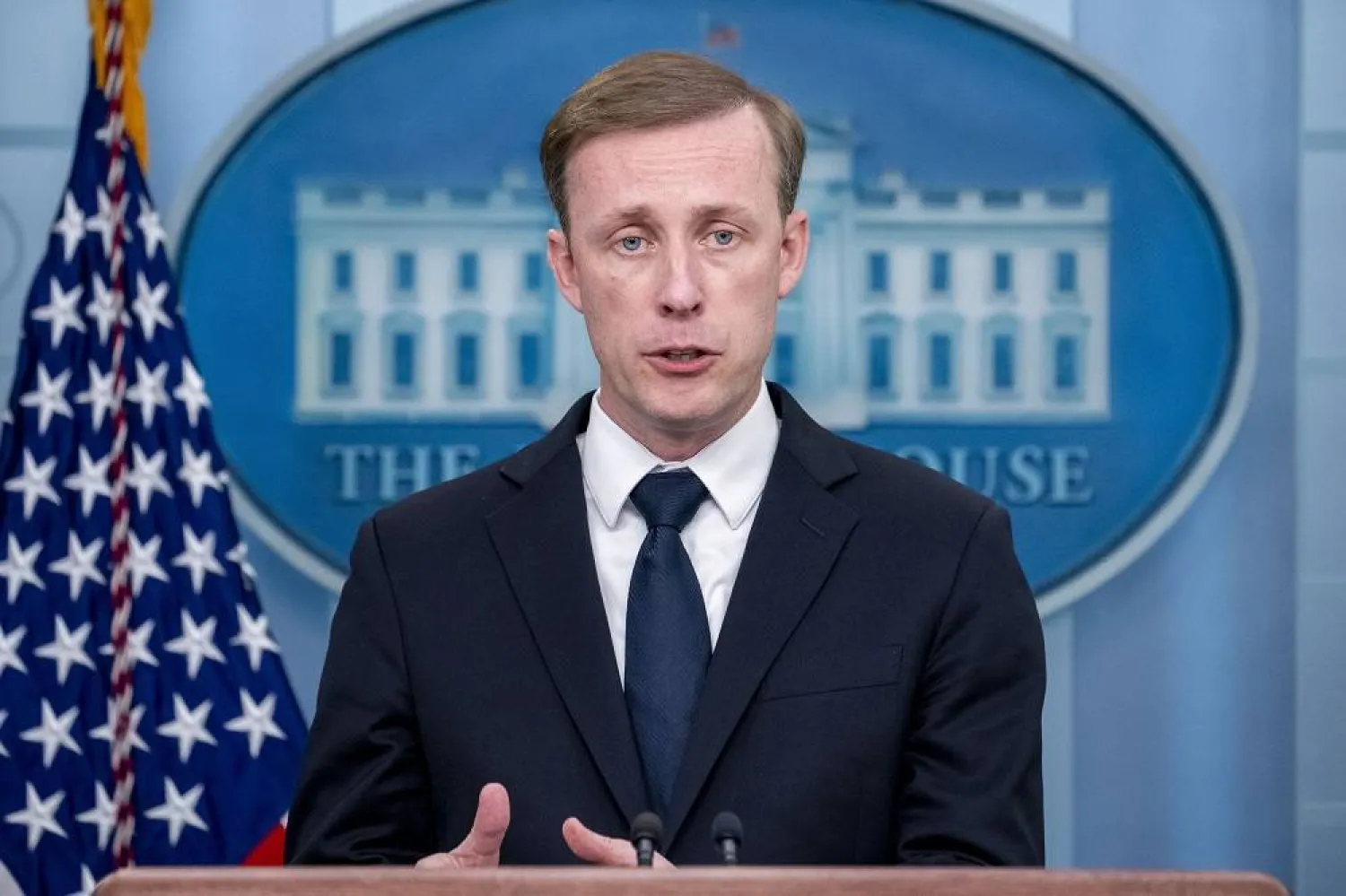
White House national security adviser Jake Sullivan speaks at a press briefing at the White House in Washington, April 24, 2023. (AP)
TT

White House Wants to Engage Russia on Nuclear Arms Control in Post-treaty World

White House national security adviser Jake Sullivan speaks at a press briefing at the White House in Washington, April 24, 2023. (AP)

The Biden administration is ready to talk to Russia without conditions about a future nuclear arms control framework even while taking countermeasures in response to the Kremlin's decision to suspend the last nuclear arms control treaty between the two countries, White House national security adviser Jake Sullivan said Friday.

Russian President Vladimir Putin announced in February he was suspending Russia’s cooperation with the New START Treaty's provisions for nuclear warhead and missile inspections, a move that came as tensions worsened after Moscow's invasion of Ukraine. Russia did say it would respect the treaty's caps on nuclear weapons.

Sullivan said at the Arms Control Association's annual meeting said that the United States is committed to adhering to the treaty if Russia also does, and that Washington wants to open a dialogue on a new framework for managing nuclear risks once the treaty expires in February 2026.

"It is in neither of our countries’ interest to embark on opening the competition in the strategic nuclear forces," Sullivan said. "And rather than waiting to resolve all of our bilateral differences, the United States is ready to engage Russia now to manage nuclear risks and develop a post 2026" agreement.

The US is willing to stick to the warhead caps until the treaty's end. Figuring out details about a post-2026 framework will be complicated by US-Russia tension and China's growing nuclear strength.

China now has about 410 nuclear warheads, according to an annual survey from the Federation of American Scientists. The Pentagon in November estimated China's warhead count could grow to 1,000 by the end of the decade and to 1,500 by around 2035.

The size of China's arsenal and whether Beijing is willing to engage in substantive dialogue will affect the future US force posture and Washington's ability to come to any agreement with the Russians, administration officials said.

US-Chinese relations have been strained by the shooting down a Chinese spy balloon this year after it crossed the continental United States; tensions about the status of the self-ruled island of Taiwan, which China claims as its own; US export controls aimed at limiting China's advanced semiconductor equipment; and other issues.

"Simply put we have not yet seen the willingness from the PRC to compartmentalize strategic stability from broader issues in the relationship," Sullivan said using he acronym for the People's Republic of China.

The White House push on Moscow on nuclear arms control comes the day after the administration announced new steps in response to Russia suspending participation in the treaty.

The State Department said it no longer would notify Russia of any updates on the status or location of "treaty-accountable items" such as missiles and launchers, would revoke US visas issued to Russian treaty inspectors and aircrew members, and would cease providing telemetric information on test launches of intercontinental ballistic missiles and submarine-launched ballistic missiles.

The United States and Russia earlier this year stopped sharing biannual nuclear weapons data required by the treaty.

The treaty, which then-Presidents Barack Obama and Dmitry Medvedev signed in 2010, limits each country to no more than 1,550 deployed nuclear warheads and 700 deployed missiles and bombers and provides for on-site inspections to verify compliance.

The inspections have been dormant since 2020 because of the COVID-19 pandemic. Discussions on resuming them were supposed to have taken place in November 2022, but Russia abruptly called them off, citing US support for Ukraine.



Top Trump Iran Negotiator Says Visits US Aircraft Carrier in Middle East

US Special Envoy Steve Witkoff delivers a press conference upon the signing of the declaration on deploying post-ceasefire force in Ukraine, during the so-called "Coalition of the Willing" summit, at the Elysee Palace in Paris, France, January 6, 2026. (Reuters)
TT

Top Trump Iran Negotiator Says Visits US Aircraft Carrier in Middle East

US Special Envoy Steve Witkoff delivers a press conference upon the signing of the declaration on deploying post-ceasefire force in Ukraine, during the so-called "Coalition of the Willing" summit, at the Elysee Palace in Paris, France, January 6, 2026. (Reuters)

US President Donald Trump's lead Iran negotiator Steve Witkoff on Saturday said he visited the USS Abraham Lincoln aircraft carrier currently in the Arabian Sea, with Washington and Tehran due to hold further talks soon.

"Today, Adm. Brad Cooper, Commander of US Naval Forces Central Command, Jared Kushner, and I met with the brave sailors and Marines aboard the USS Abraham Lincoln, her strike group, and Carrier Air Wing 9 who are keeping us safe and upholding President Trump's message of peace through strength," said Witkoff in a social media post.

Iranian Foreign Minister Abbas Araghchi said on Saturday he hoped talks with the United States would resume soon, while reiterating Tehran's red lines and warning against any American attack.


Israel’s Netanyahu Expected to Meet Trump in US on Wednesday and Discuss Iran

Israeli Prime Minister Benjamin Netanyahu delivers a speech during a special session to mark the 77th anniversary of the Knesset's establishment and the 60th anniversary of the dedication of the current building at the Knesset, the Israeli parliament, in Jerusalem, 02 February 2026. (EPA)
TT

Israel’s Netanyahu Expected to Meet Trump in US on Wednesday and Discuss Iran

Israeli Prime Minister Benjamin Netanyahu delivers a speech during a special session to mark the 77th anniversary of the Knesset's establishment and the 60th anniversary of the dedication of the current building at the Knesset, the Israeli parliament, in Jerusalem, 02 February 2026. (EPA)

Israeli Prime Minister Benjamin Netanyahu is expected to meet US President Donald Trump on Wednesday in Washington, where they will discuss negotiations with Iran, Netanyahu's office said on Saturday.

Iranian and US officials held indirect nuclear ‌talks in the ‌Omani capital ‌Muscat ⁠on Friday. ‌Both sides said more talks were expected to be held again soon.

A regional diplomat briefed by Tehran on the talks told Reuters Iran insisted ⁠on its "right to enrich uranium" ‌during the negotiations with ‍the US, ‍and that Tehran's missile capabilities ‍were not raised in the discussions.

Iranian officials have ruled out putting Iran's missiles - one of the largest such arsenals in the region - up ⁠for discussion, and have said Tehran wants recognition of its right to enrich uranium.

"The Prime Minister believes that any negotiations must include limiting ballistic missiles and halting support for the Iranian axis," Netanyahu's office said in a ‌statement.


Italy FM Rules Out Joining Trump’s ‘Board of Peace’

Italy's Minister for Foreign Affairs Antonio Tajani speaks to the press during the EPP Leaders’ meeting, in Zagreb, Croatia, 30 January 2026. (EPA)
TT

Italy FM Rules Out Joining Trump’s ‘Board of Peace’

Italy's Minister for Foreign Affairs Antonio Tajani speaks to the press during the EPP Leaders’ meeting, in Zagreb, Croatia, 30 January 2026. (EPA)

Italy will not take part in US President Donald Trump's "Board of Peace", Italian Foreign Minister Antonio Tajani said Saturday, citing "insurmountable" constitutional issues.

Trump launched his "Board of Peace" at the World Economic Forum in Davos in January and some 19 countries have signed its founding charter.

But Italy's constitution bars the country from joining an organization led by a single foreign leader.

Prime Minister Giorgia Meloni, a Trump ally, last month noted "constitutional problems" with joining, but suggested Trump could perhaps reopen the framework "to meet the needs not only of Italy, but also of other European countries".

Tajani appeared Saturday to rule that out.

"We cannot participate in the Board of Peace because there is a constitutional limit," he told the ANSA news agency.

"This is insurmountable from a legal standpoint," he said, the day after meeting US Secretary of State Marco Rubio and US Vice President JD Vance at the Olympics in Milan.

Although originally meant to oversee Gaza's rebuilding, the board's charter does not limit its role to the Palestinian territory and appears to want to rival the United Nations.