Jordanian Exports See 5.5% Rise Driven by High Trade to Saudi Arabiahttps://english.aawsat.com/business/4363506-jordanian-exports-see-55-rise-driven-high-trade-saudi-arabia
Jordanian Exports See 5.5% Rise Driven by High Trade to Saudi Arabia
Transport trucks drive near containers at a Jordanian port (Getty Images)
Jordan's Foreign Ministry revealed that the value of national exports to Greater Arab Free Trade Area (GAFTA) countries increased by 5.5 percent, reaching $888 million compared with the previous year's $842 million.
The increase was primarily driven by higher export volumes to the Saudi market, which amounted to approximately $288 million.
According to foreign trade data from the Department of Statistics (DoS), exports to the countries under the North American Free Trade Agreement (NAFTA) witnessed a growth of 11.2 percent, reaching around $589 million compared with the $540 million recorded during 2022. It was mainly attributed to expanded Jordanian exports to the US.
Jordanian exports to non-Arab Asian countries saw a 10 percent increase during the first quarter of this year, reaching approximately $868 million compared with $789 million achieved during the same period last year.
The value of Jordanian exports to European Union countries rose 28.3 percent, reaching approximately $114 million compared with the previous year's $88 million. Belgium emerged as the top European destination for Jordanian exports, accounting for nearly $25 million.
Jordanian exports to other economic blocs witnessed a 4.9 percent increase, totaling around $324 million compared with the previous year's $308 million. It was driven by higher export volumes to the free zone, which amounted to approximately $149 million.
The ministry stated that total Jordanian exports achieved a slight growth with various trading partners and economic blocs during the first quarter of this year, to record $2.78 billion, compared to $2.56 billion for the same period last year.
Mawani Adds CMA CGM’s Ocean Rise Express Service to Jeddah Port
The Saudi Ports Authority (Mawani) has added CMA CGM's Ocean Rise Express (OCR) shipping service to Jeddah Islamic Port, aiming to strengthen maritime connectivity between Saudi Arabia and global markets, support the smooth flow of supply chains, and increase the efficiency of port operations.
The OCR service will connect Jeddah to key international ports, including Kobe, Nagoya, and Yokohama in Japan; Xiamen, Yantian, and Nansha in China; Rotterdam in the Netherlands; Hamburg in Germany; and Southampton in the United Kingdom.
The route will utilize vessels with a capacity of up to 10,000 TEUs, according to SPA.
This addition aligns with Mawani’s efforts to enhance Jeddah Islamic Port’s global competitiveness and support international trade.
By enabling access to new markets, the initiative reinforces the Kingdom's position as a global logistics hub in line with the National Transport and Logistics Strategy and Saudi Vision 2030.
Lebanon's Financial Battles Persist Despite War Prioritieshttps://english.aawsat.com/business/5276448-lebanons-financial-battles-persist-despite-war-priorities
Lebanon's Financial Battles Persist Despite War Priorities
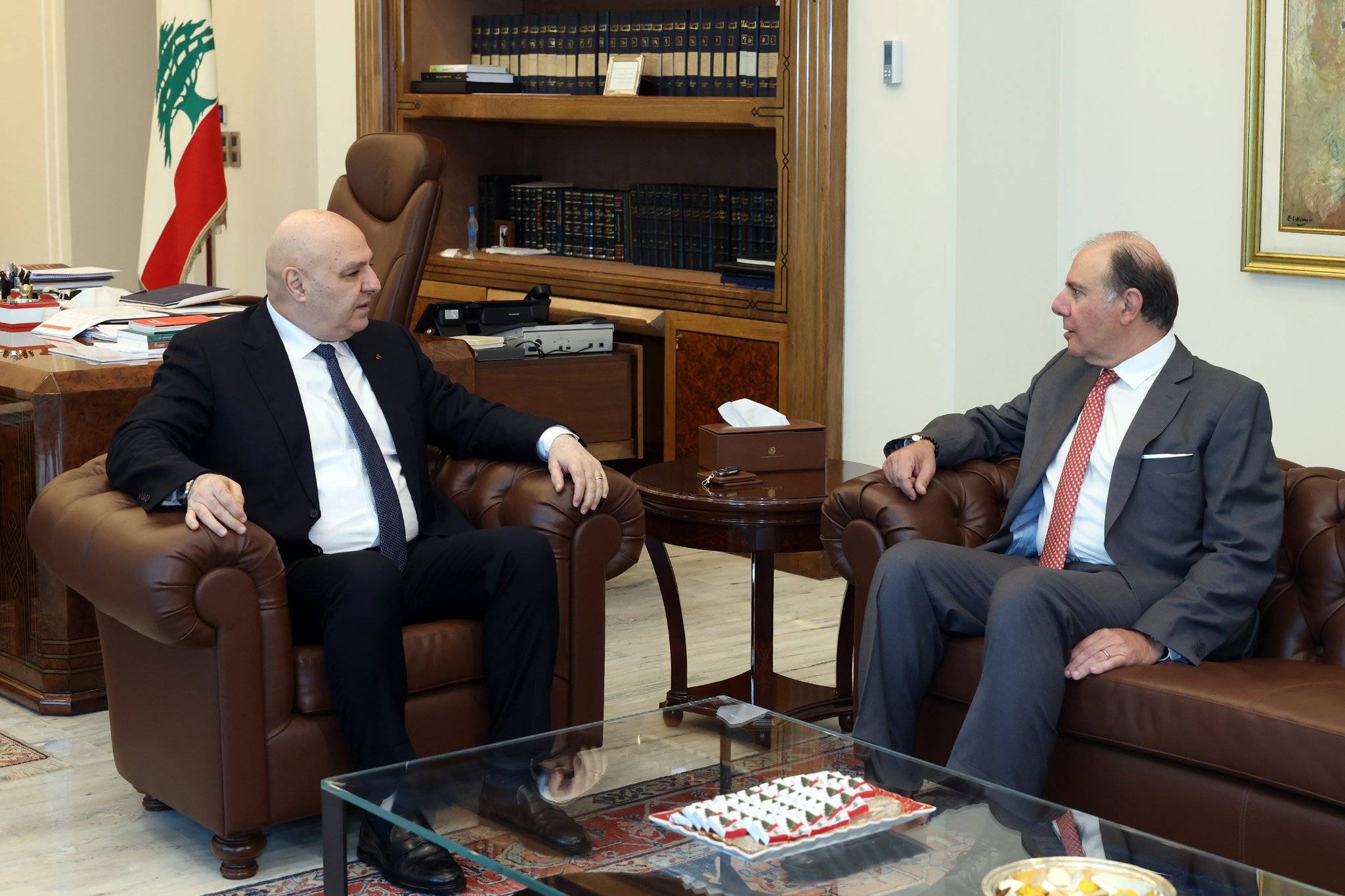
Lebanese President Joseph Aoun meets with a delegation from the Association of Banks in Lebanon (Lebanese Presidency)
Lebanon's unresolved financial and monetary issues continue to generate new and pressing obligations for the executive, legislative and monetary authorities. Although they have been partially overshadowed by the storm of war and its devastating human, reconstruction and social consequences, these issues remain high on both the political and economic agenda.
As the government's economic team works on amendments to the draft financial-gap law, including discussions over reservations raised by the central bank, newly proposed changes to the banking reform law, submitted by the government to parliament this month, have reignited the ongoing disputes within Lebanon's financial sector.
These disputes remain centered on the rescue plan and the treatment of structural crises that have persisted into their seventh consecutive year, most notably reflected in the repeated failure to meet reform commitments required to secure a financing agreement with the International Monetary Fund (IMF).
According to information obtained by Asharq Al-Awsat from a financial official, wartime developments and their repercussions have effectively granted Lebanon additional time, at least until the autumn meetings of international financial institutions, to complete legislation forming the roadmap for restoring financial stability and recovering deposits.
This includes the sought-after reforms of the banking sector, alongside compliance with anti-money laundering requirements, particularly measures aimed at curbing the informal economy, shutting down channels used for illicit financial flows, and addressing excessive cash circulation through enhanced source-to-beneficiary verification requirements.
A notable development is expected to influence future deliberations in parliamentary committees and the legislature's general assembly. In an updated report, the IMF classified the crisis affecting Lebanon's banking sector as a "systemic crisis," placing it alongside similar crises experienced by 13 countries worldwide over the past decade, from Angola in 2015 to Vietnam in 2022. This classification is expected to help align Lebanon's reform measures and responsibilities with international standards and draw on rescue plans implemented in comparable cases.
According to the financial official, the IMF's classification could help settle long-running domestic disputes that have prolonged the failure to adopt a comprehensive plan for exiting the financial and monetary crisis and containing its social and economic consequences. Such a plan remains the only viable pathway to restoring confidence in the financial sector and returning gradually to economic recovery, particularly after the enormous reconstruction and economic losses caused by successive destructive wars, estimated to exceed $20 billion at a minimum.
Lebanese President Joseph Aoun meets with Central Bank of Lebanon Governor Karim Souaid on May 7. (Lebanese Presidency)
Systemic Crisis and Financial Sector Restructuring
The official added that this approach takes on added importance amid discussions surrounding the restructuring of the financial sector, particularly the draft law on restoring financial order and recovering deposits submitted by the government to parliament.
"The recognition of the systemic nature of the crisis requires reconsidering some of the proposals currently on the table in a way that ensures a fairer distribution of responsibilities and burdens among all parties concerned, rather than reducing what happened to a narrow framework and placing the full cost of the collapse on depositors and banks," the official said.
This international reassessment is consistent with an opinion issued by Lebanon's State Council more than two years ago, which concluded that Lebanon was not facing an ordinary banking crisis but rather a systemic one, assigning primary responsibility for the financial crisis to the state because of its reliance on borrowing from the central bank to finance budget deficits.
Banks Ready to Shoulder Responsibilities
The issue resurfaced during a meeting between President Joseph Aoun and the board of the Association of Banks in Lebanon, headed by Salim Sfeir. The association conveyed the banking sector's readiness to assume its responsibilities and participate in absorbing losses, provided that reform does not amount to liquidation and that restructuring does not unfairly burden both banks and depositors. It stressed the need for a fair allocation of responsibilities and costs while safeguarding depositors' rights and preserving the sector's viability.
Aoun emphasized "the importance of reaching a fair and comprehensive solution to the banking crisis that satisfies all parties and preserves rights equally."
He stressed the importance of reform without destroying or undermining the sector, adding that "it is the state's duty to stand by the banking sector, reform it and restructure it in order to safeguard the economy and guarantee depositors' rights."
He further noted that "without a sound banking sector, there will be no investment, and there will be no country."
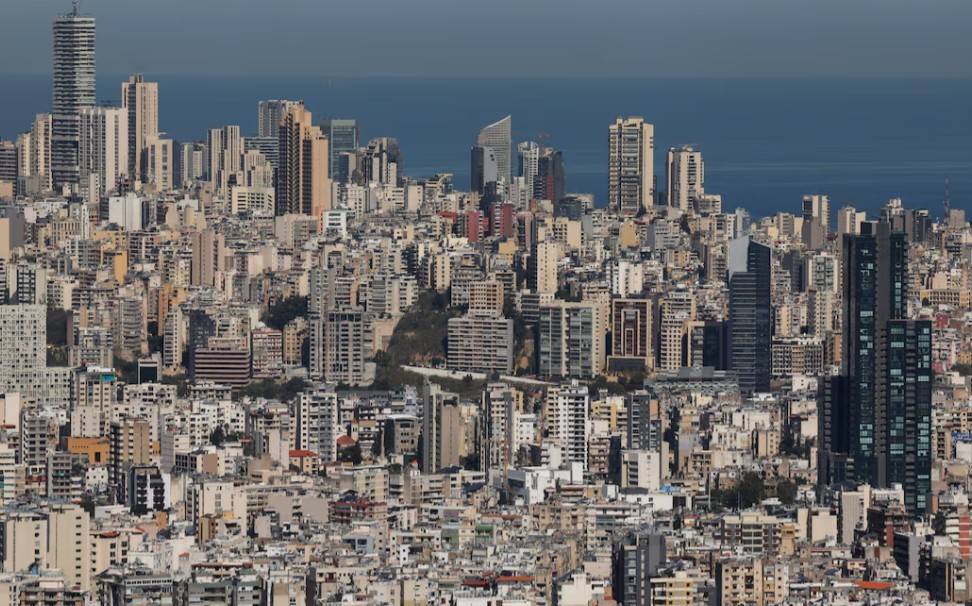
A general view of Beirut, Lebanon. (Reuters/File Photo)
Central Bank Governor Voices Reservations
Earlier, Central Bank Governor Karim Souaid openly expressed reservations about key provisions in the government's proposal, stating that "the draft requires further clarification and strengthening regarding the state's obligations. Since the state is ultimately the entity that used these funds over many years, its contribution must be explicitly defined, measurable, legally binding, and linked to a clear and credible timetable."
In several remarks, Souaid highlighted the challenge of distributing financial burdens and responsibilities among the state, the central bank and commercial banks. He additionally stressed the need to reduce the fiscal deficit by eliminating irregular claims, categorizing deposits into clearly defined groups, and carrying out repayments through a combination of cash payments and asset-backed financial instruments in phases and within available liquidity limits.
Banks continue to insist on their right to participate in discussions that will determine their future. They have outlined an approach that seeks to balance depositor protection with the sector's continued viability. In a memorandum submitted to officials, they argued that "instead of ensuring a fair distribution of responsibilities, the draft law submitted to parliament exempts the state, which bears primary responsibility for the financial gap, from making any clear contribution toward losses. Moreover, the proposal harms both the banking sector and depositors alike."
For instance, the draft law, despite objections from the monetary authorities, requires the removal of impaired assets, meaning assets deemed unrecoverable for depositors, and proposes deducting them from deposits without returning them to their owners. At the same time, banks would be required to absorb their value as losses. In practice, this would impose losses on both depositors and banks, pushing banks toward liquidation rather than enabling them to repay deposits.
Consequently, if banks are burdened with obligations that exceed their responsibilities and capacities, the outcome will be clear: the liquidation of the majority of banks.
The financial official noted that international experience shows that systemic crises, regardless of their severity, can become a starting point for rebuilding stronger and more modern financial systems when political will and serious reforms are present. The current period therefore represents an opportunity to redesign a new economic and financial model that can restore Lebanon's regional financial role and rebuild confidence both domestically and internationally.
In this context, the official said, it is essential to adopt a balanced and inclusive approach that rebuilds confidence in the financial and banking sectors while safeguarding the rights of depositors and investors and ensuring the continuity of financial institutions.
Economic recovery cannot be achieved through confrontational policies or temporary solutions, but rather through a comprehensive reform vision that recognizes the true scale of the crisis and lays the groundwork for a gradual and sustainable recovery.
World Bank: 27 Countries Seeking to Ensure Access to Crisis Fundshttps://english.aawsat.com/business/5276376-world-bank-27-countries-seeking-ensure-access-crisis-funds
The war and resulting disruption of global energy markets have hit global supply chains and prevented vital fertilizer shipments from reaching developing countries (Reuters)
World Bank: 27 Countries Seeking to Ensure Access to Crisis Funds
The war and resulting disruption of global energy markets have hit global supply chains and prevented vital fertilizer shipments from reaching developing countries (Reuters)
Twenty-seven countries have moved since the Iran war started to put in place crisis instruments that could quickly access funding from existing World Bank programs, according to an internal document viewed by Reuters.
The World Bank document did not name the countries or the total amount of funds potentially being sought. The World Bank declined to comment.
The document showed that three countries had approved new instruments since the Middle East conflict began on February 28 while the others were still completing the process.
The war and resulting disruption of global energy markets have hit global supply chains and prevented vital fertilizer shipments from reaching developing countries.
Officials in Kenya and Iraq have confirmed they are seeking rapid financial support from the World Bank to deal with the war's fallout such as surging fuel prices hitting the African nation to a massive drop in oil revenue for Iraq.
The 27 countries are among 101 that had access to some form of pre-arranged financing instrument that they could tap in a crisis, including 54 that signed up to the Rapid Response Option, which allows countries to use up to 10% of their undisbursed financing.
World Bank President Ajay Banga last month said the bank's crisis toolkit would allow countries to draw on pre-arranged contingent financing, existing project balances and fast-disbursing instruments to access an estimated $20 billion to $25 billion.
He said the bank could also reorient parts of its portfolio to bring the total to $60 billion over six months, with further longer-term changes possible to bring the total to around $100 billion.
At the time, the head of the International Monetary Fund, Kristalina Georgieva, said she expected up to a dozen countries to seek $20 billion to $50 billion in near-term assistance from the global lender. But few requests have been logged, according to three sources familiar with the matter.
"Countries are definitely in wait-and-see mode," said one of the sources, who spoke on condition of anonymity.
Kevin Gallagher, director of the Global Development Policy Center at Boston University, said countries were more willing to seek World Bank funds than negotiate with the IMF because IMF programs generally require austerity measures that could compound the social unrest already seen in countries like Kenya.
لم تشترك بعد
انشئ حساباً خاصاً بك لتحصل على أخبار مخصصة لك ولتتمتع بخاصية حفظ المقالات وتتلقى نشراتنا البريدية المتنوعة