


Yemen Military Spokesman to Asharq Al-Awsat: Houthis Have Ignored Calls for Peace

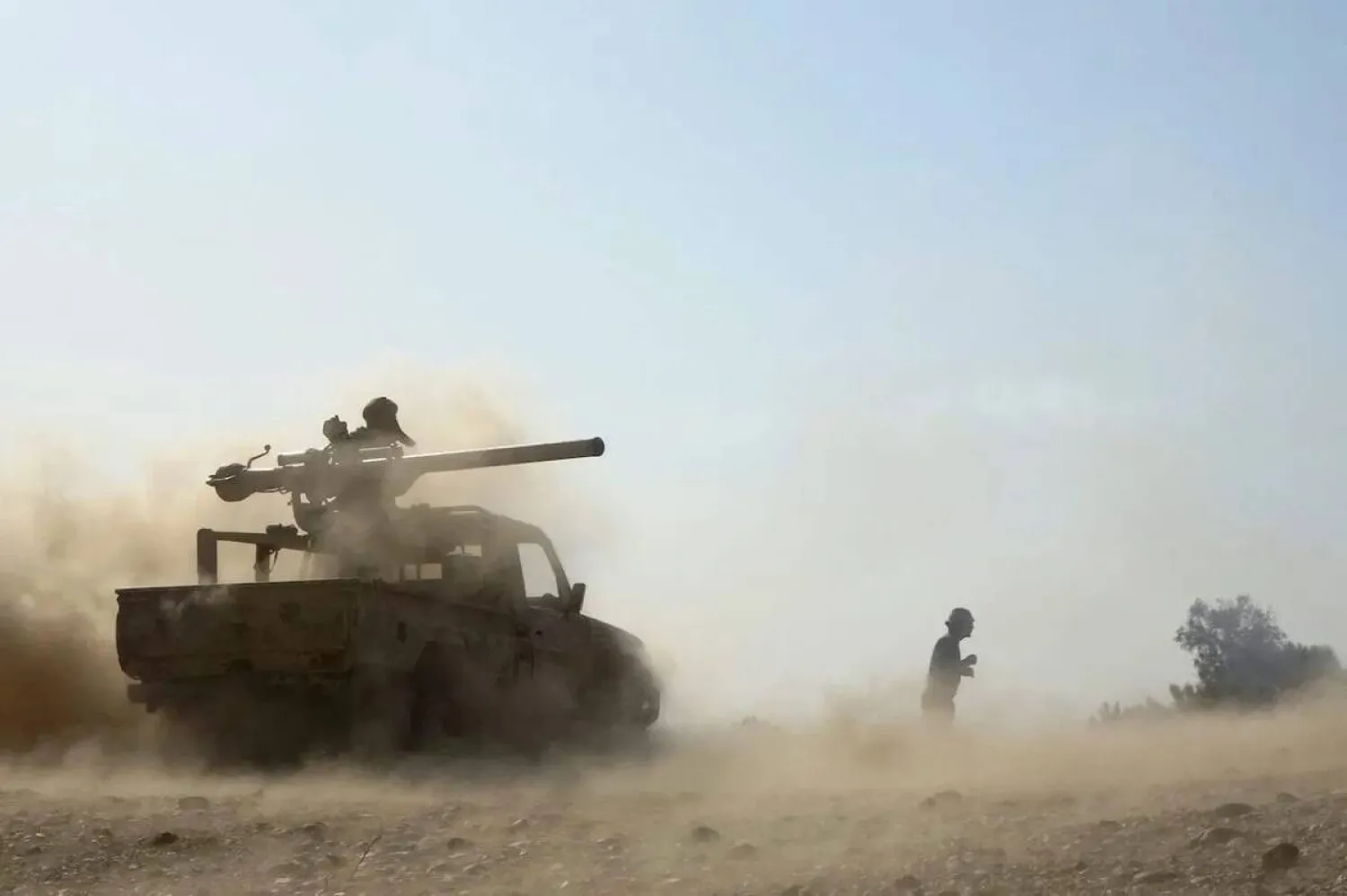
Pro-government troops repel a Houthi offensive on Marib, on 14 February 2021. (AFP via Getty Images)
TT

Yemen Military Spokesman to Asharq Al-Awsat: Houthis Have Ignored Calls for Peace

Pro-government troops repel a Houthi offensive on Marib, on 14 February 2021. (AFP via Getty Images)

The Iran-backed Houthi militias are planning military escalation on various fronts in Yemen as shown by their amassing of forces and attacks on government troops, most notably in Marib and Taiz. 

The army said it has thwarted an attempt by the Houthis to infiltrate military positions in northwestern and western Taiz. 

It also downed two Houthi drones in Marib. 

The escalation is taking place amid international and United Nations efforts to kick off a comprehensive peace process in the war-torn country. 

Military spokesman Abdo Majali told Asharq Al-Awsat that the army is ready to confront all Houthi infiltrations  

The Houthis do not heed agreements or the truce in any way, shape or form, he added. 

They have persisted in attacking military positions on various fronts, especially in Marib, he went on to say. 

He confirmed that the militias were continuing to amass their members to carry out violations, whether against civilians or the army. The Houthis are recruiting new members, including children, and bringing in more weapons and gear. 

Majali said the coming days will witness greater efforts to thwart all Houthi infiltrations. 

A decisive military victory is the only way to avert more suffering for the Yemeni people, he stressed. 

The Houthis have prevented the export of oil and gas and barred the import of diesel and gas in areas under their control, destroying the economy and starving the people, he charged. 

He stressed that the military morale is high and the troops are ready to advance on all fronts, especially given the cohesion and coordination at all fronts, starting from the west coast until Marib. 


Israeli Minister Calls for West Bank War, Annexation of Lebanon, Gaza Areas

Far-right Israeli Finance Minister Bezalel Smotrich reviews the 'E1' settlement map in the West Bank (Archival - AFP)
TT

Israeli Minister Calls for West Bank War, Annexation of Lebanon, Gaza Areas

Far-right Israeli Finance Minister Bezalel Smotrich reviews the 'E1' settlement map in the West Bank (Archival - AFP)

Israel's far-right finance minister Bezalel Smotrich called on Sunday for the annexation of areas of south Lebanon and the Gaza Strip currently under Israeli military control and for Israeli forces to "go to war" against Palestinians in the occupied West Bank, reported AFP.

"I would like us to annex at least as far as the Yellow Line in Gaza (which demarcates the areas under Hamas and Israeli control) and as far as the Litani River in Lebanon... because if a war ends along the same lines where it began, what will deter the enemy from going to war again," Smotrich said in a podcast for Israeli news site Ynet.

"I think we need to go to war in Judea and Samaria, to dismantle the Palestinian Authority that supports terror," he added, using the biblical term for the West Bank.

Smotrich is the leader of a far-right party that advocates the annexation of the entire West Bank, which has been occupied by Israel since 1967.

The West Bank has seen a surge in violence since the outbreak of war in the Gaza Strip following Hamas's attack on Israel on October 7, 2023.

More than 500,000 Israelis live in West Bank settlements, which are illegal under international law, in the Palestinian territory among some three million Palestinians.


Libya Oil Pipeline Reopens after Being Blocked by Armed Group

Sharara oil field (Libyan News Agency)
TT

Libya Oil Pipeline Reopens after Being Blocked by Armed Group

Sharara oil field (Libyan News Agency)

Libya's national oil firm announced Saturday that an oil pipeline blocked for several days by an armed group had reopened, ending a disruption it said had cost $95 million.

The pipeline links the Al-Sharara oilfield in southwest Libya to the Zawiya export terminal on the Mediterranean coast, said AFP.

The National Oil Corporation (NOC) said in a statement that valve number seven had been reopened, allowing crude pumping through the pipeline to resume.

The pipeline is operated by Akakus, a joint venture between the NOC, Spain's Repsol, France's TotalEnergies, Austria's OMV and Norway's Equinor.

An armed group shut the valve on Monday, causing a sharp drop in production, according to the NOC. It gave no details about those responsible or their demands.

Blockades of oil and gas facilities have been common in Libya in recent years, driven by social grievances, security threats or political disputes.


Egyptian Source Denies Cairo Involvement in Ethiopia Unrest

Gunmen in Tigray hand over light weapons to Ethiopian defense forces earlier (Ethiopian News Agency)
TT

Egyptian Source Denies Cairo Involvement in Ethiopia Unrest

Gunmen in Tigray hand over light weapons to Ethiopian defense forces earlier (Ethiopian News Agency)

An informed Egyptian source on Saturday rejected allegations linking Cairo to renewed unrest in northern Ethiopia’s Tigray region where fighting resumed between Tigrayan forces and the federal government, nearly four years after a peace deal ended a two-year war.

Field Marshal Birhanu Jula, chief of general staff of the Ethiopian National Defense Force, accused foreign powers of supporting a newly formed armed alliance seeking to destabilize Ethiopia.

“The Tigray front and the alliance cannot achieve anything on their own unless they are pushed, supported and supplied by Sudan, Egypt and other forces,” Jula said in remarks carried by Ethiopian media Friday.

He also accused Eritrea of acting as an intermediary between foreign powers and armed groups inside Ethiopia.

Tigrayan forces seized three airports in the region and launched attacks in neighboring Afar and Amhara in recent days, marking the most serious escalation since the devastating 2020-2022 war.

The Egyptian source told Asharq Al-Awsat that Ethiopia’s insinuations were “allegations that do not merit a response,” adding that Cairo “has nothing to do with such polemics.”

The source urged Ethiopian authorities to “address their own internal crises and problems instead of trying to blame their domestic failures on external parties.”

The Tigray crisis was a longstanding internal issue, the source added, stressing that Egypt maintains “a consistent and strict policy of non-interference in the internal affairs of other countries.”

Egyptian strategic and military expert Samir Ragheb similarly told Asharq Al-Awsat that the Ethiopian military chief’s remarks amounted to assumptions intended to shift responsibility for Addis Ababa’s internal problems onto outside actors.

Ragheb argued that Ethiopia’s reference to outside support was based largely on geography, given Tigray’s northern borders with Sudan and Eritrea.

“If Egypt had sought to intervene in Ethiopia to exert pressure over other issues, it would have done so during the 2020 fighting, when the conflict was at its height and before construction phases of the Grand Ethiopian Renaissance Dam had been completed,” he said.

Ragheb described the fighting as a longstanding domestic struggle over power and resources, stemming from disputes over governance and efforts to weaken Ethiopia’s federal system.

He also urged that the Tigray conflict be kept separate from the dispute over the Grand Ethiopian Renaissance Dam, saying there was no operational or strategic link between fighting in Tigray and the dam.

Ragheb argued that Addis Ababa’s accusations were intended to deflect attention from what he described as failures to fulfill commitments under the 2022 Pretoria peace agreement. He stressed that Cairo does not support armed factions or movements against African states.

The Tigray People’s Liberation Front dominated Ethiopia’s ruling coalition from 1991 until Prime Minister Abiy Ahmed came to power in 2018 and marginalized the group, contributing to tensions that erupted into war in 2020.

The Pretoria agreement ended that conflict in 2022, but tensions and intermittent clashes subsequently returned before escalating sharply this month.
