


BioNTech Faces First German Lawsuit Over Alleged COVID Vaccine Side Effects 

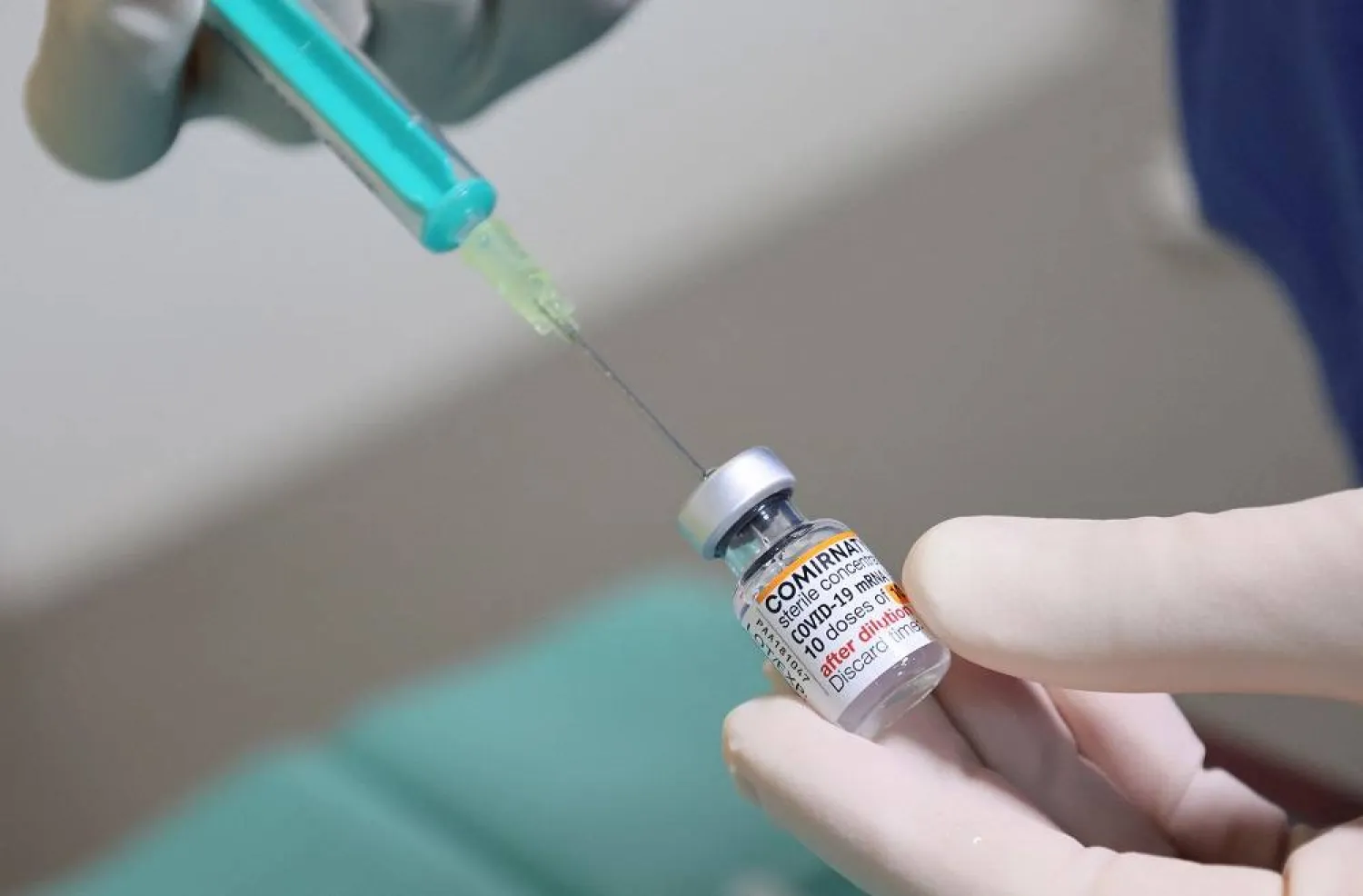
A medical technical assistant prepares a syringe with a children's dose of Comirnaty, the Pfizer-BioNTech vaccine against the coronavirus disease (COVID-19) at a practice of a children's doctor, as Germany rolls out vaccinations for the five to eleven year old children, in Bonn, Germany, December 15, 2021. (Reuters)
TT

BioNTech Faces First German Lawsuit Over Alleged COVID Vaccine Side Effects 

A medical technical assistant prepares a syringe with a children's dose of Comirnaty, the Pfizer-BioNTech vaccine against the coronavirus disease (COVID-19) at a practice of a children's doctor, as Germany rolls out vaccinations for the five to eleven year old children, in Bonn, Germany, December 15, 2021. (Reuters)

BioNTech will go to court on Monday to defend itself against a lawsuit from a German woman who is seeking damages for alleged side effects of its COVID-19 vaccine, the first of potentially hundreds of cases in the country.

The woman, exercising her right under German privacy law for her name not to be made public, is suing the German vaccine maker for at least 150,000 euro ($161,500) in damages for bodily harm as well as compensation for unspecified material damage, according to the regional court in Hamburg which is hearing the case and law firm Rogert & Ulbrich, which is representing her.

The plaintiff claims she suffered upper-body pain, swollen extremities, fatigue and sleeping disorder due to the vaccine.

The first hearing is on Monday.

Tobias Ulbrich, a lawyer at Rogert & Ulbrich, told Reuters he aimed to challenge in court the assessment made by European Union regulators and German vaccine assessment bodies that the BioNTech shot has a positive risk-benefit profile.

German pharmaceutical law states that makers of drugs or vaccines are only liable to pay damages for side-effects if "medical science" shows that their products cause disproportionate harm relative to their benefits or if the label information is wrong.

BioNTech, which holds the marketing authorization in Germany for the shot it developed with Pfizer, said it concluded after careful consideration that the case was without merit.

"The positive benefit-risk profile of Comirnaty remains positive and the safety profile has been well characterized," the biotech firm said, referring to the vaccine's brand name.

It noted about 1.5 billion people had received the shot across the world, including more than 64 million in Germany.

The European Medicines Agency (EMA) says that BioNTech's Comirnaty, the most commonly used in the Western world, is safe to use.

In a media briefing last week, the EMA reaffirmed the benefit of all COVID shots it approved, including BioNTech's, saying in the first year of the pandemic alone, vaccines were estimated to have helped save almost 20 million lives globally.

It has said there is a very small risk of myocarditis and pericarditis, two types of heart inflammation, following vaccination with Comirnaty, mainly for young males.

Unexpected side-effects after a drug has regulatory approval are rare. The unprecedented speed at which COVID vaccines were developed during the pandemic meant that potential uncommon side-effects may not have been detected as readily as they might have been in traditionally longer trials.

EMA has said that safety monitoring had not been compromised during the fast-track assessment.

The EMA had registered almost 1.7 million spontaneous reports of suspected side-effects by May, which translates into about 0.2 for every 100 administered doses.

Almost 768 million vaccine doses have been administered in the European Economic Area (EEA), which includes the 27 EU member states plus Iceland, Liechtenstein and Norway.

The most common temporary side-effects are headache, fever, fatigue and muscle pain.

The EMA also monitors adverse events or illness after vaccination, and checks for frequencies that surpass normal rates in the non-vaccinated population.

Liability

It is not clear who would pay the legal costs or compensation if the plaintiff wins the case.

Sources have said some of the EU's bulk purchase agreements with vaccine makers, including BioNTech-Pfizer, contained full or partial liability waivers for both legal costs and potential compensation, which could force EU governments to bear some of the costs.

Like many countries, Germany also has a public sector financial support scheme for people who suffer permanent harm from vaccines, known as a no-fault compensation program, but participation in the program does not block someone seeking damages separately.

The United States has granted manufacturers immunity from liability for COVID vaccines that receive regulatory approval.

Rogert & Ulbrich says it has filed about 250 cases for clients seeking damages for alleged side-effects of COVID-19 vaccines.

Another law firm, Caesar-Preller, says it is representing 100 cases, with both firms saying separately they cover almost all cases in Germany between them.

A handful of similar cases have been filed in Italy.


NASA's New Moon Rocket Heads to the Pad Ahead of Astronaut Launch

NASA's Artemis II SLS (Space Launch System) rocket and Orion spacecraft, secured to the mobile launcher, is seen inside the Vehicle Assembly building as preparations continue for roll out to Launch Pad 39B, Thursday, Jan. 15, 2026, at NASA's Kennedy Space Center in Florida. (Keegan Barber/NASA via AP)
TT

NASA's New Moon Rocket Heads to the Pad Ahead of Astronaut Launch

NASA's Artemis II SLS (Space Launch System) rocket and Orion spacecraft, secured to the mobile launcher, is seen inside the Vehicle Assembly building as preparations continue for roll out to Launch Pad 39B, Thursday, Jan. 15, 2026, at NASA's Kennedy Space Center in Florida. (Keegan Barber/NASA via AP)

NASA’s giant new moon rocket headed to the launch pad Saturday in preparation for astronauts’ first lunar fly-around in more than half a century.

The out-and-back trip could blast off as early as February.

The 322-foot (98-meter) rocket began its 1 mph (1.6 kph) creep from Kennedy Space Center’s Vehicle Assembly Building at daybreak. The four-mile (six-kilometer) trek was expected to take until nightfall.

Throngs of space center workers and their families gathered in the predawn chill to witness the long-awaited event, delayed for years, The Associated Press reported. They huddled together ahead of the Space Launch System rocket’s exit from the building, built in the 1960s to accommodate the Saturn V rockets that sent 24 astronauts to the moon during the Apollo program. The cheering crowd was led by NASA’s new administrator Jared Isaacman and all four astronauts assigned to the mission.

Weighing in at 11 million pounds (5 million kilograms), the Space Launch System rocket and Orion crew capsule on top made the move aboard a massive transporter that was used during the Apollo and shuttle eras. It was upgraded for the SLS rocket’s extra heft.

The first and only other SLS launch — which sent an empty Orion capsule into orbit around the moon — took place back in November 2022.

“This one feels a lot different, putting crew on the rocket and taking the crew around the moon,” NASA’s John Honeycutt said on the eve of the rocket’s rollout.

Heat shield damage and other capsule problems during the initial test flight required extensive analyses and tests, pushing back this first crew moonshot until now. The astronauts won’t orbit the moon or even land on it. That giant leap will take come on the third flight in the Artemis lineup a few years from now.

Commander Reid Wiseman, pilot Victor Glover and Christina Koch — longtime NASA astronauts with spaceflight experience — will be joined on the 10-day mission by Canadian astronaut Jeremy Hansen, a former fighter pilot awaiting his first rocket ride.

They will be the first people to fly to the moon since Apollo 17’s Gene Cernan and Harrison Schmitt closed out the triumphant lunar-landing program in 1972. Twelve astronauts strolled the lunar surface, beginning with Neil Armstrong and Buzz Aldrin in 1969.

NASA is waiting to conduct a fueling test of the SLS rocket on the pad in early February before confirming a launch date. Depending on how the demo goes, “that will ultimately lay out our path toward launch,” launch director Charlie Blackwell-Thompson said on Friday.

The space agency has only five days to launch in the first half of February before bumping into March.


Iron Age Teeth Fossils Reveal Diet Diversity of Italians 2,500 Years Ago

The fresco on the wall of a house in Pompeii that dates back 2,000 years (AFP)
TT

Iron Age Teeth Fossils Reveal Diet Diversity of Italians 2,500 Years Ago

The fresco on the wall of a house in Pompeii that dates back 2,000 years (AFP)

Italians began exploring a varied diet sometime between the 7th and 6th centuries BC, according to a new analysis of ancient teeth from Iron Age Italians.

Unravelling details about the lifestyles of ancient cultures is a challenging task, as it requires specific, well-preserved fossils of long-deceased individuals, The Independent reported.

Fossil human teeth are an excellent resource to understand ancient diets, acting as archives of each individual’s life history.

However, collecting information from teeth across different eras remains a challenge.

In the new study, researchers combined multiple analyses of teeth remains from the Italian archaeological site of Pontocagnano to interpret the health and diet of people in the region during the 7th and 6th centuries BC.

Scientists assessed the dental tissue of 30 teeth from 10 individuals, obtaining data from canine and molar teeth to reconstruct each ancient person’s history during the first six years of their lives.

Researchers found that the Iron Age Italians had a diet rich in cereals, legumes, abundant carbohydrates, and even fermented foods and drinks.

“We could follow childhood growth and health with remarkable precision and identify traces of cereals, legumes, and fermented foods in adulthood, revealing how this community adapted to environmental and social challenges,” said Roberto Germano, an author of the study.

Emanuela Cristiani, another author of the study said, “In the case of Pontocagnano, the analysis of dental calculus revealed starch granules from cereals and legumes, yeast spores, and plant fibres, providing a very concrete picture of the diet and some daily activities of these Iron Age communities.”

The findings offer strong evidence of this ancient Italian population regularly consuming fermented foods and beverages, researchers said.

Their diets likely diversified at the time as their contact with Mediterranean cultures increased, they added.

The researchers noted that while the study may not be completely representative of the broader Italian population, it provides a “very concrete picture” of the diet and some daily activities of Iron Age communities in the Italian region.

“This and other modern approaches represent a major technological and disciplinary advancement that is revolutionizing the study of the biocultural adaptations of past populations,” said Alessia Nava, another author of the study from Sapienza University of Rome.


Sharks Are Famous for Fearsome Teeth, but Ocean Acidification Could Make them Weaker

In this undated handout photo provided by Heinrich Heine University Duesseldorf in January 2026, a blacktip reef shark swims at Sealife Oberhausen in Oberhausen, Germany. (Maximilian Baum/Heinrich Heine University Duesseldorf via AP)
TT

Sharks Are Famous for Fearsome Teeth, but Ocean Acidification Could Make them Weaker

In this undated handout photo provided by Heinrich Heine University Duesseldorf in January 2026, a blacktip reef shark swims at Sealife Oberhausen in Oberhausen, Germany. (Maximilian Baum/Heinrich Heine University Duesseldorf via AP)

Sharks are the most feared predators in the sea, and their survival hinges on fearsome teeth that regrow throughout their lives. But changes in the ocean's chemistry could put those weapons at risk.

That is the takeaway from a study performed by a group of German scientists who tested the effects of a more acidic ocean on sharks' teeth. Scientists have linked human activities including the burning of coal, oil and gas to the ongoing acidification of the ocean, The Associated Press reported.

As oceans become increasingly acidic, sharks' teeth could become structurally weaker and more likely to break, the scientists found. That could change the big fishes' status at the top of the ocean's food chain, they wrote.

The ocean will not become populated with toothless sharks overnight, said the study's lead author, Maximilian Baum, a marine biologist at Heinrich Heine University Düsseldorf. But the possibility of weaker teeth is a new hazard to sharks that already face pollution, overfishing, climate change and other threats, Baum said.

“We found there is a corrosion effect on sharks' teeth,” Baum said. “Their whole ecological success in the ocean as the rulers of other populations could be in danger.”

The researchers, who published their work in the journal Frontiers in Marine Science, performed their study as ocean acidification has become an increasing focus of conservation scientists.

Acidification occurs when oceans absorb more carbon dioxide from the air, the National Oceanic and Atmospheric Administration has said. The ocean is expected to become almost 10 times more acidic than it currently is by the year 2300, the German scientists wrote.

The scientists performed their study by collecting more than 600 discarded teeth from an aquarium that houses blacktip reef sharks, a species of shark that lives in the Pacific and Indian oceans and typically grows to about 5.5 feet (1.7 meters) long. They then exposed the teeth to water with the acidity of today and the projected acidity of 2300.

The teeth exposed to the more acidic water became much more damaged, with cracks and holes, root corrosion and degradation to the structure of the tooth itself, the scientists wrote.

The results “show that ocean acidification will have significant effects on the morphological properties of teeth,” the scientists wrote.

Still the ocean's top predator Shark teeth are “highly developed weapons built for cutting flesh, not resisting ocean acid,” Baum said. Sharks will go through thousands of teeth in a lifetime, and the teeth are critical for allowing sharks to regulate populations of fish and marine mammals in the oceans.

Many sharks are also facing extinction jeopardy, as more than a third of shark species are currently threatened with extinction according to the International Union for Conservation of Nature. Thankfully, sharks have a number of factors that can help them stave off the negative effects of ocean acidification, said Nick Whitney, senior scientist at the Anderson Cabot Center for Ocean Life at the New England Aquarium.

Whitney, who was not involved in the study, said the scientists' work on the shark teeth was sound. However, because shark teeth develop inside the mouth tissue of sharks, they will be shielded from changes in ocean chemistry for a time, he said.

And history has taught us that sharks are survivors, Whitney said.

“They've been around for 400 million years and have evolved and adapted to all kinds of changing conditions,” he said.

Ocean acidification could be a concern, but overfishing remains the biggest threat to sharks, said Gavin Naylor, director of the Florida Program for Shark Research at the Florida Museum of Natural History.

Acidification will bring many changes Naylor and others cautioned that ocean acidification is indeed going to pose many threats to the ocean beyond just sharks. Ocean acidification is expected to be especially harmful to shellfish such as oysters and clams because it will make it more difficult for them to build shells, NOAA has said.

It could also make fish scales weaker and more brittle. It's tough to say now whether that could ultimately benefit the sharks that feed on them, Naylor said.

For now, ocean acidification can't be disregarded as a threat facing sharks, Baum said. Some shark species could come close to extinction in the coming years and ocean acidification could be one of the factors causing that to happen, he said.

“The evolutionary success of sharks is dependent on their perfectly developed teeth,” Baum said.
