


With NATO Membership in Mind, Sweden Hands over Turkish Man Convicted of Drug Offenses at Home

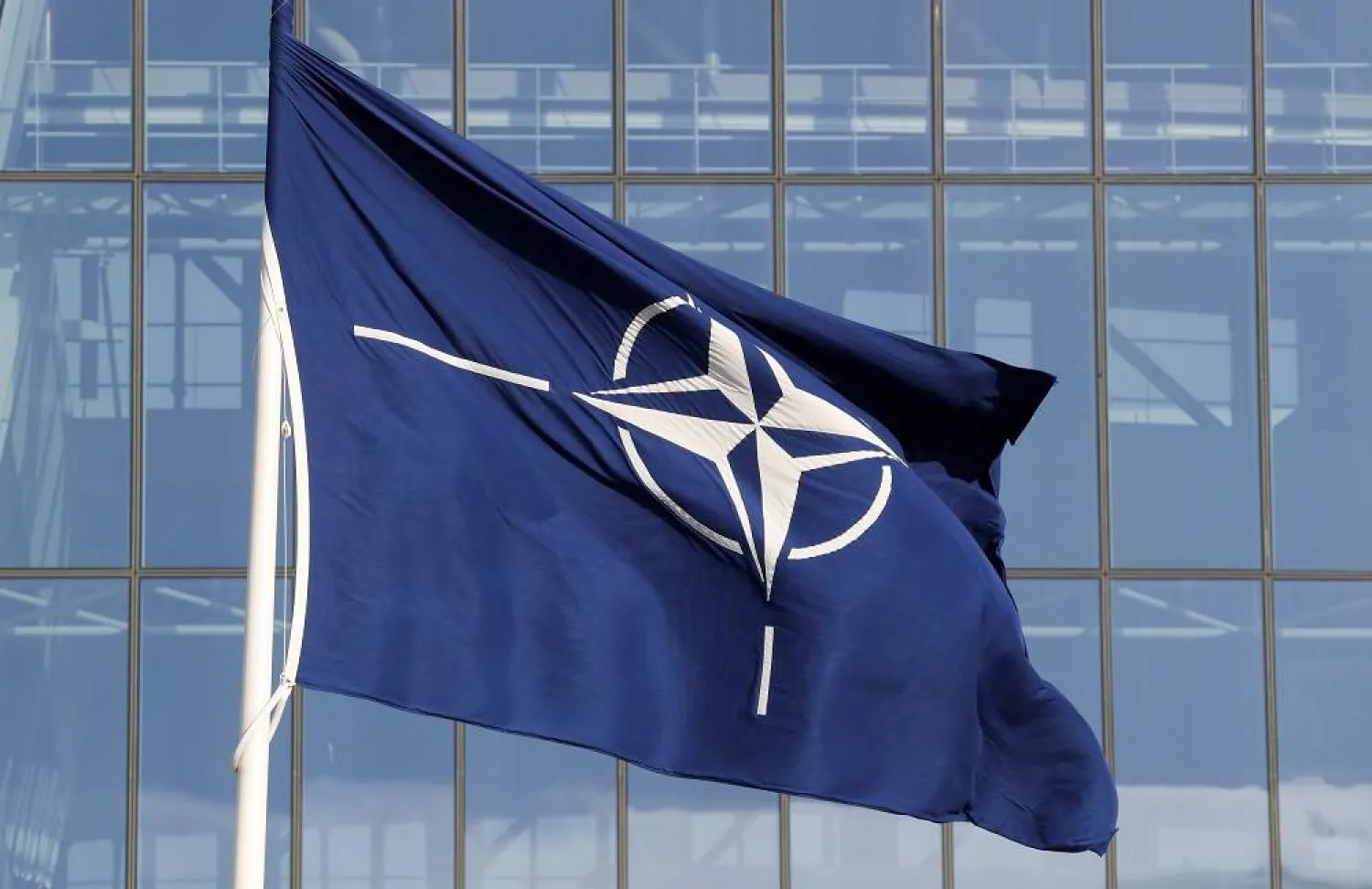
A NATO flag is seen at the Alliance headquarters ahead of a NATO Defense Ministers meeting, in Brussels, Belgium, October 21, 2021. (Reuters)
TT

With NATO Membership in Mind, Sweden Hands over Turkish Man Convicted of Drug Offenses at Home

A NATO flag is seen at the Alliance headquarters ahead of a NATO Defense Ministers meeting, in Brussels, Belgium, October 21, 2021. (Reuters)

The Swedish government decided Monday to extradite a Turkish citizen resident in Sweden who had been convicted in 2013 of drug crime in Türkiye.

The move came as NATO-member Türkiye continued to hold up Sweden’s bid to join the military alliance.

The man, who had served his prison sentence and was living in Sweden legally, claimed the real reason for his extradition was that he was active in a pro-Kurdish political party and supported a group Ankara considers to be terrorists.

Sweden's Supreme Court said there were “no obstacles” to his extradition, and that the man was under investigation in Türkiye for posting online manipulated photos of President Recep Tayyip Erdogan which is punishable under Turkish laws.

Ankara has accused Stockholm of not doing enough to crack down on members of the outlawed Kurdistan Workers’ Party, or PKK, and others whom it considers extremists.

The military alliance wants to admit Sweden before a summit next month in Vilnius, Lithuania. All existing NATO members must ratify a candidate country’s accession protocol before it can join the trans-Atlantic alliance.

The Swedish Justice Ministry which didn't identify the man, confirmed to The Associated Press that the government in Stockholm had endorsed last month's ruling by Sweden’s highest court to extradite him. It was not clear if the man is among a group of people Türkiye wants extradited.

Last month, Sweden tightened its anti-terrorism laws. Swedish lawmakers included a prison term of up to eight years for individuals convicted of participating in an extremist organization in a way that is intended to promote, strengthen or support the group. The revisions took effect June 1.

The man told the Swedish court that in 2019 and 2020, “he expressed approval” on Facebook of posts critical of the Ankara regime. During the same time period, he uploaded and posted manipulated images of Erdogan.

The man had initially been sentenced to four years and seven months in Türkiye for transporting about 1.8 kilograms (4 pounds) of cannabis in September 2013 in the Turkish city of Adana. After his release from a Turkish prison, he traveled legally to Sweden, where he got a work permit in 2018.

According to what he told the Supreme Court, “the real reason” behind the extradition is because he “has actively worked for the Kurds’ cause.” He has explained that he is a member of the pro-Kurdish Peoples’ Democratic Party, or HDP, which Turkish prosecutors seek to shut down for alleged links to the PKK.

The HDP rejects accusations that it acts on behalf of the PKK, insisting that it is struggling for increased rights for Kurds and other minorities through legal means.

The PKK, considered a terror group by Türkiye and its Western allies, has waged an insurgency since 1984. The conflict has claimed tens of thousands of lives.



Iran Insists on Diplomatic Solution after Trump Rejects Peace Plan

Iranians walk near an anti-Trump billboard in Tehran, Iran, 19 August 2026. EPA/ABEDIN TAHERKENAREH
TT

Iran Insists on Diplomatic Solution after Trump Rejects Peace Plan

Iranians walk near an anti-Trump billboard in Tehran, Iran, 19 August 2026. EPA/ABEDIN TAHERKENAREH

Iran on Sunday insisted that only diplomacy can solve its conflict with the United States and Israel after US President Donald Trump said he rejected an Iranian proposal to reopen the Strait of Hormuz and end fighting.

"Our conditions are clear, and any move toward reopening the Strait of Hormuz is contingent on these conditions being met," Iranian Foreign Minister Abbas Araghchi posted on social media. "Only a negotiated solution can get them out of this deadlock."

Iran announced a peace proposal last week at the UN General Assembly in New York, saying it had been transmitted to the Americans via Qatari mediators. Trump said on Saturday he rejected the plan and argued that desperation was driving the Iranians’ push for an agreement on the key waterway.

"They want to make a deal to open ‌the Hormuz Strait immediately ‌because they're losing so badly," Trump told reporters at the White House.

Despite Trump's public ‌statements, ⁠mediators facilitating Iran's talks ⁠with the United States have not officially relayed a US rejection of the plan, according to Araghchi.

"We are waiting for the mediators to convey the definitive views to us, and we will make a decision based on them," Araghchi posted.

The US has imposed an economic blockade on Iran to put pressure on Tehran to stop Iranian attacks on vessels in the Strait of Hormuz, which have drastically reduced shipping through the area even as Trump repeatedly asserts that the US controls the waterway.

The Wall Street Journal first reported that Trump had rejected the Iranian proposal, citing unnamed US officials.

It said Trump was privately skeptical that Iran ⁠would meet his demands and had told his staff that he sees a renewed bombing campaign ‌as likely after the November US midterm elections.

A US official had said ‌earlier that discussions with Iran through mediators were "positive and constructive".

CONFLICT HAS DISRUPTED OIL FLOWS, HARMED GLOBAL ECONOMY

Araghchi told reporters at the United Nations on Friday the proposed deal would trigger a seven-day countdown to reopening the strait and a pause in regional fighting.

"If there is seriousness on the US side to come to a deal and reopen the Strait of Hormuz, everything is now prepared," Araghchi said. If the US were to agree, ‌the warring parties could start wider talks "on mutually agreed subjects."

That could potentially include discussions of Iran's nuclear program. Trump has said Tehran must never acquire a nuclear bomb, while ⁠a senior Iranian official ⁠told Reuters that Iran would show no flexibility over its nuclear program even if the US accepted its peace deal.

Iran would grant no concessions over its rights, including enriching uranium or shipping its highly enriched uranium out of the country, the official said.

Iranian President Masoud Pezeshkian, in an interview with the CBS show "Face the Nation", said Tehran was ready for talks on its nuclear program and other issues, but would not accept "bullying or coercion".

"Iran is not seeking war, but will defend itself against pressure, threats and attacks,” Pezeshkian said, adding that it had already agreed that "we're not supposed to develop nuclear weapons".

Previous attempts at diplomacy have failed to end the war, which began on February 28 with US and Israeli attacks.

Since then the war has alternated between pauses and renewed strikes, killing thousands while degrading the conventional forces of Iran and damaging its already ailing economy.


Russia Says It Struck Military Infrastructure, Vessel in Ukraine

In this photo provided by the Ukrainian Emergency Service, an emergency services personnel works to extinguish a fire following a Russian air attack in Odesa, Ukraine, Thursday, Sept. 17, 2026. (Ukrainian Emergency Service via AP)
TT

Russia Says It Struck Military Infrastructure, Vessel in Ukraine

In this photo provided by the Ukrainian Emergency Service, an emergency services personnel works to extinguish a fire following a Russian air attack in Odesa, Ukraine, Thursday, Sept. 17, 2026. (Ukrainian Emergency Service via AP)

The Russian defense ministry said on Sunday its forces had carried out overnight drone strikes on logistics centers, port and transport infrastructure, as well as ‌communications centers ‌and vessels ‌that ⁠Moscow said were linked to ⁠the Ukrainian military.

The ministry said the strikes hit a data center in ⁠Kyiv, logistic hubs in the ‌Kyiv ‌and Odesa regions, ‌two drone storages in ‌Mykolaiv, headquarters of a naval base as well as of ‌the State Border Guard Service of Ukraine and ⁠four ⁠military storages in the Kiliya port, and a cargo ship carrying military and dual-use goods to the port of Odesa.

Reuters could not independently verify the claims.


Separate Mass Shootings in South Africa Townships Leave at Least 27 People Dead

South African police officers during a raid in Johannesburg (Archive - Reuters)
TT

Separate Mass Shootings in South Africa Townships Leave at Least 27 People Dead

South African police officers during a raid in Johannesburg (Archive - Reuters)

Two separate mass shootings near South Africa’s two biggest cities killed at least 27 people, police said Sunday.

The South African Police Service said 17 people were killed Saturday night when eight suspects armed with AK-47 rifles and pistols opened fire at a bar in Wedela township, southwest of Johannesburg. At least 15 others sustained gunshot injuries in that attack, police said.

In a separate statement, police said 10 people were killed in a mass shooting at a store in Lwandle, near Cape Town, around 1 a.m. Sunday. Another 11 were wounded in that shooting. Police said they were searching for multiple suspects in that case also, though they didn't give an exact number, The Associated Press said.

The two shootings come just days after a mass shooting by three gunmen at a house party near the east coast city of Durban killed 11 people, including a pregnant woman.

No arrests had been made in the two latest mass shootings, police said.

South Africa has struggled with high rates of violent crime for years, but the series of mass shootings this week were shocking even to a country used to some of the highest violent crime rates in the world.