


UN Warns that 90% of Syrians are Below the Poverty Line, While Millions Face Cuts in Food Aid

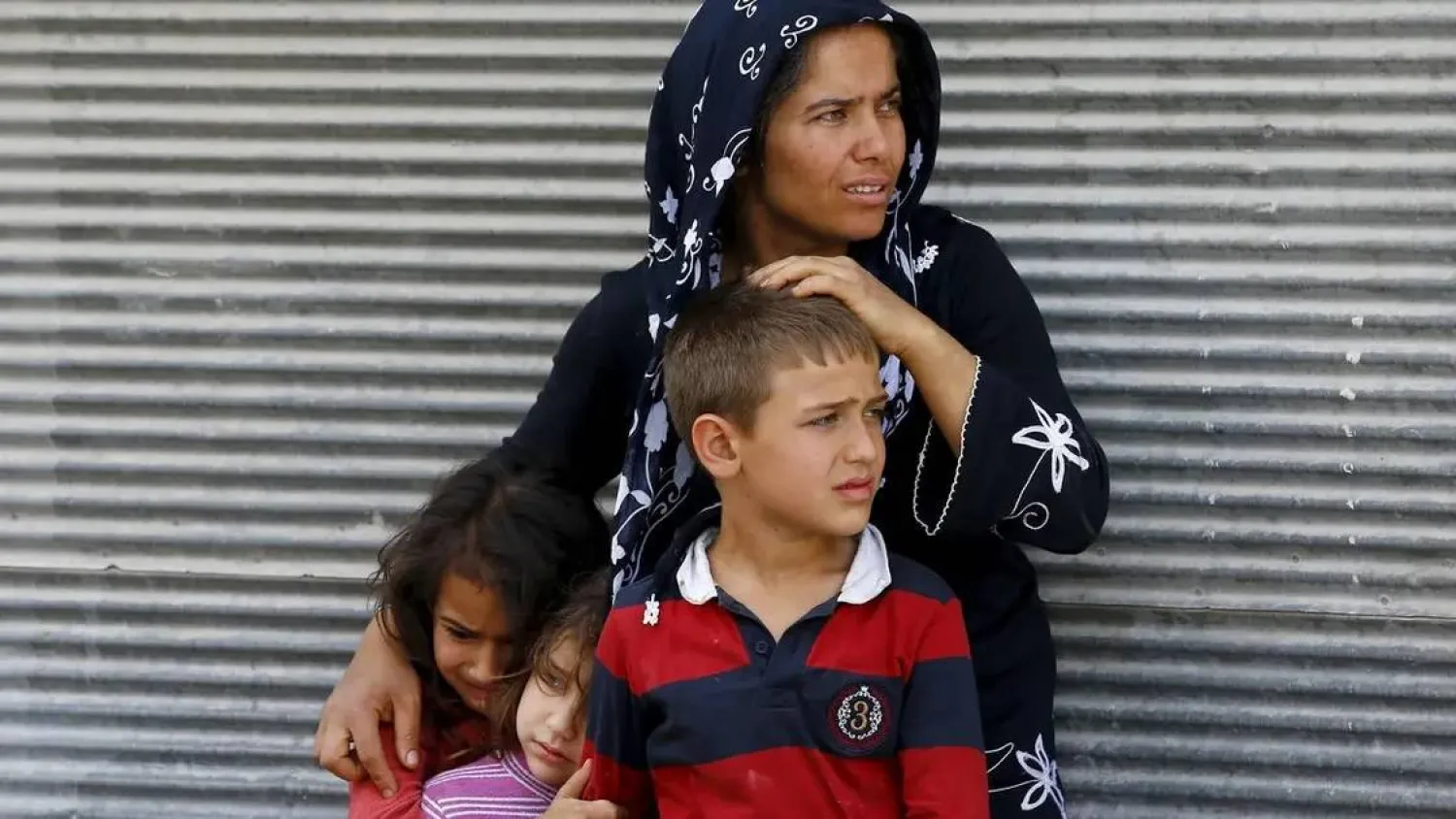
A mother and her children react after two rockets hit the Turkish town of Kilis near the Syrian border, Türkiye, April 24, 2016. (Reuters)
TT

UN Warns that 90% of Syrians are Below the Poverty Line, While Millions Face Cuts in Food Aid

A mother and her children react after two rockets hit the Turkish town of Kilis near the Syrian border, Türkiye, April 24, 2016. (Reuters)

The UN humanitarian chief warned Thursday that the 12-year conflict in Syria has pushed 90% of its population below the poverty line, and that millions face cuts in food aid next month because of a funding shortfall.

Martin Griffiths said that the $5.4 billion UN humanitarian appeal for Syria – the world’s largest – is only 12% funded, meaning that emergency food aid for millions of Syrians could be cut by 40% in July, The Associated Press said.

Griffiths delivered the grim news to the UN Security Council along with an appeal to members to renew the authorization for the delivery of aid to the country’s opposition-held northwest from Türkiye, which expires July 10.

But Russia’s UN ambassador, whose country is Syria’s most important ally, called the cross-border aid deliveries “a zero-sum game” that is undermining Syria’s sovereignty, discriminating against government-controlled territory, and fueling illegal armed groups including “terrorists in Idlib.”

Syria’s uprising-turned conflict, now in its 13th year, has killed nearly half a million people and displaced half of its prewar population of 23 million. A deadly 7.8 magnitude earthquake rocked large swaths of Syria in February, further compounding its misery.

Griffiths, the undersecretary-general for humanitarian affairs who returned Wednesday from Damascus, said the Syrian people are facing “profound humanitarian challenges." He said they were gathering Thursday on the Muslim holy day Eid al-Adha “with less food on their plates, little fuel in their stoves, and limited water in their homes” and their hardship comes at a time when the UN and its humanitarian partners have limited means to help.

Russia’s Ambassador Vassily Nebenzia said the emergency humanitarian appeal for $397 million to help earthquake victims was funded in the first months, but the overall UN appeal for Syria was only 12% funded near the end of June. And he accused the US and its allies of spending far more on weapons for Ukraine than the $55 billion the UN is seeking for global humanitarian needs this year, saying “this lays out Western priorities very clearly.”

Britain’s UN Ambassador Barbara Woodward retorted that the UK’s $190 million pledge on June 15 brought their contribution to Syria to over $4.8 billion to date and said: “I look forward to Russia announcing its contribution in due course following the recent announcement that Russia spends $2 billion a year on the Wagner Group.”

Russia’s President Vladimir Putin said Tuesday, after the founder of the Wagner mercenary group, Yevgeny Prigozhin, and his forces staged a revolt inside Russia, that Wagner and its founder had received almost $2 billion from the Russian government in the past year.

Woodward, who visited the Turkish-Syria border earlier this month, echoed Secretary-General Antonio Guterres’ call for a 12-month extension of the authorization for cross-border aid deliveries to ensure humanitarian access to 4.1 million people in Syria’s northwest.

In January, the council approved a resolution extending humanitarian aid deliveries to Idlib for six months until July 10 as Russia demanded. Many of the people sheltering in the area have been internally displaced by the conflict. The resolution allowed for aid deliveries to continue through the Bab al-Hawa crossing, but after the earthquake Syria’s President Bashar Assad allowed aid to go through two additional crossings at Bab al-Salameh and al-Rai.

US deputy ambassador Jeffrey DeLaurentis, who said the United States made its largest commitment to Syria of $920 million on June 15, called it “essential” to keep all three crossings open for 12 months. He cited Guterres’ latest report which said anything less would be inadequate to meet humanitarian needs in the northwest which have never been greater. The UN chief called it “a moral and humanitarian imperative.”

Russia and Syria have pressed for aid deliveries to the northwest across conflict lines and UN aid chief Griffiths said a 10-truck convoy from Aleppo recently traveled from Aleppo to Idlib safely, with aid for some 22,000 people. But Russia’s Nebenzia dismissed it as the only cross-line delivery in the last six months “clearly timed to coincide with today’s meeting.”

“Do you seriously expect us to consider the situation with cross-line convoys to be satisfactory after this?,” he asked.

Griffiths said expanding early recovery programs – another key Syrian and Russian demand – “is the humanitarian community’s best chance to support the future of the Syrian people.”

He urged a stronger international consensus on the importance of these programs and a relaxation of rules to allow not only vocational training but mentoring for young people, construction of irrigation systems without qualifying them as “development” projects, and the opening of schools regardless of whether they are described as “rehabilitated” or “reconstructed.”


Lebanon PM Pledges Reconstruction on Visit to Ruined Border Towns

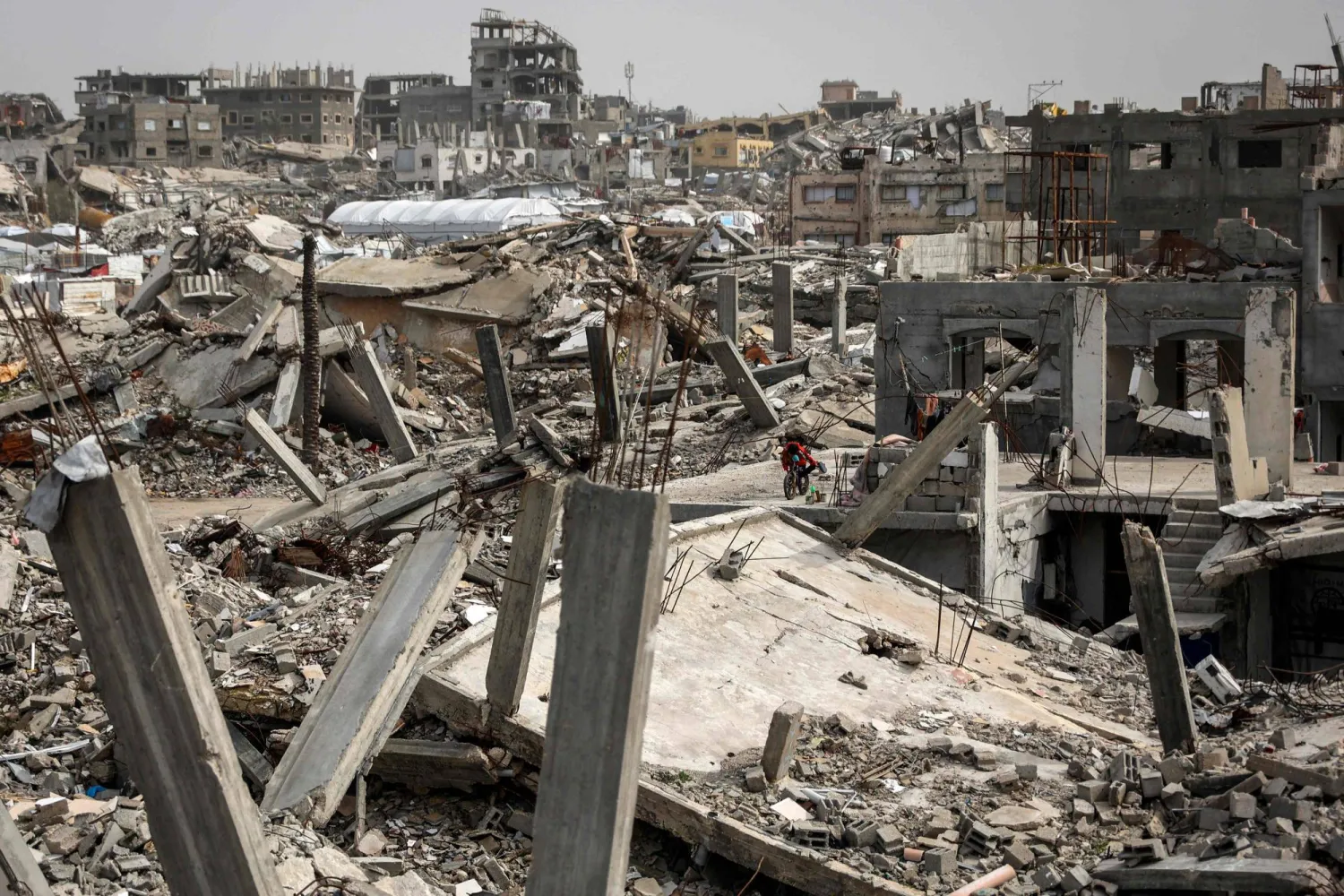
This handout picture released by the Lebanese Government Press Office shows Lebanon's Prime Minister Nawaf Salam being showered with confetti as he is received by locals during a tour in the heavily-damaged southern village of Dhayra near the border with Israel on February 7, 2026. (Lebanese Government Press Office / AFP)
TT

Lebanon PM Pledges Reconstruction on Visit to Ruined Border Towns

This handout picture released by the Lebanese Government Press Office shows Lebanon's Prime Minister Nawaf Salam being showered with confetti as he is received by locals during a tour in the heavily-damaged southern village of Dhayra near the border with Israel on February 7, 2026. (Lebanese Government Press Office / AFP)

Lebanese Prime Minister Nawaf Salam visited heavily damaged towns near the Israeli border on Saturday, pledging reconstruction.

It was his first trip to the southern border area since the army said it finished disarming Hezbollah there, in January.

Swathes of south Lebanon's border areas remain in ruins and largely deserted more than a year after a US-brokered November 2024 ceasefire sought to end hostilities between Israel and the Iran-backed group.

Lebanon's government has committed to disarming Hezbollah, and the army last month said it had completed the first phase of its plan to do so, covering the area between the Litani River and the Israeli border about 30 kilometers (20 miles) further south.

Visiting Tayr Harfa, around three kilometers from the border, and nearby Yarine, Salam said frontier towns and villages had suffered "a true catastrophe".

He vowed authorities would begin key projects including restoring roads, communications networks and water in the two towns.

Locals gathered on the rubble of buildings to greet Salam and the delegation of accompanying officials in nearby Dhayra, some waving Lebanese flags.

In a meeting in Bint Jbeil, further east, with officials including lawmakers from Hezbollah and its ally the Amal movement, Salam said authorities would "rehabilitate 32 kilometers of roads, reconnect the severed communications network, repair water infrastructure" and power lines in the district.

Last year, the World Bank announced it had approved $250 million to support Lebanon's post-war reconstruction, after estimating that it would cost around $11 billion in total.

Salam said funds including from the World Bank would be used for the reconstruction and rehabilitation projects.

The second phase of the government's disarmament plan for Hezbollah concerns the area between the Litani and the Awali rivers, around 40 kilometers south of Beirut.

Israel, which accuses Hezbollah of rearming, has criticized the army's progress as insufficient, while Hezbollah has rejected calls to surrender its weapons.

Despite the truce, Israel has kept up regular strikes on what it usually says are Hezbollah targets and maintains troops in five south Lebanon areas.

Lebanese officials have accused Israel of seeking to prevent reconstruction in the heavily damaged south with repeated strikes on bulldozers, excavators and prefabricated houses.

Visiting French Foreign Minister Jean-Noel Barrot on Friday said the reform of Lebanon's banking system needed to precede international funding for reconstruction efforts.

The French diplomat met Lebanon's army chief Rodolphe Haykal on Saturday, the military said.


Over 2,200 ISIS Detainees Transferred to Iraq from Syria, Says Iraqi Official

 One of the American buses transporting ISIS fighters, according to a security source from the Syrian Democratic Forces, heads from Syria towards Iraq, in Qamishli, Syria, February 7, 2026. (Reuters)
One of the American buses transporting ISIS fighters, according to a security source from the Syrian Democratic Forces, heads from Syria towards Iraq, in Qamishli, Syria, February 7, 2026. (Reuters)
TT

Over 2,200 ISIS Detainees Transferred to Iraq from Syria, Says Iraqi Official

 One of the American buses transporting ISIS fighters, according to a security source from the Syrian Democratic Forces, heads from Syria towards Iraq, in Qamishli, Syria, February 7, 2026. (Reuters)
One of the American buses transporting ISIS fighters, according to a security source from the Syrian Democratic Forces, heads from Syria towards Iraq, in Qamishli, Syria, February 7, 2026. (Reuters)

Iraq has so far received 2,225 ISIS group detainees, whom the US military began transferring from Syria last month, an Iraqi official told AFP on Saturday.

They are among up to 7,000 ISIS detainees whose transfer from Syria to Iraq the US Central Command (CENTCOM) announced last month, in a move it said was aimed at "ensuring that the terrorists remain in secure detention facilities".

Previously, they had been held in prisons and camps administered by the Kurdish-led Syrian Democratic Forces (SDF) in northeast Syria.

The announcement of the transfer plan last month came after US envoy to Syria Tom Barrack declared that the SDF's role in confronting ISIS had come to an end.

Saad Maan, head of the security information cell attached to the Iraqi prime minister's office, told AFP on Saturday that "Iraq has received 2,225 terrorists from the Syrian side by land and air, in coordination with the international coalition", which Washington has led since 2014 to fight IS.

He said they are being held in "strict, regular detention centers".

A Kurdish military source confirmed to AFP the "continued transfer of ISIS detainees from Syria to Iraq under the protection of the international coalition".

On Saturday, an AFP photographer near the Kurdish-majority city of Qamishli in northeastern Syria saw a US military convoy and 11 buses with tinted windows.

- Iraq calls for repatriation -

ISIS seized swathes of northern and western Iraq starting in 2014, until Iraqi forces, backed by the international coalition, managed to defeat it in 2017.

Iraq is still recovering from the severe abuses committed by the extremists.

In recent years, Iraqi courts have issued death and life sentences against those convicted of terrorism offences.

Thousands of Iraqis and foreign nationals convicted of membership in the group are incarcerated in Iraqi prisons.

On Monday, the Iraqi judiciary announced it had begun investigative procedures involving 1,387 detainees it received as part of the US military's operation.

In a statement to the Iraqi News Agency on Saturday, Maan said "the established principle is to try all those involved in crimes against Iraqis and those belonging to the terrorist ISIS organization before the competent Iraqi courts".

Among the detainees being transferred to Iraq are Syrians, Iraqis, Europeans and holders of other nationalities, according to Iraqi security sources.

Iraq is calling on the concerned countries to repatriate their citizens and ensure their prosecution.

Maan noted that "the process of handing over the terrorists to their countries will begin once the legal requirements are completed".


Drone Attack by RSF in Sudan Kills 24, Including 8 Children, Doctors’ Group Says

Displaced Sudanese wait to receive humanitarian aid at the Abu al-Naga displacement camp in the Gedaref State, some 420km east of the capital Khartoum on February 6, 2026. (AFP)
TT

Drone Attack by RSF in Sudan Kills 24, Including 8 Children, Doctors’ Group Says

Displaced Sudanese wait to receive humanitarian aid at the Abu al-Naga displacement camp in the Gedaref State, some 420km east of the capital Khartoum on February 6, 2026. (AFP)

A drone attack by a notorious paramilitary group hit a vehicle carrying displaced families in central Sudan Saturday, killing at least 24 people, including eight children, a doctors’ group said.

The attack by the Rapid Support Forces occurred close to the city of Rahad in North Kordofan province, said the Sudan Doctors Network, which tracks the country’s ongoing war.

The vehicle transported displaced people who fled fighting in the Dubeiker area of North Kordofan, the doctors’ group said in a statement. Among the dead children were two infants, the group said.

The doctors’ group urged the international community and rights organizations to “take immediate action to protect civilians and hold the RSF leadership directly accountable for these violations.”

There was no immediate comment from the RSF, which has been at war against the Sudanese military for control of the country for about three years.

Sudan plunged into chaos in April 2023 when a power struggle between the military and the RSF exploded into open fighting in the capital, Khartoum, and elsewhere in the country.

The devastating war has killed more than 40,000 people, according to UN figures, but aid groups say that is an undercount and the true number could be many times higher.

It created the world’s largest humanitarian crisis with over 14 million people forced to flee their homes. It fueled disease outbreaks and pushed parts of the country into famine.