


Türkiye Seeks Severed Head of Ancient Statue from Danish Museum

This photo, taken on June 29, 2023, shows a bronze head of Roman Emperor Septimius Severus (145 AD-211 CE), Asia Minor, ca 195-211, displayed at the Ny Carlsberg Glyptotek museum in Copenhagen. (Camille BAS-WOHLERT / AFP)
TT

Türkiye Seeks Severed Head of Ancient Statue from Danish Museum

This photo, taken on June 29, 2023, shows a bronze head of Roman Emperor Septimius Severus (145 AD-211 CE), Asia Minor, ca 195-211, displayed at the Ny Carlsberg Glyptotek museum in Copenhagen. (Camille BAS-WOHLERT / AFP)

A bronze head of Emperor Septimius Severus on display at a Copenhagen museum has become a bone of contention between the Danish museum and Türkiye, which claims it was looted during an archaeological dig in the 1960s and wants it back.

After decades in the United States as part of a private collection that loaned it to New York's Metropolitan Museum, a statue of the Roman emperor, who lived from AD 145 to 211, was recently sent back to Türkiye-- minus the head.

The statue was believed to have been stolen from a site in Türkiye.

Turkish authorities say the missing head is in the Danish capital -- where it has been on display at the Ny Carlsberg Glyptotek in Copenhagen for over 50 years.

But many Danish experts say they are not so sure.

"We are not convinced that the two things belong together. The documentation is at the moment not very strong, we have to compare breaks of the torso and the head," Glyptotek's director of collections Rune Frederiksen told AFP.

In 1979, a former museum curator estimated that the head -- acquired in 1970 without any information about its exact origins -- corresponded to a decapitated statue from a private American collection.

The two bronze parts were even reunited for an exhibition.

"The head was fitted to the torso in the sense that a pole was put into the neck of the head and fitted into the torso so that the two fragments approached each other," Frederiksen explained.

Not conclusive
But in his view, the assembly did not conclusively prove they were meant to be together.

"I'm not saying that they don't belong together. I'm just saying that we are not as sure as we perhaps were 25-30 years ago, when we wrote the catalogues," he said.

The catalogues -- covering Danish museum collections -- state that "nothing, in terms of composition or structure, prevented the head and body from belonging to the same statue".

As for the origin of the bronze head, it is more categorical and places it at Bubon, a Roman site in Asia Minor, in the historic region of Lycia on what is now Türkiye’s Mediterranean coast.

For archaeologist Guillaume Biard, a lecturer at the Aix-Marseille University, there is no documented evidence to definitely identify the origin of the head.

But he argues it is clear "the torso that was once exhibited at the Metropolitan Museum in New York and returned to Türkiye comes from the Sebasteion -- the temple of the imperial cult -- at Bubon."

For Turkish authorities on the other hand, the origin of the head is not in dispute, and in particular they quote the work of the late Turkish archaeologist, Jale Inan, who took measurements of the head and body.

"The bronze comes from Bubon in Türkiye. And like all objects from Türkiye, we are asking for it to be returned," said Mehmet Bulut, the Turkish charge d'affaires in Denmark.

Discussions with the Glyptotek have begun.

"The procedure has been initiated. We have expressed our request, but it will take time", Bulut added.

'Complete models are rare'
While he is not opposed to a potential return, Frederiksen said he thinks it is necessary to thoroughly research the parts.

Reuniting lost fragments is a vital and often difficult task for historians and museums.

"It is obviously important to be able to reconstruct ancient statues. Most of those that have come down to us are heads without bodies or bodies without heads," Emmanuelle Rosso, a professor of art history and archaeology at the Paris-Sorbonne University, told AFP.

Heads have been worn down over time and statues may have been decapitated -- sometimes during revolts or by looters looking to maximize profits by selling two objects rather than one.

"Complete statues are very rare, and this is even truer in the case of bronze statues," Rosso noted.

However, "the more complete a sculpted work is, the more archaeologists and art historians have at their disposal to place it in its original context of production and exhibition," Biard noted.

There have also been reunions with heads and bodies that weren't originally meant to be together.

"In the Roman period, the emperor used sculptures as part of political propaganda and when a new emperor came, instead of changing all the statues, sometimes it was just much more efficient and cheaper to change the head," Frederiksen explained.


Syrian Culture Minister Applauds Saudi Pavilion at Damascus Book Fair

The 2026 Damascus International Book Fair is held from February 6 to 16 - SPA
TT

Syrian Culture Minister Applauds Saudi Pavilion at Damascus Book Fair

The 2026 Damascus International Book Fair is held from February 6 to 16 - SPA

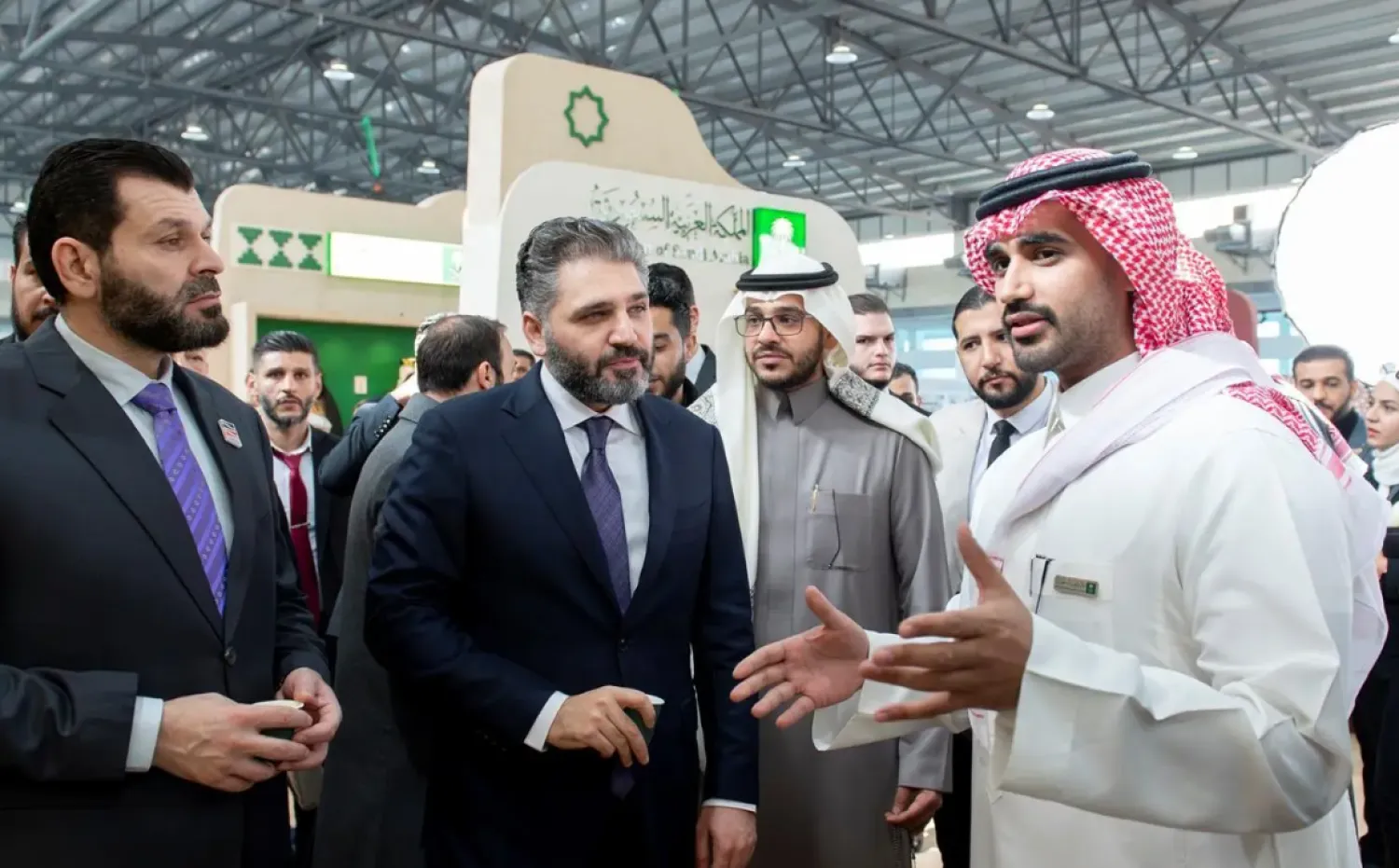
Syrian Minister of Culture Mohammed Yassin Saleh visited the Kingdom’s pavilion at the 2026 Damascus International Book Fair, held from February 6 to 16, where the Kingdom is serving as the Guest of Honor.

He commended the efforts of the Literature, Publishing and Translation Commission in showcasing the rich diversity of the Saudi cultural and literary scene. The pavilion features exhibitions of manuscripts, a Saudi fashion corner, and archaeological replicas, SPA reported.

The minister reviewed the commission's Tarjim translation initiative and Saudi literature comics.

This participation at the 2026 Damascus International Book Fair showcases Saudi creativity and fosters cultural dialogue, supporting Saudi Vision 2030’s goals of knowledge exchange and cultural leadership.


Saudi Arabia, Syria Underline Depth of their Cultural Ties

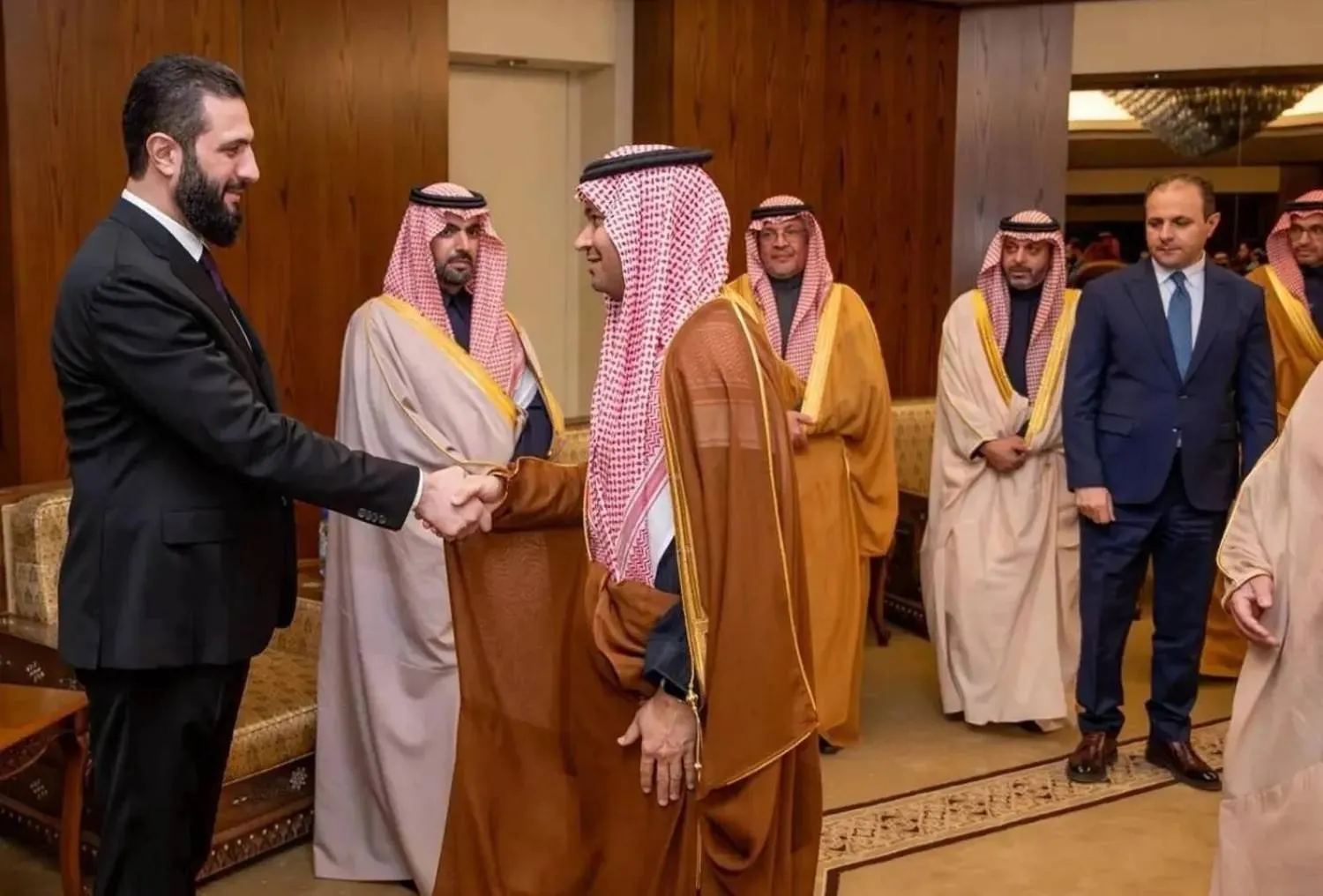
Syrian President al-Sharaa receives the Saudi minister of culture and the accompanying delegation at the Conference Palace in Damascus on Thursday. (SPA)
TT

Saudi Arabia, Syria Underline Depth of their Cultural Ties

Syrian President al-Sharaa receives the Saudi minister of culture and the accompanying delegation at the Conference Palace in Damascus on Thursday. (SPA)

Saudi Arabia and Syria underlined the strength of their cultural relationship during high-level meetings held in Damascus on Thursday, on the sidelines of the opening of the Damascus International Book Fair 2026, where the Kingdom is participating as guest of honor.

Syrian President Ahmad al-Sharaa received Saudi Minister of Culture Prince Badr bin Abdullah bin Farhan at the Conference Palace in the capital.

Earlier the same day, Prince Badr met with his Syrian counterpart, Minister of Culture Mohammad Yassin Saleh, during an official visit to attend the fair. T

he Saudi minister congratulated Syria on hosting the exhibition and expressed his wishes for continued prosperity, progress, and stability for the Syrian government and people.

Both meetings highlighted the depth of cultural relations between the two countries, the importance of expanding joint cultural cooperation across various fields, and the alignment of positions on issues of mutual interest in a way that serves both nations.

The Saudi delegation included senior officials and advisers, among them representatives from the Royal Court, the Ministry of Culture, and the King Abdulaziz Public Library, reflecting broad institutional engagement in the visit.

In the evening, Prince Badr attended the opening ceremony of the fair’s special session, held under the patronage and in the presence of al-Sharaa. The event drew wide official and cultural participation, including Arab ministers, political and intellectual figures, and a distinguished group of writers and cultural figures.

In a post on the X platform, Prince Badr thanked “our brothers in Syria for their generous hospitality and their efforts in organizing the Damascus International Book Fair.”

The minister also inaugurated the Kingdom’s pavilion at the fair in the presence of the Syrian minister of culture and the Qatari minister of culture.

Saudi Arabia’s guest-of-honor participation continues until Feb. 16 and reflects its growing prominence and leadership in the Arab and global cultural landscape.

This participation aligns with Saudi Vision 2030, which places culture at the heart of national development, viewing it as a space for dialogue, a bridge for civilizational communication, and a tool for strengthening ties among Arab peoples.

The Saudi Literature, Publishing and Translation Commission is leading the Kingdom’s participation, highlighting the development of the cultural sector and reaffirming the central role of books as carriers of knowledge and awareness.

The Saudi pavilion boasts a comprehensive cultural program featuring intellectual seminars, poetry evenings, a manuscript exhibition, traditional Saudi fashion displays, hospitality corners, archaeological replicas, and performing arts that express the depth of the Kingdom’s cultural heritage.

On the sidelines of the visit, Prince Badr, accompanied by Minister Saleh, toured the National Museum of Damascus, which houses rare artifacts spanning prehistoric eras, ancient Syrian civilizations, classical and Islamic periods, as well as traditional and modern art.


UNESCO Honors Al-Bisht Al-Hasawi as Thousands Flock to Al-Ahsa Festival

Visitors can explore interactive displays, participate in live workshops, and witness the meticulous process of tailoring this iconic symbol of prestige - SPA
TT

UNESCO Honors Al-Bisht Al-Hasawi as Thousands Flock to Al-Ahsa Festival

Visitors can explore interactive displays, participate in live workshops, and witness the meticulous process of tailoring this iconic symbol of prestige - SPA

The third edition of Al-Bisht Al-Hasawi Festival is drawing thousands of regional and international visitors to Ibrahim Palace in historic Al-Hofuf.

Organized by the Heritage Commission, this year’s festival celebrates the inscription of the Bisht on UNESCO’s Representative List of the Intangible Cultural Heritage of Humanity.

The event showcases Al-Ahsa’s centuries-old tradition of hand-weaving and gold embroidery, a craft passed down through generations of local families, SPA reported.

Visitors can explore interactive displays, participate in live workshops, and witness the meticulous process of tailoring this iconic symbol of prestige.

With UNESCO's participation and representatives from six countries, the festival has evolved into a global platform for cultural dialogue, cementing the Bisht’s status as a world-class cultural treasure.