IOM: Number of Displaced by Sudan War Surpasses 3 Million 

A Sudanese refugee girl who fled ethnic violence in Sudan's Darfur region, sits on her family's belongings outside the house of a Chadian family where they took refuge, near the border between Sudan and Chad in Koufroun, Chad, May 14, 2023. (Reuters)
TT

IOM: Number of Displaced by Sudan War Surpasses 3 Million 

A Sudanese refugee girl who fled ethnic violence in Sudan's Darfur region, sits on her family's belongings outside the house of a Chadian family where they took refuge, near the border between Sudan and Chad in Koufroun, Chad, May 14, 2023. (Reuters)

The number of people uprooted by a conflict between military factions in Sudan that erupted nearly three months ago has surpassed 3 million, according to estimates from the International Organization for Migration.

More than 2.4 million people have been displaced internally and more than 730,000 have crossed into neighboring countries, data published late on Tuesday said.

Most have fled either from the capital Khartoum, the focus of the power struggle between the army and the paramilitary Rapid Support Forces (RSF) that broke out on April 15, or from Darfur, where ethnically-targeted violence has surged.

On Wednesday, residents reported the sound of fighter jets and artillery shelling in Omdurman and Bahri, parts of the wider capital.

Fighting has also been reported in recent days between the army and powerful SPLM rebel factions in South Kordofan State, and in Blue Nile State near the border with Ethiopia, triggering displacement from those regions as well.

The fighting has laid waste to large parts of the capital and led to waves of attacks in Darfur. Civilians have faced widespread looting, power cuts, food and water shortages, a collapse in health services and a spike in sexual violence.

The Sudanese government's Combating Violence against Women and Children unit said on Tuesday it had recorded nine new cases of sexual assault in Khartoum, bringing the total since mid-April to 51, adding that the real number of cases was likely much higher.

Of those leaving Sudan, the majority have fled north to Egypt or west to Chad, with large numbers also crossing into South Sudan and Ethiopia.

After sharing power with civilians following the overthrow of Omar al-Bashir during a popular uprising four years ago, the army and the RSF seized full control in a coup in 2021 then came to blows amid disputes over a plan for a transition towards elections.

International efforts to broker an end to the fighting have shown little sign of progress, including talks led by Saudi Arabia and the United States in Jeddah that were adjourned last month, and an African-led meeting in Addis Ababa this week.

A summit of Sudan's neighbors will be held in Cairo on Thursday.


Israel to Resume Commercial Shipments to Gaza After Hamas Fee Dispute

Tents are pictured by the rubble of collapsed buildings in the Jabalia camp for Palestinian refugees in the northern Gaza Strip on October 19, 2026. (AFP)
TT

Israel to Resume Commercial Shipments to Gaza After Hamas Fee Dispute

Tents are pictured by the rubble of collapsed buildings in the Jabalia camp for Palestinian refugees in the northern Gaza Strip on October 19, 2026. (AFP)

Israel said on ‌Monday it would resume allowing commercial goods shipments into Gaza after a days-long halt over a tax dispute involving Hamas and merchants, restoring a key route for food and other essentials to the aid-dependent enclave.

COGAT, the Israeli military agency overseeing humanitarian affairs in Gaza, said it made the decision after merchants reported that Hamas authorities had withdrawn demands for payments of 10,000 shekels ($3,225) per truck.

"The resumption of coordination is being carried ‌out in accordance ‌with Israel's commitment to the ‌humanitarian provisions ⁠of the ceasefire agreement," ⁠it said.

COGAT said the merchants' accounts had not been independently verified and shipments would resume gradually, with priority given to essential goods ahead of winter.

Oversight would be tightened to ensure payments are made and received only through documented bank transfers, with any merchant ⁠found to have paid Hamas facing ‌exclusion from the system.

Hamas said ‌the 10,000-shekel fee was a voluntary contribution by better-off Gazans ‌to a national fund supporting people in need in ‌the war-ravaged territory.

Most Gazans remain dependent on aid after three years of war, repeated displacement and severe restrictions on aid deliveries. While last year's US-brokered ceasefire halted the heaviest ‌fighting, it has not ended Israeli attacks.

Local health officials said on Monday ⁠that at ⁠least five Palestinians, including a 14-year-old boy, were killed in separate Israeli strikes in Gaza City and Khan Younis. The Israeli military did not immediately comment.

Israel says Hamas has continued to rearm and carry out attacks in violation of the ceasefire, while Hamas accuses Israel of undermining the agreement.

Gaza health officials say about 1,500 Palestinians have been killed by Israeli fire since the October 2025 ceasefire, while Israel says four of its soldiers have been killed by fighters in Gaza over the same period.


Dawn of Yemen Operation Piles Pressure on Houthis in Taiz

A member of the Saudi-backed Yemeni government forces, including National Army and Taiz Axis forces, mans a turret mounted on the back of a pickup truck at a checkpoint along the Kadha frontline west of Taiz in western Yemen on September 13, 2026. (AFP)
TT

Dawn of Yemen Operation Piles Pressure on Houthis in Taiz

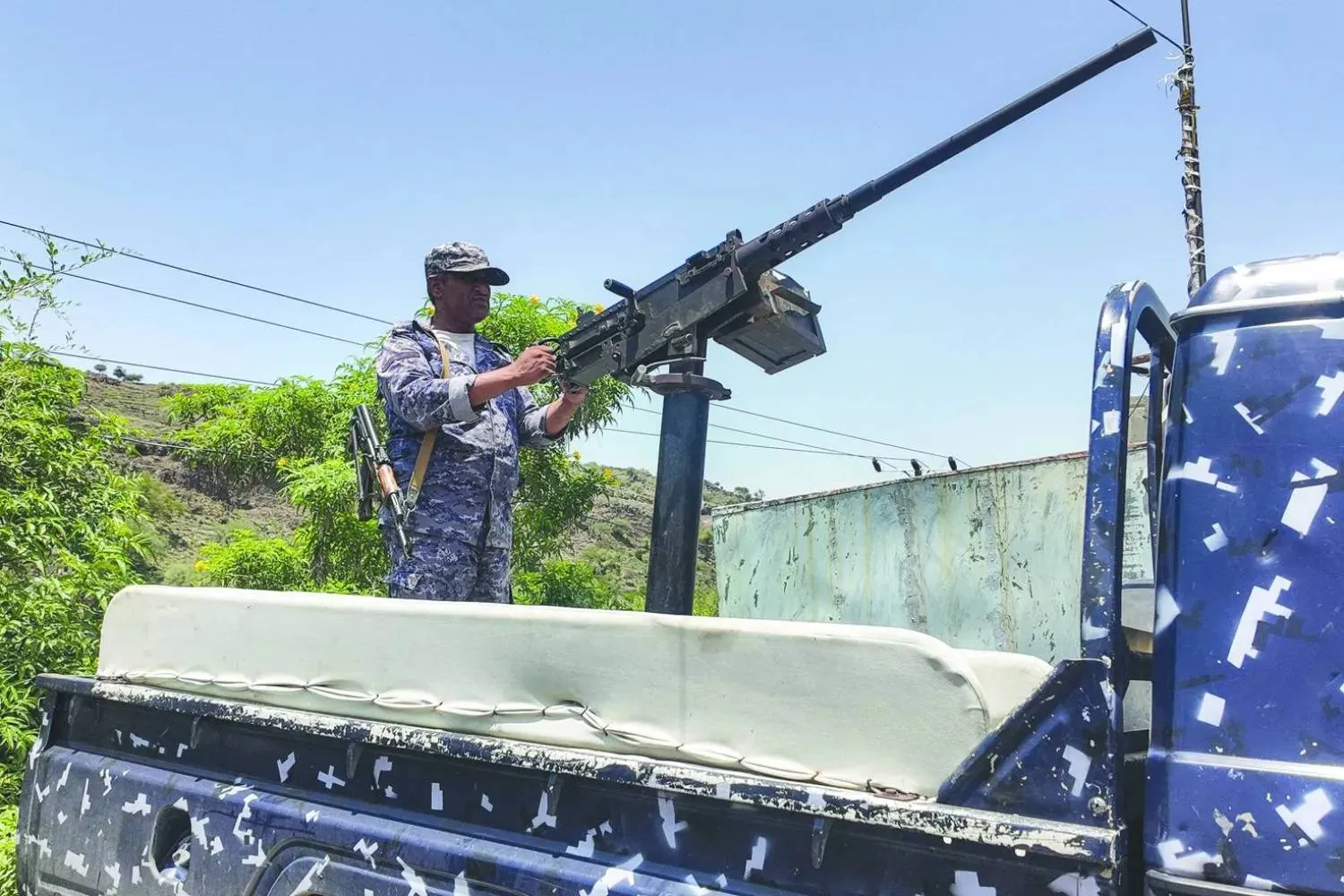
A member of the Saudi-backed Yemeni government forces, including National Army and Taiz Axis forces, mans a turret mounted on the back of a pickup truck at a checkpoint along the Kadha frontline west of Taiz in western Yemen on September 13, 2026. (AFP)

The "Dawn of Yemen" operation entered its 15th day amid sustained military pressure against Iran-backed Houthi militias on the Taiz and Marib fronts.

Government forces continued offensive operations to retake Houthi-held positions, supported by airstrikes on militia gatherings and reinforcements, with Yemeni military estimates placing Houthi casualties at over 15,000 dead and wounded in recent weeks.

The Yemeni Armed Forces said they carried out 1,326 operations over the past 24 hours, striking Houthi gatherings, vehicles, fortifications, and firing positions.

According to an initial toll, the operations resulted in the neutralization of around 370 militants and the destruction and disabling of dozens of military vehicles and assets.

In Taiz, clashes continued across multiple axes, as government forces advanced backed by the popular resistance, and the recapture of positions, heavy weapons, and military equipment.

Meanwhile, the Houthis are seeking to reorganize their ranks and reinforce combat positions following the collapse of attacks described as some of the fiercest over the past two days.

Government forces made advances in the Al-Sanamat and Al-Sarari areas of the Saber district, south of Taiz, following an offensive that began at dawn on Sunday, according to military sources. They reported significant casualties among the Houthis.

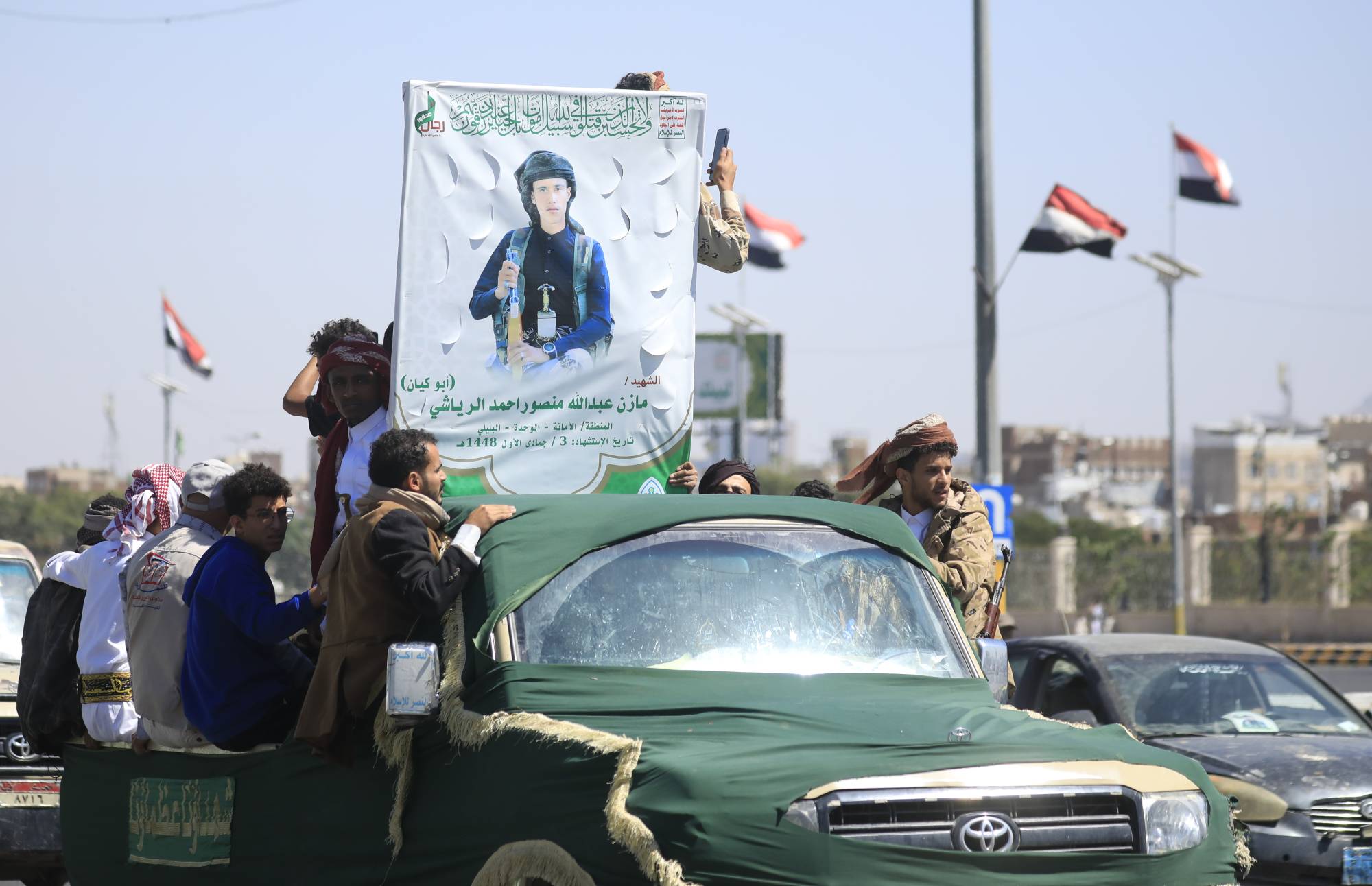
Houthi supporters ride in pickup trucks carrying portraits and the coffin of a fighter killed in recent fighting during a funeral procession in Sanaa, Yemen, 17 October 2026. (EPA)

Warplanes launched three airstrikes targeting group gatherings northwest of the city.

Government forces also maintained pressure on the remaining Houthi pockets in the Bab al-Mandeb area, while working to secure the highlands separating the Taiz and Lahj governorates.

The effort aims to consolidate the positions recaptured by the forces and prevent the militants from using them to launch counterattacks.

In Aden, an expanded security meeting chaired by Yemeni Minister of Interior Major General Ibrahim Haydan discussed the latest security developments, general mobilization, and the level of readiness within security agencies across governorates.

The meeting also addressed ongoing efforts to combat crime, pursue wanted individuals, and apprehend subversive cells.


53 Killed, More Than 200 Wounded in Houthi Missile Strike on Security Camp in Shabwa

Yemeni Presidential Leadership Council Chairman Rashad al-Alimi (SABA)
TT

53 Killed, More Than 200 Wounded in Houthi Missile Strike on Security Camp in Shabwa

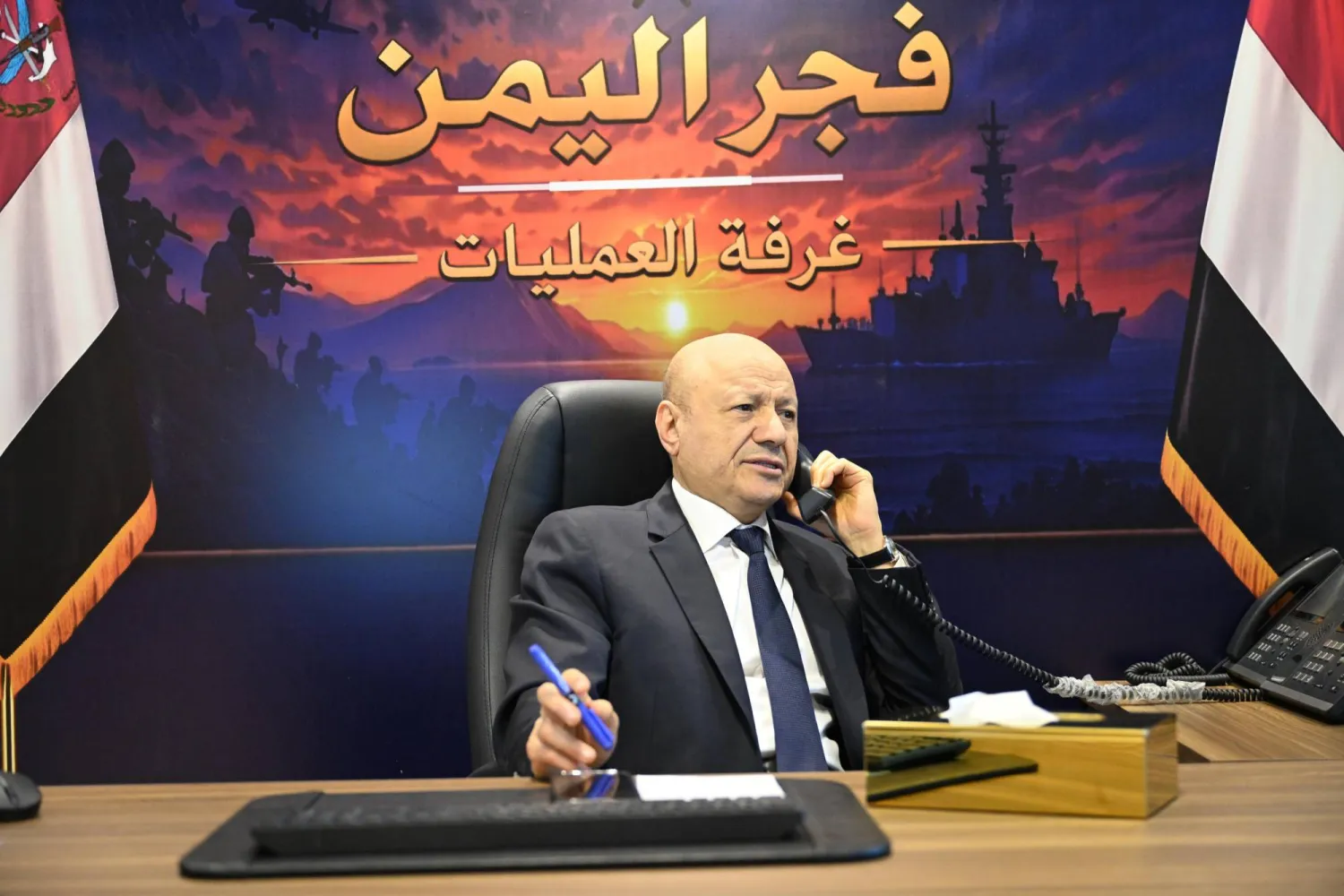
Yemeni Presidential Leadership Council Chairman Rashad al-Alimi (SABA)

The death toll from Monday's Houthi missile attack on a training center for recruits in Yemen's southeastern Shabwa province has risen to 53, with more than 200 wounded, according to preliminary figures released by local authorities. The strike was one of the deadliest attacks targeting security personnel in the province.

Three ballistic missiles struck the Martyr Ahmed Al-Sulaimani Training Center on the outskirts of Ataq, the provincial capital, while new internal security recruits were undergoing training and qualification programs, according to a statement from the local authorities.

The authorities announced that those killed would be officially recognized as having died in the line of duty, with their salaries permanently allocated to their families. They also pledged to safeguard the rights and financial entitlements of the wounded and ensure their payment without delay, while mobilizing the necessary resources to provide medical care.

As part of the emergency medical response, local authorities ordered the General Authority Hospital, the Maternity and Childhood Hospital, and private hospitals to raise their readiness levels, ensure adequate supplies of medicines and emergency medical equipment, and transfer critically injured patients to specialized medical centers when necessary.

They also praised Shabwa residents for turning out to donate blood and support the wounded.

Local authorities held the Iran-backed Houthi group fully responsible for the attack and the resulting casualties, describing the targeting of recruits during training as an extremely serious military escalation. They called for urgent measures to protect military and security facilities and their personnel.

Meanwhile, Yemeni Presidential Leadership Council Chairman Rashad al-Alimi was briefed on developments during a telephone call with Shabwa Governor Awad bin Al-Wazir.

Al-Alimi instructed the relevant authorities to provide necessary medical treatment to the wounded, care for the families of those killed, complete procedures to settle their entitlements and ensure payment of their salaries, and take the necessary measures to respond firmly to the sources of the attack.

He said the targeting of recruits reflected what he described as the Houthis' tendency to resort to attacks whenever they faced pressure or setbacks in plans backed by the Iranian regime.

Al-Alimi stressed that such attacks would not deter the state from fulfilling its responsibilities to protect citizens and restore national institutions.

He also vowed that the victims' deaths would not go unanswered, emphasizing that caring for their families and honoring their sacrifices was a national responsibility.

Earlier, a spokesperson for Yemeni government forces had announced that three ballistic missiles struck a training center for security and police personnel in Shabwa, before local authorities released the preliminary casualty toll of 53 killed and more than 200 wounded.