
Milan Kundera, Author of ‘The Unbearable Lightness of Being’, Dies Aged 94 

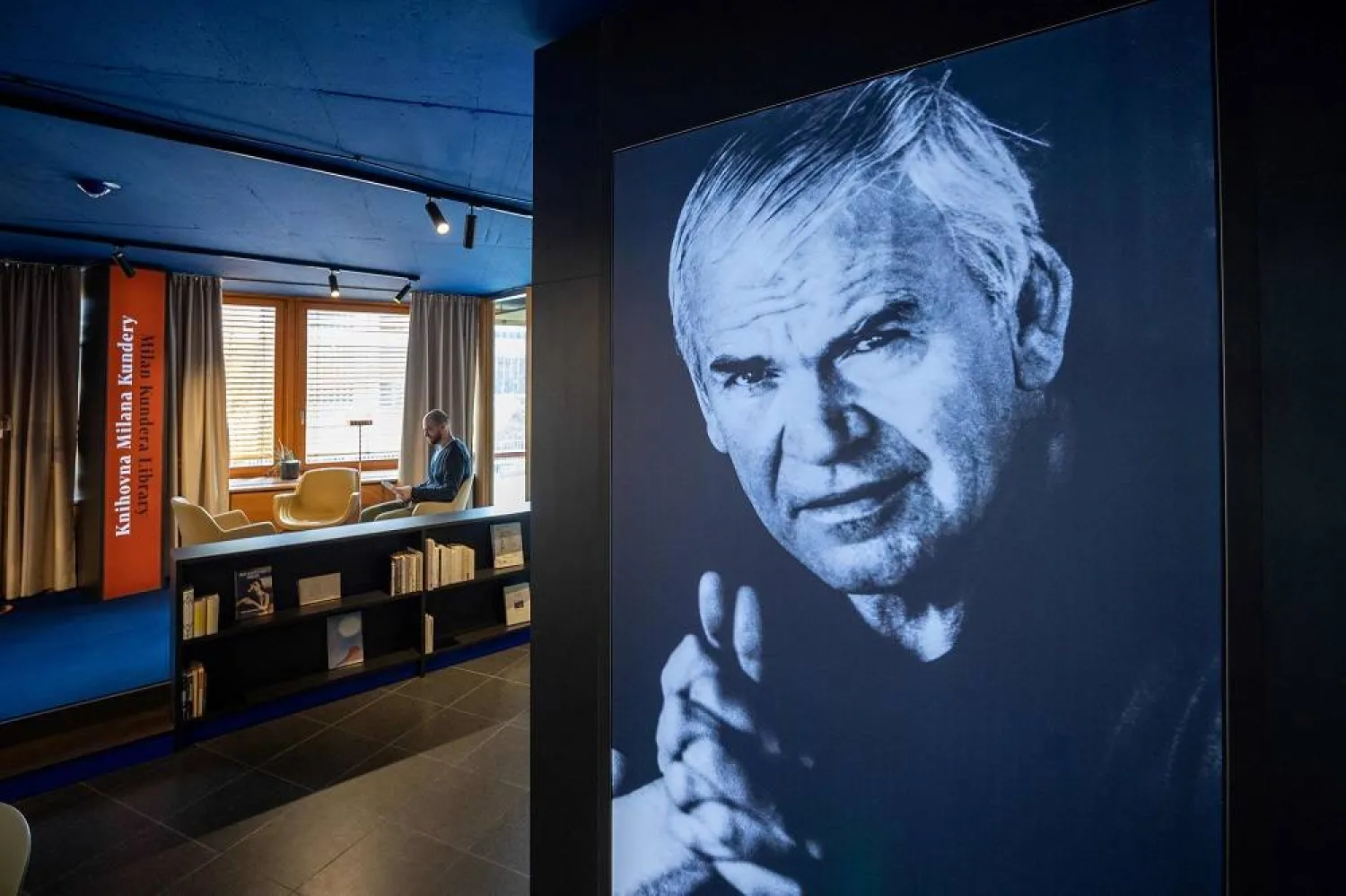
A visitor to the Milan Kundera library in Brno, Czech Republic reads a book by the Czech novelist on April 6, 2023. (AFP)
TT

Milan Kundera, Author of ‘The Unbearable Lightness of Being’, Dies Aged 94 

A visitor to the Milan Kundera library in Brno, Czech Republic reads a book by the Czech novelist on April 6, 2023. (AFP)

Milan Kundera, whose dissident writings in communist Czechoslovakia transformed him into an exiled satirist of totalitarianism, has died in Paris at the age of 94, Czech media said Wednesday. 

Kundera’s renowned novel, “The Unbearable Lightness of Being,” opens wrenchingly with Soviet tanks rolling through Prague, the Czech capital that was the author’s home until he moved to France in 1975. Weaving together themes of love and exile, politics and the deeply personal, Kundera’s novel won critical acclaim, earning him a wide readership among Westerners who embraced both his anti-Soviet subversion and the eroticism threaded through many of his works. 

“If someone had told me as a boy: One day you will see your nation vanish from the world, I would have considered it nonsense, something I couldn’t possibly imagine. A man knows he is mortal, but he takes it for granted that his nation possesses a kind of eternal life,” he told the author Philip Roth in a New York Times interview in 1980, the year before he became a naturalized French citizen. 

In 1989, the Velvet Revolution pushed Communists from power and Kundera’s nation was reborn as the Czech Republic, but by then he had made a new life — and a complete identity — in his attic apartment on Paris’ Left Bank. 

To say his relationship with the land of his birth was complex would be an understatement. He returned to the Czech Republic rarely and incognito, even after the fall of the Iron Curtain. His final works, written in French, were never translated into Czech. “The Unbearable Lightness of Being,” which won him such acclaim and was made into a film in 1988, was not published in the Czech Republic until 2006, 17 years after the Velvet Revolution, although it was available in Czech since 1985 from a compatriot who founded a publishing house in exile in Canada. It topped the best-seller list for weeks and, the following year, Kundera won the State Award for Literature for it. 

Kundera’s wife, Vera, was an essential companion to a reclusive man who eschewed technology — his translator, his social secretary, and ultimately his buffer against the outside world. It was she who fostered his friendship with Roth by serving as their linguistic go-between, and — according to a 1985 profile of the couple — it was she who took his calls and handled the inevitable demands on a world-famous author. 

The writings of Kundera, whose first novel “The Joke” opens with a young man who is dispatched to the mines after making light of communist slogans, was banned in Czechoslovakia after the Soviet invasion of Prague in 1968, when he also lost his job as a professor of cinema. He had been writing novels and plays since 1953. 

“The Unbearable Lightness of Being” follows a dissident surgeon from Prague to exile in Geneva and back home again. For his refusal to bend to the Communist regime the surgeon, Tomas, is forced to become a window washer. Tomas ultimately lives out his final days in the countryside with his wife, Tereza, their lives becoming both more dreamlike and more tangible as the days pass. 

Jiri Srstka, Kundera’s Czech literary agent at the time the book was finally published in the Czech Republic, said the author himself delayed its release there for fears it would be badly edited. 

“Kundera had to read the entire book again, rewrite sections, make additions and edit the entire text. So given his perfectionism, this was a long-term job, but now readers will get the book that Milan Kundera thinks should exist,” Ststka told Radio Praha at the time. 


Greece’s Oldest Modern-Era Museum Reopens on the Acropolis After a Major Restoration

Visitors tour the Acropolis, with the old Acropolis Museum on the left and the Parthenon on the right, as Greece's Culture Ministry presents the museum's reopening following renovation and conversion to new uses, in Athens, Greece, Monday, Nov. 23, 2026. (AP)
TT

Greece’s Oldest Modern-Era Museum Reopens on the Acropolis After a Major Restoration

Visitors tour the Acropolis, with the old Acropolis Museum on the left and the Parthenon on the right, as Greece's Culture Ministry presents the museum's reopening following renovation and conversion to new uses, in Athens, Greece, Monday, Nov. 23, 2026. (AP)

A museum that has stood on the Acropolis since 1874, making it the oldest in modern Greece, reopened Monday after a high-tech makeover.

The squat stone building often goes unnoticed by visitors. It had been closed to the public since 2007, three years before the country was plunged into a massive financial crisis.

The seven-year restoration cost 6.2 million euros ($6.8 million), raised through public funds and private donations, Culture Minister Lina Mendoni said.

The site will host ancient artifacts never before exhibited, digital displays tracing the monuments’ 2,500-year history and a viewing gallery where Culture Ministry technicians will carry out restoration work on ancient objects.

The museum opened in 1874, making it the first museum purpose-built since modern Greece gained independence several decades earlier.

It closed in 2007, becoming an administrative building after cranes carefully lowered its renowned sculptures and other masterpieces to the new Acropolis Museum at the foot of the hill.

“For us, it was inconceivable, almost an affront, that this historic building, with its uniquely privileged location, should be converted into offices and storerooms,” Mendoni said.

“We therefore decided that the museum should reopen in accordance with its original purpose,” she said.

The Parthenon and other temples on the Acropolis remain Greece’s most visited ancient site, with more than 4.6 million admissions recorded last year.

Restoration work continues even during the peak summer months. The Parthenon recently shed its heavy scaffolding for the first time in years.

Prime Minister Kyriakos Mitsotakis attended Monday’s inauguration and described the reopening as another milestone for Greece’s cultural heritage.

He used the occasion to restate Greece’s long-running demand for the return of the Parthenon Sculptures held by the British Museum in London.

“The rightful home of these priceless masterpieces is here, beneath the Attic light and in direct proximity to the temple to which they belong,” he said, adding that Greece would not accept the return of the sculptures as a loan.

“No solution and no agreement can be based on the recognition of foreign ownership over our national treasures,” Mitsotakis said.

“I reaffirm my commitment that we will continue this effort with responsibility, seriousness and determination,” he added. “And in the end, we will succeed.”


Saudi Arabia's History, National Heritage Showcased at 'Bridge of Civilizations' Art Exhibition in Cairo

The exhibition features more than 60 visual artists from Saudi Arabia, Egypt, and Russia. (SPA)
TT

Saudi Arabia's History, National Heritage Showcased at 'Bridge of Civilizations' Art Exhibition in Cairo

The exhibition features more than 60 visual artists from Saudi Arabia, Egypt, and Russia. (SPA)

The "Bridge of Civilizations" art exhibition opened in Cairo, highlighting the power of art to foster closer ties between civilizations and peoples, reported the Saudi Press Agency on Monday.

The exhibition features more than 60 visual artists from Saudi Arabia, Egypt, and Russia, with prominent artists and art enthusiasts in attendance.

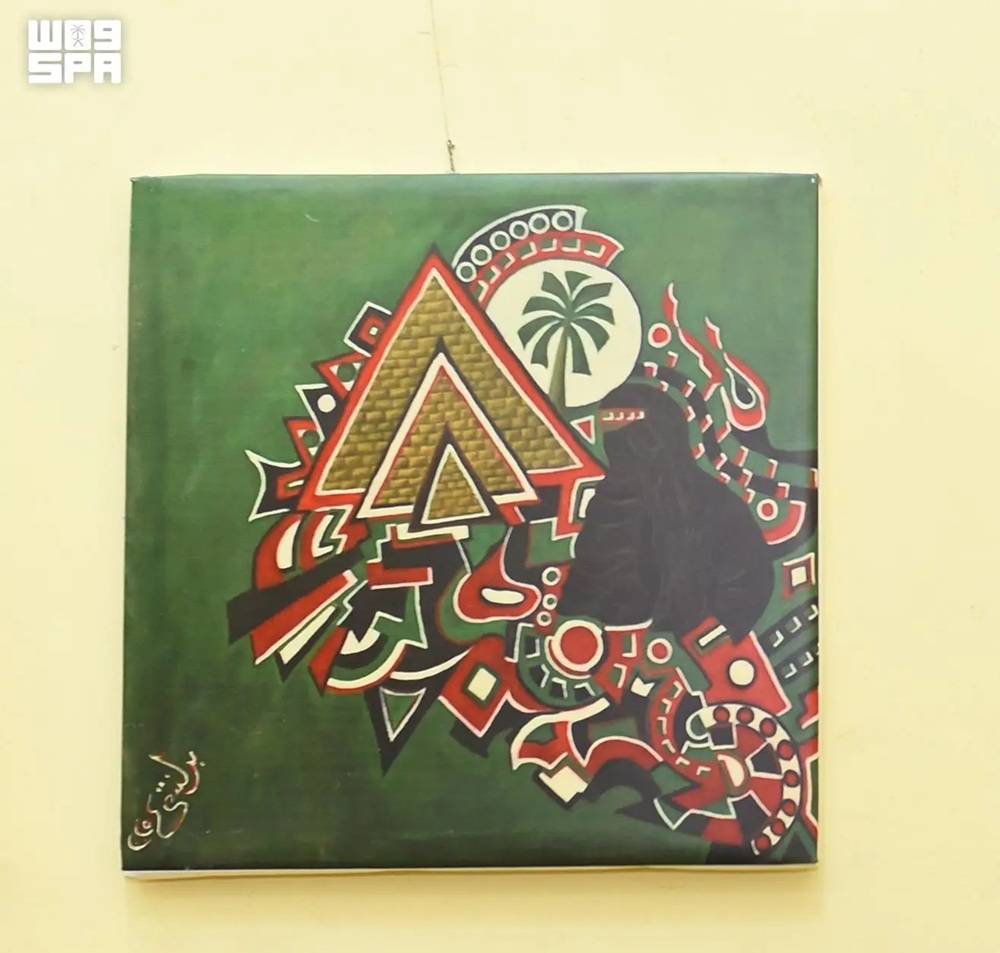
At the three-day exhibition, around 30 Saudi visual artists will present a diverse collection of works highlighting the Kingdom's history, national symbols, and heritage passed down through generations.

An artwork featured at the exhibition in Cairo. (SPA)

The Saudi artists' paintings document Islamic heritage, the Prophet Muhammad's biography, and historical sites associated with the Two Holy Mosques. They also highlight the Kingdom's development achievements, including the Haramain High Speed Railway, as well as its cultural and architectural heritage, such as Najdi Sadu weaving and Al-Masmak Palace.

Participating Saudi artists told SPA that they aim to introduce audiences to the Kingdom's history, identity, and heritage through contemporary artistic approaches while highlighting the development of visual arts in Saudi Arabia.


Red Sea Museum Showcases Jeddah's Black Coral Prayer-Bead Making Heritage

The gallery also features a wall displaying shells, molluscs and pieces of coral from the Red Sea - SPA
TT

Red Sea Museum Showcases Jeddah's Black Coral Prayer-Bead Making Heritage

The gallery also features a wall displaying shells, molluscs and pieces of coral from the Red Sea - SPA

The Red Sea Museum represents a valuable addition to Jeddah's cultural and tourism landscape, offering an educational experience that brings the history of the Red Sea to life and highlights Saudi Arabia’s rich civilization and cultural heritage associated with navigation, trade and Hajj.

As one of Saudi Arabia’s prominent cultural and educational destinations, the museum presents art exhibitions and cultural and educational programs that explore the history and civilization heritage of the Red Sea and document its connection with navigation, trade and human life through experiences that bring together visual arts, architecture, cinema and storytelling, SPA reported.

The Red Sea Museum showcases the craft of prayer-bead making. An identification label accompanying a set of prayer beads made from black coral on display at the museum bears the name of craftsman Ahmed Al-Halabi, who made the beads in Jeddah. The beads tell part of his family's history, as it is one of the oldest families known for this craft in the city.

The gallery also features a wall displaying shells, molluscs and pieces of coral from the Red Sea.

Visitors can observe coral in its natural form before seeing how the craftsman shaped black coral into beads, threaded them together to make a string of prayer beads, and designed them to pass smoothly between the fingers.