

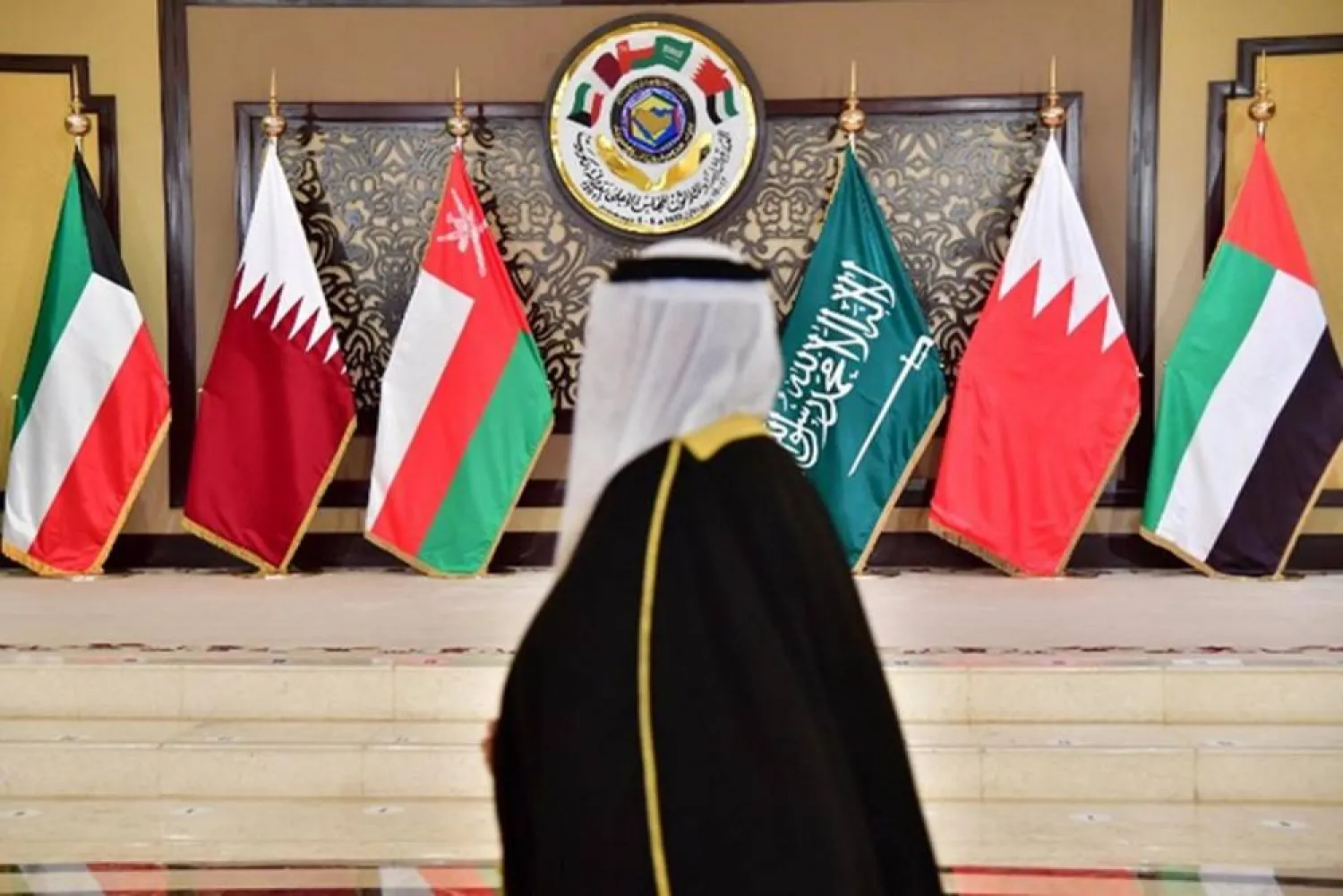

Gulf Economic Capabilities Are Growing, Impacting the Global Arena

The Gulf economies are among the ten largest in the world. (AFP)
TT

Gulf Economic Capabilities Are Growing, Impacting the Global Arena

The Gulf economies are among the ten largest in the world. (AFP)

The visits by Indian, Japanese, and Turkish leaders to the Gulf within a week reflected the region's outstanding role on the global economic scene.

They reflect the importance of economic relations between the Gulf countries and the three countries that signed financial agreements and memorandums of understanding in various sectors and fields.

Top 10 global economies

The combined GDP of the growing Gulf economies are projected to reach $ $6 trillion by 2050, according to World Bank estimates, which places them among the top ten economies in the world.

The world is led by the US with a GDP of $25 trillion, followed by China, Japan, and Germany, then India, the UK, France, Canada, and Russia, while Italy stands in the tenth place with a GDP of $1.9 trillion.

According to the World Bank, if the GCC countries implemented a green growth strategy that would help and accelerate their economic diversification, GDP could grow to over $13 trillion by 2050.

Sustainability

President of the Federation of GCC Chambers Hassan al-Huwaizi said the Gulf countries have benefited from several factors creating sustainability for the Gulf economy.

They followed the latest modern technologies in the oil and gas industry, harnessing the financial revenues of the sector to support other economic and industrial sectors to achieve added value to the Gulf economy.

They aim to establish a sustainable Gulf economy, said Huwaizi.

He indicated that the GCC countries have worked to qualify their human forces, especially their national cadres, to contribute to economic development, which helped in creating a sustainable economy.

In the past few years, the Gulf countries have implemented structural economic reforms by modernizing and developing legislation and regulations to provide more facilities and incentives supporting their economies and attracting foreign capital to non-oil sectors to reduce oil dependency.

Huwaizi stressed that the GCC countries tended to diversify the sources of domestic products by relying on other sectors such as petrochemicals, industry, travel, tourism, the entertainment sector, artificial intelligence, and the digital revolution.

He explained that the development and sustainability of the oil industry and the qualification of national cadres, attracting foreign investment, and diversifying sources of GDP had a role in creating sustainability for the Gulf economy.

Impacting the global scene

The expert addressed the impact of the Gulf economy on the global economy, saying it stands among the top economies because of its domestic solid product.

Petrochemicals, aviation, ports, industry, and the financial sectors ensured the stability of the global economy, said Huwaizi, noting that Gulf leaders are keen to achieve regional political and security stability, which boosts international peace.

He also referred to the efforts of the GCC states to build strategic partnerships with global economic blocs, including the US-Gulf Summit in Jeddah in July 2022 and the Riyadh Arab-China Summit for Cooperation and Development, affirming the Gulf states' endeavor to boost strategic partnerships.

Strengths

Huwaizi identified the strengths of the Gulf economy by benefiting from the technical and information revolution, supporting the growth and development of all sectors.

The GCC countries supported the oil and gas industry sector and harnessed advanced modern technologies, starting with exploration and production, refining, and distribution operations, which provided the budgets of the Gulf states with huge financial revenues.

The Gulf states possess an advanced financial and banking sector with substantial financial assets, capital, and investments, said Huwaizi.

He added that the GCC countries had made great strides towards achieving economic unity by adopting the customs union system, Gulf rail and electrical linkages, and implementing the Gulf common market.

The developments increased intra-regional trade between the Gulf states to approximately $102.8 billion in 2021.

The cumulative number of licenses granted to GCC citizens who carry out economic activities in other member states has also increased to more than 60,000 until the end of 2021.

Non-oil sectors

Huwaizi noted that the GCC countries were keen to diversify their economy by supporting and developing other sectors besides oil and gas.

The Gulf states believe the petrochemical sector is among the most important for construction and development, he said, adding that the Gulf industry sector's contribution to the GDP exceeded more than 11.5 percent.

The Gulf private sector, represented by the Federation of GCC Chambers, will play an essential role in defining the investment opportunities available in the region, said Huwaizi.



ECB's Rehn Sees Downside Risks to Inflation, Urges Action on Ukraine Funding

FILE PHOTO: Olli Rehn in Helsinki, Finland, January 28, 2024. Lehtikuva/Heikki Saukkomaa via REUTERS
TT

ECB's Rehn Sees Downside Risks to Inflation, Urges Action on Ukraine Funding

FILE PHOTO: Olli Rehn in Helsinki, Finland, January 28, 2024. Lehtikuva/Heikki Saukkomaa via REUTERS

Inflation in the euro zone faces downside risks in the medium term, even as price growth has returned to the ECB's 2% target, European Central Bank policymaker Olli Rehn said, according to a report in a magazine on Saturday.

The sharp drop from the October 2022 peak of 10.6% to around 2% currently was achieved without triggering mass unemployment or a severe slowdown, he told Italian financial magazine Milano Finanza.

"The good news is that inflation has stabilized around the ECB's symmetric 2% target, supporting real incomes in Europe," Reuters quoted him as saying. "Our latest forecast suggests inflation will remain slightly below 2% over the horizon."

Rehn also urged EU leaders to resolve a stalled plan for a Ukraine "repair loan" funded by Russia's frozen assets, calling it "essential, even existential."

He dismissed speculation about ECB involvement, saying such a move would breach the EU Treaty's ban on monetary financing.

Instead, he backed a European Commission proposal under Article 122, often called the 'EU's emergency clause,' that gives the EU Council the power to adopt measures proposed by the European Commission in exceptional circumstances, bypassing the ordinary legislative process and the European Parliament.

"Every European should support using frozen Russian assets to help Ukraine," he said.

The Finnish policymaker, who has served in senior EU roles for decades, confirmed he would be a strong candidate for ECB vice president when the post opens next year.

"I have received encouragement from various parts of Europe," Rehn added.


World Bank to Partner with Global Vaccine Group Gavi on $2 Billion in Funding

The Vaccine Alliance (GAVI) logo and US flag are seen in this illustration taken April 23, 2025. REUTERS/Dado Ruvic/Illustration/File Photo
TT

World Bank to Partner with Global Vaccine Group Gavi on $2 Billion in Funding

The Vaccine Alliance (GAVI) logo and US flag are seen in this illustration taken April 23, 2025. REUTERS/Dado Ruvic/Illustration/File Photo

The World Bank Group said on Saturday it is working with global vaccine alliance Gavi to strengthen financing for immunization and primary healthcare systems, planning to mobilize at least $2 billion over the next five years in joint financing.

The two organizations will also work together to advance vaccine manufacturing in Africa as part of a World Bank goal to help countries reach 1.5 billion people with quality, affordable health services by 2030, Reuters quoted the World Bank as saying.

Gavi is a public-private partnership that helps vaccinate more than half the world’s poorest children against diseases.

"Our expanded collaboration with the World Bank Group reflects a long-standing joint effort to support countries as they build robust and resilient health systems," said Sania Nishtar, Gavi's chief executive.

US Health Secretary Robert F. Kennedy Jr. said in June the United States would no longer contribute funding to Gavi, alleging that the group ignores safety and calling on it to "justify the $8 billion that America has provided in funding since 2001."

The Trump administration had also indicated in March it planned to cut annual funding of around $300 million for Gavi as part of a wider pullback from international aid.

In June, Gavi had more than $9 billion, less than a target of $11.9 billion, for its work over the next five years helping to immunize children.

Other donors, including Germany, Norway and the Gates Foundation, have pledged money this year for Gavi's future work.


Defying Trump, EU Hits X with $140 Million

(FILES) This illustration photograph shows the logo of social network X (formerly Twitter) and a photograph of CEO of social network X, Elon Musk displayed on a smartphone in Brussels on September 27, 2024. (Photo by Nicolas TUCAT / AFP)
TT

Defying Trump, EU Hits X with $140 Million

(FILES) This illustration photograph shows the logo of social network X (formerly Twitter) and a photograph of CEO of social network X, Elon Musk displayed on a smartphone in Brussels on September 27, 2024. (Photo by Nicolas TUCAT / AFP)

Elon Musk's social media company X was fined 120 million euros ($140 million) by EU tech regulators on Friday for breaching online content rules, the first sanction under landmark legislation that once again drew criticism from the US government.

X's rival TikTok staved off a penalty with concessions, according to Reuters.

Europe's crackdown on Big Tech to ensure smaller rivals can compete and consumers have more choice has been criticized by the administration of US President Donald Trump, which says it singles out American companies and censors Americans.

The European Commission, the EU's executive, said its laws do not target any nationality and that it is merely defending its digital and democratic standards, which usually serve as the benchmark for the rest of the world.

The EU sanction against X followed a two-year-long investigation under the bloc's Digital Services Act (DSA), which requires online platforms to do more to tackle illegal and harmful content.

The EU's investigation of ByteDance's social media app TikTok led to charges in May that the company had breached a DSA requirement to publish an advertisement repository allowing researchers and users to detect scam advertisements.

The European Commission's tech chief Henna Virkkunen said X's modest fine was proportionate and calculated based on the nature of the infringements, their gravity in terms of affected EU users and their duration.

“We are not here to impose the highest fines. We are here to make sure that our digital legislation is enforced and if you comply with our rules, you don't get the fine. And it's as simple as that,” she told reporters.

“I think it's very important to underline that DSA is having nothing to do with censorship,” Virkkunen said.

She said forthcoming decisions on companies which have been charged with DSA violations are expected to take a shorter time than the two years for the X case.

“I'm really expecting that we will do the final decisions now faster,” she said.

Ahead of the EU decision, US Vice President JD Vance said on X: “Rumors swirling that the EU commission will fine X hundreds of millions of dollars for not engaging in censorship. The EU should be supporting free speech not attacking American companies over garbage.”

TikTok, which pledged changes to its ad library to be more transparent, urged regulators to apply the law equally and consistently across all platforms.

EU regulators said X's DSA violations included the deceptive design of its blue checkmark for verified accounts, the lack of transparency of its advertising repository and its failure to provide researchers access to public data.

The Commission said the investigation into the dissemination of illegal content on X and measures taken to combat information manipulation and a separate probe into TikTok's design, algorithmic systems and obligation to protect children continue.

DSA fines can be as high as 6% of a company's annual global revenue.