


Iraq’s Summer: From ‘Father of the Poor’ to ‘Unbearable Hell’

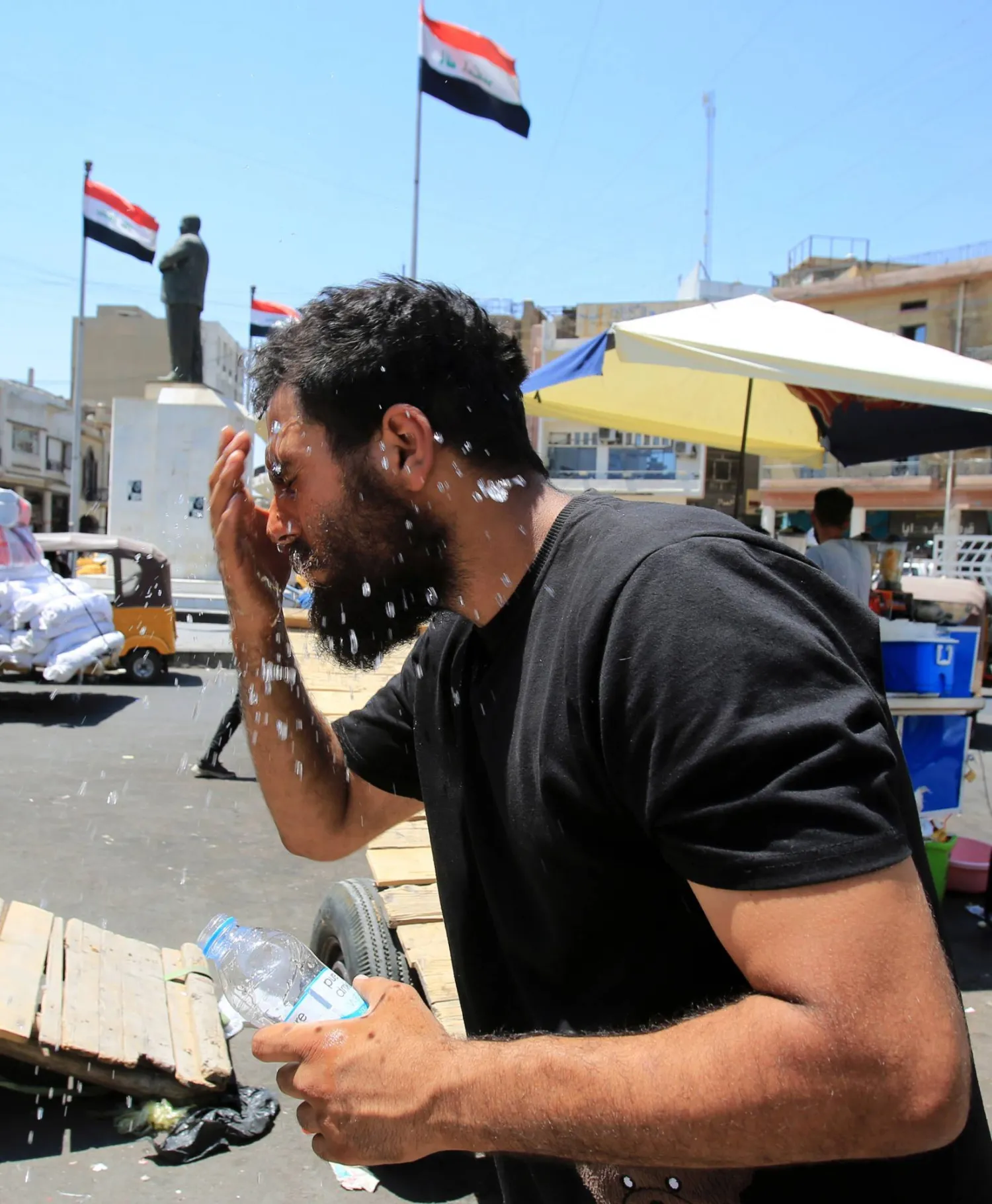
Iraq experiences scorching temperatures reaching nearly 50°C (AP)
TT

Iraq’s Summer: From ‘Father of the Poor’ to ‘Unbearable Hell’

Iraq experiences scorching temperatures reaching nearly 50°C (AP)

Many Iraqis, especially from the older generations, hold on to the saying that “summer is the father of the poor.”

This belief stems from the fact that people, particularly those in the impoverished classes, could fulfill their nutritional needs during this season through the abundance of vegetables and fruits before modern agricultural methods, greenhouses, and genetically modified organisms revolutionized crop production, making such produce available even in the harshness of winter.

In bygone decades, most individuals used to make do with simple and rudimentary cooling devices, in contrast to the expensive air conditioning units commonly used today, which poorer families could not afford.

Nowadays, almost everything has changed. The impoverished and others endure long days of unbearable heat that starts around the beginning of June.

In recent years, this scorching weather has extended into early October before the temperatures, which often surpass 50°C on many days during these months, finally start to recede.

Consequently, governmental authorities have been compelled to announce additional official holidays due to the difficulty of venturing out in such extreme temperatures.

While governments and nations can contribute to alleviating the suffering of their citizens from high temperatures through various means, including meeting the population’s electricity needs and increasing the cultivation of trees and green areas, the issue of summer in Iraq, with its severity and harshness, appears to be complex and multi-faceted, defying simple solutions.

The problem stems from a severe decline in green areas, coupled with the major and persistent electricity issue that worsens during the summer, resulting in reduced energy supply to homes and other facilities, sometimes dropping to less than 8 hours per day.

This situation is exacerbated by Iran’s decision to cut off gas supplies that power a significant number of the country’s power stations.

Despite the flow of Iranian gas following the latest allowance granted by the US to Iraq to settle its dues to Tehran, the total energy production (around 24,000 megawatts) falls short of meeting the country’s growing electricity demands, making summer an oppressive season for the population.


Atrocities in Sudan's El-Fasher were 'Preventable Human Rights Catastrophe'

Sudanese displaced people who left El Fasher after its fall, sit in the shade in Tawila at the Rwanda camp reception point on December 17, 2025. (Photo by AFP)
TT

Atrocities in Sudan's El-Fasher were 'Preventable Human Rights Catastrophe'

Sudanese displaced people who left El Fasher after its fall, sit in the shade in Tawila at the Rwanda camp reception point on December 17, 2025. (Photo by AFP)

The atrocities unleashed on El-Fasher in Sudan's Darfur region last October were a "preventable human rights catastrophe", the United Nations said Monday, warning they now risked being repeated in the neighbouring Kordofan region.

"My office sounded the alarm about the risk of mass atrocities in the besieged city of El-Fasher for more than a year ... but our warnings were ignored," UN rights chief Volker Turk told the Human Rights Council in Geneva.

He added that he was now "extremely concerned that these violations and abuses may be repeated in the Kordofan region".


Arab League Condemns Israel's Decisions to Alter Legal, Administrative Status of West Bank

A general view shows the opening session of the meeting of Arab foreign ministers at the Arab League Headquarters (Reuters)
TT

Arab League Condemns Israel's Decisions to Alter Legal, Administrative Status of West Bank

A general view shows the opening session of the meeting of Arab foreign ministers at the Arab League Headquarters (Reuters)

The General Secretariat of the Arab League strongly condemned decisions by Israeli occupation authorities to impose fundamental changes on the legal and administrative status of the occupied Palestinian territories, particularly in the West Bank, describing them as a dangerous escalation and a flagrant violation of international law, international legitimacy resolutions, and signed agreements, SPA reported.

In a statement, the Arab League said the measures include facilitating the confiscation of private Palestinian property and transferring planning and licensing authorities in the city of Hebron and the area surrounding the Ibrahimi Mosque to occupation authorities.

It warned of the serious repercussions of these actions on the rights of the Palestinian people and on Islamic and Christian holy sites.

The statement reaffirmed the Arab League’s firm support for the legitimate rights of the Palestinian people, foremost among them the establishment of their independent state on the June 4, 1967 borders, with East Jerusalem as its capital.


UN: 53 Migrants Dead or Missing in Shipwreck Off Libya

(FILES) Migrants sit on board a RHIB (Rigid inflatable boat) after being evacuated by crew members of the “Ocean Viking” rescue ship from the oil tanker the 'Maridive 703' in the search-and-rescue zone of the international waters between Malta and Tunisia, on December 31, 2025. (Photo by Sameer Al-DOUMY / AFP)
TT

UN: 53 Migrants Dead or Missing in Shipwreck Off Libya

(FILES) Migrants sit on board a RHIB (Rigid inflatable boat) after being evacuated by crew members of the “Ocean Viking” rescue ship from the oil tanker the 'Maridive 703' in the search-and-rescue zone of the international waters between Malta and Tunisia, on December 31, 2025. (Photo by Sameer Al-DOUMY / AFP)

The UN migration agency on Monday said 53 people were dead or missing after a boat capsized in the Mediterranean Sea off the Libyan coast. Only two survivors were rescued.

The International Organization for Migration said the boat overturned north of Zuwara on Friday.

"Only two Nigerian women were rescued during a search-and-rescue operation by Libyan authorities," the IOM said in a statement, adding that one of the survivors said she lost her husband and the other said "she lost her two babies in the tragedy.”

According to AFP, the IOM said its teams provided the two survivors with emergency medical care upon disembarkation.

"According to survivor accounts, the boat -- carrying migrants and refugees of African nationalities departed from Al-Zawiya, Libya, at around 11:00 pm on February 5. Approximately six hours later, it capsized after taking on water," the agency said.

"IOM mourns the loss of life in yet another deadly incident along the Central Mediterranean route."

The Geneva-based agency said trafficking and smuggling networks were exploiting migrants along the route from north Africa to southern Europe, profiting from dangerous crossings in unseaworthy boats while exposing people to "severe abuse.”

It called for stronger international cooperation to tackle the networks, alongside safe and regular migration pathways to reduce risks and save lives.
