
Library Restores Palestinian History One Manuscript at a Time 

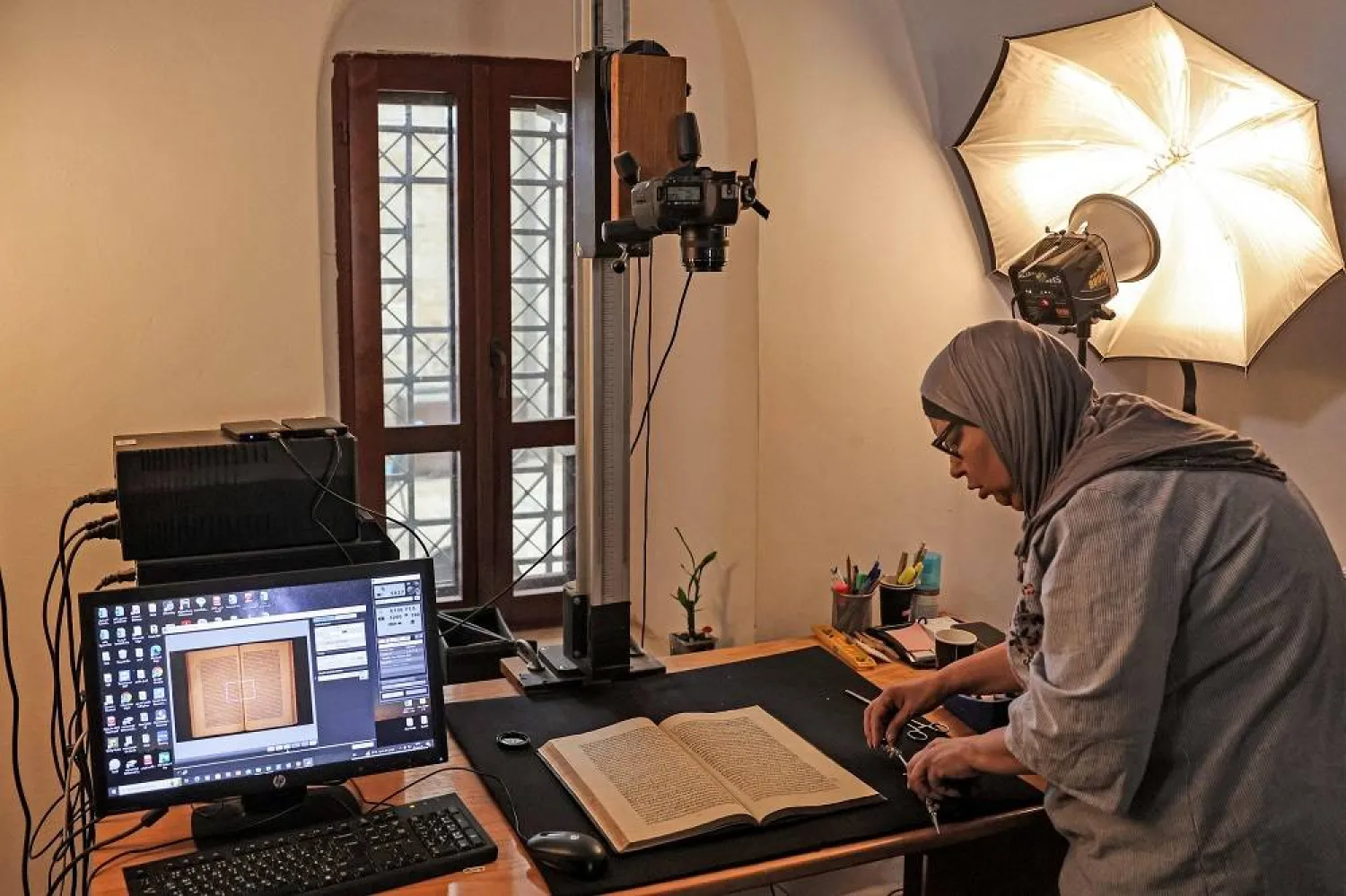
Shaimaa al-Budeiri the head of the digital library at Khalidi library in the Old City of Jerusalem on June 20, 2023. (AFP)
TT

Library Restores Palestinian History One Manuscript at a Time 

Shaimaa al-Budeiri the head of the digital library at Khalidi library in the Old City of Jerusalem on June 20, 2023. (AFP)

A library in Israeli-annexed east Jerusalem offers a rare glimpse into Palestinian history with its treasure trove of manuscripts dating back hundreds of years before the creation of Israel.

At the Khalidi Library in the walled Old City, Rami Salameh expertly inspects a damaged manuscript as part of the effort to restore and digitize historical Palestinian documents.

"The manuscripts range from jurisprudence to astronomy, the Prophet's (Mohammed) biography and the Quran," says the Italian-trained restorer as he carefully maneuvers a dry brush over a fragile text on Arabic grammar.

From his small workshop, he lets out a sigh of relief, concluding that it won't be necessary to treat the 200-year-old document for discoloration as a result of oxidation.

Working alone, Salameh has already restored 1,200 pages from over a dozen manuscripts belonging to private Palestinian libraries over the past two and a half years.

The items date back as far as 300 years, to the Ottoman period.

The majority of the manuscripts come from the Khalidi Library itself, the largest private collection of Arabic and Islamic manuscripts in the Palestinian territories.

Also on its shelves are Persian, German and French books, including an impressive collection of titles by French writer Victor Hugo.

Glimpse into history

Located in the Old City near one of the entrances to the Al-Aqsa Mosque compound, the library was founded by Palestinian judge Raghib Al-Khalidi in 1900.

From its main building, which overlooks the Western Wall -- the holiest site where Jews can pray -- warring sultans reportedly played a role in liberating Jerusalem from the Crusaders in the 12th and 13th centuries.

The collection contains books, correspondence, Ottoman decrees and newspapers, including documents from the influential Khalidi family.

They offer a rich view of past life in the holy city, with the oldest book dating back to the 10th century.

"We have manuscripts that talk about the cultural and social status of the people of Jerusalem, and this is an indication of the presence of Palestinians here for centuries," says librarian Khader Salameh, the restorer's father who manages the collection.

"The contents of the library negate the Zionist claim that this country was empty," he added, referring to the common refrain that the land was unpopulated prior to the creation of Israel in 1948 and the expulsion of over 750,000 Palestinians.

Palestinian families and institutions in east Jerusalem have frequently been evicted to make way for Israeli settlements since Israel captured and annexed the area, including the Old City, in the 1967 Six-Day War -- moves regarded as illegal by the UN and the international community.

Part of the library was seized by Israeli settlers to build a Jewish religious school, the librarian lamented.

The library's administration waged a long legal battle to fight the settlement, but did not succeed in preventing the seizure of part of it.

Khader Salameh said the outcome could have been much worse, and the entire property taken by settlers, had it not been for the support they received.

"Israeli intellectuals supported the library administration and testified in court in our favor," he noted.

'Delicate' manuscripts

Ever since, the library has continued to preserve cultural heritage in Jerusalem through their restoration and digitization, with support from local and international organizations.

"We capture the documents with very high precision without exposing the paper to light, as the manuscripts are very delicate, and we want to preserve them for as long as possible," says Shaimaa al-Budeiri, a digital archive officer.

Surrounded by hundreds of books and equipment in her office, she brushes pages clean before placing them flat to photograph and upload the images onto her computer.

To date, Budeiri has photographed around 2.5 million pages of manuscripts, newspapers, rare books and other documents from the four private libraries in Jerusalem.

She says digitization is the way forward, as it allows researchers remote access to the library's archive.

They hope to secure more funding for the restoration work to buy costly supplies and equipment, including acid-free storage boxes.

They also want to update the workshop to safeguard against the humidity that threatens their work with the delicate manuscripts.

Budeiri says it is her love for books that drives her passion for her work.

"If I see someone holding a book in a violent way, I feel like the book is in pain," she notes.

"The book gives to you, it doesn't take away from you."


Greece’s Oldest Modern-Era Museum Reopens on the Acropolis After a Major Restoration

Visitors tour the Acropolis, with the old Acropolis Museum on the left and the Parthenon on the right, as Greece's Culture Ministry presents the museum's reopening following renovation and conversion to new uses, in Athens, Greece, Monday, Nov. 23, 2026. (AP)
TT

Greece’s Oldest Modern-Era Museum Reopens on the Acropolis After a Major Restoration

Visitors tour the Acropolis, with the old Acropolis Museum on the left and the Parthenon on the right, as Greece's Culture Ministry presents the museum's reopening following renovation and conversion to new uses, in Athens, Greece, Monday, Nov. 23, 2026. (AP)

A museum that has stood on the Acropolis since 1874, making it the oldest in modern Greece, reopened Monday after a high-tech makeover.

The squat stone building often goes unnoticed by visitors. It had been closed to the public since 2007, three years before the country was plunged into a massive financial crisis.

The seven-year restoration cost 6.2 million euros ($6.8 million), raised through public funds and private donations, Culture Minister Lina Mendoni said.

The site will host ancient artifacts never before exhibited, digital displays tracing the monuments’ 2,500-year history and a viewing gallery where Culture Ministry technicians will carry out restoration work on ancient objects.

The museum opened in 1874, making it the first museum purpose-built since modern Greece gained independence several decades earlier.

It closed in 2007, becoming an administrative building after cranes carefully lowered its renowned sculptures and other masterpieces to the new Acropolis Museum at the foot of the hill.

“For us, it was inconceivable, almost an affront, that this historic building, with its uniquely privileged location, should be converted into offices and storerooms,” Mendoni said.

“We therefore decided that the museum should reopen in accordance with its original purpose,” she said.

The Parthenon and other temples on the Acropolis remain Greece’s most visited ancient site, with more than 4.6 million admissions recorded last year.

Restoration work continues even during the peak summer months. The Parthenon recently shed its heavy scaffolding for the first time in years.

Prime Minister Kyriakos Mitsotakis attended Monday’s inauguration and described the reopening as another milestone for Greece’s cultural heritage.

He used the occasion to restate Greece’s long-running demand for the return of the Parthenon Sculptures held by the British Museum in London.

“The rightful home of these priceless masterpieces is here, beneath the Attic light and in direct proximity to the temple to which they belong,” he said, adding that Greece would not accept the return of the sculptures as a loan.

“No solution and no agreement can be based on the recognition of foreign ownership over our national treasures,” Mitsotakis said.

“I reaffirm my commitment that we will continue this effort with responsibility, seriousness and determination,” he added. “And in the end, we will succeed.”


Saudi Arabia's History, National Heritage Showcased at 'Bridge of Civilizations' Art Exhibition in Cairo

The exhibition features more than 60 visual artists from Saudi Arabia, Egypt, and Russia. (SPA)
TT

Saudi Arabia's History, National Heritage Showcased at 'Bridge of Civilizations' Art Exhibition in Cairo

The exhibition features more than 60 visual artists from Saudi Arabia, Egypt, and Russia. (SPA)

The "Bridge of Civilizations" art exhibition opened in Cairo, highlighting the power of art to foster closer ties between civilizations and peoples, reported the Saudi Press Agency on Monday.

The exhibition features more than 60 visual artists from Saudi Arabia, Egypt, and Russia, with prominent artists and art enthusiasts in attendance.

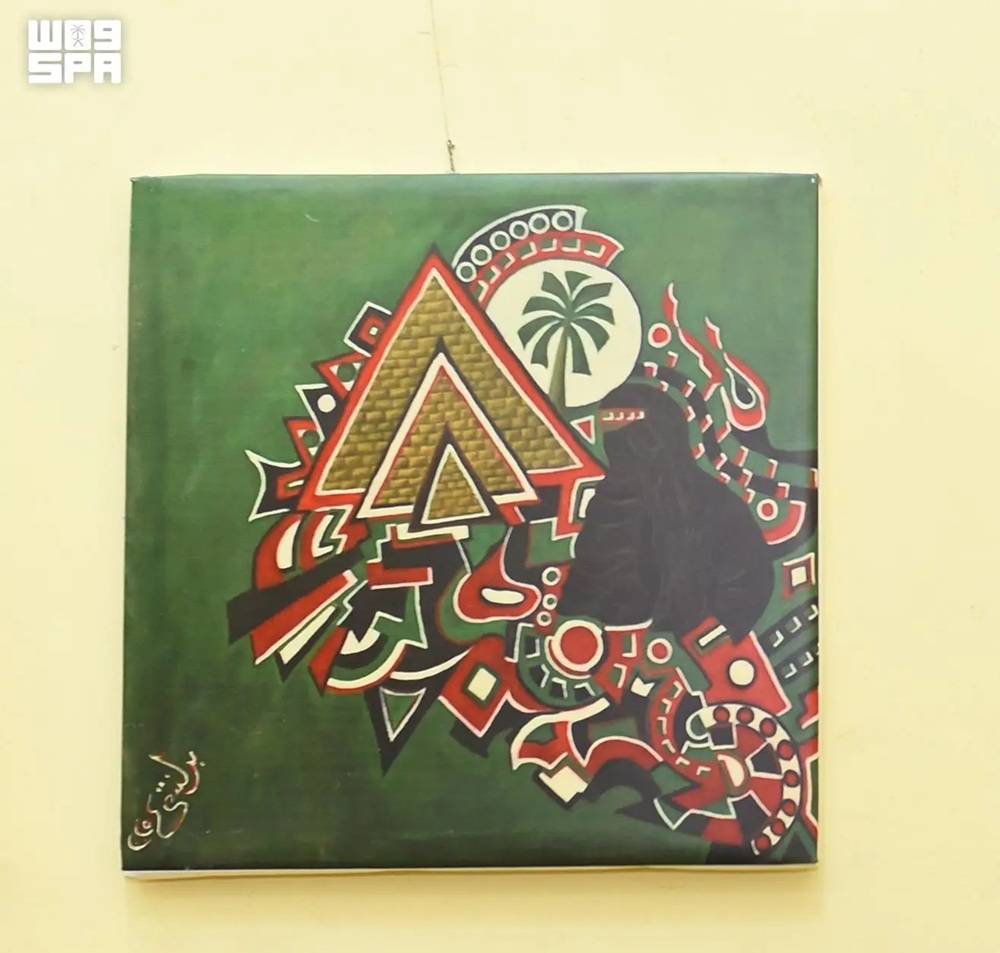
At the three-day exhibition, around 30 Saudi visual artists will present a diverse collection of works highlighting the Kingdom's history, national symbols, and heritage passed down through generations.

An artwork featured at the exhibition in Cairo. (SPA)

The Saudi artists' paintings document Islamic heritage, the Prophet Muhammad's biography, and historical sites associated with the Two Holy Mosques. They also highlight the Kingdom's development achievements, including the Haramain High Speed Railway, as well as its cultural and architectural heritage, such as Najdi Sadu weaving and Al-Masmak Palace.

Participating Saudi artists told SPA that they aim to introduce audiences to the Kingdom's history, identity, and heritage through contemporary artistic approaches while highlighting the development of visual arts in Saudi Arabia.


Red Sea Museum Showcases Jeddah's Black Coral Prayer-Bead Making Heritage

The gallery also features a wall displaying shells, molluscs and pieces of coral from the Red Sea - SPA
TT

Red Sea Museum Showcases Jeddah's Black Coral Prayer-Bead Making Heritage

The gallery also features a wall displaying shells, molluscs and pieces of coral from the Red Sea - SPA

The Red Sea Museum represents a valuable addition to Jeddah's cultural and tourism landscape, offering an educational experience that brings the history of the Red Sea to life and highlights Saudi Arabia’s rich civilization and cultural heritage associated with navigation, trade and Hajj.

As one of Saudi Arabia’s prominent cultural and educational destinations, the museum presents art exhibitions and cultural and educational programs that explore the history and civilization heritage of the Red Sea and document its connection with navigation, trade and human life through experiences that bring together visual arts, architecture, cinema and storytelling, SPA reported.

The Red Sea Museum showcases the craft of prayer-bead making. An identification label accompanying a set of prayer beads made from black coral on display at the museum bears the name of craftsman Ahmed Al-Halabi, who made the beads in Jeddah. The beads tell part of his family's history, as it is one of the oldest families known for this craft in the city.

The gallery also features a wall displaying shells, molluscs and pieces of coral from the Red Sea.

Visitors can observe coral in its natural form before seeing how the craftsman shaped black coral into beads, threaded them together to make a string of prayer beads, and designed them to pass smoothly between the fingers.