


16 Killed as Homes Hit in Khartoum Air, Artillery Strikes

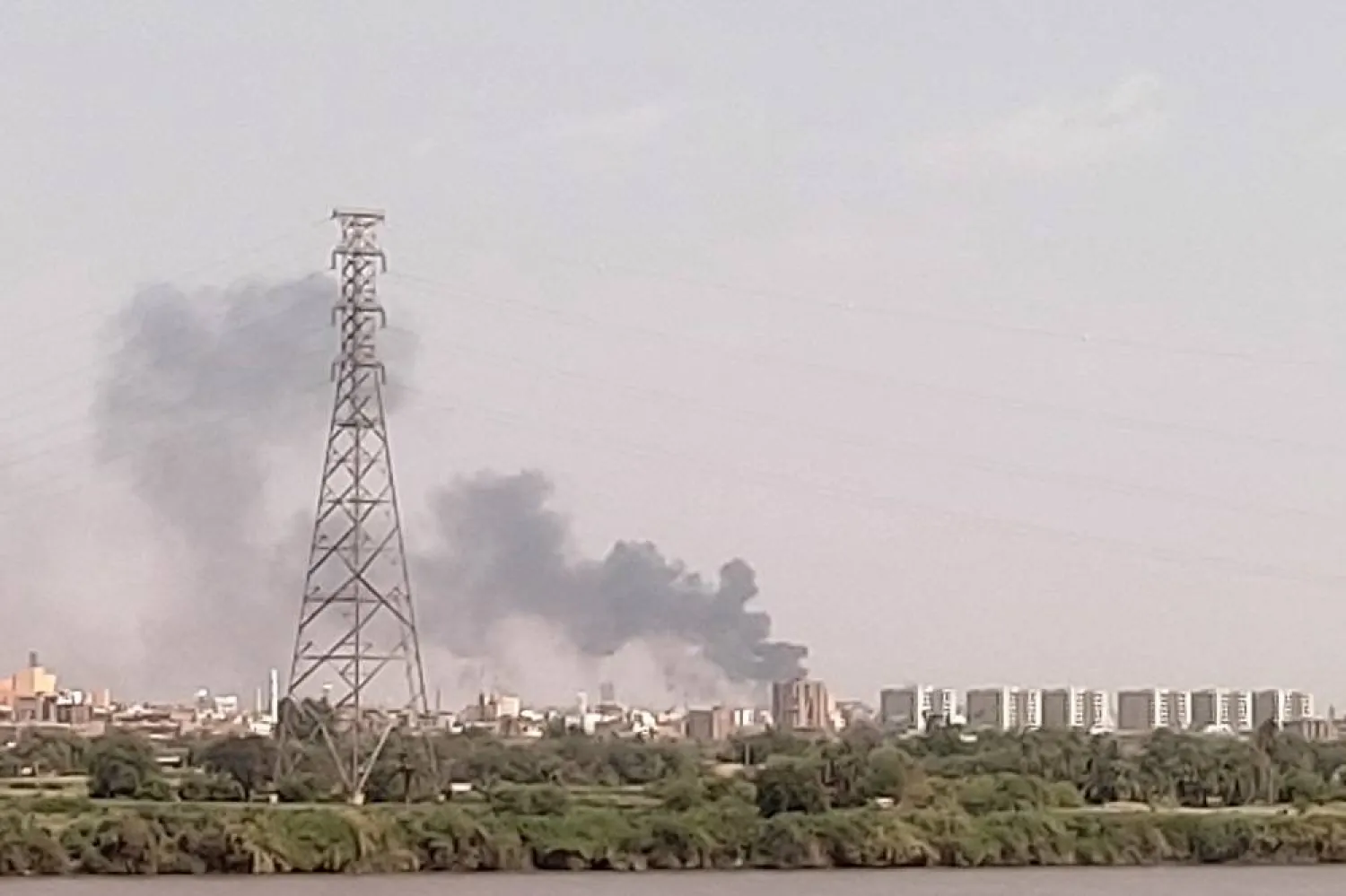
 A picture taken from Omdurman shows smoke billowing north of Khartoum on July 22, 2023. (AFP)
A picture taken from Omdurman shows smoke billowing north of Khartoum on July 22, 2023. (AFP)
TT

16 Killed as Homes Hit in Khartoum Air, Artillery Strikes

 A picture taken from Omdurman shows smoke billowing north of Khartoum on July 22, 2023. (AFP)
A picture taken from Omdurman shows smoke billowing north of Khartoum on July 22, 2023. (AFP)

Air strikes and artillery barrages from Sudan's warring generals killed at least 16 people in a Khartoum neighborhood on Tuesday, a neighborhood group reported.

After more than 100 days of war, the latest bombardments added to a toll of at least 3,900 killed nationwide.

"Sixteen citizens died today in this senseless war" when shells hit civilian homes in the Ombada area of Khartoum's northwest, the neighborhood group said.

It is one of many pro-democracy "resistance committees" that have cobbled together supplies over the patchy internet, land lines, or by risking their own lives to venture out since the war began.

The total number of casualties from the latest strikes was still unclear, the committee added in statements provided to AFP.

Mohamed Mansour, a local resident, told AFP he "helped pull eight bodies" from the rubble of homes destroyed by the blasts.

"Four people were killed in the house next door, including two children," said another resident, Hagar Youssef.

The war that began on April 15 between army chief Abdel Fattah al-Burhan and his former deputy Mohamed Hamdan Daglo, commander of the paramilitary Rapid Support Forces (RSF), has uprooted more than 3.3 million other people from their homes.

Much of the fighting has taken place in densely populated neighborhoods of the capital Khartoum, where residents on Tuesday reported a renewed RSF attack on the army's ammunition corps in the city's south.

Pro-democracy lawyers said late Monday that civilians in the city's south and center were again being "forcibly evacuated from their homes, to be used by fighters" as bases.

'Catastrophic humanitarian crisis'

For more than three months, millions have been rationing water and electricity in the stifling heat, shielding their families from blasts and unable to reach the few health care facilities still functioning.

The World Health Organization warned Tuesday of the "catastrophic humanitarian crisis" facing Sudan, "with more than 67 percent of the country's hospitals out of service."

Health care and aid facilities have themselves frequently come under attack or been looted by both forces.

Fighters have also been accused of rampant sexual violence, reports which the WHO said it was "appalled by".

Alleged sexual and gender based crimes are a focus of a new investigation announced earlier this month by the International Criminal Court into alleged war crimes in Sudan.

The WHO reiterated demands for an urgent response to help prevent outbreaks of disease during the rainy season, which began in June and brought increased reports of malaria, cholera and other water-borne diseases -- particularly in remote areas.

"Outbreaks are likely to claim more lives unless urgent action is taken to halt their spread," said Ahmed Al-Mandhari and Matshidiso Moeti, WHO regional directors for the Eastern Mediterranean and Africa, respectively.

On Monday, the UN children's agency said it had documented "2,500 severe violations of children's rights -- an average of at least one an hour" since the fighting began, with at least 435 children killed and 2,025 injured.

More than half of Sudan's 48 million people are in need of aid and protection, the UN says, but only a fraction of those have received assistance because of the security challenges, bureaucratic hurdles and other obstacles cited by aid groups.

The UN's World Food Program said it has reached more than 1.4 million people with emergency food aid as needs intensify.

Civilian talks

Although there is no sign an end to the war is near, peace attempts have taken place.

The Forces for Freedom and Change, Sudan's main civilian bloc, attended a two-day civilian meeting, which began Monday in Cairo and sought to "restore the path of peace and stop the war in Sudan," according to FFC spokesman Jaafar Hassan.

The FFC was ousted from power in a 2021 coup orchestrated by Burhan and Daglo, and which derailed the country's transition to democracy.

The two generals later fell out in a feud that exploded into war.

US- and Saudi-brokered ceasefires were systematically violated, before Washington and Riyadh adjourned talks.

A quartet from East African regional bloc IGAD has also sought to mediate, but with little success.



Palestinian President, again Denied a Visa to Speak at UN, Addresses Leaders on Prerecorded Video

Palestinian President Mahmoud Abbas delivers a video address to the UN General Assembly in September 2025 (EPA)
TT

Palestinian President, again Denied a Visa to Speak at UN, Addresses Leaders on Prerecorded Video

Palestinian President Mahmoud Abbas delivers a video address to the UN General Assembly in September 2025 (EPA)

Palestinian President Mahmoud Abbas addressed the UN General Assembly on Thursday, delivering prerecorded remarks from his office in Ramallah after the United States denied him and other top Palestinian officials visas to attend the gathering for the second year in a row.

Israeli Prime Minister Benjamin Netanyahu was scheduled to speak in person early in the afternoon.

Since 2005, the now-90-year-old Abbas has led the Palestinian Authority, which is the internationally recognized representative of the Palestinian people. But his support among Palestinians has withered during years of corruption and the sometimes violent advance of Israeli settlers in the occupied West Bank, according to The AP news.

Under Abbas, Palestine has been recognized as a country by a majority of UN member states. But on the ground in the West Bank, the mostly symbolic moves have not affected Israel’s decades long military occupation. Throughout the war in Gaza, Abbas and the authority have been largely sidelined from negotiations over its future in favor of a transition process shepherded by President Donald Trump’s Board of Peace.

The Palestinian Authority was created under a series of peace agreements with Israel in the 1990s and administers semiautonomous areas of the West Bank, while relying heavily on foreign aid. It is the internationally recognized representative of the Palestinian people.

It was ousted from Gaza after Hamas won parliamentary elections in 2006 and violently seized control. Abbas was elected to what was supposed to be a four-year term in 2005. The authority has not held presidential or legislative elections since 2006.

Israel captured the West Bank and east Jerusalem in the 1967 war, and the Palestinians want both as part of their future state. The Palestinians and much of the international community view the settlements as illegal and as an obstacle to creating a viable, contiguous Palestinian state.

Abbas recorded the video on Wednesday.


Türkiye will Hand Over Key Base in Iraq in a Gradual Troop Withdrawal Deal

Iraqi border security force personnel patrol in their armoured vehicles along the border with Syria, in Sinjar district, northern Iraq on January 22, 2026, following recent situation in Syria.  (Photo by Zaid AL-OBEIDI / AFP)
Iraqi border security force personnel patrol in their armoured vehicles along the border with Syria, in Sinjar district, northern Iraq on January 22, 2026, following recent situation in Syria. (Photo by Zaid AL-OBEIDI / AFP)
TT

Türkiye will Hand Over Key Base in Iraq in a Gradual Troop Withdrawal Deal

Iraqi border security force personnel patrol in their armoured vehicles along the border with Syria, in Sinjar district, northern Iraq on January 22, 2026, following recent situation in Syria.  (Photo by Zaid AL-OBEIDI / AFP)
Iraqi border security force personnel patrol in their armoured vehicles along the border with Syria, in Sinjar district, northern Iraq on January 22, 2026, following recent situation in Syria. (Photo by Zaid AL-OBEIDI / AFP)

Türkiye has agreed to gradually withdraw forces from a strategic military base in northern Iraq and hand over its control to the Iraqi government, following a meeting between the two countries’ leaders on the sidelines of the UN General Assembly in New York.

Iraq, meanwhile, pledged to remove armed groups that Türkiye considers security threats from the region of Sinjar, in northwestern Iraq, according to a joint statement issued after the meeting late Wednesday between Turkish President Recep Tayyip Erdogan and Iraqi Prime Minister Ali al-Zaidi.

“In light of the progress Iraq has achieved through security measures, Turkish forces will gradually hand over the Bashiqa-Zelikan camp to the Iraqi federal government, in accordance with the agreed-upon mechanism and timeline,” according to the joint statement released by Erdogan and al-Zaidi’s offices.

Türkiye and Iraq also agreed to “fully extend the authority of the Iraqi state in Sinjar and to end the presence of banned foreign armed elements,” the statement read.

The strategically-located Bashiqa base has long been an issue of contention between Türkiye and Iraq, with Türkiye failing to fully withdraw forces, despite previous discussions for their removal. Türkiye established a military presence there in 2015 to support operations against the ISIS group and help secure the region.

Although Türkiye maintains several bases in northern Iraq for operations against the militant Kurdistan Workers’ Party, or PKK, the Bashiqa camp is Türkiye's furthest base from its border.

Türkiye, for its part, has long been pressing Iraq to curb groups with links to the PKK and other non-state armed groups from operating in Sinjar.

The Iraqi government announced earlier this month that the Sinjar Resistance Units, a Yazidi militia affiliated with the PKK, had agreed to disarm and eligible fighters would be integrated into the Iraqi security forces. The group played a significant role in the fight against ISIS, but was seen by Türkiye as a threat because of its PKK affiliation.

The agreement came as the US is ending its decades-long military presence in Iraq, with officials saying the hundreds of troops remaining in northern Iraq will be out by a Sept. 30 deadline.

Türkiye, meanwhile, is engaged in peace efforts with the PKK aimed at ending a decades-long conflict. The group, whose fighters have launched attacks on Turkish targets from bases in northern Iraq, has agreed to disband and lay down arms as part of the effort.


PAM Party Wins Most Seats in Morocco's Parliamentary Election

A man arrives to vote during parliamentary elections in Rabat, Morocco September 23, 2026. REUTERS/Ahmed El Jechtimi
TT

PAM Party Wins Most Seats in Morocco's Parliamentary Election

A man arrives to vote during parliamentary elections in Rabat, Morocco September 23, 2026. REUTERS/Ahmed El Jechtimi

The Authenticity and Modernity Party (PAM) won the largest number of seats in Morocco's legislative election, followed by its partners in the outgoing government, RNI, and the Istiqlal party, according to official preliminary results on Thursday.

Liberal-centrist PAM took 97 seats in the 395-seat parliament, ahead of the RNI with 66, while the Istiqlal Party secured 65 seats, the Interior Minister Abdelouafi Laftit said in a news briefing on Thursday.

The Justice and Development Party rebounded to 54 seats, from only 13 in the previous election, buoyed by the return of its former prime minister Abdelilah Benkirane.

Leftist parties such as USFP, PPS and FGD took 26, 19 and 8 seats respectively.

Turnout stood at 38.02%, down from 50% in the 2021 election, according to official data. About 27 million Moroccans are of voting age, but only 15.8 million are registered to vote, a drop of about 12% from 2021 election.

Turnout is seen as a barometer for citizens' engagement and trust in elected institutions.

The parliamentary poll is not expected to fundamentally alter the balance of power in Morocco, where the king retains sweeping powers over policy direction, defense and foreign affairs.

Under a constitution adopted in 2011, the king appoints the prime minister from the party that wins the most seats.

If King Mohammed VI appoints PAM’s current leader, Fatima Ezzahra El Mansouri, as head of government, she would become the second woman to hold such a position in the Arab region, after Tunisia’s Najla Bouden.

PAM will have to negotiate a coalition even as its leaders have ruled out partnering again with RNI as the two parties trade accusations over failed policies.

PAM campaigned on a $37 billion platform promising 1 million new jobs and continued investment in healthcare, social protection and better wages.