Crammed with Tourists, Alaska's Capital Wonders What Will Happen as Its Magnificent Glacier Recedes

Patrick T. Fallon/AFP/Getty Images
TT

Crammed with Tourists, Alaska's Capital Wonders What Will Happen as Its Magnificent Glacier Recedes

Patrick T. Fallon/AFP/Getty Images

Thousands of tourists spill onto a boardwalk in Alaska’s capital city every day from cruise ships towering over downtown. Vendors hawk shoreside trips and rows of buses stand ready to whisk visitors away, with many headed for the area’s crown jewel: the Mendenhall Glacier.
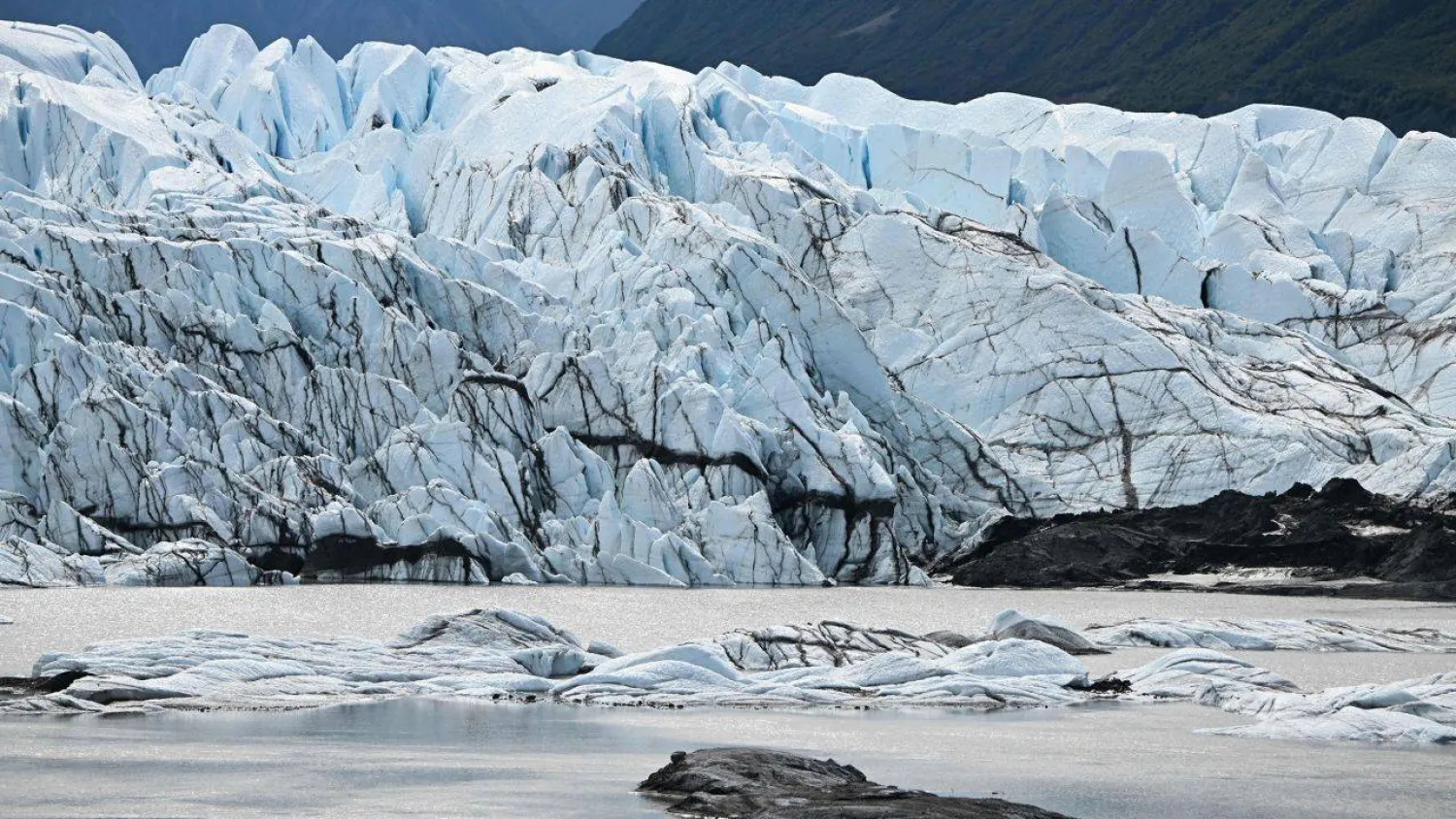
A craggy expanse of gray, white and blue, the glacier gets swarmed by sightseeing helicopters and attracts visitors by kayak, canoe and foot. So many come to see the glacier and Juneau’s other wonders that the city’s immediate concern is how to manage them all as a record number are expected this year. Some residents flee to quieter places during the summer, and a deal between the city and cruise industry will limit how many ships arrive next year.
But climate change is melting the Mendenhall Glacier. It is receding so quickly that by 2050, it might no longer be visible from the visitor center it once loomed outside, The Associated Press said.
That’s prompted another question Juneau is only now starting to contemplate: What happens then?
“We need to be thinking about our glaciers and the ability to view glaciers as they recede,” said Alexandra Pierce, the city’s tourism manager. There also needs to be a focus on reducing environmental impacts, she said. “People come to Alaska to see what they consider to be a pristine environment and it’s our responsibility to preserve that for residents and visitors.”
The glacier pours from rocky terrain between mountains into a lake dotted by stray icebergs. Its face retreated eight football fields between 2007 and 2021, according to estimates from University of Alaska Southeast researchers. Trail markers memorialize the glacier's backward march, showing where the ice once stood. Thickets of vegetation have grown in its wake.
While massive chunks have broken off, most ice loss has come from the thinning due to warming temperatures, said Eran Hood, a University of Alaska Southeast professor of environmental science. The Mendenhall has now largely receded from the lake that bears its name.
Scientists are trying to understand what the changes might mean for the ecosystem, including salmon habitat.
There are uncertainties for tourism, too.
Most people enjoy the glacier from trails across Mendenhall Lake near the visitor center. Caves of dizzying blues that drew crowds several years ago have collapsed and pools of water now stand where one could once step from the rocks onto the ice.
Manoj Pillai, a cruise ship worker from India, took pictures from a popular overlook on a recent day off.
“If the glacier is so beautiful now, how would it be, like, 10 or 20 years before? I just imagine that,” he said.
Officials with the Tongass National Forest, under which the Mendenhall Glacier Recreation Area falls, are bracing for more visitors over the next 30 years even as they contemplate a future when the glacier slips from casual view.
The agency is proposing new trails and parking areas, an additional visitor center and public use cabins at a lakeside campground. Researchers do not expect the glacier to disappear completely for at least a century.
“We did talk about, ‘Is it worth the investment in the facilities if the glacier does go out of sight?’" said Tristan Fluharty, the forest’s Juneau district ranger. “Would we still get the same amount of visitation?”
A thundering waterfall that is a popular place for selfies, salmon runs, black bears and trails could continue attracting tourists when the glacier is not visible from the visitor center, but “the glacier is the big draw,” he said.
Around 700,000 people are expected to visit this year, with about 1 million projected by 2050.
Other sites offer a cautionary tale. Annual visitation peaked in the 1990s at around 400,000 to the Begich, Boggs Visitor Center, southeast of Anchorage, with the Portage Glacier serving as a draw. But now, on clear days, a sliver of the glacier remains visible from the center, which was visited by about 30,000 people last year, said Brandon Raile, a spokesperson with the Chugach National Forest, which manages the site. Officials are discussing the center's future, he said.
“Where do we go with the Begich, Boggs Visitor Center?" Raile said. “How do we keep it relevant as we go forward when the original reason for it being put there is not really relevant anymore?”
At the Mendenhall, rangers talk to visitors about climate change. They aim to “inspire wonder and awe but also to inspire hope and action," said Laura Buchheit, the forest's Juneau deputy district ranger.
After pandemic-stunted seasons, about 1.6 million cruise passengers are expected in Juneau this year, during a season stretching from April through October.
The city, nestled in a rainforest, is one stop on what are generally week-long cruises to Alaska beginning in Seattle or Vancouver, British Columbia. Tourists can leave the docks and move up the side of a mountain in minutes via a popular tram, see bald eagles perch on light posts and enjoy a vibrant Alaska Native arts community.
On the busiest days, about 20,000 people, equal to two-thirds of the city’s population, pour from the boats.
City leaders and major cruise lines agreed to a daily five-ship limit for next year. But critics worry that won’t ease congestion if the vessels keep getting bigger. Some residents would like one day a week without ships. As many as seven ships a day have arrived this year.
Juneau Tours and Whale Watch is one of about two dozen companies with permits for services like transportation or guiding at the glacier. Serene Hutchinson, the company's general manager, said demand has been so high that she neared her allotment halfway through the season. Shuttle service to the glacier had to be suspended, but her business still offers limited tours that include the glacier, she said.
Other bus operators are reaching their limits, and tourism officials are encouraging visitors to see other sites or get to the glacier by different means.
Limits on visitation can benefit tour companies by improving the experience rather than having tourists “shoehorned” at the glacier, said Hutchinson, who doesn't worry about Juneau losing its luster as the glacier recedes.
“Alaska does the work for us, right?" she said. “All we have to do is just kind of get out of the way and let people look around and smell and breathe.”
Pierce, Juneau’s tourism manager, said discussions are just beginning around what a sustainable southeast Alaska tourism industry should look like.
In Sitka, home to a slumbering volcano, the number of cruise passengers on a day earlier this summer exceeded the town’s population of 8,400, overwhelming businesses, dragging down internet speeds and prompting officials to question how much tourism is too much.
Juneau plans to conduct a survey that could guide future growth, such as building trails for tourism companies.
Kerry Kirkpatrick, a Juneau resident of nearly 30 years, recalls when the Mendenhall’s face was “long across the water and high above our heads.” She called the glacier a national treasure for its accessibility and noted an irony in carbon-emitting helicopters and cruise ships chasing a melting glacier. She worries the current level of tourism isn't sustainable.
As the Mendenhall recedes, plants and animals will need time to adjust, she said.
So will humans.
“There’s too many people on the planet wanting to do the same things,” Kirkpatrick said. "You don’t want to be the person who closes the door and says, you know, ‘I’m the last one in and you can’t come in.’ But we do have to have the ability to say, ‘No, no more.’”



Hong Kongers Bid Farewell to 'King of Umbrellas'

Yau Yiu-wai, 73, one of the few remaining umbrella repairmen in Hong Kong, is closing his 183-year-old family-run business at the end of the year. Tommy WANG / AFP
TT

Hong Kongers Bid Farewell to 'King of Umbrellas'

Yau Yiu-wai, 73, one of the few remaining umbrella repairmen in Hong Kong, is closing his 183-year-old family-run business at the end of the year. Tommy WANG / AFP

Scores of residents flocked to a cramped shop in Hong Kong's old district to bid farewell to the city's "king of umbrellas", who is retiring after spending decades repairing umbrellas at his family business.

Established in 1842 during the Qing Dynasty, the Sun Rise Company was founded by the Yau family in the southern Chinese city of Guangzhou.

Current proprietor Yau Yiu-wai, 73, announced earlier this month that his 183-year-old family business would close its doors at year's end.

The family-run shop has been passed down through five generations, but due to shifting consumer habits towards online shopping and his advancing age, it has to cease operations, Yau told AFP on Friday.

"We've upheld our family's reputation, and this legacy has come down to me... It truly pains me to end it," Yau said. "I'm sorry to my ancestors."

After enduring wartime turmoil, the shop relocated to Hong Kong, eventually finding its place amid the bustling meat and vegetable vendors in Sham Shui Po district.

"(Today's) wheel of time rolled over me and crushed me beneath its weight," Yau said.

News of the closure spread across social media, with one user calling it "another loss of a wonderful community business".

"He genuinely cared about selling customers a good, practical umbrella," student Niki Lum told AFP, referring to Yau.

"I could tell he put his heart into running this shop," said the 20-year-old.

Resident Peter Tam, 60, said witnessing the disappearance of these classic shops felt like the end of an era.

"It's such a pity... These are all pieces of history," he said. "And we ourselves are becoming history too."

While most retailers rely on customers replacing damaged umbrellas with new ones, Yau said he aims for durability.

"This is for environmental protection. It's a social responsibility."

Those who brought umbrellas for repair included couples hoping to mend their relationships and married couples who had used umbrellas as tokens of affection.

Yau said fewer than five repairmen like him remain in Hong Kong practicing this "barely profitable" umbrella trade.

But now, Yau said he has no choice but to end the service he took pride in.

"I'm getting old. You have to forgive me, I just can't carry on any more," he said, adding he had suffered a stroke several years ago.

"The most important thing for you is to stay smart... and learn to be eco-friendly," he added.


Winter Storm Bears Down on US Northeast, Disrupting Airline Travel

 Workers clear snow from the ice rink at Bryant Park during a winter storm in New York City, US, December 26, 2025. (Reuters)
Workers clear snow from the ice rink at Bryant Park during a winter storm in New York City, US, December 26, 2025. (Reuters)
TT

Winter Storm Bears Down on US Northeast, Disrupting Airline Travel

 Workers clear snow from the ice rink at Bryant Park during a winter storm in New York City, US, December 26, 2025. (Reuters)
Workers clear snow from the ice rink at Bryant Park during a winter storm in New York City, US, December 26, 2025. (Reuters)

A winter storm packing a frosty mix of snow and ice bore down on the US Northeast early on Saturday, disrupting post-holiday weekend airline traffic and prompting officials in New York and New Jersey to issue weather emergency declarations.

The National Weather Service posted ice storm and winter storm warnings throughout New York state and Connecticut, forecasting some of the heaviest snowfall totals - up to a foot in localized areas - for Long Island and the Hudson Valley.

New York City could see its highest accumulations since 2022, with peak snowfall ‌rates of 2 ‌or more inches per hour, according to an ‌emergency ⁠declaration on Friday ‌from Governor Kathy Hochul, warning of treacherous road conditions.

In many areas snow was forecast to be mixed or glazed over with sleet and freezing rain.

"The safety of New Yorkers is my top priority, and I continue to urge extreme caution throughout the duration of this storm," Hochul said in a statement, admonishing residents to "avoid unnecessary travel."

Ice storm warnings and winter weather advisories were likewise posted for ⁠most of Pennsylvania, much of Massachusetts, and most of New Jersey, where a state of emergency ‌also was declared. High winds were forecast as part ‍of the storm.

Snow began falling ‍in western New York state and the New York City area on Friday ‍evening and was expected to intensify on Saturday.

More than 1,600 commercial airline flights within the United States and into or out of the country were canceled on Friday, and 7,800-plus were delayed as weather conditions began to worsen, according to the flight-tracking service FlightAware.

The three major airports serving the New York City area - John F. Kennedy, Newark Liberty International and LaGuardia Airport - accounted for ⁠the bulk of Friday's flight cancellations. All three issued alerts on social media platform X warning travelers of potential disruptions.

Another 650 flights that had been scheduled to depart or land in the US on Saturday were canceled, FlightAware reported.

Representatives from American Airlines, United Airlines and JetBlue Airways told Reuters those carriers had waived change fees normally charged to re-book for passengers whose travel plans may be affected by weather-related disruptions.

New Jersey and Pennsylvania issued commercial vehicle restrictions for some roads, including many interstate highways.

"This storm will cause dangerous road conditions and impact holiday travel," New Jersey's acting governor Tahesha Way said in a statement. "We are urging travelers to ‌avoid travel during the storm and allow crews to tend to roads."


Cypriot Fishermen Battle Invasive Lionfish and Turn Them into a Delicacy

 A cat stands next to a table with fried lionfish at Stefanos restaurant in Larnaca, Cyprus, in the eastern Mediterranean, Thursday, Dec. 18, 2025. (AP)
A cat stands next to a table with fried lionfish at Stefanos restaurant in Larnaca, Cyprus, in the eastern Mediterranean, Thursday, Dec. 18, 2025. (AP)
TT

Cypriot Fishermen Battle Invasive Lionfish and Turn Them into a Delicacy

 A cat stands next to a table with fried lionfish at Stefanos restaurant in Larnaca, Cyprus, in the eastern Mediterranean, Thursday, Dec. 18, 2025. (AP)
A cat stands next to a table with fried lionfish at Stefanos restaurant in Larnaca, Cyprus, in the eastern Mediterranean, Thursday, Dec. 18, 2025. (AP)

Photis Gaitanos’ rough fingers adroitly untangle the venomous spikes of a lionfish from a net, throwing the exotic-looking creature into an ice-filled rubber bin along with other fish from the day’s catch.

Unlike a few years ago when he would have mostly caught local staples as sea bream, red mullet or bass, the veteran fisherman now hunts for the invasive species that made its way from the Red Sea to the warming waters of the Mediterranean,

Lionfish, with their red and orange-hued stripes and antennae-like barbs that menacingly ward off enemies, threaten to decimate indigenous fish stocks, wreaking havoc on the livelihoods of the roughly 150 professional fishermen in Cyprus.

The prickly fish has even made its way as far north as the Ionian Sea, where Italian authorities have asked the public to photograph and report sightings.

The East Mediterranean has also seen another invasive Red Sea fish in the last decade: the silver-cheeked toadfish. Known as an eating machine whose powerful jaws cut through fishing nets, decimating fishermen’s catch, it has no natural predators off Cyprus, allowing its population to explode.

That toadfish also produces a lethal toxin, making it inedible.

Warmer waters are the culprit

Gaitanos, the 60-year-old fisherman, has fished for years in an area a few kilometers off the coastal town of Larnaca, once famous for its fishing bounty. Now, he says, it’s been more than two years since he’s caught a red mullet, a consumer favorite.

"I have been practicing this profession for 40 years. Our income, especially since these two foreign species appeared, has become worse every year. It is now a major problem (affecting) the future of fishing," he said. "How can it be dealt with?"

Europe’s General Fisheries Commission for the Mediterranean says with the sea warming some 20% faster than the global average, the presence of invasive species "is progressively increasing in the western basin."

Models show that warmer seas as a result of climate change could see lionfish swarm the entire Mediterranean by the century’s end. Warmer waters and an expanded Suez Canal "have opened the floodgates" to Indo-Pacific species in general, according to Cyprus’ Fisheries Department.

Lionfish, center, are seen at Stefanios restaurant in Larnaca, Cyprus, in the eastern Mediterranean, Thursday, Dec. 18, 2025. (AP)

The European Union’s Fisheries Commissioner Costas Kadis, a Cypriot himself, told The Associated Press that more frequent and intense extreme weather, often linked to climate change, could make the Mediterranean more hospitable to invasive species.

And that’s taking a heavy toll on Europe’s fishing industry as fishermen’s catches diminish while their costs shoot up as a result of repairs to fishing gear damaged by the powerful intruders.

"The native marine biodiversity of a specific region, as in the case of Cyprus, faces heightened competition and pressure, with implications for local ecosystems and industries dependent on them," said Kadis.

Fishermen cry for help

Gaitanos, who inherited his father’s boat in 1986, is not sure the fishermen’s grievances are being handled in a way that can stave off the profession’s decline.

"We want to show the European Union that there’s a big problem with the quantity of the catch as well as the kind of fish caught, affected by the arrival of these invasive species and by climate change," he said.

Some EU-funded compensation programs have been enacted to help fishermen. The latest, enforced last year, pays fishermen about 4.73 euros ($5.5) per kilogram (2.2 pounds) to catch toadfish to control their number. The toadfish are then sent to incinerators.

Another project, RELIONMED, which began in 2017, recruits some 100 scuba divers to cull lionfish around wrecks, reefs and marine protected areas. The Cyprus Fisheries Department says surveys show that frequent culls could buy time for native species to recover, but it’s not a permanent fix.

Some try eating the problem

What local fishermen are hoping will catch on with the fish-loving public is a new campaign to serve lionfish as a delicacy after its poisonous spines are carefully removed.

Kadis, the EU Fisheries commissioner, said a social media campaign that began in 2021, #TasteTheOcean, had top European chefs and influencers plugging invasive species as a tasty alternative to the more commonly consumed fish. Renowned Cypriot chef Stavris Georgiou worked up a lionfish recipe of his own.

For most Cypriots, local taverns with their rich meze menus that feature numerous plates different fish is the way to go. Although eating lionfish has been slow to catch on, many tavernas and fish restaurants have started to introduce it as part of their menu.

The bonus is that lionfish is now priced competitively compared to more popular fish like sea bass. At the Larnaca harbor fish market, lionfish cost less than half as much as more popular fish like sea bass.

"By incorporating invasive species such as lionfish into our diet, we can turn this challenge into an opportunity for the fisheries sector and at the same time help limit the environmental threat caused by these species," Kadis said

Stephanos Mentonis, who runs a popular fish tavern in Larnaca, has included lionfish on his meze menu as a way to introduce the fish to a wider number of patrons.

Mentonis, 54, says most of his customers aren’t familiar with lionfish. But its meat is fluffy and tender, and he says it can hold up against perennial tavern favorites like sea bream.

"When they try it, it’s not any less tasty than any other fish," he said.