SAUDIA Launches New Routes Connecting Riyadh and Jeddah with Beijinghttps://english.aawsat.com/business/4473701-saudia-launches-new-routes-connecting-riyadh-and-jeddah-beijing
SAUDIA Launches New Routes Connecting Riyadh and Jeddah with Beijing
SAUDIA launches new direct flights connecting Riyadh and Jeddah with Beijing. (SPA)
TT
TT
SAUDIA Launches New Routes Connecting Riyadh and Jeddah with Beijing
SAUDIA launches new direct flights connecting Riyadh and Jeddah with Beijing. (SPA)
SAUDIA, the national flag carrier of Saudi Arabia, in partnership with the Air Connectivity Program (ACP), has launched new direct flights connecting Riyadh and Jeddah with Beijing, further strengthening ties between Saudi Arabia and China, and reflecting a commitment to help the two countries deepen their collaboration.
The inaugural flight from Jeddah to Beijing was carried on August 4 and the direct flight from Riyadh to Beijing on August 6. These new routes provide around 165 million people in northern China with direct access to the Kingdom, boosting mutual tourism and strengthening the growing international cooperation between Saudi Arabia and global aviation markets.
Through the efforts of ACP, the Kingdom's air connectivity facilitator, the new routes have been launched as the country reinforces its commitment to making its travel and aviation sectors further progress.
"The launch of this new route comes shortly after the hugely successful 10th Arab-China business forum in Riyadh and represents an important development in our ongoing efforts to expand air connectivity," said ACP CEO Ali Rajab.
"By working closely with the ecosystem's stakeholders, we ensure that every aspect of our visitors' air travel journey is met with exceptional service and operational readiness. This concerted effort underscores our commitment to creating a truly unforgettable experience for travellers from Beijing and its surroundings, showcasing the warmth of Saudi hospitality and the remarkable beauty of our country," Rajab added.
ACP believes additional routes to and from the Kingdom will be launched in the second half of this year and the first half of 2024, further broadening its aviation network and international accessibility. The effort to expand is also reflected in the improved global air connectivity classification of Saudi Arabia by the International Air Transport Association (IATA); the country moved from 27th place in 2019 to 13th in 2022.
SAUDIA CEO Capt. Ibrahim Koshy said: "At SAUDIA, we remain dedicated to expanding our network and contributing to the 250 destinations outlined in the Saudi National Aviation strategy. Partnerships, like the one with ACP, play a crucial role in achieving this goal. Together, we have successfully launched routes, including Birmingham, UK, and Zurich, Switzerland, that have enabled us to connect the world to Saudi Arabia."
China is a priority growth market for ACP, which also focuses on broader tourism considerations, including the overall travel experience and the quality of airport facilities.
(FILES) An aerial view shows ships anchored off the coast of Khasab in Oman's Musandam Governorate, near the Strait of Hormuz, on October 2, 2026. (Photo by AFP)
World Bank Projects Regional Growth to Reach 7.8% in 2027
(FILES) An aerial view shows ships anchored off the coast of Khasab in Oman's Musandam Governorate, near the Strait of Hormuz, on October 2, 2026. (Photo by AFP)
The World Bank said Tuesday that if the Middle East conflict subsides by the end of this year, regional growth excluding Iran is projected to rebound to 7.8% in 2027.
In a report titled “From Divide to Opportunity: AI, Jobs, and Growth,” the Bank said that regional output is projected to contract by 2.1% on average in 2026, after expanding 3.3% in 2025.
The report on the economic update on Middle East, North Africa, Afghanistan & Pakistan reveals a sharp deterioration compared with its April forecasts. At that time, the Bank projected that the region's economies, excluding Iran, would grow by 1.8 percent in 2026, while it expected the economies of the Gulf Cooperation Council (GCC) countries to expand by 1.3 percent.
But growth expectations for the region have been revised downward by approximately 3.9 percentage points compared with the April forecast. Meanwhile, the outlook for GCC economies has shifted from 1.3 percent growth to a 4.3 percent contraction, representing a deterioration of 5.6 percentage points.
Hormuz Upends Gulf Calculations
This shift reflects the widening scope of the shock since April, as the repercussions of the closure of the Strait of Hormuz and the disruption of energy exports continue to unfold, with the effects spreading to trade, tourism, logistics services, and financial markets.
The World Bank expects the economies of GCC countries to contract by an average of 4.3 percent in 2026, compared with growth of 4.4 percent in 2025.
This marks a notable departure from traditional energy crises, in which rising oil prices typically boost the revenues of energy-exporting countries. In the current crisis, however, the disruption of oil shipments through the Strait of Hormuz has constrained producers' ability to export crude oil, making higher prices insufficient to offset the impact of reduced export volumes.
In contrast, oil-importing economies have shown greater resilience, with the World Bank forecasting their growth rate to rise to 4.3 percent in 2026, compared with 3.9 percent in 2025.
The repercussions of the conflict are not confined to the energy sector. They have also spread to tourism, aviation, and logistics services, while disruptions in shipping have increased import costs and placed additional strain on supply chains, particularly affecting food prices.
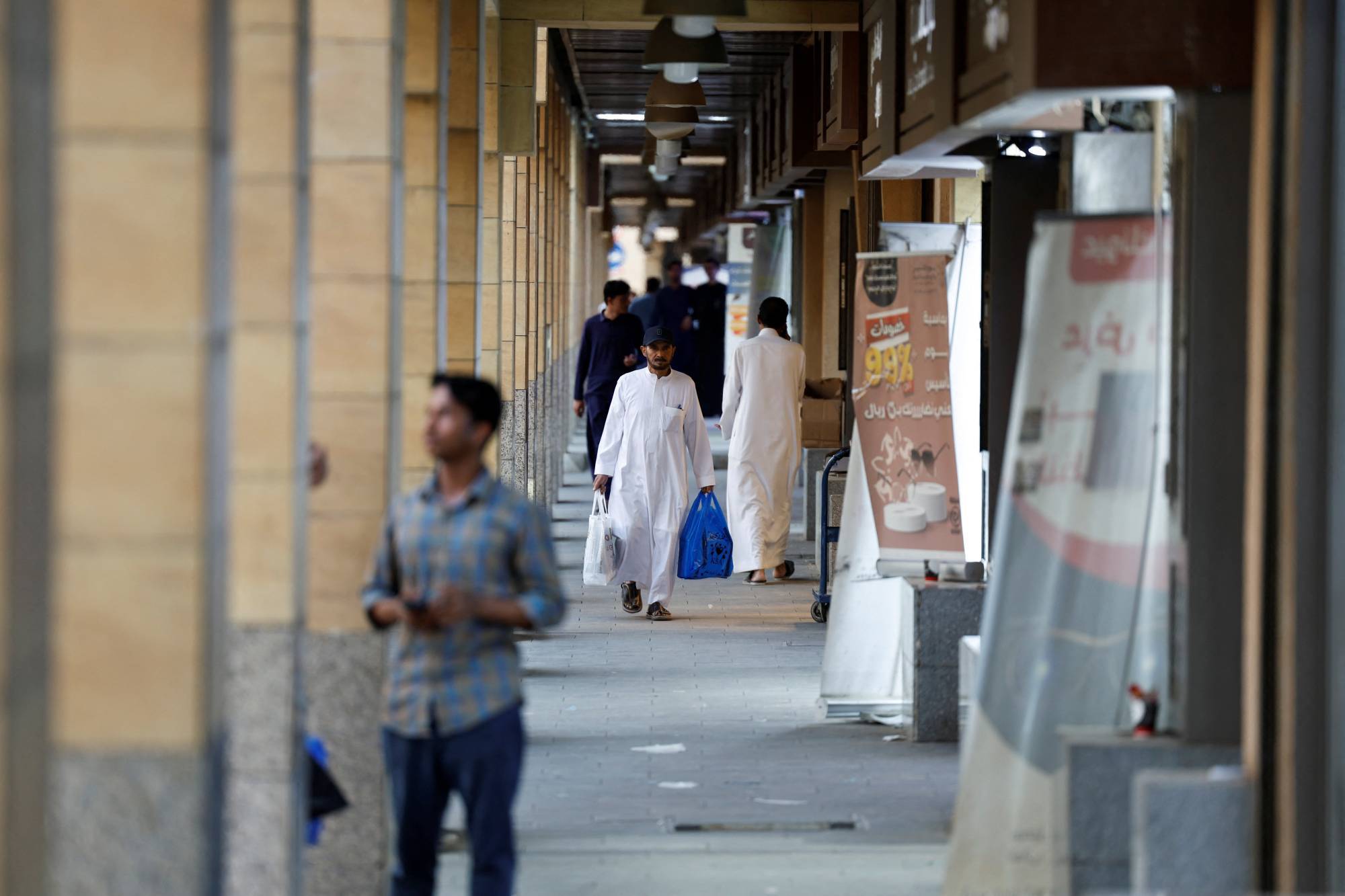
A man walks with shopping bags in a local souq down town Riyadh, Saudi Arabia, May 31, 2025. REUTERS/Hamad I Mohammed
Saudi Arabia Maintains its Recovery Path
As for Saudi Arabia, the World Bank expects real GDP per capita, which is projected to stand slightly above its 2019 level in 2025, to fall below that benchmark in 2026 before the economy benefits from a recovery in hydrocarbon production and exports as the shock recedes.
On the fiscal front, the World Bank estimates that the Kingdom's budget deficit will reach 6.6 percent of GDP in 2026, before narrowing to 3.7 percent in 2027.
The Bank also expects an improvement in the current account balance, with the deficit declining from 1.4 percent of GDP in 2026 to 0.9 percent in 2027.
These projections suggest that the most significant impact of the conflict will be concentrated in 2026, while financial and external indicators are expected to improve in the following year as hydrocarbon production and exports recover.
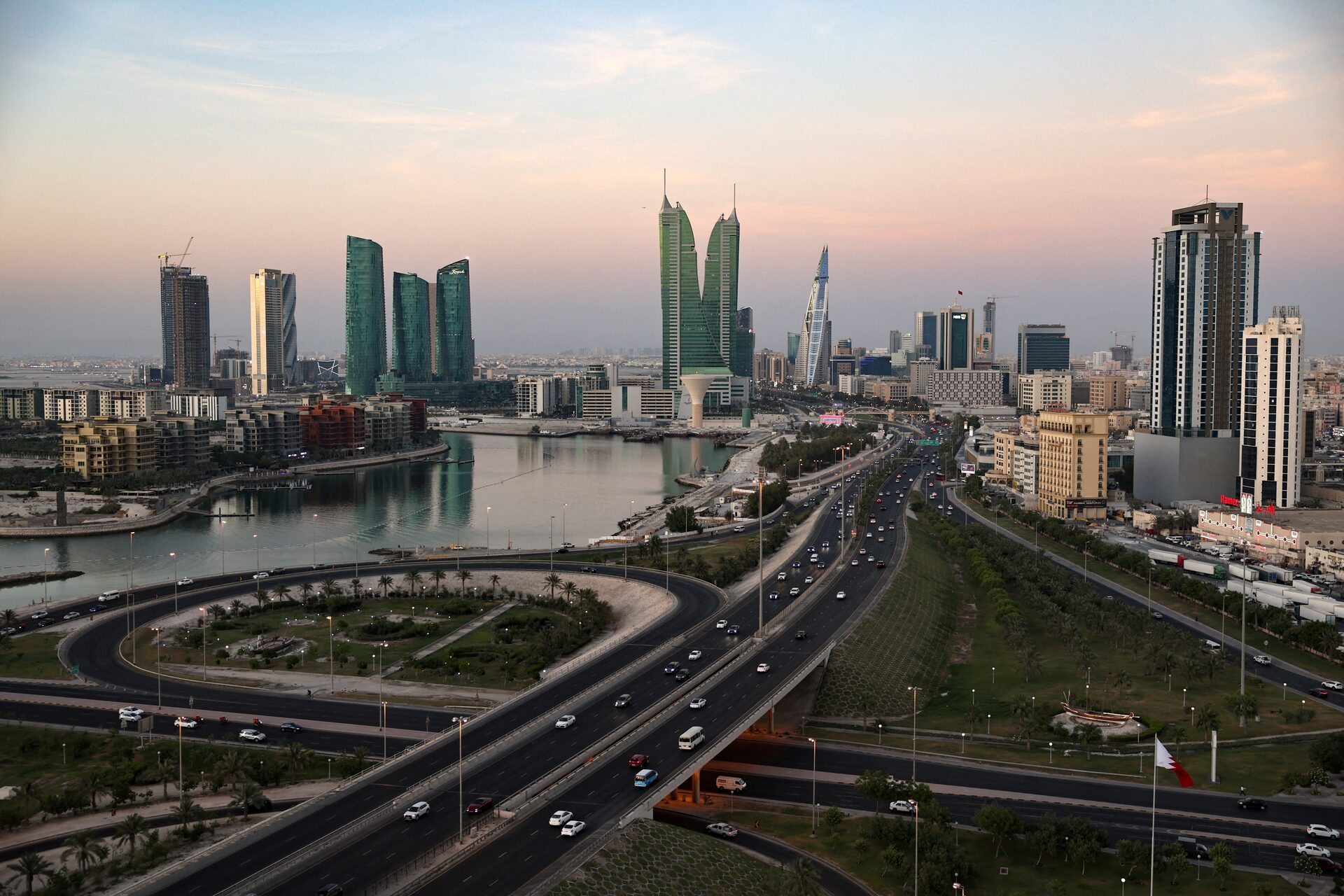
A general view of the skyline in downtown Manama, Bahrain, June 22, 2025. REUTERS/Hamad I Mohammed
Poverty Rising Across the Region
In fragile and conflict-affected economies, the latest shock is compounding pre-existing vulnerabilities. The World Bank notes that poverty in the Middle East and North Africa, Afghanistan, and Pakistan is becoming increasingly concentrated in fragile and conflict-affected settings.
The region accounts for roughly 14 percent of the world's population living in extreme poverty, making it second only to Sub-Saharan Africa. It is also the only region in the world where poverty levels remain above their pre-pandemic levels.
In 2024, some 14.3 percent of the region's population lived on less than $3 a day, compared with 10.4 percent globally. Meanwhile, 26.9 percent lived on less than $4.20 a day, compared with 18.9 percent worldwide.
The World Bank expects these negative trends to persist through 2026, with poverty becoming increasingly concentrated in conflict-affected and fragile economies, where displacement, weak labor markets, and the erosion of assets and basic services make recovery more difficult.
Strong Recovery Possible if Conflict Eases
The World Bank believes the region is capable of achieving a strong recovery if the intensity of the conflict declines by the end of 2026. Excluding Iran, the report projects regional growth to reach 7.8 percent in 2027, driven primarily by a rebound in hydrocarbon production and exports.
However, the recovery will not be automatic. The effects of damaged infrastructure, postponed investments, and the depletion of fiscal buffers could continue to weigh on growth long after the immediate shock has subsided.
Ousmane Dione, the World Bank's Vice President for the Middle East and North Africa, Afghanistan, and Pakistan, said: “Protecting vulnerable households, restoring productive capacity, and investing in more resilient energy and transport infrastructure will be critical to ensuring that a temporary shock does not leave lasting losses in human capital, growth prospects, and living standards.”
“Countries that are able to build up resilience and capacity now will be well positioned to take advantage of the opportunities of the future, particularly in artificial intelligence,” he added.
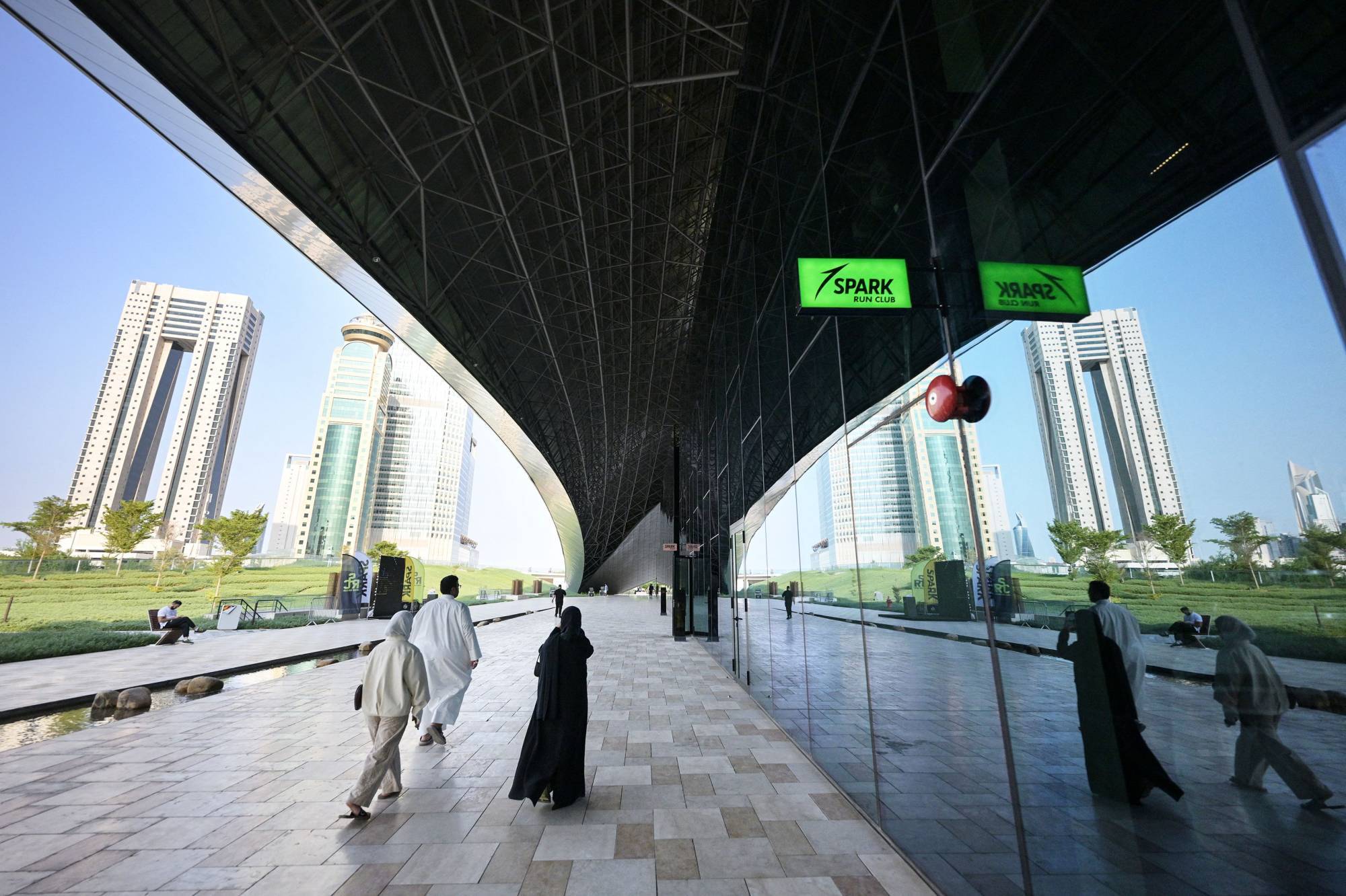
Kuwaitis at Shaheed park in Kuwait city. AFP
Artificial Intelligence: An Opportunity for Growth
Alongside the repercussions of the conflict, the report highlights a long-term transformation that could reshape the region's economies: the rise of artificial intelligence (AI).
According to Roberta Gatti, the World Bank's Chief Economist for the Middle East and North Africa, Afghanistan, and Pakistan, AI could enhance the productivity of 13 to 20 percent of jobs across the region, while fewer than 10 percent of jobs face a near-term risk of automation.
The report suggests that AI's primary impact in the region is likely to come through higher productivity rather than job losses, with workers and businesses that are able to adopt these tools effectively standing to benefit the most.
However, realizing these gains will require addressing a number of structural obstacles that continue to limit the spread of technology. These include the underrepresentation of the region's languages and data in global AI systems, low levels of AI adoption, gaps in human capital and infrastructure, and the limited dynamism of the private sector.
Regional Cooperation
The report notes that regional cooperation could be one of the most important avenues for maximizing the benefits of AI, particularly given the varying levels of technological capacity across countries in the region.
Leading countries such as Saudi Arabia and the United Arab Emirates could share their expertise in AI model development and governance with other regional economies, while middle-income countries could contribute local talent and data resources.
More fragile economies, meanwhile, could benefit from what the report describes as "small AI" solutions: low-cost technologies designed for specific purposes that can operate on basic mobile devices. These tools could help improve essential public services and support local businesses.
The report concludes that the region's ability to overcome the current shock will depend not only on the recovery of oil production and exports, but also on addressing structural weaknesses and investing in infrastructure and human capital. Such efforts would enable artificial intelligence to become an additional driver of productivity, economic growth, and long-term development.
AI Borrowing Binge Rattles US Marketshttps://english.aawsat.com/business/5326454-ai-borrowing-binge-rattles-us-markets
Tech giants are raising debt to finance the construction of data centers that power AI. Brandon Bell / GETTY IMAGES NORTH AMERICA/AFP
The world's richest companies can no longer rely on their massive cash piles alone to stay in the artificial intelligence race and have suddenly started borrowing massively in a shift that is sending repercussions across the world.
Rising US interest rates, including on the Treasury bonds that anchor the global economy, are sending tremors through the financial world, and some analysts point to the AI borrowing bonanza as one of the culprits, said AFP.
From next to nothing in 2024, tech sector borrowing has reached around $500 billion in the nine months since January, as Google, Meta, Amazon, Microsoft and others raise debt hand over fist to finance the chips, servers and data centers that power AI.
Goldman Sachs expects a further ramp-up in 2027, to $1.2 trillion.
"This is not something that we've seen before," said Chris Della Fave, senior vice president at fundraising advisory firm Post Oak Group, who estimates that AI now accounts for 25 percent of all corporate bond issuance, up from 4 percent two years ago.
In inflation-adjusted terms, the AI sector is expected to borrow more this year than US cable operators did to build out the entire internet, or than railroad companies did during the 19th-century US rail boom.
So far, investors have eagerly snapped up the chance to lend to the tech giants, but they have demanded returns that would have been unthinkable for such blue-chip companies not long ago.
Even Meta has had to offer more than 7 percent a year, while riskier cloud data center specialists have gone above 9 percent.
The impact reaches well beyond the companies building AI -- their debt is even starting to crowd out demand for the US government bonds that anchor the financial system.
An investor who might otherwise buy a US Treasury bond "might decide to buy Microsoft" instead, said Mark Malek, chief investment officer at Siebert Financial, referring to the tech giant's bonds.
That shift pushes up the rates Washington pays to borrow, he explained.
This adds to the other force driving up US borrowing costs: inflation, fueled by the war against Iran and high energy prices.
The interest rate on 10-year US government bonds -- Wall Street's benchmark and widely seen as the most important number in global finance, setting the tone for everything from mortgages to car loans -- is now above 5.30 percent, its highest level since 2002.
- 'Sharper correction' -
Adding to the volatility, hedge funds had piled into US government bonds like never before, holding 7 percent of all those in circulation at the end of 2025, though that share has since fallen.
Hedge funds, which place big bets on markets, move their money far faster than more cautious investors such as insurers and pension funds.
Even if the war and the oil situation stabilized, Della Fave said, "I wouldn't expect the yields to dramatically reduce, to be honest, because of this influence of the AI debt situation."
Beyond the rising cost of borrowing, some are questioning the risks of betting on an AI boom that could hit a wall, as the dot-com bubble did in 2000.
Even a moderate slowdown in the frenzied pace of construction, delays on certain projects or weaker-than-expected revenue growth could trigger a shock in financial markets, Malek warned.
In late September, the Bank of England's Financial Policy Committee warned that "the risk of a sharper correction persists," particularly if concerns about the pace of AI development or adoption hit earnings expectations.
In July, amid some second-guessing about the AI boom, the tech-heavy Nasdaq index fell nearly 7 percent.
Against this backdrop, cloud specialist Oracle is sometimes seen as a bellwether.
With massive debt ($125 billion), cash reserves that shrink every quarter and a possible delay on a huge data center project in New Mexico, several warning lights are flashing for Larry Ellison's group.
"Let's say Oracle has a problem... They can't pay for something," Malek said. Trouble with its debt "could trigger contagion" across AI finance as a whole, he added.
Gold Inches Lower as Firmer Dollar, Higher Yields Weighhttps://english.aawsat.com/business/5326450-gold-inches-lower-firmer-dollar-higher-yields-weigh
Gold Inches Lower as Firmer Dollar, Higher Yields Weigh
A woman passes in front of a gold shop in Hong Kong (AFP)
Gold eased on Tuesday, pressured by a firmer US dollar and rising Treasury yields, though losses were limited by easing expectations of a Federal Reserve interest rate hike this month.
Spot gold slipped 0.3% to $4,128.69 per ounce by 0155 GMT. US gold futures were little changed at $4,156.00.
The dollar held firm, making greenback-denominated commodities more expensive for holders of other currencies, Reuters said.
The 10- and 30-year Treasury yields hit 24-year highs on Monday as persistent bond market weakness weighed on sentiment.
"Fundamentals remain supportive of gold in the long term. The next big catalyst is likely to stem from geopolitical risk in the Middle East," said Kyle Rodda, senior financial market analyst at Capital.com.
"Alternatively, a significant change in US rate expectations could provide an impetus for the next break-out, so every piece of price data will be important."
Expectations of a US rate hike in October eased after data on Friday showed US job growth slowed more than expected in September and nonfarm payrolls for the prior two months were revised lower.
Traders are still pricing an 87% probability of an increase in December, according to CME's FedWatch Tool.
Higher interest rates increase the opportunity cost of holding non-yielding gold.
Data showed US services sector activity slowed in September, while strong domestic demand stretched supply chains and pushed a measure of prices paid by businesses for inputs to its highest level in more than four years, suggesting inflation could remain elevated into 2027.
Elsewhere, Yemeni government forces staged a lightning advance to retake the coast around the Bab el-Mandeb Strait up to the city of Mocha, the government said, pushing the Iran-backed Houthis out of most of the areas they seized last month.
Among other metals, spot silver fell 0.6% to $60.67, platinum lost 0.7% to $1,710.08 and palladium eased 0.2% to $1,170.15.
لم تشترك بعد
انشئ حساباً خاصاً بك لتحصل على أخبار مخصصة لك ولتتمتع بخاصية حفظ المقالات وتتلقى نشراتنا البريدية المتنوعة