


Biden Issues Executive Order Restricting US Investments in Chinese Technology 

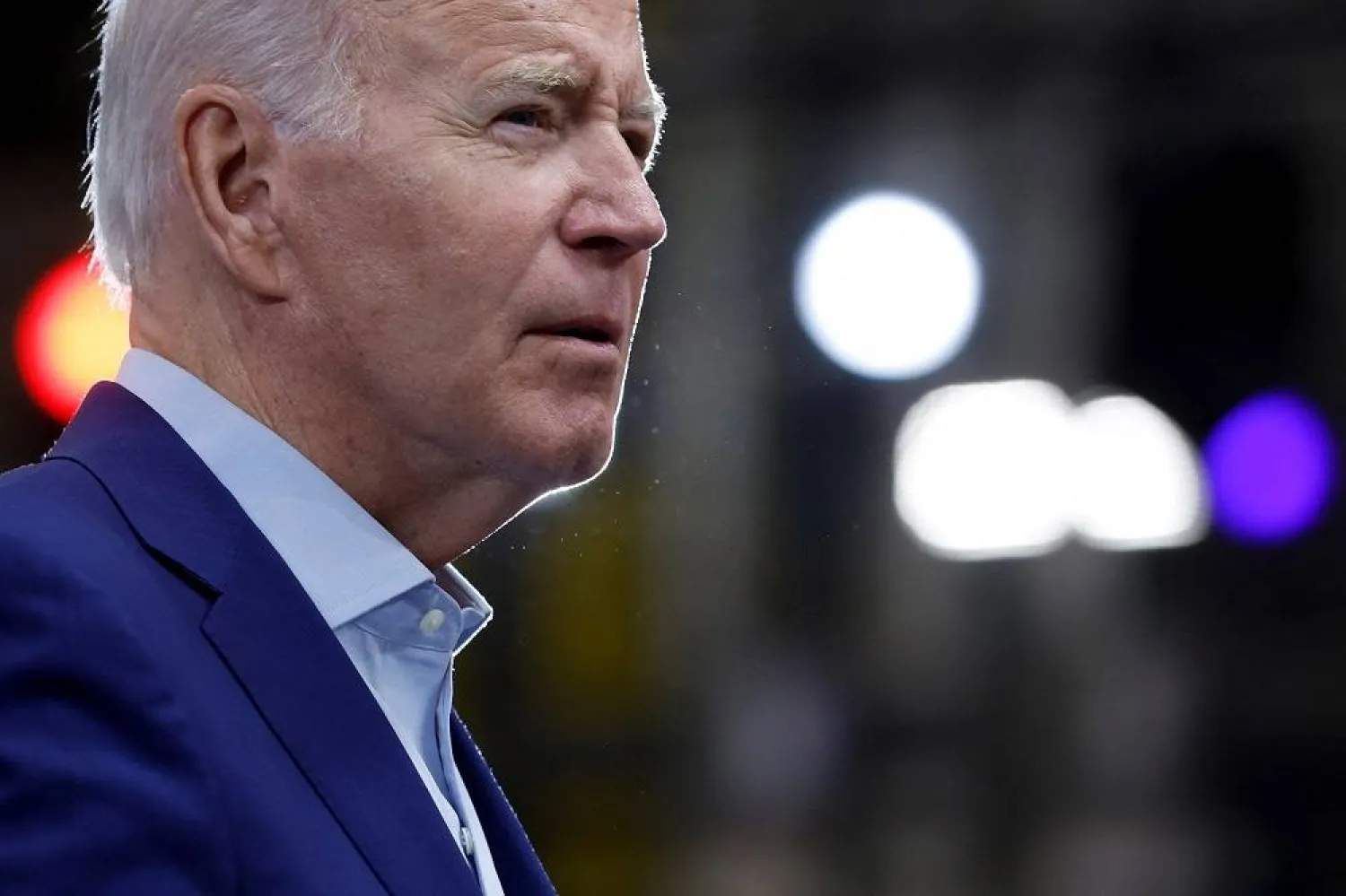
US President Joe Biden delivers remarks on the economy at Arcosa, a wind tower manufacturing facility in Belen, New Mexico, US August 9, 2023. (Reuters)
TT

Biden Issues Executive Order Restricting US Investments in Chinese Technology 

US President Joe Biden delivers remarks on the economy at Arcosa, a wind tower manufacturing facility in Belen, New Mexico, US August 9, 2023. (Reuters)

President Joe Biden signed an executive order Wednesday to block and regulate high-tech US-based investments going toward China — a move the administration said was targeted but it also reflected an intensifying competition between the world's two biggest powers.

The order covers advanced computer chips, micro electronics, quantum information technologies and artificial intelligence. Senior administration officials said that the effort stemmed from national security goals rather than economic interests, and that the categories it covered were intentionally narrow in scope. The order seeks to blunt China's ability to use US investments in its technology companies to upgrade its military while also preserving broader levels of trade that are vital for both nations' economies.

The Chinese Ministry of Commerce responded in a statement early Thursday that it has “serious concern” about the order and “reserves the right to take measures.”

The United States and China appear to be increasingly locked in a geopolitical competition with a conflicting set of values. Biden administration officials have insisted that they have no interest in “decoupling” from China, yet the US also has limited the export of advanced computer chips and kept the expanded tariffs set up by President Donald Trump. And in its response, China accused the US of “using the cover of ‘risk reduction’ to carry out ‘decoupling and chain-breaking.’” China has engaged in crackdowns on foreign companies.

Biden has suggested that China's economy is struggling and its global ambitions have been tempered as the US has reenergized its alliances with Japan, South Korea, Australia and the European Union. The administration consulted with allies and industry in shaping the executive order.

“Worry about China, but don’t worry about China,” Biden told donors at a June fundraising event in California.

The officials previewing the order said that China has exploited US investments to support the development of weapons and modernize its military. The new limits were tailored not to disrupt China's economy, but they would complement the export controls on advanced computer chips from last year that led to pushback by Chinese officials. The Treasury Department, which would monitor the investments, will announce a proposed rulemaking with definitions that would conform to the presidential order and go through a public comment process.

The goals of the order would be to have investors notify the US government about certain types of transactions with China as well as to place prohibitions on some investments. Officials said the order is focused on areas such as private equity, venture capital and joint partnerships in which the investments could possibly give countries of concern such as China additional knowledge and military capabilities.

J. Philip Ludvigson, a lawyer and former Treasury official, said the order was an initial framework that could be expanded over time.

“The executive order issued today really represents the start of a conversation between the US government and industry regarding the details of the ultimate screening regime,” Ludvigson said. “While the executive order is limited initially to semiconductors and microelectronics, quantum information technologies, and artificial intelligence, it explicitly provides for a future broadening to other sectors.”

The issue is also a bipartisan priority. In July by a vote of 91-6, the Senate added as an amendment to the National Defense Authorization Act requirements to monitor and limit investments in countries of concern, including China.

Yet reaction to Biden's order on Wednesday showed a desire to push harder on China. Rep. Raja Krishnamoorthi, D-Ill., said the order was an “essential step forward," but it “cannot be the final step.” Republican presidential candidate Nikki Haley, a former US ambassador to the United Nations, said Biden should been more aggressive, saying, “we have to stop all US investment in China’s critical technology and military companies — period.”

Biden has called Chinese President Xi Jinping a “dictator” in the aftermath of the US shooting down a spy balloon from China that floated over the United States. Taiwan's status has been a source of tension, with Biden saying that China had become coercive regarding its independence.

China has supported Russia after its 2022 invasion of Ukraine, though Biden has noted that the friendship has not extended to the shipment of weapons.

The US Chamber of Commerce said it met a number of times with the White House and federal agencies as the order was being prepared and said its goal during the comment period will be “to ensure the measure is targeted and administrable.”

US officials have long signaled the coming executive order on investing in China, but it's unclear whether financial markets will regard it as a tapered step or a continued escalation of tensions at a fragile moment.

“The message it sends to the market may be far more decisive,” said Elaine Dezenski, a senior director at the Foundation for Defense of Democracies. “US and multinational companies are already reexamining the risks of investing in China. Beijing’s so-called ‘national security’ and ‘anti-espionage’ laws that curb routine and necessary corporate due diligence and compliance were already having a chilling effect on US foreign direct investment. That chilling now risks turning into a deep freeze.”

In its statement, the Chinese Ministry of Commerce said the executive order “seriously deviates from the market economy and fair competition principles the United States has always advocated. It affects the normal business decisions of enterprises, disrupts the international economic and trade order and seriously disrupts the security of global industrial and supply chains.”

China's strong economic growth has stumbled coming out of pandemic lockdowns. On Wednesday, its National Bureau of Statistics reported a 0.3% decline in consumer prices in July from a year ago. That level of deflation points to a lack of consumer demand in China that could hamper growth.

Separately, foreign direct investment into China fell 89% from a year earlier in the second quarter of this year to $4.9 billion, according to data released by the State Administration of Foreign Exchange.

Most foreign investment is believed to be brought in by Chinese companies and disguised as foreign money to get tax breaks and other benefits, according to Chinese researchers.

However, foreign business groups say global companies also are shifting investment plans to other economies.

Foreign companies have lost confidence in China following tighter security controls and a lack of action on reform promises. Calls by Xi and other leaders for more economic self-reliance have left investors uneasy about their future in the state-dominated economy.

Microsoft Unveils $23 Billion in New AI Investments With Big Focus on India

Microsoft Chief Executive Satya Nadella speaks at the company's annual developer conference in Seattle, Washington, US, May 21, 2024. REUTERS/Max Cherney
TT

Microsoft Unveils $23 Billion in New AI Investments With Big Focus on India

Microsoft Chief Executive Satya Nadella speaks at the company's annual developer conference in Seattle, Washington, US, May 21, 2024. REUTERS/Max Cherney

Microsoft on Tuesday unveiled about $23 billion in new artificial intelligence investments, with the bulk earmarked for India as it deepens its bet on one of the world's fastest-growing digital markets.

As part of the move, Microsoft will spend $17.5 billion in India in its largest Asia investment to build out artificial intelligence infrastructure in the country, CEO Satya Nadella said.

The investment builds on the $3 billion investment Microsoft announced earlier this year. It would give the company the largest cloud presence in India, with the first new data center going live mid-2026.

Microsoft has pledged hefty investments worldwide this year, as the company races to secure more cloud computing capacity to meet the surging demand for AI workloads and compete better with rivals Amazon and Google-parent Alphabet.

Microsoft earlier in the day said it was investing more than C$7.5 billion ($5.42 billion) in Canada over the next two years.

New capacity under the investment will begin to come online in the second half of 2026, Microsoft said, adding that its total estimated investment in Canada amounts to C$19 billion between 2023 and 2027.

Microsoft also said it would expand its Azure Local cloud offering in Canada. It is also partnering with Canadian AI startup Cohere to offer the firm's advanced AI models on its Azure platform.

The company is also launching a dedicated "Threat Intelligence Hub" in Canada to focus on cybersecurity protection and AI security research, and work with the Canadian government and lawmakers to track threat actors and organized crime.

Microsoft currently has more than 5,300 employees across 11 cities in Canada.

Last month, Microsoft announced plans to invest $10 billion in AI infrastructure in Portugal as well as $15 billion in the United Arab Emirates.

Big Tech is under growing investor pressure to show that its hefty investments in AI are paying off, as surging valuations of companies and a web of circular investments fuel concerns of an AI bubble.

Microsoft reported a record capital expenditure of nearly $35 billion for its fiscal first quarter in October and warned that spending would further increase this year. It has predicted it would remain constrained on supply at least until the end of its current fiscal year in June 2026.


EU Launches Antitrust Probe into Google’s Use of Online Content for AI Purposes 

01 December 2025, Hamburg: The Google logo shines above the entrance to Google's German headquarters. (dpa)
TT

EU Launches Antitrust Probe into Google’s Use of Online Content for AI Purposes 

01 December 2025, Hamburg: The Google logo shines above the entrance to Google's German headquarters. (dpa)

The European Commission has opened an antitrust probe to assess whether Google is breaching EU competition rules in its use of online content from web publishers and YouTube for artificial intelligence purposes, it said on Tuesday.

"The investigation will notably examine whether Google is distorting competition by imposing unfair terms and conditions on publishers and content creators, or by granting itself privileged access to such content, thereby placing developers of rival AI models at a disadvantage," the Commission said.

It said it was concerned Google may have used content from web publishers to generate AI-powered services on its search results pages without appropriate compensation to publishers and without offering them the possibility to refuse such use of their content.

The Commission said it is also concerned whether Google has used content uploaded to YouTube to train its own generate AI models without offering creators compensation or the possibility to refuse.


US to Allow Nvidia H200 Chip Shipments to China, Trump Says 

A Nvidia logo appears in this illustration taken August 25, 2025. (Reuters) 
TT

US to Allow Nvidia H200 Chip Shipments to China, Trump Says 

A Nvidia logo appears in this illustration taken August 25, 2025. (Reuters) 

The United States will allow Nvidia's H200 processors, its second-best artificial intelligence chips, to be exported to China and collect a 25% fee on such sales, US President Donald Trump said on Monday.

The decision appears to settle a US debate about whether Nvidia and rivals should maintain their global lead in AI chips by selling to China or withhold the exports, though Beijing has told companies not to use US technology, leaving it unclear whether Trump's decision would lead to new sales.

Nvidia shares rose 2% in after-hours trading after Trump made the announcement on Truth Social, following a 3% rise during the day on a report by Semafor.

Trump said in his post that he had informed President Xi Jinping of China, where Nvidia's chips are under government scrutiny, about the move and that he "responded positively."

He said the US Commerce Department was finalizing details of the arrangement and the same approach would apply to other AI chip firms such as Advanced Micro Devices and Intel.

Trump's post said the fee to be paid to the US government was "$25%", and a White House official confirmed he meant 25%, higher than the 15% proposed in August.

"We will protect National Security, create American Jobs, and keep America’s lead in AI," Trump wrote on Truth Social. "NVIDIA’s US Customers are already moving forward with their incredible, highly advanced Blackwell chips, and soon, Rubin, neither of which are part of this deal."

Trump did not say how many H200 chips would be authorized for shipment or what conditions might apply, only that exports would occur "under conditions that allow for continued strong National Security."

Administration officials consider the move a compromise between sending Nvidia's latest Blackwell chips to China, which Trump has declined to allow, and sending China no US chips at all, which officials believe would bolster Huawei's efforts to sell AI chips in China, a person familiar with the matter said.

"Offering H200 to approved commercial customers, vetted by the Department of Commerce, strikes a thoughtful balance that is great for America," Nvidia said in a statement.

Intel declined to comment. The US Commerce Department, which oversees export controls, and AMD did not respond to requests for comment.

A White House official said that the 25% fee would be collected as an import tax from Taiwan, where the chips are made, to the United States, where the chips will undergo a security review by US officials before being exported to China.

FEARS OF CHIPS STRENGTHENING CHINA'S MILITARY

China hawks in Washington are concerned that selling more advanced AI chips to China could help Beijing supercharge its military, fears that had first prompted limits on such exports by the Biden administration.

The Trump administration had been considering greenlighting the sale, sources told Reuters last month. Trump said last week he met with Nvidia CEO Jensen Huang and that the executive was aware of where he stood on export controls.

"It’s a terrible mistake to trade off national security for advantages in trade," said Eric Hirschhorn, who was a senior Commerce Department official during the Obama administration. "It cuts against the consistent policies of Democratic and Republican administrations alike not to assist China’s military modernization."

According to a report released on Sunday by the non-partisan think tank, the Institute for Progress (IFP), the H200 would be almost six times as powerful as the H20, the most advanced AI semiconductor that can legally be exported to China, after the Trump administration reversed its short-lived ban on such sales this year.

The Blackwell chip now in use by US AI firms is about 1.5 times faster than H200 chips for training AI systems, the IFP said, and five times faster for inferencing work where AI models are put to use. Nvidia's own research has suggested Blackwell chips are 10 times faster than H200 chips for some tasks.

Several Democratic US senators in a statement described Trump's decision as a "colossal economic and national security failure" that would be a boon to China's industry and military.

Republican Representative John Moolenaar, who chairs the House China Select Committee, said in a statement to Reuters that China would use the chips to strengthen its military capabilities and surveillance.

"Nvidia should be under no illusions - China will rip off its technology, mass-produce it themselves and seek to end Nvidia as a competitor," he said.

CHINA EYES POTENTIAL SECURITY RISKS

The approval, however, comes as China is strengthening its resolve to wean the country off its reliance on Nvidia's chips. China's cyberspace regulator in July also accused Nvidia's H20 chips of potentially carrying backdoor security risks, an allegation Nvidia has denied.

In recent months, Beijing has cautioned Chinese tech companies against buying chips that Nvidia downgraded to sell to the Chinese market, which are the H20, RTX 6000D and L20, two sources said.

"Chinese firms want H200s, but the Chinese state is driven by paranoia and pride," said Craig Singleton, a senior fellow at the Washington think tank Foundation for Defense of Democracies. "Washington may approve the chips, but Beijing still has to let them in."

The H200 change of stance comes the same day that Trump's Justice Department announced it had cracked a China-linked chip smuggling ring that in late 2024 and early 2025 exported and attempted to export at least $160 million worth of controlled Nvidia H100 and H200 chips.

Chris McGuire, an expert on technology and national security who served at the US State Department until this summer, said Chinese firms would likely still buy H200s, given that the chip "is better than every chip the Chinese can make."

China's domestic AI chip companies now include tech giant Huawei Technologies, which in September released a three-year product roadmap, as well as smaller players such as Cambricon and Moore Threads.

China's SSE STAR Chip Index and the CSI Semiconductor Industry Index both dropped more than 1% at market open on Tuesday but soon recovered most of the losses.