


UN Envoy Says Violence Rate Drops in Yemen amid Persisting Conflicts on Certain Fronts

UN Envoy Says Violence Rate Drops in Yemen amid Persisting Conflicts on Certain Fronts
TT

UN Envoy Says Violence Rate Drops in Yemen amid Persisting Conflicts on Certain Fronts

UN Envoy Says Violence Rate Drops in Yemen amid Persisting Conflicts on Certain Fronts

The UN Secretary-General's envoy to Yemen, Hans Grundberg, announced that hostilities on the frontlines have not returned to pre-truce levels, despite his assertion that fighting has continued on some frontlines.

In his briefing to the Security Council on Wednesday, the UN envoy said that all parties to the conflict are willing to seek solutions.

However, intermittent fighting and exchanges of fire have continued on some frontlines, particularly in Taiz, Marib, Dhale, Hodeida, Shabwa, and Saada, said Grundberg, noting that there have been public threats to return to war, without indicating who is making those threats.

The UN envoy renewed his appeal to the two parties to release all detainees based on the "all-for-all principle."

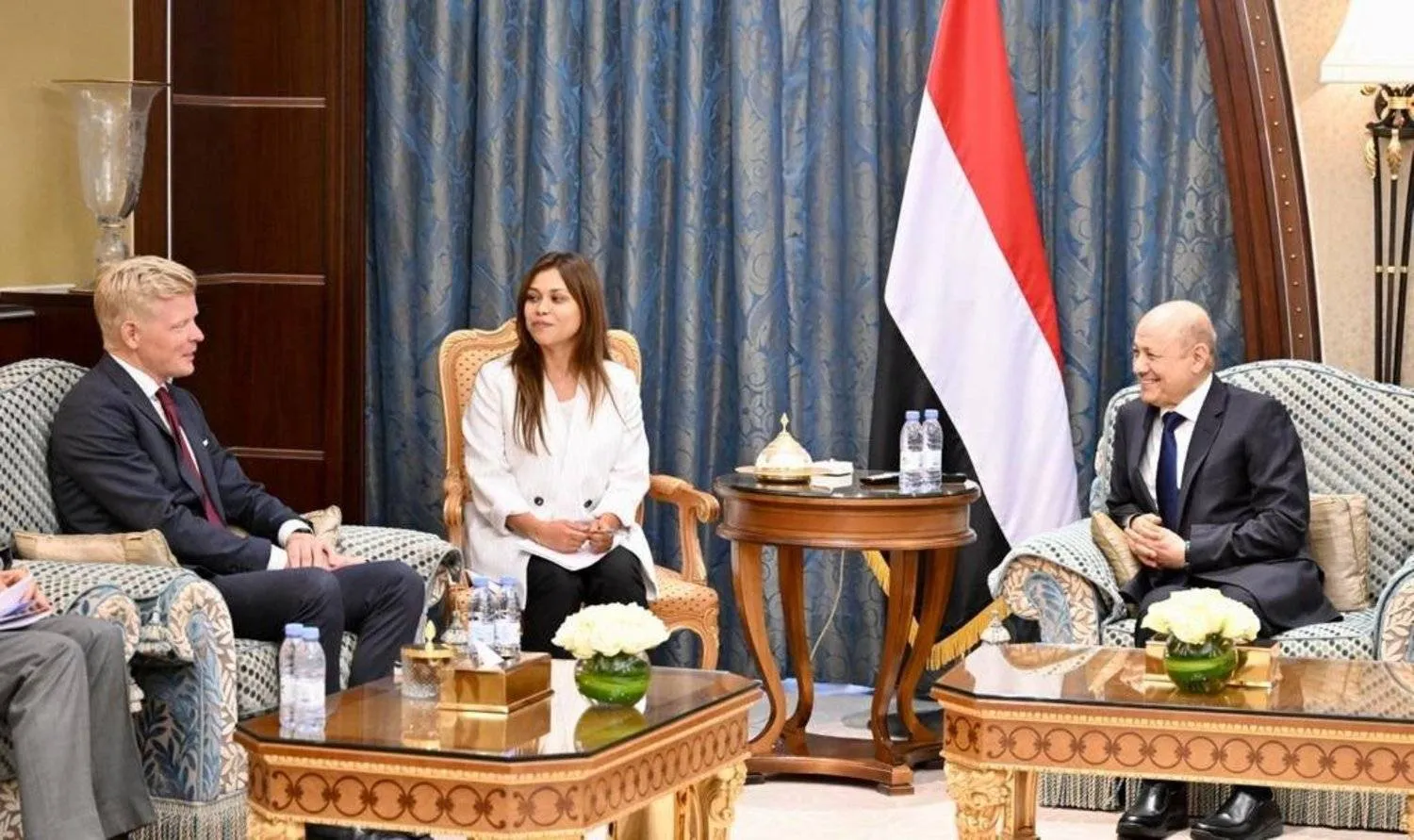
He reviewed his recent mediation efforts with the Yemeni parties and regional countries, including his visit last week to Riyadh, where he met with the head of the Yemeni Presidential Leadership Council, Rashad al-Alimi, and several senior Yemeni and Saudi officials.

Grundberg also traveled to Muscat to hold meetings with Houthi representatives and Omani officials to establish "a clear agreement" on the way forward that includes restarting an inclusive Yemeni political process.

"There have been public threats to return to war. This rhetoric is not conducive to maintaining a fruitful mediation environment," warned the envoy, calling on the parties to refrain from "escalatory rhetoric and to continue to use and build on dialogue channels established under the truce."

- No improvement without economy

Grundberg described the Yemeni economic situation as "increasingly dire," noting that both sides continue to "resort to antagonistic economic measures to weaken the other side" and warned that "these tactics primarily hurt civilians."

He praised Saudi Arabia's pledge of $1.2 billion earlier this month, saying it was a "welcome step," noting that "there will be no lasting improvement in the situation until the parties come together to discuss and agree on sustainable solutions to Yemen's economic and fiscal challenges."

He recalled the siege imposed on Taiz Governorate eight years ago, stressing that there was a "dire need for road openings in Taiz and other governorates to facilitate the freedom of movement of Yemenis who have faced restrictions to accessing their basic needs and engaging in economic opportunities."

Grundberg expressed concern about reports that activities of violent extremists have recently increased in the Abyan and Shabwa governorates, explaining that "political and economic instability are fertile grounds for violent extremist groups."

"The fragility of the situation and its impact on Yemeni women and men highlight the urgent need to reach a consensus on the way forward. My Office is working to convene the parties to address some of their immediate priorities to build confidence and move toward an inclusive and sustainable political settlement."

He emphasized that the Office of the Special Envoy of the Secretary-General for Yemen (OSESGY) "continues to explore options" with the parties to address the needs of all Yemenis, including regular public sector salary payments nationwide, improved service provision, affordable essential commodities, a functional banking system, and facilitating commercial activity.

The OSESGY continues engaging "with all parties on the technical elements required for a sustainable nationwide ceasefire."

The UN envoy urged the parties to "progress towards a more formal ceasefire."

He believed the comprehensive political process under the UN auspices should "provide a platform for a plurality of Yemenis from across the country to collectively discuss and determine their own future."

Grundberg reiterated that the continued unity and steadfast support of this Council and the international community, more broadly, have been a pivotal asset for his mediation efforts.

He cited the recent progress on FSO Safer, which showed how concerted international support and multilateral cooperation can bring tangible results.

"The removal of the oil from the FSO Safer to a new vessel has prevented an environmental and humanitarian catastrophe."



Rescue Teams Search for Survivors in Building Collapse that Killed at Least 2 in Northern Lebanon

A Lebanese flag is pictured, in the aftermath of a massive explosion, in Beirut's damaged port area, Lebanon August 17, 2020. REUTERS/Hannah McKay
TT

Rescue Teams Search for Survivors in Building Collapse that Killed at Least 2 in Northern Lebanon

A Lebanese flag is pictured, in the aftermath of a massive explosion, in Beirut's damaged port area, Lebanon August 17, 2020. REUTERS/Hannah McKay

At least two people were killed and four rescued from the rubble of a multistory apartment building that collapsed Sunday in the city of Tripoli in northern Lebanon, state media reported.

Rescue teams were continuing to dig through the rubble. It was not immediately clear how many people were in the building when it fell.

The bodies pulled out were of a child and a woman, the state-run National News Agency reported.

Dozens of people crowded around the site of the crater left by the collapsed building, with some shooting in the air.

The building was in the neighborhood of Bab Tabbaneh, one of the poorest areas in Lebanon’s second largest city, where residents have long complained of government neglect and shoddy infrastructure. Building collapses are not uncommon in Tripoli due to poor building standards, according to The AP news.

Lebanon’s Health Ministry announced that those injured in the collapse would receive treatment at the state’s expense.

The national syndicate for property owners in a statement called the collapse the result of “blatant negligence and shortcomings of the Lebanese state toward the safety of citizens and their housing security,” and said it is “not an isolated incident.”

The syndicate called for the government to launch a comprehensive national survey of buildings at risk of collapse.


Israel to Take More West Bank Powers and Relax Settler Land Buys

A view of Israeli settlement of Maale Adumim, in the West Bank, Sunday, June 18, 2023. (AP)
TT

Israel to Take More West Bank Powers and Relax Settler Land Buys

A view of Israeli settlement of Maale Adumim, in the West Bank, Sunday, June 18, 2023. (AP)

Israel's security cabinet approved a series of steps on Sunday that would make it easier for settlers in the occupied West Bank to buy land while granting Israeli authorities more enforcement powers over Palestinians, Israeli media reported.

The West Bank is among the territories that the Palestinians seek for a future independent state. Much of it is under Israeli military control, with limited Palestinian self-rule in some areas run by the Western-backed Palestinian Authority (PA).

Citing statements by Finance Minister Bezalel Smotrich and Defense Minister Israel Katz, Israeli news sites Ynet and Haaretz said the measures included scrapping decades-old regulations that prevent Jewish private citizens buying land in the West Bank, The AP news reported.

They were also reported to include allowing Israeli authorities to administer some religious sites, and expand supervision and enforcement in areas under PA administration in matters of environmental hazards, water offences and damage to archaeological sites.

Palestinian President Mahmoud Abbas said the new measures were dangerous, illegal and tantamount to de-facto annexation.

The Israeli ministers did not immediately respond to requests for comment.

The new measures come three days before Prime Minister Benjamin Netanyahu is scheduled to meet in Washington with US President Donald Trump.

Trump has ruled out Israeli annexation of the West Bank but his administration has not sought to curb Israel's accelerated settlement building, which the Palestinians say denies them a potential state by eating away at its territory.

Netanyahu, who is facing an election later this year, deems the establishment of any Palestinian state a security threat.

His ruling coalition includes many pro-settler members who want Israel to annex the West Bank, land captured in the 1967 Middle East war to which Israel cites biblical and historical ties.

The United Nations' highest court said in a non-binding advisory opinion in 2024 that Israel's occupation of Palestinian territories and settlements there is illegal and should be ended as soon as possible. Israel disputes this view.


Arab League Condemns Attack on Aid Convoys in Sudan

A general view shows the opening session of the meeting of Arab foreign ministers at the Arab League Headquarters (Reuters)
TT

Arab League Condemns Attack on Aid Convoys in Sudan

A general view shows the opening session of the meeting of Arab foreign ministers at the Arab League Headquarters (Reuters)

Arab League Secretary-General Ahmed Aboul Gheit strongly condemned the attack by the Rapid Support Forces on humanitarian aid convoys and relief workers in North Kordofan State, Sudan.

In a statement reported by SPA, secretary-general's spokesperson Jamal Rushdi quoted Aboul Gheit as saying the attack constitutes a war crime under international humanitarian law, which prohibits the deliberate targeting of civilians and depriving them of their means of survival.

Aboul Gheit stressed the need to hold those responsible accountable, end impunity, and ensure the full protection of civilians, humanitarian workers, and relief facilities in Sudan.