JCPenney is Spending $1 Billion on Store and Online Upgrades in Latest Bid to Revive Its Business

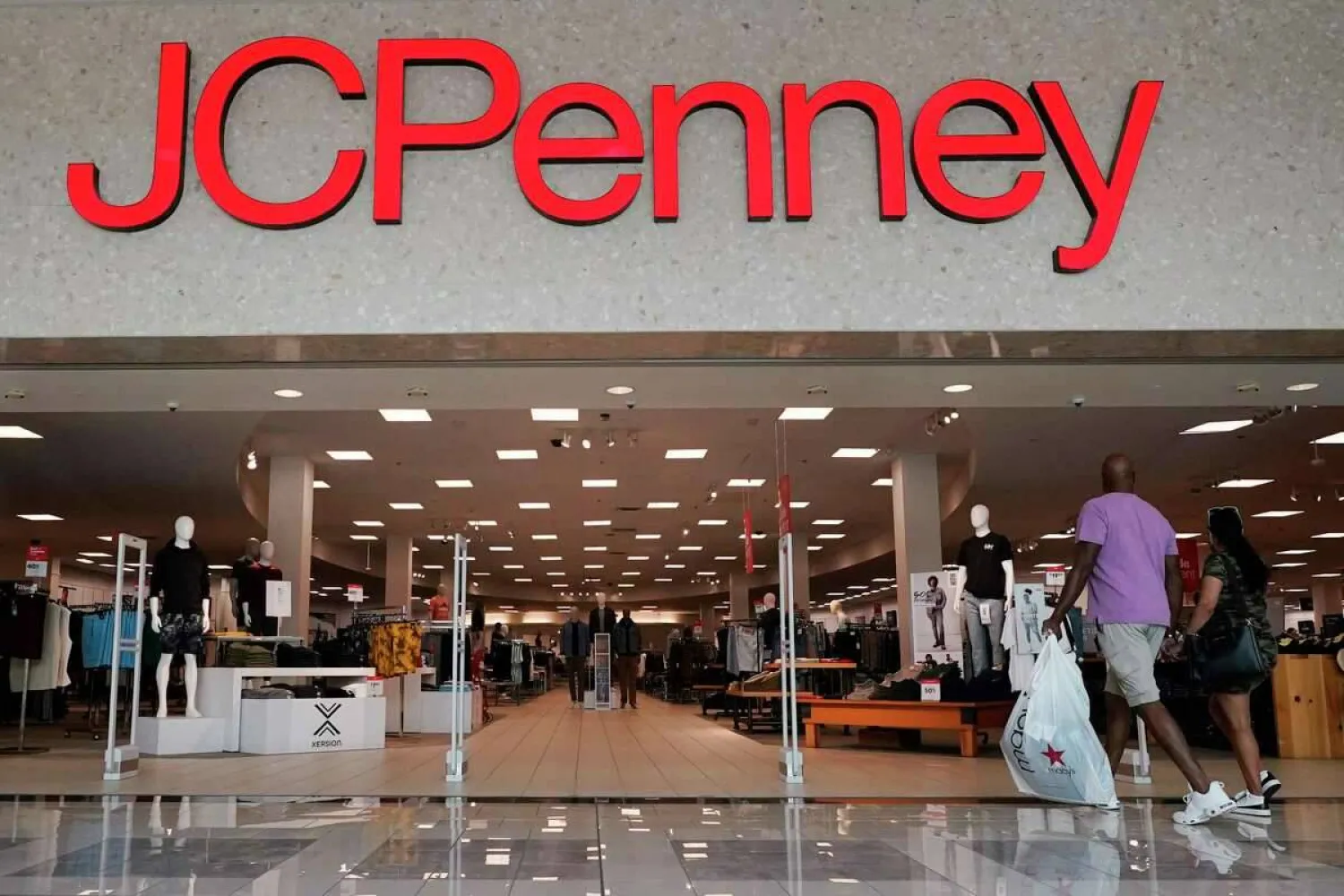
The JCPenney sign lights up the entrance to a store in Frisco, Texas, Wednesday, Aug. 30, 2023. LM Otero/AP
TT

JCPenney is Spending $1 Billion on Store and Online Upgrades in Latest Bid to Revive Its Business

The JCPenney sign lights up the entrance to a store in Frisco, Texas, Wednesday, Aug. 30, 2023. LM Otero/AP

JCPenney said Thursday it plans to spend more than $1 billion by the end of 2025 in a bid to revive the storied but troubled 121-year-old department store chain.
The money is going toward remodeling JCPenney stores, upgrading its online shopping site and app, and making its supply network more efficient so that online orders are delivered more quickly.
JCPenney’s CEO Marc Rosen, who took the company’s helm in November 2021 and has served as an executive at Levi Strauss and Walmart, is renewing the chain’s focus on its core middle-income shoppers with affordable fashion and housewares.
“Now is the time more than ever to lean into that and make sure that we’re delivering that experience for our customer,” Rosen said in an interview with The Associated Press. That’s a change of tactics from previous management teams that pursued wealthier shoppers with offers of trendy items and major appliances.
As part of the plans unveiled Thursday, check-out stations that had been located throughout JCPenney's stores will be replaced with a single area of cashiers. Shoppers will also see brighter lighting and a fresh coat of paint. Store employees will be equipped with mobile devices to scan inventory and ring up shoppers' purchases. And the chain is making upgrades to its Wi-Fi networks to speed up in-store connections.
But JCPenney is playing catch-up with its competitors — from discounters to department stores like Macy’s and Walmart — that have been upgrading their stores and online businesses, underscoring the challenges faced by the retailer based in Plano, Texas.
JCPenney, which emerged from Chapter 11 reorganization in December 2020 with new owners, not only has grappled with years of internal issues but also faces an uncertain economy that has challenged healthier department stores.
The chain's core customers are budget-conscious families, whose median income ranges from $50,000 to $75,000. They've been particularly hit hard by higher costs of basic items and high interest rates, making borrowing on credit cards and taking out a mortgage more expensive.
Rosen said JCPenney's customers are spending $700 more per month than two years ago just for basic necessities, like rent, gas and food. He noted they're seeking competitive prices as well as a good shopping experience.
But in this tough economy, JCPenney has a role, Rosen said. He believes shoppers are finding other department stores too expensive, while online retailers and off-price stores don't give them the customer service JCPenney shoppers are looking for.
The company filed for bankruptcy reorganization in May 2020 after the pandemic-induced temporary closing of stores put the already struggling retailer deeper in peril.
Under new owners — mall companies Simon Property Group Inc. and Brookfield Property Partners LP — JCPenney shuttered nearly a quarter of its 850 stores. It now has roughly 650 stores. It has less than $500 million in debt, down from nearly $5 billion at the time of its bankruptcy filing, Rosen said.
As part of the latest remodeling push, Rosen said 100 stores have been refurbished. The plan is to remodel anywhere from 50 to 100 per year, he said.
The retailer has been rebuilding its beauty business after Sephora announced a deal to leave the chain for rival Kohl's three years ago. As part of its overhaul, it has been highlighting beauty products that cover a wider range of skin tones. One third of its customers are of color.
The retailer launched new store label brands like Mutual Weave men’s clothing and reintroduced some national brands like Adidas. It launched national labels such as Forever 21, owned by Authentic Brands Group LLC, which has a minority stake in JCPenney. It also teamed up with celebrity stylist Jason Bolden to recreate collections for two of its store label brands, J. Ferrar and Worthington, a long-time brand it brought back.
Most importantly, Rosen said JCPenney has worked hard to keep the basics like jeans, white-T-shirts, and sheet sets in stock with the full size range or full color assortment, a problem that has plagued the chain and frustrated shoppers.
Rosen said the changes have helped increase the number of repeat visits of existing customers to both stores and online. More than 50 million customers have visited JCPenney in the past three years, he said. After about five years of declines, it’s now seeing customers coming to JCPenney more frequently — a 5% increase. As for its beauty departments,25% are new customers, he noted.
“That's showing us that if we get the basic relevant experience right, then they’re going to come to us more frequently because they know the brand, they’re shopping for us already and they’re now starting to shop across more areas of the store and come more frequently, ” he said.
Rosen arrived at JCPenney when its annual revenue was around $8 billion to $9 billion and that number was unchanged last year. He expects it could decline slightly this year because of all the economic uncertainty. It had annual sales of roughly $11.2 billion when it filed for bankruptcy.
Neil Saunders, managing director of GlobalData Retail, said he was recently at a JCPenney store in Phoenix, and the stores looked messy, and there were gaps on shelves. But he did praise the beauty area.
“They may have steadied the ship, but they have not revived the brand,” he said.



Fashion Commission Launches 1st Executive Master’s Program in Riyadh

Fashion Commission Launches 1st Executive Master’s Program in Riyadh
TT

Fashion Commission Launches 1st Executive Master’s Program in Riyadh

Fashion Commission Launches 1st Executive Master’s Program in Riyadh

The Fashion Commission announced the launch of the first Executive Master’s program to be delivered in Riyadh, developed in collaboration with the world-renowned Institut Français de la Mode (IFM).

The new program marks a significant leap in advancing fashion education and executive training within the Kingdom, according to SPA.

The Executive Master’s in Strategic Management of Fashion & Luxury represents a new milestone in fashion education, taking place in Riyadh for the first time. It is a 15-month hybrid executive master’s degree track designed for high-potential professionals seeking advanced executive training while continuing their careers. Delivered through a blend of in-person modules in Riyadh and Paris, alongside supervised online learning, the program equips participants with strategic, managerial, and analytical expertise tailored to the rapidly evolving fashion and luxury sector.

Designed with market needs in mind, the executive master’s curriculum covers creation and design, brand strategies, sustainability, new consumer behaviors, retail innovation, fashion media, collection management, and future industry perspectives. Participants will also complete a thesis that contributes new knowledge to the regional and global fashion landscape.

The program is taught by IFM’s internationally recognized faculty, experts in fashion history, sustainability, consumer behavior, design, and luxury management, alongside industry leaders from major global houses, fashion federations, media groups, and innovation-driven organizations.

This landmark program builds on the Fashion Commission’s ongoing partnership with IFM since June 2022. Within the first year, the collaboration introduced high-level educational initiatives, including the Advanced Management Program for Luxury Fashion and the Executive Master’s in Luxury Fashion, designed to elevate local talent and strengthen the Kingdom’s creative workforce.

These programs have contributed to developing the skills and knowledge required to support a world-class fashion ecosystem.

The launch of the Executive Master’s marks a pivotal step in establishing Riyadh as an education hub for the fashion and luxury sectors. By bringing a master’s qualification of this caliber directly to the Kingdom, the Fashion Commission reinforces its commitment to enabling professional growth, supporting innovation, and creating globally competitive talent pipelines.


Nike Shares Rise as Apple’s Cook Doubles His Bet on CEO Hill’s Overhaul Effort

A jogger wearing Nike shoes runs along the Charles River in Cambridge, Massachusetts, US, March 18, 2019. (Reuters)
TT

Nike Shares Rise as Apple’s Cook Doubles His Bet on CEO Hill’s Overhaul Effort

A jogger wearing Nike shoes runs along the Charles River in Cambridge, Massachusetts, US, March 18, 2019. (Reuters)

Nike shares rose 5% in early trading on Wednesday after Apple CEO Tim Cook doubled his personal stake in the sportswear maker, raising his bets on the margin-pinching turnaround efforts led by CEO Elliott Hill.

Cook, who has been on Nike's board since 2005, bought 50,000 shares at $58.97 ‌each, according to ‌a regulatory filing. As of December ‌22, ⁠he holds about ‌105,000 shares, which is now worth nearly $6 million.

It was the largest open market stock purchase for a Nike director or executive and possibly the largest in more than a decade, said Jonathan Komp, analyst at Baird Equity Research.

"(We see) Cook's move as a positive signal for the progress under CEO Elliott Hill and Nike's 'Win ⁠Now' actions," Komp said.

The purchase comes days after Nike reported weaker quarterly margins and weak ‌sales in China even as CEO ‍Hill tries to revive demand ‍through fresh marketing plans and innovation focused on running and sports, ‍while phasing out lagging lifestyle brands.

He has also attempted to mend Nike's ties with wholesalers such as Dicks Sporting Goods to increase visibility among shoppers amid stiff competition from newer brands.

However, the strategy has strained Nike's margins, which have been declining for over a year, while its efforts to win back its ⁠premier position in discount-friendly China appears to be faltering.

Nike's shares have slumped nearly 13% since it reported results on December 18 and are on track for the fourth straight year of declines. They were trading at $60.19 on Wednesday.

Cook has been a lead independent director of Nike since 2016 when co-founder Phil Knight stepped down as its chairman.

The Apple CEO "remains extremely close" with Knight, Komp said, adding that he has advised Nike through key strategic decisions including Hill's appointment last year.

Board director and former Intel CEO ‌Robert Swan also bought about 8,700 shares for about $500,000 this week.


Etro Founding Family Exits Group as New Investors Including Türkiye's RAMS Global Join

L Catterton, a private equity firm backed by French luxury giant LVMH, will remain Etro's majority owner. Reuters
TT

Etro Founding Family Exits Group as New Investors Including Türkiye's RAMS Global Join

L Catterton, a private equity firm backed by French luxury giant LVMH, will remain Etro's majority owner. Reuters

The founding family of Italian fashion house Etro has sold the minority stake it still owned in the brand to a group of investors including Turkish group RAMS Global, the company said on Friday.

L Catterton, a private equity firm backed by French luxury giant LVMH, will remain Etro's majority owner and "will continue to actively support the brand's long-term growth strategy," Etro added, according to Reuters.

The new investors comprise also Italian fashion group Swinger International and small private equity firm ⁠RSI.

In addition to buying the stake, they all subscribed to a capital increase that will lower L Catterton's holding in Etro to between 51% and 55% from around 65%.

When including both the acquisition and the capital increase, the deal is worth around 70 ⁠million euros ($82 million), two sources close to the matter said. Etro did not disclose financial details.

Chief Executive Fabrizio Cardinali will remain at the helm, while Faruk Bülbül, representing RAMS Global, will become chairman of the board.

L Catterton bought a 60% stake in the brand known for its paisley motif four years ago, and it slightly increased the holding over the years.

The company, founded by Gimmo Etro in 1968, has ⁠been struggling with its turnaround. Last year it posted a net loss of 23 million euros with net revenues declining to 245 million euros from 261 million euros, according to filings with the local chambers of commerce reviewed by Reuters.

Rothschild advised L Catterton and the Etro family on the deal.

Rothschild had been hired in 2024 to look for a new investor who could buy all or part of the Etro fashion group, sources had previously told Reuters.