



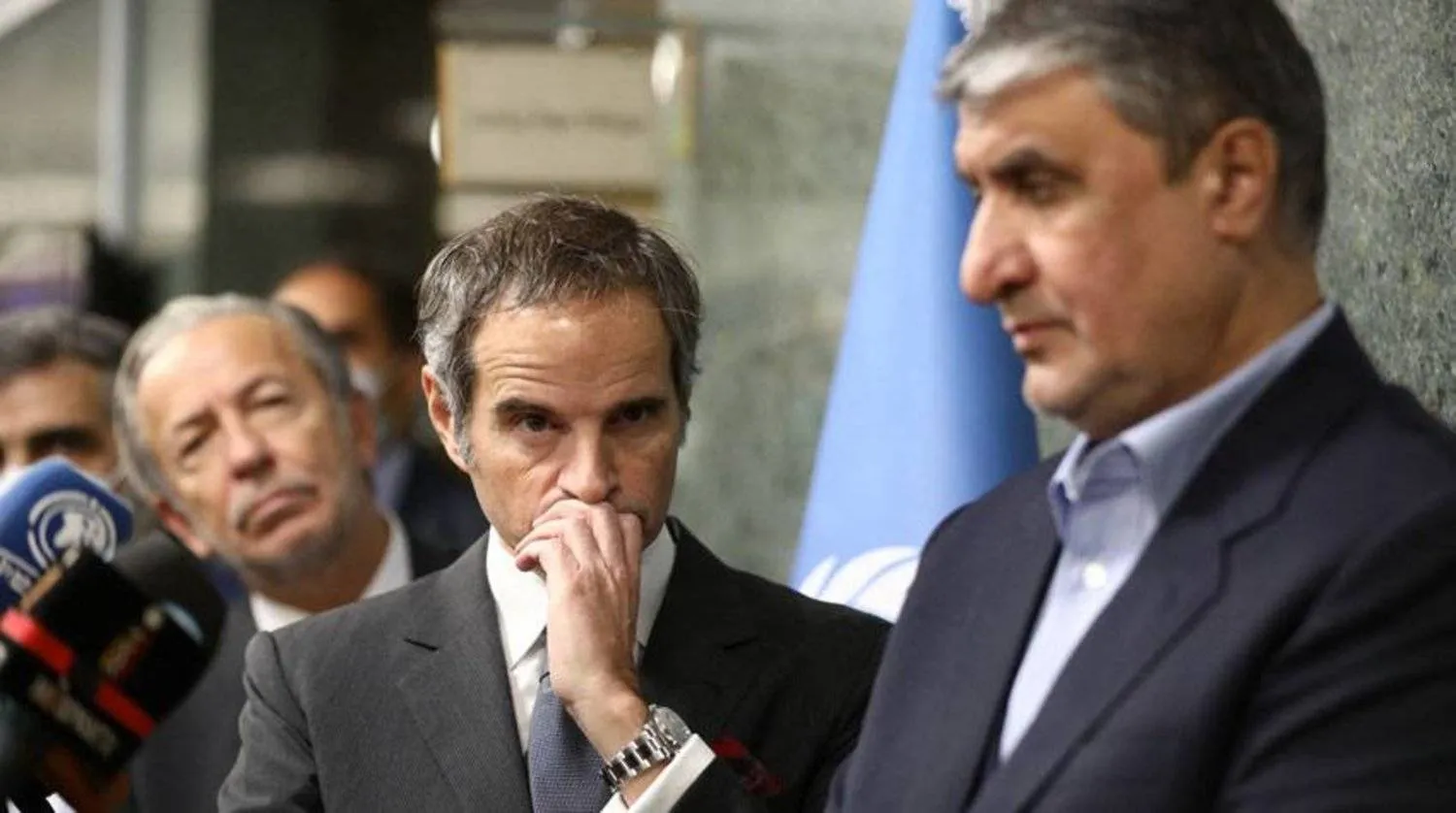

International Atomic Energy Agency (IAEA) inspectors are monitoring Iran as it is slowing the rate at which it's stockpiling near weapons-grade uranium, according to Bloomberg.
The step comes in reducing tensions between Washington and Tehran after they reached an informal understanding that includes a deal to release prisoners and increase the flow of Iranian oil to global markets in exchange for releasing Iran's frozen assets.
IAEA director Rafael Grossi is preparing to publish his quarterly report on Iran's safeguards before the board meeting on Sept. 11 in Vienna.
Bloomberg said that some nuclear officials expect the IAEA's quarterly report to show Iran reducing its uranium enrichment production by 60 percent.
Tehran and the major powers participating in the 2015 nuclear agreement entered a diplomatic path to revive the deal in April 2021.
Tehran began enriching uranium by 60 percent in response to the 2021 attack on the largest nuclear fuel station at Natanz, for which Israel held responsibility.
Earlier this month, Iran said that informal contacts could eventually lead to the resumption of nuclear talks. It has modulated uranium output to signal diplomatic readiness in the past.
US officials secretly admitted that they had already begun to ease the application of sanctions on Iranian oil sales, allowing Tehran to restore production to the highest level since the restrictions kicked in five years ago.
With the world's No. 4 oil reserves, Iran has been shipping the most crude to China in a decade, and government officials say they're confident output will only grow.
Meanwhile, Reuters quoted consultants and companies that track tanker shipments saying that Iran's oil output and exports jumped in August despite US sanctions, as Tehran sells to buyers including China.
Analysts said the higher exports result from Iran's success in evading US sanctions and Washington's discretion in enforcing them as the two countries seek better relations.
The United States has sought to limit Iran's oil exports since Donald Trump exited a 2015 nuclear accord in 2018 and re-imposed sanctions aimed at curbing revenues to Iran's government.
According to the industry trackers, exports have risen during President Joe Biden's term, with China a top buyer.
SVB International, a consultant, estimates Iran's oil production increased in August to 3.15 million barrels per day (bpd), the highest since 2018, with crude oil and condensate exports at just under 2 million bpd.
Sarah Vakhshouri, from the company, said that Iran is on the path to recover its pre-sanctions oil production.
Three other trackers contacted by Reuters had similar estimates.
The United States is in talks with Iran over a potential agreement in which Iran would release five US citizens and $6 billion in Iranian funds in South Korea would be unfrozen.
White House National Security Adviser Jake Sullivan has declined to offer a timeline on a deal.
Analysts said Iran has for years evaded oil sanctions through ship-to-ship transfers and "spoofing," or manipulating GPS transponders so that ships show up in different positions. Tehran is only getting better at those tactics.
According to figures from the Organization of the Petroleum Exporting Countries (OPEC), of which Iran is a member, a production rate of 3.15 million bpd would be the highest figure for Iran since 2018.
TankerTrackers.com, which assesses oil shipments, estimates Iran's crude and condensate exports averaged 1.92 million bpd in the first 27 days of August, of which the crude portion was 1.77 million bpd, in figures provided to Reuters.
According to the company's figures, the August oil exports would be the highest monthly rate this year.
Another tanker-tracking firm that declined to be named said August crude exports exceeded 1.5 million bpd.
Kpler, a flow data provider, expects August crude exports to average about 1.2 million bpd, down from a 2018 high of 1.54 million bpd in May. The company often revises up its figures.
Iran has said it expects higher supply in the near term. State media quoted Iran's oil minister as saying crude output will reach 3.4 million bpd by the end of September.
The rise from Iran comes as OPEC+, which includes OPEC, Russia, and others, is cutting output to support the oil market, where expectations that economic weakness will dent demand have weighed on prices.


