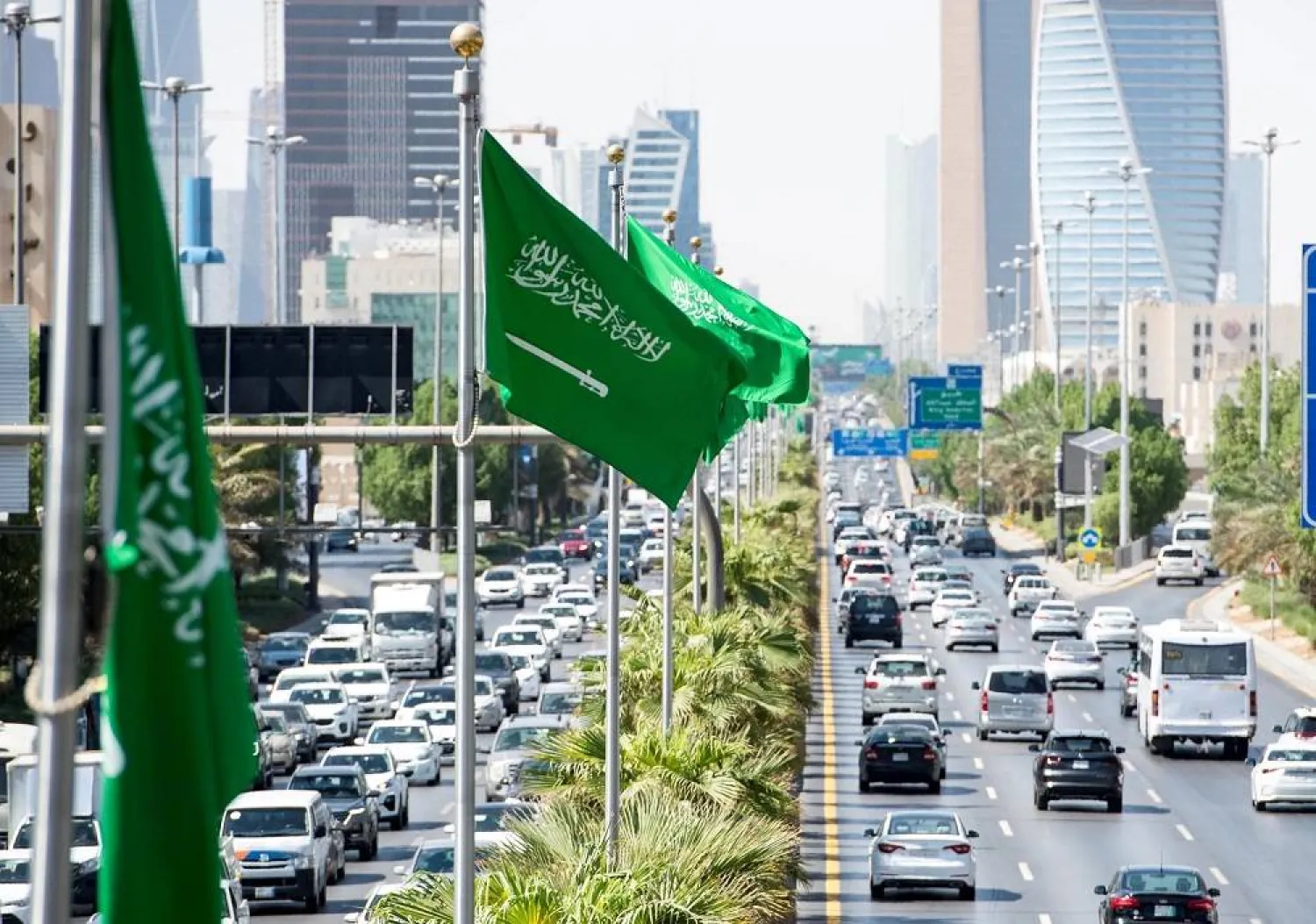
Saudi, Pakistani Naval Forces Conclude Participation in 'Sea Breeze' Maneuvers

A general view of Riyadh, Saudi Arabia. (SPA)
TT

Saudi, Pakistani Naval Forces Conclude Participation in 'Sea Breeze' Maneuvers

A general view of Riyadh, Saudi Arabia. (SPA)

The joint naval exercises "Sea Breeze 14" between the Eastern Fleet of the Royal Saudi Naval Forces (RSNF) and the Pakistani Naval Forces concluded in the Arabian Gulf, reported the Saudi Press Agency on Tuesday.

Commander of the Eastern Fleet Rear Admiral Majed bin Hazza Al-Qahtani said the exercise encompassed lectures, naval formations, strategies for dealing with floating mines, reconnaissance operations, port defense, cooperation with drone boats, and live ammunition shooting exercises.

Al-Qahtani commended the readiness, and positive results demonstrated by both sides during the exercise, underscoring the significance of ongoing training and qualification for participating forces.

"Sea Breeze 14" is a joint naval exercise involving a variety of naval vessels and units, including ships, boats, infantry units, special maritime security units, and naval aviation units.

The exercise aims to provide training in diverse maritime scenarios at sea. It forms part of the Saudi Armed Forces' annual joint military exercises with brotherly and friendly countries, aiming to boost combat efficiency, field experience, and the harmonization of military concepts and terminology among participating parties.


Pakistani Military to Asharq Al-Awsat: Our Commitment to Saudi Security Is Non-Negotiable

Pakistani military spokesperson Lieutenant General Ahmed Sharif Chaudhry. (Reuters)
TT

Pakistani Military to Asharq Al-Awsat: Our Commitment to Saudi Security Is Non-Negotiable

Pakistani military spokesperson Lieutenant General Ahmed Sharif Chaudhry. (Reuters)

Pakistani military spokesperson Lieutenant General Ahmed Sharif Chaudhry stressed that the transition of the Makkah Joint Defense Alliance into the practical implementation phase of its collective defense commitments entails adopting measures to enable the rapid deployment of agreed-upon forces and military capabilities inside Saudi Arabia. These steps include elevating readiness levels, bolstering military integration, sharing intelligence, and coordinating to conduct exclusively defensive operations.

In an interview with Asharq Al-Awsat, the spokesperson stressed his country's readiness, in light of current circumstances and based on the Joint Strategic Defense Agreement between Saudi Arabia and Pakistan and the Makkah Alliance, to take all necessary defensive measures to defend the Kingdom.

Islamabad's commitment to the Kingdom's security, sovereignty, and territorial integrity is "absolute and non-negotiable", he added.

Capabilities and forces

Regarding Pakistani forces and military capabilities in Saudi Arabia, Chaudhry revealed that Pakistani troops are already present in the Kingdom, operating in various capacities with their primary missions consisting of providing defensive support, exercises, and maneuvers.

Islamabad will continue to provide any required support for defensive purposes, whether in terms of military personnel, military capabilities, training, or logistical assistance, he said.

In response to a question regarding reinforcing the military presence or providing additional capabilities, including air and missile defense and intelligence sharing, he said that the necessary support will continue to be provided without specifying exact details, explaining that military alliances do not disclose troop numbers, deployment locations, or operational specifics.

Joint defense measures

Regarding the military measures to implement the alliance's commitments, Chaudhry explained that the transition to practical implementation of the Makkah Alliance obligations follows the recent attacks targeting Saudi Arabia.

He reiterated Pakistan's strong condemnation of the strikes on airports, cities, and civilian and economic infrastructure, describing them as a direct threat to Saudi Arabia's sovereignty, security, and territorial integrity, as well as a danger to regional stability and civilian safety.

Chaudhry said that those attacks raise deep concern in Pakistan, stressing that "the security of Saudi Arabia and the Two Holy Mosques is a top, non-negotiable priority,"

He also urged the need for restraint, de-escalation, and resorting to diplomatic solutions, as any further escalation serves the interest of no party.

Talks with Iran

On the diplomatic level, he explained that the meeting between representatives of the Makkah Joint Defense Alliance and Iran, held in Tehran on October 26, aimed to establish a framework for de-escalation and enhance regional cooperation.

He noted that the participation of Chief of Defense Forces Field Marshal Asim Munir in the meeting, along with his visit to Tehran days earlier, underscores Pakistan's commitment to promoting dialogue and the peaceful settlement of regional disputes.

The participants agreed to "continue dialogue to enhance cooperation among the four countries and contribute to achieving peace and stability in the region," without disclosing any other specific agreements.

Makkah Alliance and strategic defense agreement with Saudi Arabia

In explaining the differences between the "Joint Strategic Defense Agreement” between Saudi Arabia and Pakistan, announced in September of last year, and the Makkah Joint Defense Alliance between Saudi Arabia, Pakistan, and Türkiye, announced in August, Chaudhry noted that the bilateral agreement establishes a framework for defense cooperation between Pakistan and Saudi Arabia.

He added that it reflects the two countries' deep historical partnership and provides a structure for mutual support in the face of any aggression.

He added that under the bilateral Joint Strategic Defense Agreement, Saudi Arabia and Pakistan seek to deepen their longstanding strategic partnership, ensure mutual security, and continue practical defense cooperation to protect each country's sovereignty and vital interests.

The Makkah Joint Defense Alliance, meanwhile, is a trilateral framework bringing together Pakistan, Saudi Arabia, and Türkiye, establishing mechanisms for collective defense, joint readiness, and coordination, he explained.

Both are purely defensive in nature, and neither entails offensive intentions against any country, he stressed.

Chaudhry added that, looking to the future, the three countries aim to strengthen collective deterrence, deepen military integration, and consolidate regional stability.



Riyadh Reiterates Need for Immediate End to Threats to Bab al-Mandeb, Hormuz Straits

Prince Mohammed bin Salman bin Abdulaziz Al Saud, Crown Prince and Prime Minister, chairs the Cabinet meeting in Riyadh. (SPA)
TT

Riyadh Reiterates Need for Immediate End to Threats to Bab al-Mandeb, Hormuz Straits

Prince Mohammed bin Salman bin Abdulaziz Al Saud, Crown Prince and Prime Minister, chairs the Cabinet meeting in Riyadh. (SPA)

The Saudi government reiterated on Tuesday the Kingdom’s support for efforts to achieve regional and international security and stability and to combat terrorist and its criminal militias.

Prince Mohammed bin Salman bin Abdulaziz Al Saud, Crown Prince and Prime Minister, chaired the Cabinet meeting that was held in Riyadh.

The government also underlined the need for an immediate end to all acts that threaten the security of navigation in the Red Sea and Bab al-Mandeb and Hormuz Straits.

At the outset of the session, the Crown Prince briefed the Cabinet on the outcomes of his talks with Bahrain’s King Hamad bin Isa Al Khalifa and Syrian President Ahmed al-Sharaa. He also briefed it on the message he received from Sierra Leone’s President Dr. Julius Maada Bio and on his phone calls with Canada’s Prime Minister Mark Carney and Greek PM Kyriakos Mitsotakis.

The talks covered Saudi Arabia’s bilateral relations with their countries and ways to strengthen them, and underscored the importance of continued coordination on regional and international issues of mutual interest.

The Cabinet welcomed the signing of the General Agreement on the GCC Railway Project to connect the member states of the Gulf Cooperation Council (GCC).

It commended ongoing efforts to advance strategic cooperation and economic and development integration and to continue implementing the Custodian of the Two Holy Mosques’ vision for strengthening joint GCC action, achieving shared objectives, and meeting the aspirations of the peoples of the GCC countries.

It praised the address of Custodian of the Two Holy Mosques King Salman bin Abdulaziz Al Saud at the opening of the sixth Hajj Conference and Exhibition. The address highlighted Saudi Arabia’s efforts to serve the Two Holy Mosques and pilgrims and its continued commitment to improving Hajj services by adopting the latest technologies and strengthening coordination among government agencies.

It also highlighted the expansion of the Direct Hajj Program to serve 133 countries and the announcement of new agreements and partnerships to make pilgrims’ journeys easier from their departure from their home countries until their return.

The Cabinet reviewed the overall performance of national sectors and systems in implementing strategies, programs, projects, and initiatives, and the progress achieved in development and prosperity indicators.

It hailed government agencies on winning dozens of international and regional awards across various fields, including health, infrastructure, digital government, and technological innovation, reflecting the state’s support and its commitment to providing these and other entities with every enabler to sustain leadership and excellence and achieve the targets of Saudi Vision 2030.


Saudi Arabia, Bahrain Discuss Efforts to Bolster Regional Security, Stability

Prince Mohammed bin Salman, Crown Prince and Prime Minister, and Bahrain’s King Hamad bin Isa Al Khalifa meet in Riyadh on Tuesday. (SPA)
TT

Saudi Arabia, Bahrain Discuss Efforts to Bolster Regional Security, Stability

Prince Mohammed bin Salman, Crown Prince and Prime Minister, and Bahrain’s King Hamad bin Isa Al Khalifa meet in Riyadh on Tuesday. (SPA)

Prince Mohammed bin Salman, Crown Prince and Prime Minister, held talks in Riyadh on Tuesday with Bahrain’s King Hamad bin Isa Al Khalifa. 

The talks focused on the latest regional developments and efforts exerted towards them to bolster stability and security. 

King Hamad had arrived in the Saudi capital earlier on Tuesday. He was welcomed at King Khalid International Airport by the Crown Prince. 

The talks between the two leaders also tackled the historic ties between their countries and aspects of cooperation and means to bolster and develop them. 

Crown Prince Mohammed underscored the Kingdom’s keenness on deepening the close fraternal relations with Bahrain in all fields. 

For his part, King Hamad hailed the efforts by Custodian of the Two Holy Mosques King Salman bin Abdulaziz and Crown Prince Mohammed to strengthen ties between their countries. 

He also praised the honorable historic Saudi stances taken towards Bahrain and its people on all occasions. 

He expressed his appreciation for the Saudi leadership’s efforts in developing collective Gulf work and its pioneering role in supporting the pillars of security, peace and stability in the region.