


IMF Welcomes Saudi Arabia’s Efforts to Become Global Leader in Green Hydrogen Production

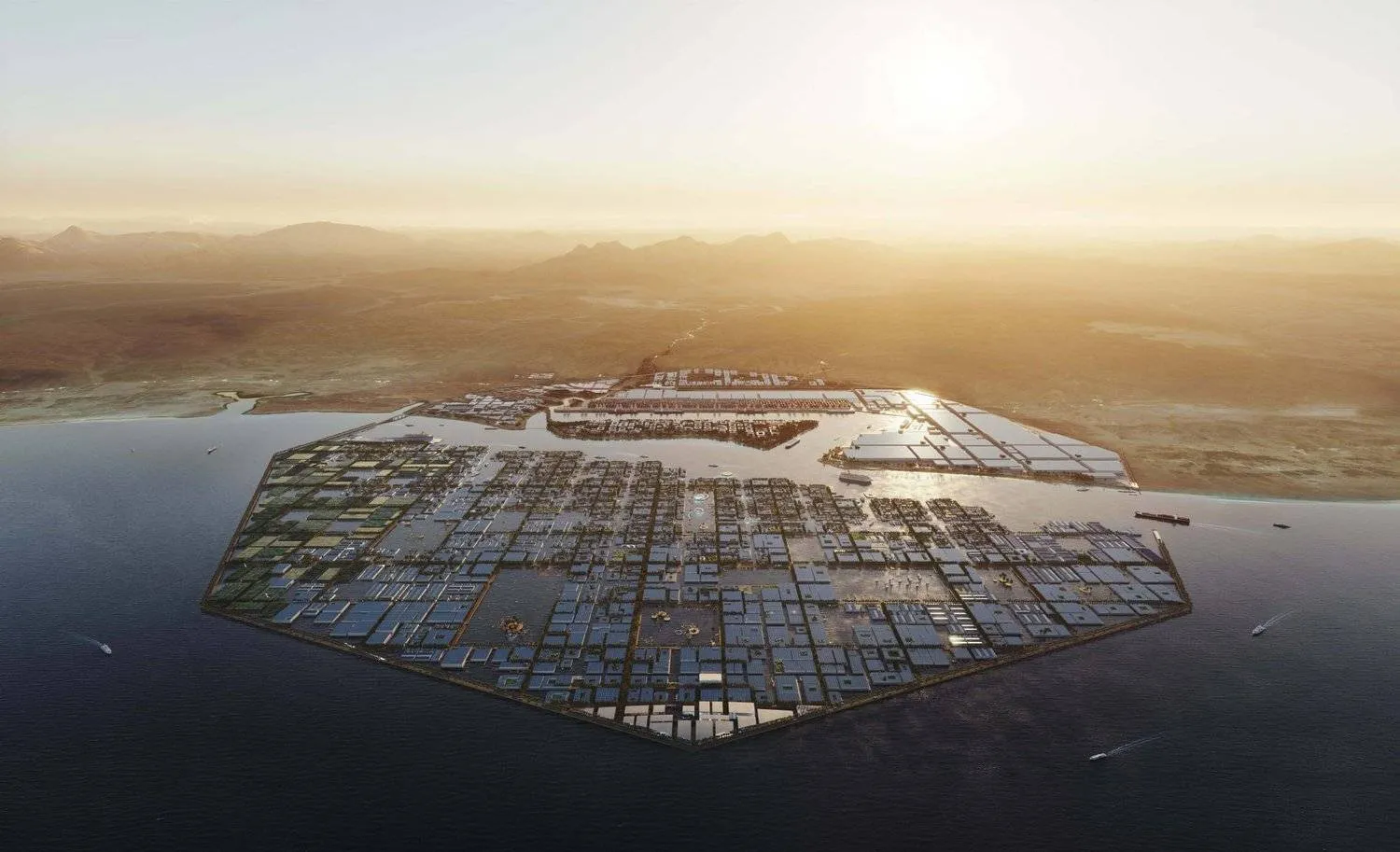
NEOM hosts the largest hydrogen production plant in the world (NEOM Saudi Arabia website)
TT

IMF Welcomes Saudi Arabia’s Efforts to Become Global Leader in Green Hydrogen Production

NEOM hosts the largest hydrogen production plant in the world (NEOM Saudi Arabia website)

Saudi Arabia is witnessing remarkable activity in the hydrogen sector, which is considered the fuel of the future, in terms of production and export.

The country is investing in its great energy potential, to export clean energy to the world, and to contribute to achieving the global goals to reduce carbon emissions and reach carbon neutrality, in line with the Paris Climate Agreement.

While the Kingdom is working to enhance its hydrogen production, it has successfully accelerated its efforts in the field of climate action, as it seeks to convert 30 percent of its land and sea areas into natural reserves, and plant about 10 billion trees by 2030.

It is also working on implementing the circular carbon economy model, with the aim of fulfilling its pledges to reduce emissions by 278 million tons annually by 2030, and raising the share of renewable energy sources in the electricity mix to 50 percent.

With this initiative, Saudi Arabia has become a world leader in carbon capture and storage projects, with a storage capacity of up to 9 million tons annually, while it aims to store 44 million metric tons by 2035.

Earlier this month, International Monetary Fund experts welcomed the ongoing plans in the Kingdom to increase renewable energy capacity by an additional 2.1 GW by 2024, and deploy circular carbon economy technologies (including the use of carbon capture and storage), as well as transforming the country into a global hub for clean hydrogen production.

Experts also welcomed the road map drawn up by the Saudi authorities to reach net-zero emissions, as their analysis highlighted the government’s ability to achieve its targets with the least amount of GDP losses.

Fast pace towards clean energy

At the beginning of May, SABIC Agricultural Nutrients announced that it had sent the first commercial shipment of low-carbon ammonia to the Indian Farmers’ Cooperative Fertilizer Company Limited (IFFCO). Ammonia is produced from hydrogen.

Through this shipment of 5,000 metric tons, SABIC Agricultural Nutrients became the first company to introduce low-carbon ammonia to the Indian fertilizer sector.

In 2022, SABIC Agricultural Nutrients and Saudi Aramco obtained the world’s first independent certification for low-carbon ammonia production and clean hydrogen production from TUV Rheinland, a leading independent agency in systems testing, inspection and certification services, based in Germany.

On May 11, Prince Abdulaziz bin Salman, Saudi Minister of Energy, and Micky Adriaansens, Dutch Minister of Economic Affairs and Climate Policy, signed a memorandum of understanding to benefit from the clean energy exported by the Kingdom, especially green hydrogen.

On June 11, NEOM announced the construction of 3 stations within the largest green hydrogen plant in the world. The green hydrogen project in the city of NEOM would reduce carbon dioxide emissions at a rate of three million tons annually, which is equivalent to the pollutants produced by 700,000 cars.

On July 20, the Saudi Public Investment Fund signed a non-binding memorandum of understanding with the Japanese company JERA, to drive cooperation between the two parties and explore opportunities for the development of green hydrogen projects and derivatives.

The PIF had previously signed an MoU with ENGIE to develop green hydrogen projects and derivatives in the Kingdom.

On August 31, a Saudi researcher registered a global patent in the clean hydrogen production sector, which contributes to reducing the cost of production by a large percentage, making production in Saudi Arabia the most efficient and least expensive in the world.

The patent was registered to Dr. Engineer Abdel-Rahman Abdelal, who works as Executive General Manager of Business Development and Head of Green Hydrogen Project Development at Saudi ACWA Power, and an expert in open innovation at the United States Patent and Trademark Office (USTPO).

During the past year, the Kingdom succeeded in accelerating its efforts in the field of climate action, as it seeks to achieve ambitious goals by 2030, which include converting 30 percent of its land and sea areas into natural reserves, and planting more than 600 million trees.

The Kingdom has adopted the circular carbon economy model with the aim of achieving its pledges to reduce emissions by 278 million tons annually, and to raise the share of renewable energy sources in the electricity mix to 50 percent by 2030.



Gold Rises as Dollar Slips, Focus Turns to US Jobs Data

FILE PHOTO: An employee places ingots of 99.99 percent pure gold in a workroom at the Novosibirsk precious metals refining and manufacturing plant in the Siberian city of Novosibirsk, Russia, September 15, 2023. REUTERS/Alexander Manzyuk/File Photo
TT

Gold Rises as Dollar Slips, Focus Turns to US Jobs Data

FILE PHOTO: An employee places ingots of 99.99 percent pure gold in a workroom at the Novosibirsk precious metals refining and manufacturing plant in the Siberian city of Novosibirsk, Russia, September 15, 2023. REUTERS/Alexander Manzyuk/File Photo

Gold prices rose on Monday, buoyed by a softer dollar as investors braced for a week packed with US economic data that could offer more clues on the US Federal Reserve's monetary policy.

Spot gold rose 1.2% to $5,018.56 per ounce by 9:30 a.m. ET (1430 GMT), extending a 4% rally from Friday.

US gold futures for April delivery also gained 1.3% to $5,042.20 per ounce.

The US dollar fell 0.8% to a more than one-week low, making greenback-priced bullion cheaper for overseas buyers.

"The big mover today (in gold prices) is the US dollar," said Bart Melek, global head of commodity strategy at TD Securities, adding that expectations are growing for weak economic data, particularly on the labor front, Reuters reported.

Investors are closely watching this week's release of US nonfarm payrolls, consumer prices and initial jobless claims for fresh signals on monetary policy, with markets already pricing in at least two rate cuts of 25 basis points in 2026.

US nonfarm payrolls are expected to have risen by 70,000 in January, according to a Reuters poll.

Lower interest rates tend to support gold by reducing the opportunity cost of holding the non-yielding asset.

Meanwhile, China's central bank extended its gold buying spree for a 15th month in January, data from the People's Bank of China showed on Saturday.

"The debasement trade continues, with ongoing geopolitical risks driving people into gold," Melek said, adding that China's purchases have had a psychological impact on the market.

Spot silver climbed 2.9% to $80.22 per ounce after a near 10% gain in the previous session. It hit an all-time high of $121.64 on January 29.

Spot platinum was down 0.2% at $2,092.95 per ounce, while palladium was steady at $1,707.25.

"A slowdown in EV sales hasn't really materialized despite all the policy softening, so I do see that platinum and palladium will possibly slow down," after a bullish run in 2025, WisdomTree commodities strategist Nitesh Shah said.


Al-Rumayyan: PIF Investments in Local Content Exceed $157 Billion

Yasir Al-Rumayyan speaks to the audience in the opening speech of the Public Investment Fund Private Sector Forum (Asharq Al-Awsat)
TT

Al-Rumayyan: PIF Investments in Local Content Exceed $157 Billion

Yasir Al-Rumayyan speaks to the audience in the opening speech of the Public Investment Fund Private Sector Forum (Asharq Al-Awsat)

Yasir Al-Rumayyan, governor of Saudi Arabia’s Public Investment Fund (PIF), announced that spending by the sovereign fund’s programs, initiatives, and companies on local content reached 591 billion riyals ($157 billion) between 2020 and 2024.

He added that the fund’s private sector platform has created more than 190 investment opportunities worth over 40 billion riyals ($10 billion).

Speaking at the opening of the PIF Private Sector Forum on Monday in Riyadh, Al-Rumayyan said the fund is working closely with the private sector to deepen the impact of previous achievements and build an integrated economic system that drives sustainable growth through a comprehensive investment cycle methodology.

He described the forum as the largest platform of its kind for seizing partnership and collaboration opportunities with the private sector, highlighting the fund’s success in turning discussions into tangible projects.

Since 2023, the forum has attracted 25,000 participants from both public and private sectors and has witnessed the signing of over 140 agreements worth more than 15 billion riyals, he pointed out.

Al-Rumayyan emphasized that the meeting comes at a pivotal stage of the Kingdom’s economy, where competitiveness will reach higher levels, sectors and value chains will mature, and ambitions will be raised.

PIF Private Sector Forum aims to support the fund’s strategic initiative to engage the private sector, showcase commercial opportunities across PIF and its portfolio companies, highlight potential prospects for investors and suppliers, and enhance cooperation to strengthen the local economy.


Pakistan’s Finance Minister to Asharq Al-Awsat: We Draw Inspiration from Saudi Arabia

The Pakistani Finance Minister during his meeting with Saudi Minister of Economy and Planning Faisal Alibrahim on the sidelines of the AlUla Conference (SPA)
TT

Pakistan’s Finance Minister to Asharq Al-Awsat: We Draw Inspiration from Saudi Arabia

The Pakistani Finance Minister during his meeting with Saudi Minister of Economy and Planning Faisal Alibrahim on the sidelines of the AlUla Conference (SPA)

Pakistani Finance Minister Muhammad Aurangzeb discussed the future of his country, which has frequently experienced a boom-and-bust cycle, saying Pakistan has relied on International Monetary Fund (IMF) programs due to the absence of structural reforms.

In an interview with Asharq Al-Awsat on the sidelines of the AlUla Conference for Emerging Market Economies, Aurangzeb acknowledged that Pakistan has relied on IMF programs 24 times not as a coincidence, but rather as a result of the absence of structural reforms and follow-up.

He stressed the government has decided to "double its efforts" to stay on the reform path, no matter the challenges, affirming that Islamabad not only has a reform roadmap, but also draws inspiration from "Saudi Vision 2030" as a unique model of discipline and turning plans into reality.

Revolution of Numbers

Aurangzeb reviewed the dramatic transformation in macroeconomic indicators. After foreign exchange reserves covered only two weeks of imports, current policies have succeeded in raising them to two and a half months.

He also pointed out to the government's success in curbing inflation, which has fallen from a peak of 38 percent to 10.5 percent, while reducing the fiscal deficit to 5 percent after being around 8 percent.

Aurangzeb commented on the "financial stability" principle put forward by his Saudi counterpart, Mohammed Aljadaan, considering it the cornerstone that enabled Pakistan to regain its lost fiscal space.

He explained that the success in achieving primary surpluses and reducing the deficit was not merely academic figures, but rather transformed into solid "financial buffers" that saved the country.

The minister cited the vast difference in dealing with disasters. While Islamabad had to launch an urgent international appeal for assistance during the 2022 floods, the "fiscal space" and buffers it recently built enabled it to deal with wider climate disasters by relying on its own resources, without having to search "haphazardly" for urgent external aid, proving that macroeconomic stability is the first shield to protect economic sovereignty.

Privatization and Breaking the Stalemate of State-Owned Enterprises

Aurangzeb affirmed that the Pakistani Prime Minister adopts a clear vision that "the private sector is what leads the state."

He revealed the handover of 24 government institutions to the privatization committee, noting that the successful privatization of Pakistan International Airlines in December provided a "momentum" for the privatization of other firms.

Aurangzeb also revealed radical reforms in the tax system to raise it from 10 percent to 12 percent of GDP, with the adoption of a customs tariff system that reduces local protection to make Pakistani industry more competitive globally, in parallel with reducing the size of the federal government.

Partnership with Riyadh

As for the relationship with Saudi Arabia, Aurangzeb outlined the features of a historic transformation, stressing that Pakistan wants to move from "aid and loans" to "trade and investment."

He expressed his great admiration for "Vision 2030," not only as an ambition, but as a model that achieved its targets ahead of schedule.

He revealed a formal Pakistani request to benefit from Saudi "technical knowledge and administrative expertise" in implementing economic transformations, stressing that his country's need for this executive discipline and the Kingdom's ability to manage major transformations is no less important than the need for direct financing, to ensure the building of a resilient economy led by exports, not debts.