

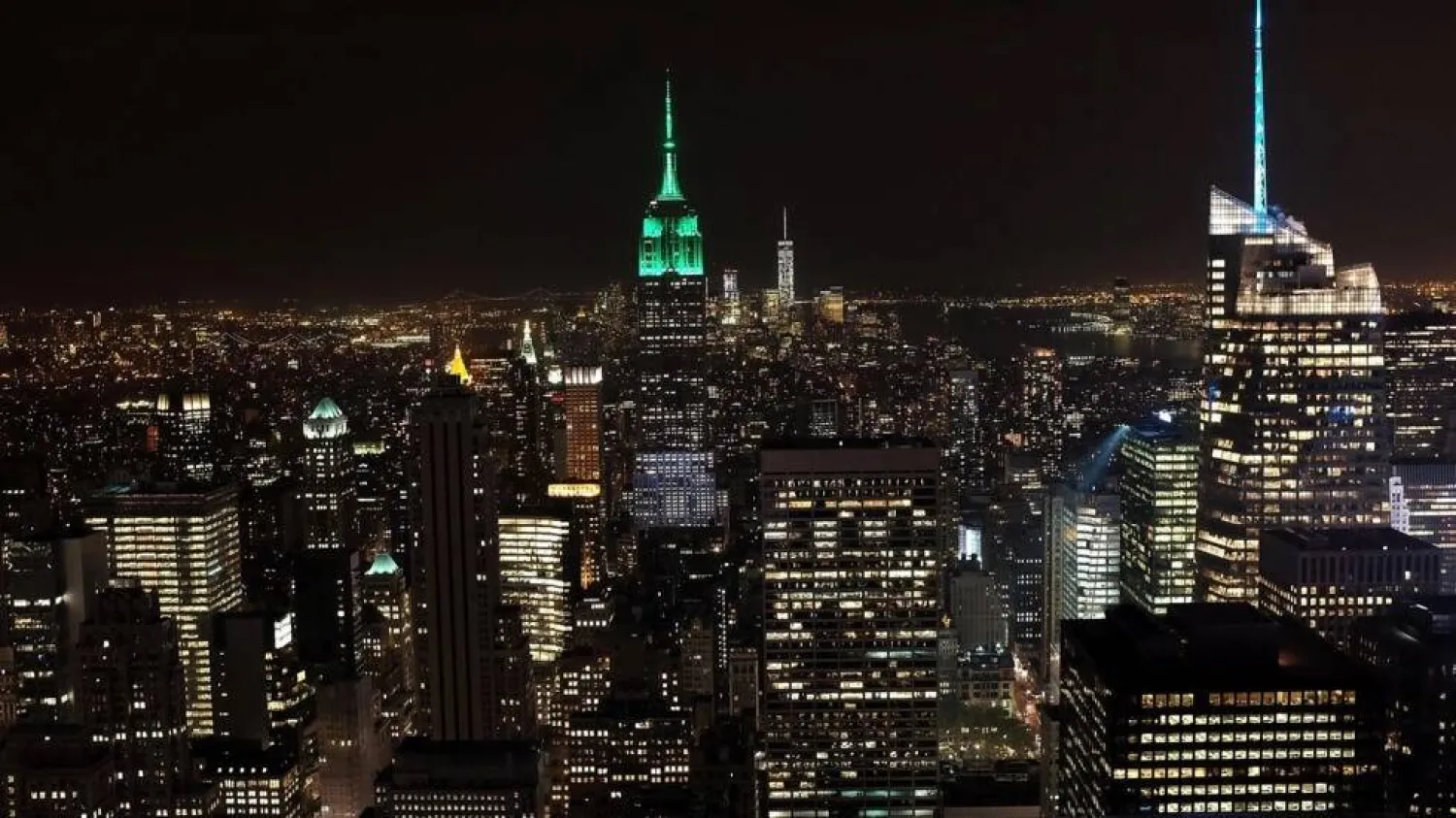

For Climate Activists, New York’s Lights Shine Too Bright 

The Manhattan skyline is viewed on May 5, 2015 in New York City. (Getty Images/AFP)
TT

For Climate Activists, New York’s Lights Shine Too Bright 

The Manhattan skyline is viewed on May 5, 2015 in New York City. (Getty Images/AFP)

New York's annual Climate Week is underway, bringing together activists, politicians and business leaders for hundreds of events aimed at addressing the planetary crisis.

But the bright lights that give the "city that never sleeps" its iconic glow have long been a source of frustration for campaigners, something at odds with the spirit of conservation embodied by the yearly summit, which takes place on the sidelines of the UN General Assembly.

"We have a long way to go until a brightly lit city is seen for what it is, which is just an egregious waste of energy -- and something that's having a direct impact on the natural world," Ruskin Hartley, director of the International Dark-Sky Association (IDA), told AFP.

According to US Department of Energy figures, outdoor lighting in the United States consumes enough energy annually to power 35 million homes. At any given time, only one percent of artificial light reaches human eyes, the department says.

City-wide energy estimates are hard to come by, but it's clear from satellite images that New York is among the worst offenders in the United States, which as a country is far more wasteful than Europe, according to studies.

As participants at Climate Week NYC -- now in its 15th year -- hold events on topics ranging from climate financing to lowering the carbon footprint of food systems, to the role of art in activism, reducing light pollution should be part of the discussion, said Hartley.

"People are looking for ways that we can make a meaningful difference in short order, given the magnitude of the crisis that is facing us. And one of the simplest things we can do is to look around and figure out where we can cut waste from the system," he argued.

Globally, the IDA estimates that outdoor lighting that escapes to space is responsible for one percent of annual greenhouse emissions.

Birds, stargazing and human health affected

It's not just an energy problem, either.

New York City lies along a bird migration pathway known as the Atlantic Flyway, with millions passing through every year, Dustin Partridge, director of conservation and science at the New York City Audubon, told AFP.

Artificial light draws the birds into the city. During the day, they crash into buildings because they see reflections of enticing vegetation in the glass and concrete jungle, while at night they fly into lighted windows.

"In New York, we have about a quarter million birds die each year with collisions," said Partridge, with Climate Week occurring in the middle of the fall migration.

The seeds these birds disperse are vital for the health of carbon-sequestering ecosystems all the way from Canada, where they began their journeys, to their destinations in South America.

"You can go outside in the evening in New York City and look out and see an easy solution to protecting biodiversity and helping fight against climate change," said Partridge.

That's to say nothing of the impact of light pollution on stargazing -- the reason the IDA was founded in the first place.

"The light that's been traveling millions of light years is being absorbed and hidden in the last nanosecond, and what a loss to society that is," said Hartley.

Other research has uncovered potential impacts on human health -- for example, increased incidents of certain cancers, which could be linked to disruptions of circadian rhythms. Artificial light also brings more mosquitoes, and the diseases they bring.

New York passed legislation in 2021 that required all city-owned buildings to turn off non-essential lights from 11:00 pm to 6:00 am during spring and fall migration.

But these account for a small fraction of all buildings, and a bill introduced this May that would extend similar rules to privately-owned and industrial buildings, remains pending.

Critics argue New York's nighttime skyline is an essential part of the city's identity -- a place of energy where people come to dream and achieve great things.

To this, the campaigners point to the examples of European cities that have begun flipping the switch when most are asleep -- including in Paris, the "City of Lights."


The Year's First Meteor Shower and Supermoon Clash in January Skies

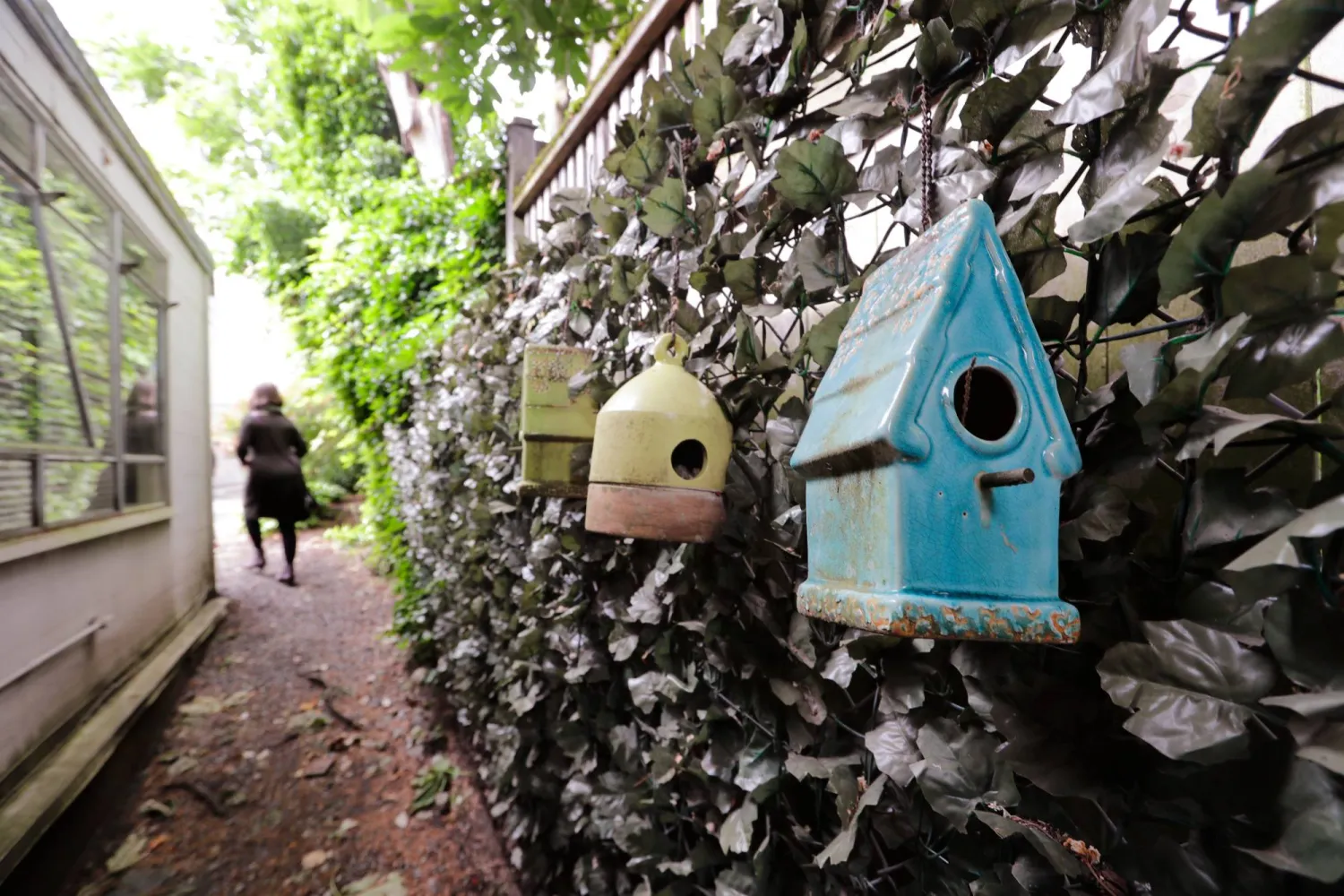
People look up to the sky from an observatory near the village of Avren, Bulgaria, Aug. 12, 2009. (AP Photo/Petar Petrov, File)
TT

The Year's First Meteor Shower and Supermoon Clash in January Skies

People look up to the sky from an observatory near the village of Avren, Bulgaria, Aug. 12, 2009. (AP Photo/Petar Petrov, File)

The year's first supermoon and meteor shower will sync up in January skies, but the light from one may dim the other.

The Quadrantid meteor shower peaks Friday night into Saturday morning, according to the American Meteor Society. In dark skies during the peak, skygazers typically see around 25 meteors per hour, but this time they'll likely glimpse less than 10 per hour due to light from Saturday's supermoon, The AP news reported.

“The biggest enemy of enjoying a meteor shower is the full moon,” said Mike Shanahan, planetarium director at Liberty Science Center in New Jersey.

Meteor showers happen when speedy space rocks collide with Earth’s atmosphere, burning up and leaving fiery tails in their wake — the end of a “shooting star.” A handful of meteors are visible on any given night, but predictable showers appear annually when Earth passes through dense streams of cosmic debris.

Supermoons occur when a full moon is closer to Earth in its orbit. That makes it appear up to 14% bigger and 30% brighter than the faintest moon of the year, according to NASA. That difference can be tough to notice with the naked eye.

Supermoons, like all full moons, are visible in clear skies everywhere that it's night. The Quadrantids, on the other hand, can be seen mainly from the Northern Hemisphere. Both can be glimpsed without any special equipment.

To spot the Quadrantids, venture out in the early evening away from city lights and watch for fireballs before the moon crashes the party, said Jacque Benitez with the Morrison Planetarium at the California Academy of Sciences. Skygazers can also try looking during early dawn hours on Sunday.

Wait for your eyes to get used to the darkness, and don’t look at your phone. The space rocks will look like fast-moving white dots and appear over the whole sky.

Meteor showers are named for the constellation where the fireballs appear to come from. The Quadrantids — space debris from the asteroid 2003 EH1 — are named for a constellation that's no longer recognized.

The next major meteor shower, called the Lyrids, is slotted for April.

Supermoons happen a few times a year and come in groups, taking advantage of the sweet spot in the moon’s elliptical orbit. Saturday night’s event ends a four-month streak that started in October. There won't be another supermoon until the end of 2026.


New Maritime Theater in Jazan to Host the City's Festival Opening

The site also includes various amenities, such as shopping zones, kiosks for dining, an art gallery - SPA
TT

New Maritime Theater in Jazan to Host the City's Festival Opening

The site also includes various amenities, such as shopping zones, kiosks for dining, an art gallery - SPA

The Jazan city theater on the southern corniche will host the opening ceremony of the Jazan Festival 2026 on Friday. This event will take place at a 35-square-kilometer site that features the Kingdom's largest maritime theater, SPA reported.

The theater accommodates more than 10,000 spectators and features five VIP areas. To ensure a smooth experience, the venue offers parking for over 9,000 vehicles, providing easy access during peak times.

Built specifically for the festival, the stage meets stringent safety and technical standards, providing a high-quality audiovisual experience against the stunning backdrop of the Red Sea.

The site also includes various amenities, such as shopping zones, kiosks for dining, an art gallery, a play area for children, a bird garden, and a regional museum, showcasing the region's history and culture.

This temporary maritime theater aims to provide a cohesive experience, integrating entertainment, culture, shopping, and services in one location, further establishing Jazan as a year-round destination for tourism and entertainment.


Saudi Post Issues Commemorative Stamp for Riyadh Air

Saudi Post Issues Commemorative Stamp for Riyadh Air
TT

Saudi Post Issues Commemorative Stamp for Riyadh Air

Saudi Post Issues Commemorative Stamp for Riyadh Air

Saudi Post, in collaboration with Riyadh Air, has launched a commemorative stamp set priced at SAR3 to celebrate the airline’s inaugural flights on October 26, 2025, coinciding with the start of its operational phase.

This issuance marks the beginning of operational activities for Riyadh Air as a new national carrier, aiming to serve over 100 destinations worldwide, SPA reported.

Saudi Post's stamps commemorate major national and international events, preserving important moments in Saudi history and appealing to collectors and historians alike.